
Intel Pivots Next-Gen 'Nova Lake' CPU Launch to Desktop First, Prioritizing Enthusiasts Over Data Center
Intel has confirmed its upcoming Nova Lake processor architecture will debut on consumer desktop PCs before reaching enterprise servers, reversing a recent industry trend of prioritizing data centers.

For anyone planning to build a high-end PC or upgrade a gaming rig in the next two years, the calculus of when to buy just shifted. Over the past several product cycles, the technology industry has increasingly prioritized lucrative data centers and enterprise AI servers, often leaving everyday consumers and DIY builders waiting for hand-me-down architectures.
The most advanced silicon typically goes where the highest margins are, forcing desktop users to settle for refreshed older designs or wait out long enterprise exclusivity windows. But Intel is explicitly flipping that script for its next major processor overhaul. The actionable takeaway for consumers is clear: the upcoming "Nova Lake" generation will put the absolute cutting edge of processor technology directly into the hands of desktop users before it ever touches a server rack.[1][2]
The confirmation comes directly from Intel's leadership. In a recent interview with Tom's Hardware, Robert Hallock, Intel's Vice President and General Manager of the Enthusiast Channel Business, stated unequivocally that the company's brand-new CPU core architecture will debut on consumer desktop chips first.
Hallock, who oversees the rollout and branding of Intel's consumer processors, noted that the company is gearing up for one of the most significant desktop CPU launches in its history. By explicitly targeting the enthusiast market right out of the gate, Intel is signaling a massive course correction designed to win back the loyalty of PC builders who have felt sidelined by the broader industry's obsession with enterprise hardware.[1][7]
This desktop-first strategy is a sharp, calculated counter-punch to Intel's primary rival, AMD. For over a decade, AMD built immense goodwill among PC enthusiasts by launching its groundbreaking Zen architectures on consumer Ryzen chips before scaling them up for enterprise servers. However, AMD recently broke that tradition, announcing that its highly anticipated Zen 6 architecture will debut first in its EPYC "Venice" server processors.
Hallock characterized AMD's enterprise-first pivot as a "natural reaction" to market demands, but emphasized that Intel is taking the exact opposite route. By ensuring that the newest cores land on consumer motherboards first, Intel is attempting to seize the momentum and position itself as the primary champion of the DIY desktop community.[1][3][8]
Intel's recommitment to the desktop is particularly notable given the company's recent trajectory. Over the last few architecture generations, Intel has consistently prioritized mobile-first releases, focusing heavily on power efficiency for laptops and portable devices. Entire architectural families, such as Meteor Lake and the upcoming Panther Lake, were designed almost exclusively for the mobile market, leaving desktop users with refreshed versions of older silicon like Raptor Lake.
This mobile-centric approach, combined with the industry's broader pivot toward enterprise AI, left desktop builders feeling neglected. By confirming that Nova Lake's entirely new core designs will break this pattern and land on desktop first, Intel is actively working to repair its relationship with the high-performance DIY community.[4]
To understand why this matters, it is essential to look at the mechanics of the Nova Lake generation itself. Unlike recent processor families that relied on refreshed or slightly tweaked versions of existing designs, Nova Lake represents a complete, ground-up overhaul of Intel's silicon. The architecture will introduce entirely new designs for both its performance cores, heavily rumored to be codenamed "Coyote Cove," and its efficiency cores, known as "Arctic Wolf."
This dual-core approach dictates how the processor divides its labor, with the performance cores handling heavy, immediate tasks like gaming, while the efficiency cores manage background processes to optimize power draw. Debuting these brand-new cores on the desktop means consumers will be the first to test the limits of Intel's next-generation instruction sets.[4][8]
The performance implications for this new architecture are substantial, particularly for users engaged in heavy-duty compute tasks. Early leaks and hardware analyses indicate that Nova Lake could push desktop core counts to unprecedented levels, potentially scaling up to 52 total cores on the highest-end consumer models. Furthermore, the architecture marks the return of advanced vector extensions—specifically AVX10 and APX—to Intel's consumer platforms.
These instruction sets allow the processor to execute complex mathematical operations much faster, providing a massive boost for workloads like 3D rendering, video encoding, and localized machine learning tasks. For creators and power users, having first access to these capabilities on a desktop platform is a significant advantage.[4][5]
However, adopting this new technology will require a complete and likely expensive platform overhaul. Because Nova Lake introduces such radical architectural changes, it will not be compatible with existing motherboards. The new processors are expected to utilize a brand-new physical socket, designated as LGA-1954.
For consumers, this means that upgrading to Nova Lake will necessitate purchasing a new motherboard, and likely investing in high-speed DDR5 memory, which is currently seeing price increases due to heavy demand from the server market. PC builders must weigh the performance benefits of the new architecture against the total cost of a full system rebuild, making it crucial to plan upgrade budgets well in advance of the launch.[2][4]
The timing of this desktop-first launch also intersects with broader macroeconomic trends in the PC component industry. Currently, computer memory is being snapped up at unprecedented rates by massive server farms building out AI infrastructure, which has caused the prices of DDR5 RAM to rise to near-record levels.
Because the Nova Lake platform will almost certainly require high-speed DDR5 memory to function optimally, the cost of entry for early adopters could be steep. However, by prioritizing the consumer launch, Intel ensures that gamers and creators are not left waiting at the back of the line while enterprise clients consume the entire global supply of next-generation memory and fabrication resources.[2]
Intel's leadership is acutely aware of the skepticism within the enthusiast community, particularly following the mixed reception of recent processor generations. Hallock emphasized that his team is composed of PC builders who understand the market's frustrations firsthand. "I have all the new CPUs all the way out to 2030," Hallock stated, promising a "back-to-back-to-back cadence of product for gamers."
He stressed that the company is moving faster than ever in its release cadence to ensure that the desktop platform remains a priority. This internal restructuring—bringing in new product management and engineering teams specifically focused on gaming CPUs—is the foundational evidence that Intel's desktop-first promise is more than just marketing rhetoric.[1][6]
Despite the aggressive posturing, significant uncertainties remain regarding the exact timeline of the Nova Lake rollout. While Intel previously slated the generation for a 2026 release, the semiconductor industry is notorious for delays, and a full-scale retail availability might easily slip into early 2027.
Furthermore, while the architecture sounds formidable on paper, it remains to be seen how it will perform in real-world gaming scenarios against AMD's highly successful 3D V-Cache processors, which currently dominate gaming benchmarks. Intel has promised that Nova Lake will feature its own response to AMD's massive cache designs, but until independent testing validates those claims, the ultimate balance of power in the desktop CPU market remains an open question.[2][6]
Ultimately, Intel's decision highlights a growing and critical divide in the global silicon market. As the insatiable demand for artificial intelligence consumes vast amounts of fabrication capacity and memory supply, semiconductor giants are increasingly forced to choose where to allocate their most advanced designs.
Ultimately, Intel's decision highlights a growing and critical divide in the global silicon market.
By explicitly choosing to feed the enthusiast channel first, Intel is making a calculated bet that brand loyalty in the consumer space still drives long-term market dominance. For PC enthusiasts who have spent the last two years watching the best technology get locked away in corporate server farms, Nova Lake represents a refreshing return to form—a promise that the most advanced silicon will once again land on their desks first.[7]
Key points
- Intel confirmed its next-generation "Nova Lake" CPU architecture will launch on consumer desktops before enterprise servers.
- The strategy directly contrasts with rival AMD, which is launching its upcoming Zen 6 architecture in data centers first.
- Nova Lake will feature entirely new designs for both its performance ("Coyote Cove") and efficiency ("Arctic Wolf") cores.
- The new processors are expected to support advanced AVX-512 instruction sets for heavy-duty compute tasks.
Open questions
- The exact release date for the Nova Lake desktop processors remains unconfirmed, with estimates ranging from late 2026 to early 2027.
- It is unclear how Nova Lake's gaming performance will stack up against AMD's highly successful 3D V-Cache processors.
- The final retail pricing for the new LGA-1954 motherboards and compatible DDR5 memory has not been announced.
Timeline
September 2025
Intel initially confirms the Nova Lake architecture is in development for a broad 2026 release window.
June 2026
AMD announces its Zen 6 architecture will debut in enterprise EPYC server processors before reaching consumer desktops.
August 2026
Intel Vice President Robert Hallock confirms Nova Lake will take the opposite approach, launching on desktop PCs first.
- PC Enthusiasts
- Gamers and builders who want the fastest possible hardware for home systems.
- Enterprise Hardware Market
- Data center operators focused on server-grade efficiency and AI compute.
- Industry Analysts
- Market watchers evaluating the competitive strategies of Intel and AMD.
Perspectives this story doesn't cover
- Motherboard Manufacturers
- Memory (RAM) Suppliers
Sources
Source coverage
8 outlets
3 viewpoints surfaced








- [1]Tom's HardwarePC Enthusiasts
Intel VP Robert Hallock sets Nova Lake expectations, teases return to Raptor Lake for DDR4 platforms — our full 1:1 interview transcript
Read on Tom's Hardware → - [2]PCGamesNPC Enthusiasts
Intel Nova Lake gaming CPUs to launch first, while server chips wait their turn
Read on PCGamesN → - [3]VideoCardzIndustry Analysts
Intel confirms Nova Lake's new CPU core will debut on desktop first
Read on VideoCardz → - [4]SportskeedaIndustry Analysts
Intel Nova Lake CPUs to launch on desktops first with massive core counts
Read on Sportskeeda → - [5]HotHardwarePC Enthusiasts
Intel Nova Lake CPUs To Hit Desktops First With AVX-512 For Heavy-Duty Compute
Read on HotHardware → - [6]Club386Industry Analysts
Intel Nova Lake CPUs will arrive on desktop first, prioritising gamers over server market
Read on Club386 → - [7]ExtremeTechEnterprise Hardware Market
Intel has said it will launch its next-generation Nova Lake CPUs on desktop first, not the data center.
Read on ExtremeTech → - [8]TechPowerUpIndustry Analysts
Intel's approach to releasing the latest CPU technology differs significantly from AMD's.
Read on TechPowerUp →

More in Shopping & Reviews
See all →Memory Tech
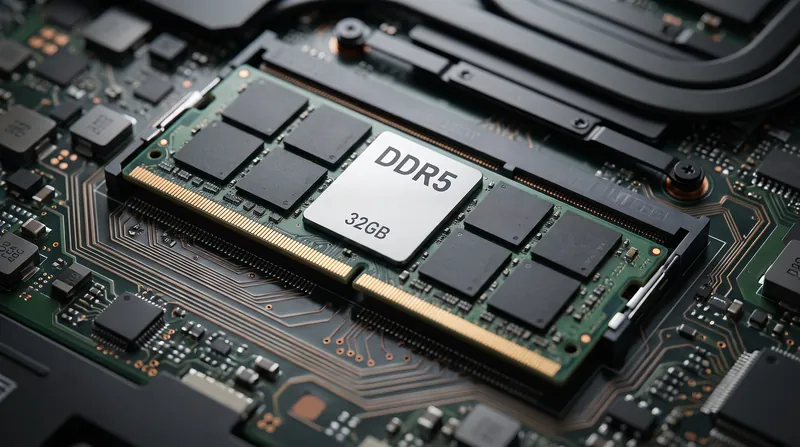
The Mechanics of Laptop Memory: Comparing Single-Channel vs. Dual-Channel RAM and the Impact of DDR4 vs. DDR5
8 sources
Memory Supply Chain
The Economics of the Memory Wall: Why AI Data Centers Are Driving Up Laptop Prices
6 sources

Thermal Management
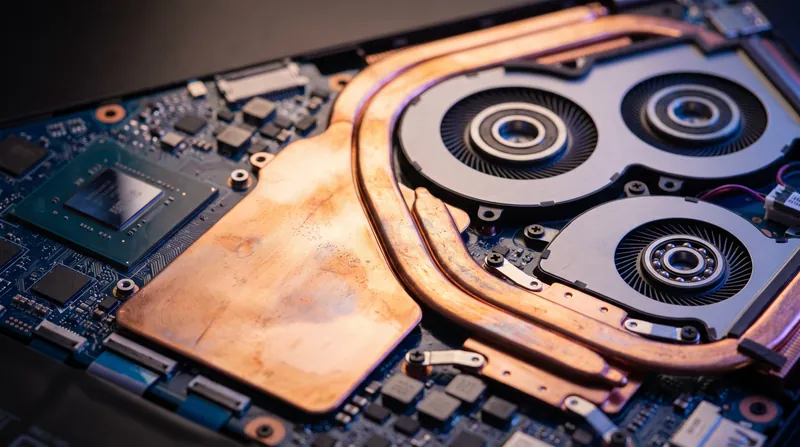
The Physics of Laptop Cooling: Why Modern Thin-and-Lights Struggle with Heat and How to Fix It
5 sources
EU Policy
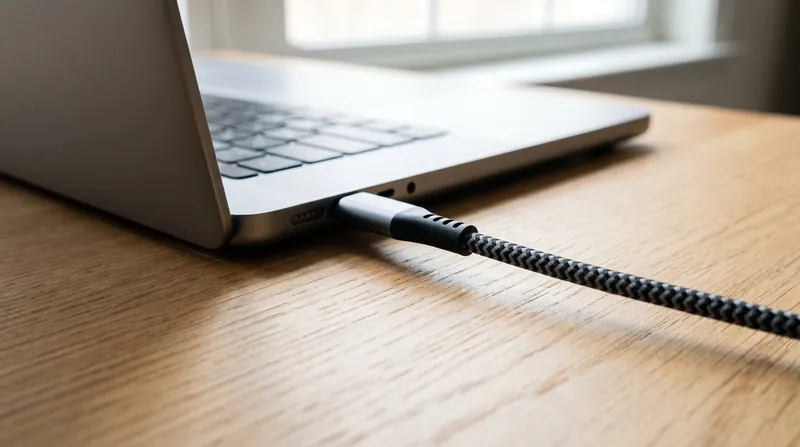
The Compliance Redesign: EU Mandates USB-C Charging and Charger-Free Laptops Starting April 2026
7 sources
Comments
Every angle. Every day.
Get Shopping & Reviews stories with full source coverage and perspective breakdowns, free every day.