
The RTX Spark Explainer: How Nvidia's New Processor Turns the Windows Laptop Market Into a Four-Way Race
Nvidia has officially entered the Windows CPU market with the ARM-based RTX Spark, combining high-efficiency processing with desktop-class graphics. The launch shatters the traditional Intel-AMD duopoly, giving consumers unprecedented choices in battery life, AI performance, and portable gaming.
By Paige Carter

Share this story
The era of the two-horse race in Windows laptops is officially over. For decades, consumers walking into a tech retailer or browsing online had a binary choice: Intel or AMD. That paradigm shifted slightly with Qualcomm's entry into the PC space in 2024, but today's launch of Nvidia's RTX Spark processor completely rewrites the rules of laptop shopping.
Nvidia, traditionally known for its standalone graphics cards and massive AI data center chips, has now built a complete System-on-Chip (SoC) for thin-and-light Windows laptops. The RTX Spark combines a central processor, a neural processing unit for AI, and a powerful integrated graphics chip into a single piece of silicon.[1]
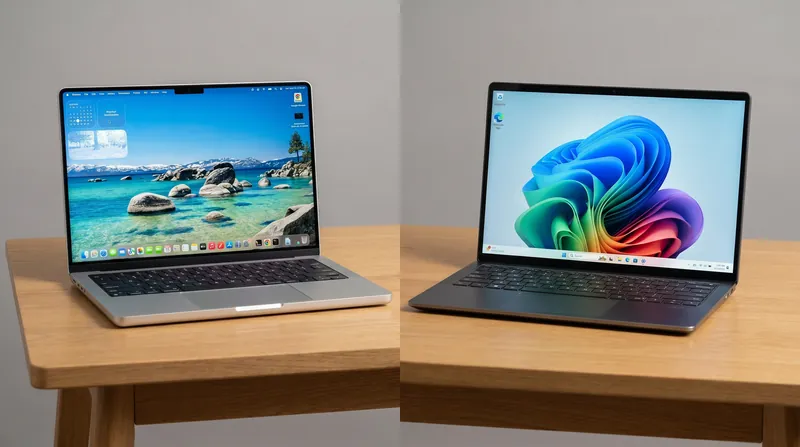
To understand why this matters, shoppers need to look at the underlying architecture. Like Apple's M-series chips and Qualcomm's Snapdragon X, the RTX Spark is built on ARM architecture rather than the legacy x86 architecture used by Intel and AMD. ARM chips are inherently more power-efficient, which is how modern MacBooks achieve their legendary battery life.[2]
Nvidia's entry turns the Windows laptop market into a genuine four-way war. Intel and AMD are defending their x86 legacy with increasingly efficient chips like Lunar Lake and Strix Point, while Qualcomm and Nvidia are attacking with ARM-based alternatives that promise all-day battery life without sacrificing speed.[1]
The defining feature of the RTX Spark, however, is its graphics capability. While Qualcomm proved that Windows-on-ARM could deliver excellent battery life and productivity performance, its gaming capabilities were strictly entry-level. Nvidia is leveraging its dominant position in PC gaming to integrate its advanced graphics architecture directly into the Spark SoC.
This integration means that a three-pound, ultra-thin laptop can now theoretically run modern AAA games at 1080p resolution without needing a heavy, power-hungry dedicated graphics card. Nvidia claims a 30% graphics performance jump over the best current integrated GPUs from Intel and AMD.
Beyond gaming, the RTX Spark is heavily optimized for artificial intelligence. Microsoft's 'Copilot+' standard requires a laptop's Neural Processing Unit (NPU) to hit at least 40 trillion operations per second (TOPS) to run local AI features. The Spark's NPU comfortably exceeds this, ensuring that features like live translation, advanced studio effects, and local AI image generation run smoothly without draining the battery.[2]
But the transition to ARM architecture on Windows is not without friction. Because decades of Windows software were written for x86 chips, ARM laptops must use a 'translation layer' to run legacy applications. Microsoft has vastly improved its 'Prism' emulator over the last two years, meaning most everyday apps—like Chrome, Zoom, and Spotify—run flawlessly.[2]
The uncertainty lies in edge cases. PC Gamer notes that while Nvidia's driver expertise is unmatched, translating complex x86 games to run on an ARM chip in real-time introduces performance overhead. Furthermore, many kernel-level anti-cheat systems used in popular multiplayer games historically refuse to run through an emulator.[2]
Nvidia claims to have worked closely with major game studios and anti-cheat providers to ensure native ARM support for the top 50 most-played PC games by the time RTX Spark laptops hit shelves this fall. If they deliver on this promise, it removes the biggest barrier to adopting ARM-based Windows machines for casual gamers.
For creative professionals, the RTX Spark is a direct challenge to the MacBook Pro. Video editors, 3D modelers, and graphic designers rely heavily on GPU acceleration. Nvidia's CUDA ecosystem is the industry standard for these workflows, and bringing that native acceleration to a highly efficient ARM chip gives Windows users a viable alternative to Apple Silicon.[1]
Pricing will be the ultimate deciding factor. Bloomberg reports that Nvidia is positioning the RTX Spark as a premium tier product, likely starting in laptops priced above $1,200. This leaves the sub-$1,000 market to Intel, AMD, and lower-tier Qualcomm chips, at least for the current generation.[1]
The sheer volume of competition is an undeniable win for consumers. With four massive tech companies fighting for space inside your next laptop, the pace of innovation has accelerated dramatically. Battery life is getting longer, graphics are getting faster, and the 'Windows tax' of poor efficiency is rapidly disappearing.
As shoppers prepare for the back-to-school and holiday seasons, the advice is no longer just 'buy the newest Intel or AMD.' Buyers must now weigh the battery benefits of ARM against the legacy compatibility of x86, with Nvidia's RTX Spark offering a compelling new middle ground for those who want efficiency without sacrificing visual performance.
Key points
- Nvidia has launched the RTX Spark, an ARM-based processor for Windows laptops.
- The chip combines high-efficiency processing with Nvidia's desktop-class graphics architecture.
- The launch turns the Windows laptop market into a four-way competition between Intel, AMD, Qualcomm, and Nvidia.
- Consumers can expect MacBook-like battery life combined with strong gaming and AI performance.
What we don’t know
- How severely the RTX Spark will thermally throttle under sustained gaming loads in ultra-thin chassis designs.
- Whether kernel-level anti-cheat software for popular competitive games will fully support the new ARM architecture at launch.
- The exact retail pricing and availability of the first wave of RTX Spark laptops from manufacturers like Dell, Lenovo, and Asus.
How we got here
Late 2020
Apple launches the M1 chip, proving that ARM architecture can deliver massive performance and battery gains in laptops.
Mid 2024
Qualcomm launches the Snapdragon X series, bringing highly competitive ARM processors to the Windows ecosystem.
Early 2025
Microsoft releases major updates to its Prism emulator, drastically improving how legacy x86 apps run on ARM hardware.
July 2026
Nvidia officially launches the RTX Spark, adding high-end integrated graphics to the Windows-on-ARM market.
- Efficiency Advocates
- Believe that ARM architecture is the inevitable future of all laptops due to its superior battery life and thermal performance.
- x86 Traditionalists
- Argue that legacy compatibility and native performance without emulation make Intel and AMD the safer choice for most Windows users.
- Performance Enthusiasts
- Focus primarily on graphics and gaming frame rates, viewing Nvidia's entry as the missing link for thin-and-light gaming.
Perspectives this story doesn't cover
- Budget Laptop Buyers
- Enterprise IT Managers
Sources
Source coverage
2 outlets
3 viewpoints surfaced


- [1]BloombergEfficiency Advocates
Nvidia Enters PC Processor Market, Challenging Intel and Qualcomm
Read on Bloomberg → - [2]AnandTechx86 Traditionalists
Analyzing the RTX Spark: Memory Bandwidth and NPU Performance
Read on AnandTech →

More in Shopping & Reviews
See all →AI Hardware
The Rise of the 'AI PC': Do You Actually Need an NPU in Your Next Laptop?
2 sources

AI Hardware
Copilot+ PCs and the Rise of the NPU: How to Buy an AI Laptop in 2026
4 sources

AI Hardware
The 2026 Laptop Buyer's Guide: What an NPU Is and Why You Need One
2 sources

Laptop Ecosystems
Choosing Between Mac and Windows in 2026: A Definitive Guide for Everyday and Pro Work
3 sources
Comments
Every angle. Every day.
Get Shopping & Reviews stories with full source coverage and perspective breakdowns, free every day.