
How Group Relative Policy Optimization Eliminates the Memory Bottleneck in AI Reasoning Training
By dropping the memory-heavy value model and scoring answers against each other, GRPO is allowing developers to train advanced reasoning models on consumer-grade hardware.

- Open-Source AI Developers
- Independent researchers view GRPO as a democratizing force for AI training.
- Enterprise AI Labs
- Large technology companies view GRPO as a critical efficiency optimization.
- AI Alignment Researchers
- Safety researchers caution that GRPO may be less effective for nuanced human alignment.
Perspectives this story doesn't cover
- Hardware Manufacturers
At a glance
- Group Relative Policy Optimization (GRPO) eliminates the memory-heavy value model from reinforcement learning.
- The algorithm scores a group of 4 to 16 answers against each other rather than using an absolute baseline.
- Dropping the value model reduces peak memory footprint by roughly 30 to 50 percent during training.
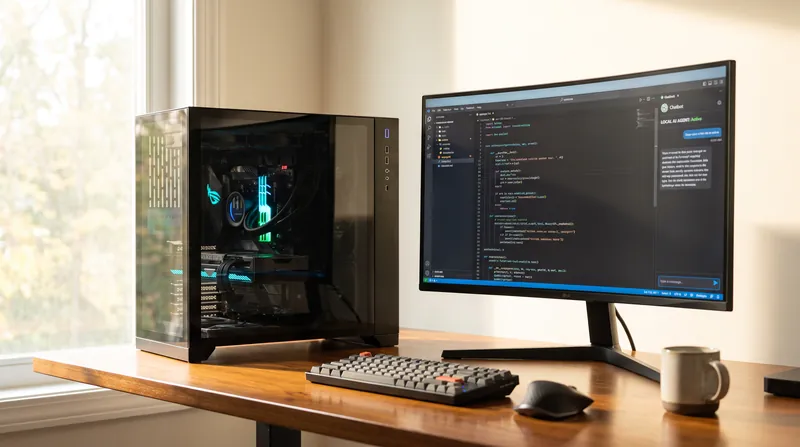
- The efficiency gains allow open-source developers to train large reasoning models on consumer-grade hardware.
- GRPO is particularly effective for verifiable tasks like mathematics and software development.
Why it matters now
By eliminating the need for a massive secondary critic model, GRPO cuts the memory required for reinforcement learning by up to half. This structural efficiency is democratizing AI development, allowing smaller labs and open-source developers to train advanced reasoning models that previously required thousands of GPUs.
The critical step in teaching a large language model to reason is advantage estimation—the moment the system looks at a generated answer and calculates exactly how much better or worse it is than expected. For years, this step required a massive, secondary neural network called a value model to act as a critic, judging every token the primary model produced. Because this critic model is often the same size as the main model, it effectively doubles the memory required to train the system, locking advanced reinforcement learning behind the doors of labs with thousands of GPUs.[3][4]
Group Relative Policy Optimization, or GRPO, bypasses that bottleneck entirely by changing how the model measures success. Instead of relying on a separate critic to predict an absolute score for a single answer, GRPO prompts the model to generate a group of different answers—typically 4 to 16—for the exact same prompt. It then scores all of them using a lightweight reward function or a deterministic rule, such as checking if a mathematical proof reaches the correct final number. As researchers at DataCamp note, the technique "doesn't require labeled data, just a means to verify correctness and order responses accordingly" [2].[2]
Once the group of answers is scored, GRPO normalizes those scores against each other. The algorithm calculates the average score of the group and assigns a positive advantage to the answers that beat the average, while penalizing those that fall below it. By comparing the model's outputs to its own concurrent attempts rather than an external baseline, the algorithm completely eliminates the need for the memory-heavy value model. A recent arXiv preprint summarizes the shift, noting that GRPO can "eliminate the need for a critic by estimating advantages directly from groups of responses" [5].[5]
This architectural shift was first introduced in early 2024 by researchers developing DeepSeekMath, who needed a way to push the limits of mathematical reasoning without scaling up their hardware footprint. It gained widespread industry attention in 2025 when it was used to train DeepSeek-R1, proving that a model could develop advanced, self-correcting reasoning chains using relative group comparisons. According to analysis from Deep (Learning) Focus, while older models relied on Proximal Policy Optimization (PPO), "recent reasoning research relies upon Group Relative Policy Optimization" to build large reasoning models [3].[3]
The efficiency gains are structural rather than marginal. In a traditional PPO setup, training a 70-billion parameter model requires keeping the model weights, the optimizer states, the reference model, and the value model all in memory simultaneously. By dropping the value model, GRPO reduces the peak memory footprint by roughly 30 to 50 percent, depending on the specific optimizer configuration. An AWS Machine Learning Blog review highlights that this efficiency makes GRPO "better suited for large-scale models like DeepSeek-V2 and V3, where resource efficiency is critical" [4].[4]
By dropping the value model, GRPO reduces the peak memory footprint by roughly 30 to 50 percent, depending on the specific optimizer configuration.
This reduction in overhead has triggered a rapid adoption cycle across the open-source ecosystem. In September 2026, platforms like Hugging Face integrated asynchronous GRPO with Low-Rank Adaptation (LoRA) across their training jobs [1]. This integration allows developers to run reinforcement learning pipelines across distributed, consumer-grade hardware without relying on high-bandwidth interconnects like NVIDIA's NCCL, effectively democratizing access to reasoning-model training.[1]
The shift also marks a transition from Reinforcement Learning from Human Feedback (RLHF) to Reinforcement Learning with Verifiable Rewards (RLVR). Because GRPO evaluates a batch of outputs simultaneously, it pairs perfectly with domains where correctness can be verified by a compiler or a math solver, rather than a human rater. The model learns to reason by exploring multiple paths, seeing which one passes the verifier, and updating its internal weights to favor the successful logic.[3][6]
While GRPO excels in objective domains like software development and mathematics, researchers are still mapping its limitations in subjective tasks like creative writing or conversational alignment. Without a dense value model providing token-by-token guidance, the algorithm relies entirely on the final outcome of the reasoning chain. Yet, by democratizing the compute required to train reasoning models, GRPO has fundamentally altered the trajectory of open-weight AI development, shifting the bottleneck from hardware access to verifier design.[6]
Terms to know
- Reinforcement Learning
- A machine learning framework where a model learns by interacting with an environment and receiving rewards or penalties for its actions.
- Proximal Policy Optimization (PPO)
- The traditional reinforcement learning algorithm used for AI, which relies on a separate value model to estimate the expected reward of a generated response.
- Value Model
- A secondary neural network used in traditional reinforcement learning to act as a critic, predicting how good a specific state or token is.
- Advantage Estimation
- The mathematical process of determining how much better a specific action was compared to the expected baseline.
- Reinforcement Learning with Verifiable Rewards (RLVR)
- A training approach where the model is rewarded based on deterministic, rule-based checks rather than human preference ratings.
Questions readers ask
Why does GRPO save so much memory compared to older methods?
It completely removes the need for a value model, which is a secondary neural network used in older algorithms like PPO to judge the main model's outputs.
Can GRPO be used for any type of AI training?
It is currently most effective for tasks with clear, verifiable answers, such as mathematics and computer programming, where a rule-based system can easily score a group of responses.
How does the model know if an answer is good without a value model?
It generates multiple answers to the same prompt, scores them all, and compares them against each other. Answers that score above the group average are reinforced.
Sources
Source coverage
6 outlets
3 viewpoints surfaced






- [1]Hugging Face BlogOpen-Source AI Developers
Async GRPO with LoRA across HF Jobs: a bucket, a proxy, and no NCCL
Read on Hugging Face Blog → - [2]DataCampEnterprise AI Labs
Group Relative Policy Optimization (GRPO)
Read on DataCamp → - [3]Deep (Learning) FocusAI Alignment Researchers
Reinforcement Learning for LLMs
Read on Deep (Learning) Focus → - [4]AWS Machine Learning BlogEnterprise AI Labs
Summary of why GRPO is Better
Read on AWS Machine Learning Blog → - [5]arXivAI Alignment Researchers
Reinforcement Learning
Read on arXiv → - [6]Factlen Editorial Team
Synthesis by Factlen editorial team
Read on Factlen Editorial Team →
Comments
More in Artificial Intelligence
See all →AI Liability
The Legal Distinction Between AI as a Product, a Service, and an Agent in Tort Law
6 sources

AI Architecture
How the Chain Rule Propagates Error Signals Backward to Update Neural Network Weights
6 sources

Local Inference
How the GGML Format Enables CPU-Only Inference for Large Language Models
10 sources
AI Infrastructure
Meta Plots AI Cloud Business to Monetize Infrastructure, Directly Challenging AWS and Azure
4 sources

Every angle. Every day.
Get Artificial Intelligence stories with full source coverage and perspective breakdowns delivered to your inbox.