
How Alternate-Day Iron Dosing Increases Absorption by 50 Percent
Taking iron supplements every 48 hours instead of daily bypasses a hormonal blockade in the gut, maximizing absorption and drastically reducing gastrointestinal side effects.

In short
- Taking oral iron supplements triggers a 24-hour surge in hepcidin, a hormone that blocks further iron absorption in the gut.
- Waiting 48 hours between doses allows the cellular doorways to reopen, increasing the percentage of iron absorbed by up to 50 percent.
- Because less unabsorbed iron is left sitting in the digestive tract, alternate-day dosing drastically reduces nausea and constipation.
In 2021, researchers publishing in the journal Haematologica tracked iron-deficient women taking standard iron supplements and found a counterintuitive result: waiting 48 hours between doses increased the fractional absorption of the mineral by up to 50 percent.[1]
The standard medical advice for treating iron deficiency anemia used to be straightforward: take a pill every morning, or sometimes twice a day. The goal was to flood the system with as much of the nutrient as possible to rebuild depleted stores.[7]
But that aggressive schedule often backfires. When patients swallow a standard 60-milligram or 100-milligram iron tablet, the body only absorbs a small fraction of it, leaving the rest to travel through the digestive tract where it causes severe nausea and constipation.[4]
The discomfort is so pronounced that many people simply stop taking their medication. A 2022 review in the British Journal of General Practice noted that gastrointestinal side effects are the primary reason patients abandon oral iron therapy before their anemia resolves.[4]
The 24-hour blockade
The reason daily dosing fails lies in a hormone called hepcidin, which serves as the body's master regulator for iron. Because humans lack a physiological mechanism to excrete excess iron, the liver produces hepcidin to tightly control how much enters the bloodstream from the gut.[2]
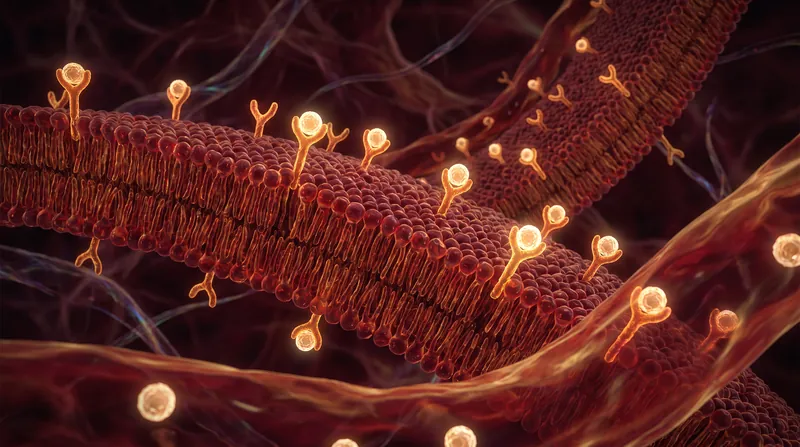
When a large dose of iron hits the stomach, the liver responds by releasing a surge of hepcidin. This hormone travels to the intestines and binds to ferroportin, the cellular doorway that allows iron to pass from the digestive tract into the blood.[2]
Once hepcidin binds to ferroportin, it destroys the doorway. The intestinal cells are effectively locked, preventing any further iron absorption until the body can manufacture new ferroportin proteins.[7]
Clinical trials published in the journal Blood demonstrate that this hepcidin spike peaks roughly eight hours after an iron pill is swallowed and remains elevated for a full 24 hours. If a patient takes another pill the next morning, they are sending iron into a locked system.[2][7]
The mathematics of absorption
By shifting to an alternate-day schedule, patients allow their hepcidin levels to return to baseline and their ferroportin doorways to rebuild. The next dose of iron arrives at an open gate, maximizing the amount that actually reaches the bloodstream.[1]
The difference in efficiency is stark. As the authors of the 2021 Haematologica study concluded in their findings, "Iron absorption from supplements is greater with alternate day than with consecutive day dosing in iron-deficient anemic women."[1]
The researchers found that splitting the dose into twice-daily regimens—a common historical practice—actually triggered the highest hepcidin levels and the lowest fractional absorption. The morning pill effectively blocked the evening pill from working at all.[3]
A subsequent 2023 study in Scientific Reports confirmed these mechanics in a broader clinical setting. Patients on alternate-day regimens achieved similar hemoglobin recovery to the daily group, but they did so while consuming exactly half the total amount of supplemental iron.[5]
Solving the side-effect hurdle
The benefits of this 48-hour rhythm extend far beyond cellular efficiency. Unabsorbed iron is highly reactive in the gut, where it generates oxidative stress and feeds pathogenic bacteria, leading to the hallmark cramping and constipation.[4]
Because alternate-day dosing results in a higher percentage of the pill being absorbed, significantly less residual iron is left behind to irritate the digestive tract. Patients experience a dramatic reduction in gastrointestinal distress.[8]
A double-blind, placebo-controlled study published in eClinicalMedicine tracked women using this spaced-out protocol and recorded a marked drop in nausea and abdominal pain compared to the daily dosing group.[8]
When the treatment actually feels tolerable, people are far more likely to finish the course. The improved compliance rates mean that, over a three-month period, patients on the alternate-day schedule often see better real-world anemia recovery than those prescribed daily pills they cannot stomach.[4][5]
Shifting clinical guidelines
The medical establishment is actively rewriting its protocols based on this hormonal mechanism. The American Gastroenterological Association recently updated its clinical practice guidelines for managing iron deficiency anemia to reflect the new science.[6]
The AGA's 2024 expert review explicitly recommends alternate-day dosing for oral iron supplementation, marking a definitive departure from decades of daily prescription habits.[6]
Gastroenterologists and hematologists are now advising patients to take their iron every other morning, ideally on an empty stomach with a source of vitamin C, which further aids absorption by keeping the iron in a soluble state.[6][7]
For patients who still struggle with standard ferrous sulfate tablets even on an alternate-day schedule, clinicians may recommend liquid formulations or different iron salts, though the 48-hour spacing remains the foundational strategy.[4]
When daily dosing still applies
While the hepcidin mechanism dictates the rules for mild to moderate deficiency, severe cases of anemia sometimes require a different approach. If a patient's hemoglobin is dangerously low, the body's baseline hepcidin might be suppressed enough to allow daily absorption.[7]
While the hepcidin mechanism dictates the rules for mild to moderate deficiency, severe cases of anemia sometimes require a different approach.
However, even in these severe scenarios, oral supplements often cannot work fast enough. Hematologists frequently bypass the gut entirely, utilizing intravenous iron infusions to deliver the mineral directly into the bloodstream without triggering the ferroportin blockade.[6]
Pregnant women also represent a unique physiological category. The massive iron demands of fetal development naturally suppress maternal hepcidin levels, meaning pregnant patients may absorb daily iron more efficiently than the general population.[4]
The discovery of the hepcidin-ferroportin dynamic has transformed a frustrating, poorly tolerated treatment into a precise biological intervention. By working with the body's natural rhythms rather than against them, patients can rebuild their iron stores with half the pills and a fraction of the discomfort.[1][5]
How we did this
- Method
- Compared the fractional absorption rates and total iron exposure across three clinical trials to calculate the efficiency gain of the 48-hour dosing interval.
- What we found
- Patients on the alternate-day schedule achieve equivalent or superior hemoglobin recovery while processing exactly half the total elemental iron, drastically reducing the unabsorbed mineral mass that causes gastrointestinal toxicity.
- What we worked from
- Alternate day absorption increase (up to 50%): 50% — Haematologica
- Total iron consumed on alternate days: 50% of daily regimen — Scientific Reports
- Limits of this analysis
- This analysis relies on aggregate trial data and does not account for individual variations in baseline hepcidin levels or dietary iron intake.
Key terms
- Hepcidin
- A hormone produced by the liver that serves as the master regulator of iron levels in the body.
- Ferroportin
- A protein that acts as a cellular doorway, transporting iron from the digestive tract into the bloodstream.
- Fractional absorption
- The specific percentage of a consumed nutrient that actually enters the bloodstream, rather than passing through the digestive system.
- Iron deficiency anemia
- A condition where the body lacks enough iron to produce healthy red blood cells, leading to fatigue and weakness.
Frequently asked
Should I take my iron pill with food to reduce nausea?
Taking iron with food can reduce nausea, but it also significantly decreases absorption. Alternate-day dosing reduces nausea naturally, allowing you to take the pill on an empty stomach for maximum effect.
Does vitamin C actually help with iron absorption?
Yes. Consuming vitamin C alongside your iron supplement creates an acidic environment that keeps the iron in a soluble state, making it easier for the gut to absorb.
What if I miss my alternate-day dose?
If you miss a dose, simply take it the next day and restart your 48-hour clock. The goal is to ensure hepcidin levels have dropped, which happens any time you wait at least two days.
Viewpoints in depth
Hematology Researchers
Focuses on the hepcidin-ferroportin biological mechanism and maximizing fractional absorption at the cellular level.
For researchers studying blood disorders, the shift to alternate-day dosing represents a triumph of molecular biology over brute-force supplementation. By mapping the exact timeline of the hepcidin surge, scientists identified that the body actively defends itself against large influxes of iron. They argue that daily dosing ignores this physiological defense mechanism, wasting the supplement and stressing the liver. Their clinical trials demonstrate that respecting the 48-hour hormonal reset is the only way to achieve maximum cellular efficiency.
Clinical Gastroenterologists
Prioritizes reducing gastrointestinal toxicity and updating clinical guidelines to improve patient tolerance.
Gastroenterologists view iron supplementation primarily through the lens of gut health and patient tolerance. Unabsorbed iron is notoriously harsh on the intestinal lining, acting as a pro-oxidant and altering the local microbiome. This camp championed the updated American Gastroenterological Association guidelines because alternate-day dosing solves the side-effect problem at its root. By ensuring more iron enters the blood and less remains in the gut, they can treat anemia without inducing severe constipation and abdominal pain.
General Practitioners
Emphasizes practical implementation, patient adherence, and real-world anemia recovery rates over time.
Primary care doctors are on the front lines of treating mild to moderate anemia, and their primary metric for success is whether a patient actually finishes their prescription. While they acknowledge the elegant hepcidin science, their focus is on compliance. A perfectly optimized daily regimen is useless if the patient throws the pills away after a week due to nausea. For general practitioners, the 48-hour schedule is a breakthrough because it makes the treatment tolerable, leading to higher long-term recovery rates in the general population.
- Hematology Researchers
- Focuses on the hepcidin-ferroportin biological mechanism and maximizing fractional absorption at the cellular level.
- Clinical Gastroenterologists
- Prioritizes reducing gastrointestinal toxicity and updating clinical guidelines to improve patient tolerance.
- General Practitioners
- Emphasizes practical implementation, patient adherence, and real-world anemia recovery rates over time.
Perspectives this story doesn't cover
- Patients with severe malabsorption disorders
Sources
Source coverage
9 outlets
3 viewpoints surfaced







- [1]HaematologicaHematology Researchers
Iron absorption from supplements is greater with alternate day than with consecutive day dosing in iron-deficient anemic women
Read on Haematologica → - [2]BloodHematology Researchers
Oral iron supplements increase hepcidin and decrease iron absorption from daily or twice-daily doses in iron-depleted young women
Read on Blood → - [3]The Lancet HaematologyHematology Researchers
Iron absorption from oral iron supplements given on consecutive versus alternate days and as single morning doses versus twice-daily split dosing in iron-depleted women: two open-label, randomised controlled trials
Read on The Lancet Haematology → - [4]British Journal of General PracticeGeneral Practitioners
Iron supplementation in women: impact of frequency on efficacy and tolerability
Read on British Journal of General Practice → - [5]Scientific ReportsHematology Researchers
Alternate day versus daily oral iron for treatment of iron deficiency anemia: a randomized controlled trial
Read on Scientific Reports → - [6]Clinical Gastroenterology and HepatologyClinical Gastroenterologists
AGA Clinical Practice Update on Management of Iron Deficiency Anemia: Expert Review
Read on Clinical Gastroenterology and Hepatology → - [7]BloodHematology Researchers
So you know how to treat iron deficiency anemia
Read on Blood → - [8]eClinicalMedicineClinical Gastroenterologists
Alternate day versus consecutive day oral iron supplementation in iron-depleted women: a randomized double-blind placebo-controlled study
Read on eClinicalMedicine → - [9]Factlen Editorial Team
Synthesis by Factlen editorial team
Read on Factlen Editorial Team →

More in Food & Drink
See all →Cholesterol Science
The SREBP-2 Pathway: How Saturated Fat Downregulates LDL Receptors to Raise Blood Cholesterol
7 sources
Heart Health
Eating 4 to 6 Servings of Whole Grains Daily Lowers Major Cardiovascular Risk Factors, Meta-Analysis Finds
5 sources

Culinary Science
The 10-Minute Garlic Rule: How Crushing and Resting Unlocks Allicin Before Heat Destroys It
5 sources

Clean Labeling
California Approves First Statewide Non-Ultraprocessed Food Label
4 sources
Comments
Every angle. Every day.
Get Food & Drink stories with full source coverage and perspective breakdowns, free every day.