
Global Swimming Standings: Two-Per-Nation Rule Threatens U.S. Depth Ahead of Pan Pacific Championships
As the 2026 Pan Pacific Championships approach in Irvine, a strict two-per-nation final rule is forcing deep squads from the U.S. and Australia to treat morning preliminaries as high-stakes elimination races.
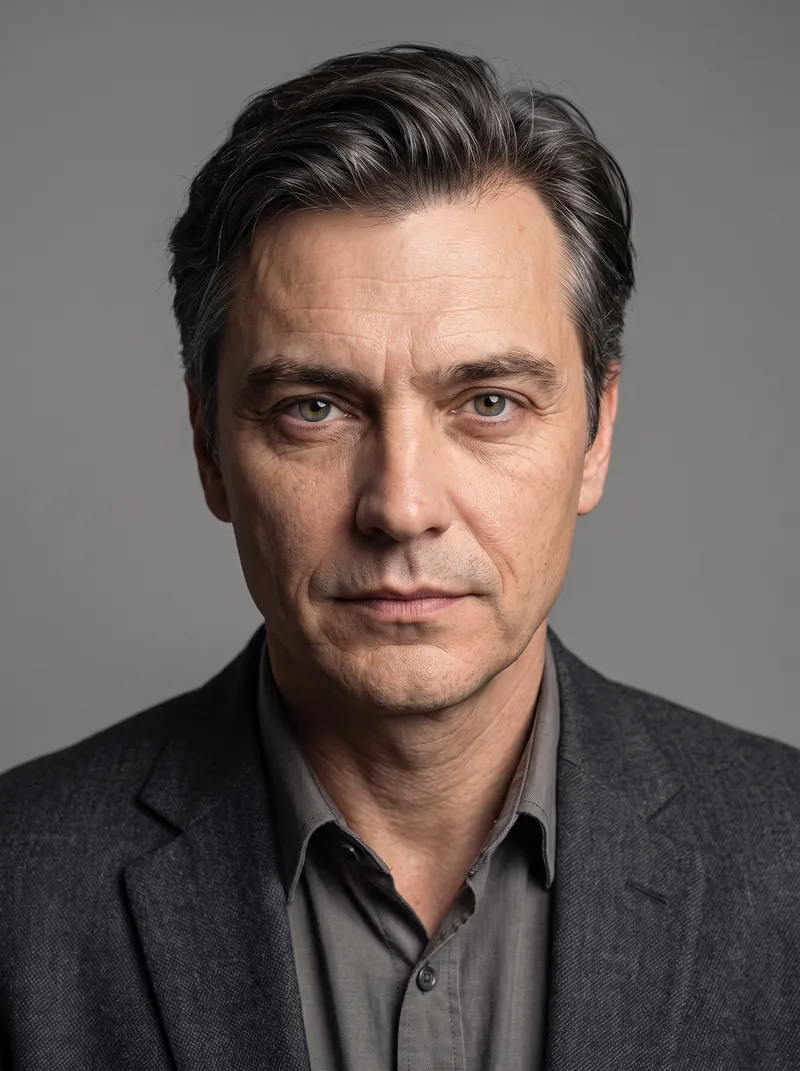
The global swimming standings are facing a dramatic bottleneck this August. As the sport's elite converge on the William Woollett Jr. Aquatics Center in Irvine, California, for the 2026 Pan Pacific Championships, the traditional hierarchy of the world rankings is about to collide with one of swimming's most unforgiving regulations.
The looming competition, set to begin on August 12, marks the first time the Pan Pacs have been held since Tokyo hosted the event in 2018. But for powerhouse nations like the United States and Australia, the biggest threat to their medal counts isn't just international rivals—it is their own internal depth.[1][3]
At the heart of the tension is the strict "two-per-nation" rule governing the Pan Pacific Championships. Designed to ensure broader country representation in the evening sessions, the guideline dictates that no matter how many swimmers a single country places in the top eight during morning preliminaries, only two can advance to the championship final. For nations boasting immense depth, this transforms routine morning heats into high-stakes, full-blast elimination races where a fraction of a second can relegate a world-class athlete to the consolation bracket.[1]
The United States men's backstroke and butterfly contingents are currently staring down this exact scenario. In the men's 100-meter backstroke, American swimmers occupy the top four seeds globally. Will Modglin leads the entry list at 52.54 seconds, followed closely by Jack Aikins at 52.74, Destin Lasco at 52.93, and Daniel Diehl at 52.94.
Under normal championship formats, all four could comfortably cruise through preliminaries to secure lanes in the final. Next week, however, two of these top-tier athletes will be mathematically eliminated from medal contention before the sun reaches its peak over California.[1]
A similar battle is brewing in the men's 50-meter butterfly. Of the top eight seeds entering the meet, five represent Team USA. Michael Andrew, Dare Rose, and Van Mathias hold the top three entries, while Shaine Casas and Santo Condorelli sit in seventh and eighth.
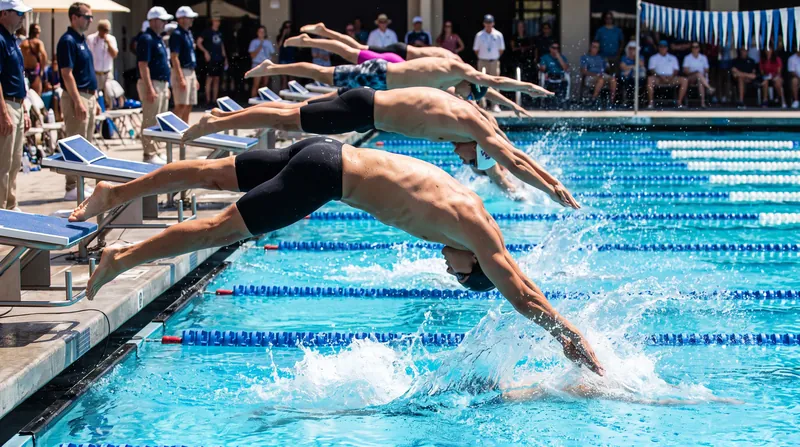
With only two berths available, each of these sprinters will be forced to treat their morning heat as if it were the championship final itself. The margin for error is effectively zero, and coaches are warning athletes that easing off the gas over the final ten meters could mean watching the evening session from the stands.[1]
This dynamic frequently leads to bizarre statistical anomalies in the global standings. Throughout the meet, legitimate podium contenders will find themselves racing in the consolation finals. Historically, it is not uncommon for the winner of a Pan Pacs consolation heat to post a faster time than the athlete who ultimately wins gold in the championship final. The pressure to perform in the morning fundamentally alters race strategy, forcing athletes to peak twice in a single day rather than building toward an evening crescendo.[1]
Beyond the internal American battles, the international standings are being reshaped by ambitious entry lists and high-profile withdrawals. Canadian phenom Summer McIntosh is poised to test the limits of her endurance, entering five distinct events: the 200-meter and 400-meter freestyle, the 200-meter butterfly, and both the 200-meter and 400-meter individual medleys. As the world-record holder in four of those five disciplines, McIntosh's schedule will be a focal point of the meet, particularly on the opening day when the 200 free and 200 fly are contested back-to-back.[2]
American versatility will be answered by Kate Douglass, who is currently entered in a staggering seven events. Fresh off a dominant performance at the U.S. National Championships, Douglass holds entries across the 50 and 100 freestyles, all three breaststroke distances, the 50 butterfly, and the 200 individual medley. While she is expected to scratch several events to manage her relay duties, her sweeping presence on the psych sheets underscores the sheer volume of elite talent vying for limited finals lanes.[4]
The Australian Dolphins, traditionally the fiercest rivals to the American squad, are arriving in California with a targeted roster aimed at exploiting any U.S. missteps. Led by team flag bearer Meg Harris, distance specialist Lani Pallister, and breaststroke powerhouse Zac Stubblety-Cook, the Australian camp is heavily invested in the sprint freestyles and relay showdowns. However, the global standings will be missing two of the sport's biggest names, as Australian stars Mollie O'Callaghan and Kaylee McKeown have officially withdrawn from the competition due to injury and illness, respectively.[3]
The Pan Pacs are not the only arena where the global standings are currently shifting. Across the Atlantic, the European Aquatics Championships are set to begin in Paris on August 10, featuring the highly anticipated return of French icon Leon Marchand. Marchand has been nursing an injured right adductor since pulling out of the French national championships in June, raising questions about his ability to compete in his signature breaststroke events.[5]
Despite the lingering injury concerns, Marchand has officially been named to the entry list for four events in Paris: the 400-meter freestyle, the 200-meter butterfly, and both the 200-meter and 400-meter individual medleys. His inclusion in the 400 IM suggests a renewed confidence in his physical condition, while his entry into the relatively fresh 400-meter freestyle indicates a desire to test his endurance against the European elite ahead of the short-course season.[5]
As athletes navigate the grueling August championship slate, the financial stakes of the global standings have also been dramatically elevated. World Aquatics recently announced a massive $2.025 million prize pool for the upcoming World Short Course Swimming Championships, scheduled for December in Beijing. The unprecedented investment is designed to reward the best-performing swimmers and relay teams, with equal distribution across men's and women's events.[6]
Every individual or relay victory in Beijing will earn $10,000, with payouts extending down to $2,000 for an eighth-place finish. To further incentivize elite participation across the calendar, World Aquatics has introduced a highly lucrative "Double Crown" bonus. Any swimmer who wins the same event at all three stops of the 2026 Swimming World Cup Silk Road Tour and triumphs again at the World Championships will receive an additional $15,000 per event, alongside a $25,000 bonus for any world records broken along the way.[6]
For the athletes currently tapering for Irvine and Paris, these financial incentives add a critical layer of strategy to the late-summer standings. The results of the Pan Pacific and European Championships will not only dictate the current global hierarchy but will also serve as the primary qualifying and seeding grounds for the lucrative short-course tour.
For the athletes currently tapering for Irvine and Paris, these financial incentives add a critical layer of strategy to the late-summer standings.
Key points
- The 2026 Pan Pacific Championships in Irvine enforce a strict two-per-nation rule for championship finals.
- Deep squads like the U.S. face internal elimination in morning preliminaries, particularly in the men's backstroke and butterfly.
- Canadian star Summer McIntosh is entered in five events, while American Kate Douglass is entered in seven.
- Australia's Mollie O'Callaghan and Kaylee McKeown have withdrawn due to injury and illness.
- French icon Leon Marchand is returning from an adductor injury to compete in four events at the European Aquatics Championships.
- World Aquatics announced a $2.025 million prize pool for the upcoming short-course season, including a $15,000 'Double Crown' bonus.
How we got here
June 2026
Leon Marchand pulls out of the French national championships with an adductor injury.
July 2026
Caeleb Dressel and Gretchen Walsh post world-leading times at the U.S. National Championships.
August 8, 2026
World Aquatics announces a $2.025 million prize pool for the upcoming short-course season.
August 10, 2026
The European Aquatics Championships begin in Paris.
August 12, 2026
The Pan Pacific Championships commence in Irvine, California.
- U.S. National Team Strategy
- Focusing on navigating the two-per-nation rule and maximizing medals despite intense internal competition.
- Australian Dolphins Camp
- Emphasizing the rivalry with the U.S. and capitalizing on key absences to top the medal table.
- International Contenders
- Athletes from non-charter nations and European stars focusing on individual dominance and upcoming financial incentives.
Perspectives this story doesn't cover
- Athletes from smaller nations who benefit directly from the two-per-nation rule opening up finals lanes.
- Sponsors and broadcasters navigating the absence of key injured stars like Mollie O'Callaghan.
Sources
Source coverage
6 outlets
3 viewpoints surfaced






- [1]Swimming World MagazineU.S. National Team Strategy
Pan Pacs Format Will Have U.S. Swimmers on Alert During Morning Prelims
Read on Swimming World Magazine → - [2]SwimSwamU.S. National Team Strategy
Luka Mijatovic Looks Toward Junior Pan Pacs After US Nats
Read on SwimSwam → - [3]NineAustralian Dolphins Camp
Ultimate Water Warfare in Pan Pacs Swimming on Nine
Read on Nine → - [4]Olympics.comU.S. National Team Strategy
Caeleb Dressel to test comeback form while Kate Douglass, Gretchen Walsh race for 50m free record at 2026 USA National Swimming Championships
Read on Olympics.com → - [5]European AquaticsInternational Contenders
Paris 2026: Marchand and Grousset named in entry list for European Aquatics Championships swimming programme just released
Read on European Aquatics → - [6]Inside The GamesInternational Contenders
World Aquatics puts price on Beijing 2026 success
Read on Inside The Games →
More in Sports
See all →Standings
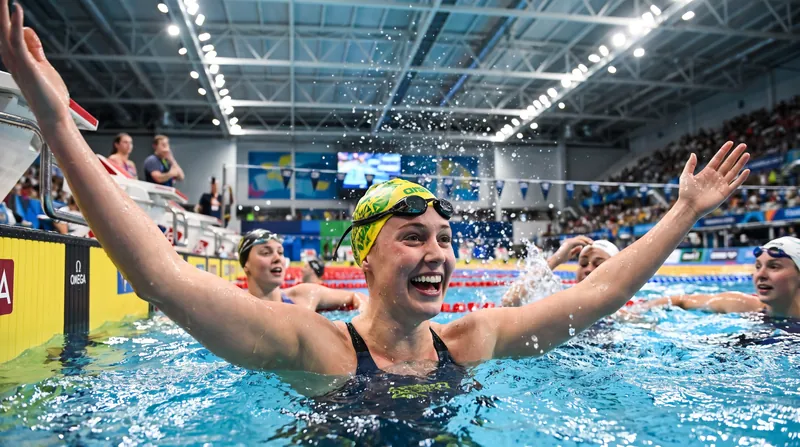
Global Women's Individual Medley Standings: Yu Yiting Edges Summer McIntosh to Claim Pan Pacs Crown
4 sources
Standings
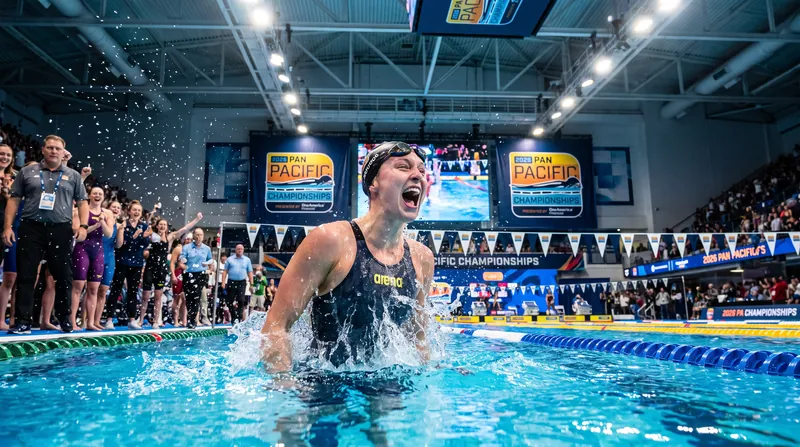
Global Swimming Standings: Team USA Captures Pan Pacs Crown Over Surging Australia as Douglass Smashes Sprint Records
5 sources
Standings
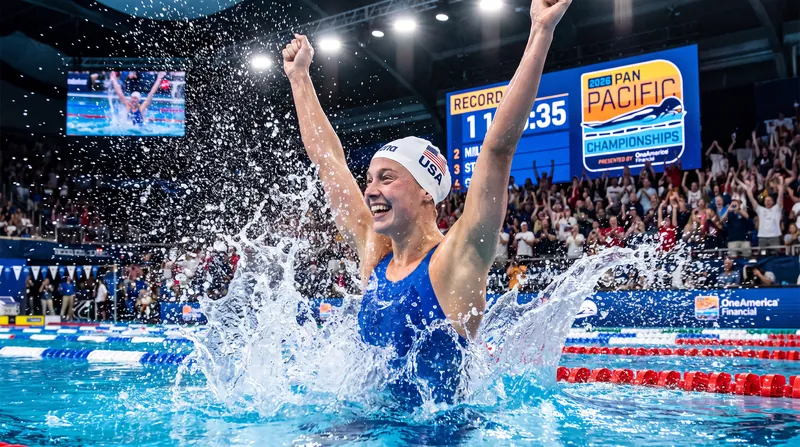
Global Swimming Standings: Walsh and McIntosh Lead the Charge as Pan Pacs 2026 Kick Off
5 sources
Recap
Brinkleigh Hansen and Ethan Parker Clinch 3km Knockout Sprint Titles at Junior Open Water Worlds
2 sources

Comments
Every angle. Every day.
Get Sports stories with full source coverage and perspective breakdowns, free every day.