
Canadian Swimmer Raben Dommann Completes Improbable Comeback From Stroke to Qualify for Pan Pacs
Eighteen months after a congenital heart defect caused an ischemic stroke, 24-year-old Canadian swimmer Raben Dommann has secured a spot on the 2026 Pan Pacific Championships roster following a string of lifetime bests.

Share this story
In January 2025, Raben Dommann was in peak physical condition. The 23-year-old backstroker was logging 30 hours a week in the pool and the gym, training with Swimming Canada's High Performance Centre in Vancouver. He had recently represented Canada at the World Championships in Doha and won two relay medals at the Pan American Games. But while preparing for a routine training session, he suddenly felt weakness in his right leg and profound lightheadedness. When he attempted to stand, his coordination vanished.[1][3][5]
Assuming it was a minor muscular issue, Dommann initially considered brushing it off. However, at the urging of those around him, he went to the hospital, where doctors delivered a diagnosis that seemed impossible for an elite endurance athlete: he had suffered an ischemic stroke in his left frontal lobe. The stroke was caused by a previously undetected congenital heart defect—specifically, a patent foramen ovale (PFO), a small hole in the heart that allowed a blood clot to bypass the lungs' filtration system and travel directly to his brain.[2][3]
The diagnosis abruptly halted Dommann's swimming career and shifted his focus to basic survival and mobility. "When I first suffered the stroke, I wasn't even sure that I would be able to walk properly again," Dommann recalled. For months, he was barred from rigorous physical activity, restricted to short, low-intensity swims and light stationary biking to avoid placing any additional strain on his heart. In May 2025, he underwent cardiac surgery to repair the defect.[1][2]
While congenital heart defects are the most common type of birth defect, their manifestation as ischemic strokes in young, highly conditioned athletes remains rare but devastating. According to the Heart and Stroke Foundation of Canada, roughly one in 20 strokes occurs in adults under the age of 45. For athletes like Dommann, the intense cardiovascular demands of training can sometimes mask underlying structural heart issues until a critical event occurs.[3][6]
Following his heart surgery, Dommann faced a grueling and uncertain rehabilitation. He was essentially out of proper training from January until September 2025. When he finally returned to the University of British Columbia (UBC) swim team in the fall, his reintegration was heavily modified. He operated under strict limits on volume and intensity, working closely with coaches and medical staff to progressively rebuild his aerobic base without triggering a cardiac setback.[1][4]
The physical recovery was complicated by a new hurdle: persistent atrial fibrillation. The condition, which causes irregular and skipped heartbeats, required Dommann to take heart-rhythm medication. While the medication managed the dangerous symptoms, it also artificially lowered his heart rate and increased his baseline fatigue—a massive physiological disadvantage for a swimmer trying to regain world-class speed. Dommann and his medical team are currently evaluating whether a secondary procedure might be necessary to address the fibrillation during a future training break.[1]
Despite these compounding challenges, Dommann's return to the water yielded shocking results. By November 2025, he was winning medals at the Canada West Championships. In March 2026, competing at the U SPORTS Swimming Championships, he set lifetime bests in short-course meters across every event he raced, capturing silver in both the 100-meter and 200-meter backstroke.[1]
The culmination of his 18-month odyssey arrived at the 2026 Canadian Swimming Trials in Montreal this July. Dommann entered the meet hoping simply to compete, but he quickly proved he was faster than he had ever been before his stroke. In the final of the men's 100-meter backstroke, he touched the wall in a blistering 53.79 seconds—a new personal best that shattered his previous mark of 53.90 set in 2024.[1]
He carried that momentum through the rest of the Trials, clocking another lifetime best of 52.57 in the 100-meter butterfly and reaching the 'A' finals in three other events. His performances comfortably cleared the national qualifying standards, officially securing his spot on Canada's roster for the 2026 Pan Pacific Championships, which will be held in Irvine, California, in mid-August.[1]
For Dommann, the qualification represents far more than a return to form; it is a testament to a radically altered mindset. Prior to the stroke, his life was consumed by the relentless pursuit of faster splits and heavier training loads. The forced hiatus forced him to find identity outside the pool and approach the sport with a profound sense of gratitude. "I think that my change in perspective over the past 18 months is what allowed me to reach these goals," he noted.[1][3]
For Dommann, the qualification represents far more than a return to form; it is a testament to a radically altered mindset.
As Dommann prepares to represent Canada on the international stage once again, his story has rippled through the global swimming community. It serves as a stark reminder of the fragility of athletic health, but also as a masterclass in patient, medically-guided rehabilitation. "Eighteen months ago, I didn't know if I would walk properly again, let alone swim and compete again," Dommann said. "I almost can't believe we actually pulled it off."[1]
The essentials
- 24-year-old Canadian swimmer Raben Dommann suffered an ischemic stroke in January 2025 due to an undetected congenital heart defect.
- He underwent heart surgery in May 2025 and was restricted from full training for nine months.
- Dommann currently manages atrial fibrillation with medication that increases fatigue, adding a layer of difficulty to his training.
- At the 2026 Canadian Trials, he swam a lifetime best of 53.79 seconds in the 100m backstroke.
- His performance secured him a spot on Canada's roster for the 2026 Pan Pacific Championships in Irvine, California.
Timeline
Jan 31, 2025
Dommann suffers an ischemic stroke caused by a patent foramen ovale (PFO).
May 2025
Undergoes cardiac surgery to repair the congenital heart defect.
Sep 2025
Resumes modified, low-intensity training with the UBC swim team.
Mar 2026
Sets short-course lifetime bests at the U SPORTS Swimming Championships.
Jul 2026
Swims a lifetime best 53.79 in the 100m backstroke at the Canadian Trials, qualifying for Pan Pacs.
- Medical & Rehabilitation Experts
- Emphasizes the severity of ischemic strokes in young athletes and the necessity of a slow, phased return to high-intensity cardiovascular load.
- Canadian Swimming Community
- Celebrates Dommann's resilience and views his qualification as a major inspirational boost for the national team heading into the Pan Pacs.
- The Athlete's View
- Focuses on gratitude, the mental challenge of managing ongoing heart-rhythm medication, and a shifted perspective that prioritizes health over pure performance.
Perspectives this story doesn't cover
- Cardiologists specializing in elite endurance athletes
- Other young stroke survivors in high-performance sports
Sources
Source coverage
6 outlets
3 viewpoints surfaced






- [1]SwimSwamThe Athlete's View
Raben Dommann's Comeback From Stroke to Canada's Pan Pac Team: “It's Difficult to Put Into Words”
Read on SwimSwam → - [2]Swimming World MagazineCanadian Swimming Community
Canadian International Raben Dommann Recovering from Stroke
Read on Swimming World Magazine → - [3]Healthing.caThe Athlete's View
Raben Dommann's stroke at 24 left him uncertain about the future
Read on Healthing.ca → - [4]UBC AthleticsCanadian Swimming Community
Raben Dommann - Men's Swimming
Read on UBC Athletics → - [5]Team Canada
Raben Dommann Biography
Read on Team Canada → - [6]American Heart AssociationMedical & Rehabilitation Experts
Hypertrophic Cardiomyopathy and Stroke Risk in Young Athletes
Read on American Heart Association →
More in Sports
See all →Recap
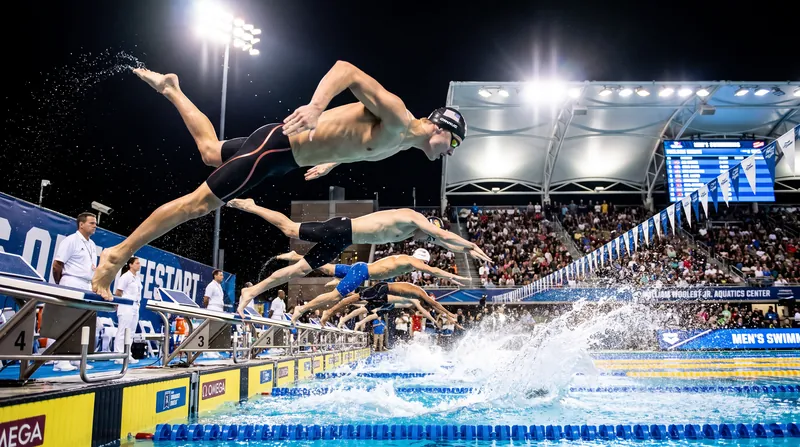
Lani Pallister Ends Katie Ledecky's 14-Year Reign in the 800m Freestyle at Pan Pacs
6 sources
Recap
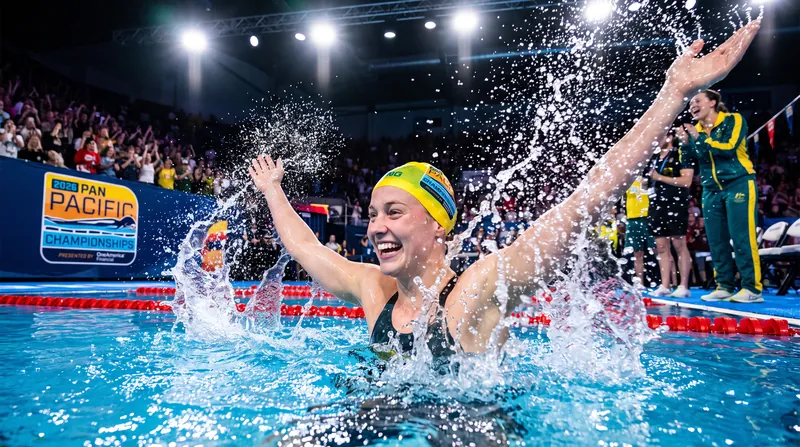
Meg Harris Holds Off Gretchen Walsh to Claim 100m Freestyle Crown at Pan Pacs
5 sources
Standings
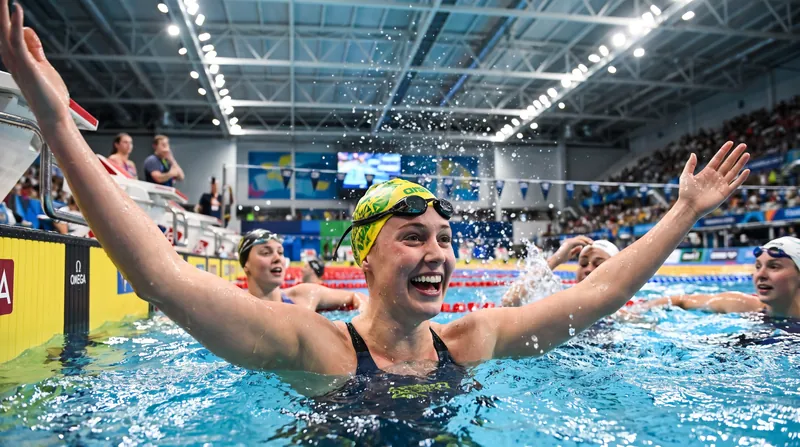
Global Women's Individual Medley Standings: Yu Yiting Edges Summer McIntosh to Claim Pan Pacs Crown
4 sources
Standings
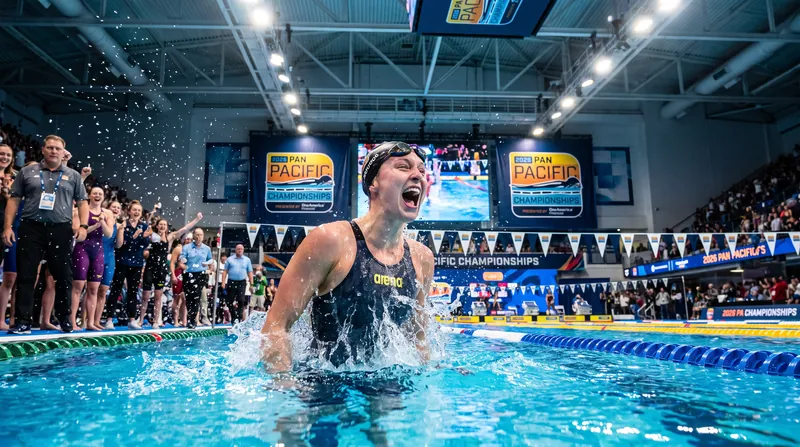
Global Swimming Standings: Team USA Captures Pan Pacs Crown Over Surging Australia as Douglass Smashes Sprint Records
5 sources
Comments
Every angle. Every day.
Get Sports stories with full source coverage and perspective breakdowns, free every day.