
Federal Judge Tentatively Blocks Key Part of TikTok's $400 Million Privacy Settlement
A U.S. District Judge has signaled his refusal to lift a 2019 consent decree, freezing $100 million of TikTok's recent settlement with the Justice Department.

- Judicial Oversight Advocates
- Argue that past privacy violations require ongoing, court-mandated monitoring rather than one-time financial settlements.
- Corporate Compliance Proponents
- Believe that massive structural changes and hefty fines are sufficient to correct corporate behavior without perpetual decrees.
- Child Privacy Watchdogs
- Focus on the strict enforcement of COPPA and view any relaxation of oversight as a risk to underage users.
Perspectives this story doesn't cover
- Parents of underage TikTok users directly affected by the data collection practices.
- Independent cybersecurity auditors who evaluate the effectiveness of TikTok's new age-gating tools.
Why this matters
The ruling demonstrates that federal courts are unwilling to trade long-term oversight of children's data for one-time financial penalties, complicating TikTok's efforts to clear its regulatory slate in the United States.
Key points
- U.S. District Judge George H. Wu tentatively refused to lift a 2019 consent decree governing TikTok's children's privacy practices.
- The decision freezes $100 million of a $400 million settlement reached between TikTok and the Justice Department in August 2026.
- The court found insufficient evidence that TikTok's recent structural changes made the 2019 oversight obligations obsolete.
- The original decree, imposed on predecessor app Musical.ly, mandates reporting and record-keeping through 2029.
- A final hearing on the unopposed motion to vacate the order is scheduled for Monday, September 21.
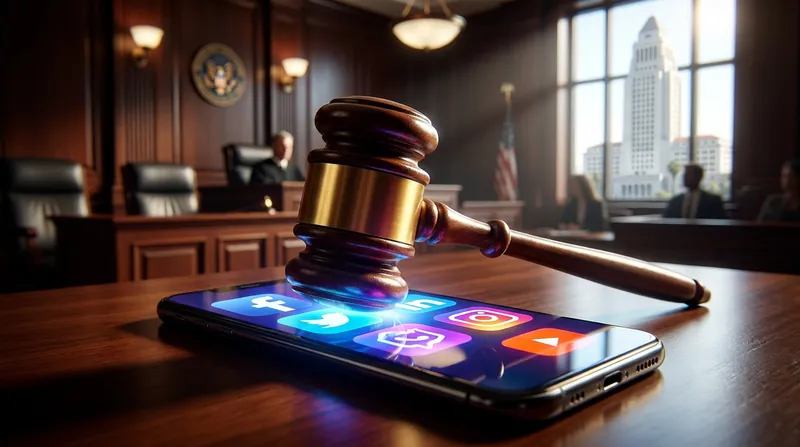
Inside a Los Angeles federal courtroom on Friday, U.S. District Judge George H. Wu looked at a $400 million agreement meant to close the book on TikTok's children's privacy violations and decided a crucial piece of it was not ready to be signed. In a 16-page tentative ruling, Wu signaled his refusal to lift a 2019 consent decree that currently governs how the platform handles the data of its youngest users, effectively blocking the final $100 million of the settlement.[1][5]
The decision throws a sudden hurdle into what had appeared to be a neatly wrapped resolution between the video-sharing giant and the U.S. Justice Department. Reached in August 2026, the settlement was designed to end a lawsuit accusing TikTok and its parent company, ByteDance, of violating the Children's Online Privacy Protection Act (COPPA). The government alleged the platform knowingly allowed children under 13 to create accounts without parental consent and failed to delete their data when asked.[3][6]
The mechanics of the August deal were straightforward: TikTok would pay $300 million immediately, with an additional $100 million contingent on the court vacating the older 2019 order. That earlier decree, originally imposed on TikTok's predecessor app Musical.ly, mandated strict reporting and record-keeping obligations that are scheduled to run through 2029.[5][6]
But Judge Wu balked at the contingency. In his tentative ruling, he wrote that neither the Justice Department nor TikTok had provided sufficient evidence that the 2019 obligations were no longer necessary. Without further detail, the court "cannot determine that it constitutes a durable remedy or that termination is suitably tailored to the asserted change in circumstance," Wu noted, leaving the final quarter of the payout in limbo.[2][4][6]
In his tentative ruling, he wrote that neither the Justice Department nor TikTok had provided sufficient evidence that the 2019 obligations were no longer necessary.
The government had argued that TikTok is a fundamentally different company today than it was when the original decree was signed. Officials pointed to significant overhauls in the platform's ownership structure, management, and compliance functions over the past seven years. In January 2026, ByteDance even agreed to establish a majority American-owned joint venture to manage U.S. user data, a massive structural shift aimed at averting a nationwide ban.[2][6]
Yet for the court, structural changes at the corporate level did not automatically translate to a diminished need for federal oversight of children's data. Wu emphasized that the recent $400 million settlement and the company's new safeguards did not establish that TikTok had substantially complied with the existing order, nor did they prove that the 2019 protections were obsolete.[2][4]
The ruling underscores a broader cultural and legal tension surrounding the platform, which claims more than 200 million American users and serves as the primary entertainment engine for a generation. While the company has implemented new age-related controls and enhanced parental oversight tools, regulators and courts remain deeply skeptical of its ability to self-police when it comes to underage users.[3][5][6]
The immediate fallout of the tentative ruling is financial, freezing $100 million of the agreed-upon penalty. But the longer-term consequence is operational. By refusing to vacate the 2019 decree, Judge Wu signaled his intent to retain active judicial oversight of TikTok's privacy practices for the remainder of the decade.[2][5]
The two sides are scheduled to meet for a hearing on Monday, September 21, where the government's unopposed motion to lift the consent decree will face its final test. If the tentative ruling holds, the Justice Department and TikTok will have to decide whether to renegotiate the terms of their landmark settlement or accept that the 2019 oversight regime will remain a permanent fixture of the platform's American operations.[1][5][6]
Viewpoints in depth
Judicial Oversight
The court's view that past violations require ongoing, mandated monitoring.
Judge Wu's tentative ruling reflects a judicial philosophy that corporate promises and financial penalties are insufficient replacements for active court oversight. By maintaining the 2019 consent decree, the court ensures that TikTok remains legally bound to specific reporting and record-keeping requirements regarding underage users, rather than relying solely on the company's internal compliance overhauls.
The Government and Corporate View
The argument that structural changes make the old decree obsolete.
Both the Justice Department and TikTok argued that the platform has fundamentally transformed since the 2019 order was imposed on Musical.ly. They point to the massive $400 million penalty, the creation of a U.S.-based data joint venture, and sweeping new age-verification tools as evidence that the original consent decree is no longer necessary to protect American children.
What we don’t know
- Whether the Justice Department and TikTok will attempt to renegotiate the settlement terms if the tentative ruling becomes final.
- How the continued enforcement of the 2019 consent decree will interact with TikTok's newly established U.S. data joint venture.
- If ByteDance will appeal the decision or accept the ongoing judicial oversight through 2029.
Sources
Source coverage
6 outlets
3 viewpoints surfaced






- [1]ReutersCorporate Compliance Proponents
U.S. Judge Signals Rejection of Part of TikTok's $400 Million Privacy Settlement
Read on Reuters → - [2]Investing.comJudicial Oversight Advocates
California judge blocks part of TikTok's $400 million privacy settlement
Read on Investing.com → - [3]The American QuorumJudicial Oversight Advocates
Judge Questions $400 Million TikTok Privacy Deal
Read on The American Quorum → - [4]FastpipChild Privacy Watchdogs
California Judge Blocks Part of TikTok's $400 Million Privacy Settlement
Read on Fastpip → - [5]PPC LandChild Privacy Watchdogs
DOJ's $100m bid to lift TikTok child privacy order faces rejection
Read on PPC Land → - [6]NetInfluencerCorporate Compliance Proponents
U.S. Judge Signals Rejection Of Key Piece In TikTok's $400M Privacy Settlement
Read on NetInfluencer →
Comments
More in Entertainment
See all →Merger Settlement
Paramount Settles State Lawsuits, Clears Path for WBD Merger With $1.5 Billion Domestic Film Commitment
8 sources

AI Media
Kevin Roose and Casey Newton Launch Video-First AI Podcast 'Machine Gods' With NPR
5 sources
Fall Anime Season
Crunchyroll Unveils Fall 2026 Anime Lineup Headlined by 'Black Clover' and 'The Apothecary Diaries'
8 sources

DC Universe
HBO's 'Lanterns' Draws 9.3 Million Viewers, Reviving the DC Universe Streaming Slate
6 sources

Every angle. Every day.
Get Entertainment stories with full source coverage and perspective breakdowns delivered to your inbox.