
full timeline
Delhi air pollution crisis
Retailers across the Delhi National Capital Region report a massive spike in air filtration system purchases as winter smog pushes pollution to hazardous levels.
Follow Delhi air pollution crisis in the Factlen app and get an alert when there is news. Get the app
Share this story
Latest report
Northern India Air Purifier Sales Jump Fivefold as Delhi Air Quality Index Crosses 400
Retailers across the Delhi National Capital Region report a massive spike in air filtration system purchases as winter smog pushes pollution to hazardous levels. Traders are now petitioning the central government to reduce the 18% goods and services tax on the devices.
- Air purifier sales in Northern India have jumped fivefold as New Delhi's Air Quality Index crossed the hazardous 400 mark.
- Demand has expanded beyond traditional affluent metro areas into middle-income households and tier-two cities across neighboring states.
- Retailers and traders are actively petitioning the central government to slash the 18% Goods and Services Tax currently levied on the devices.
- Manufacturers are struggling to meet the concentrated regional demand, diverting inventory from southern states to replenish depleted northern warehouses.
Air purifier sales across Northern India have surged fivefold this week as the Air Quality Index in New Delhi breached the critical 400 mark. The sudden spike in demand has cleared out retail inventories across the National Capital Region and prompted urgent calls for immediate tax relief.[1][3]
The surge represents a distinct shift from previous years, with demand now spreading rapidly beyond traditional affluent markets into middle-income households. Retailers report that consumers are increasingly viewing indoor filtration systems as medical necessities rather than optional home appliances, driving unprecedented foot traffic.[3][5]
"We are seeing a fivefold jump in inquiries and actual conversions over the past 48 hours," said a representative for a major electronics retail chain in Delhi. The unprecedented rush began immediately after the city's air quality deteriorated into the 'severe' category on November 15.[1]
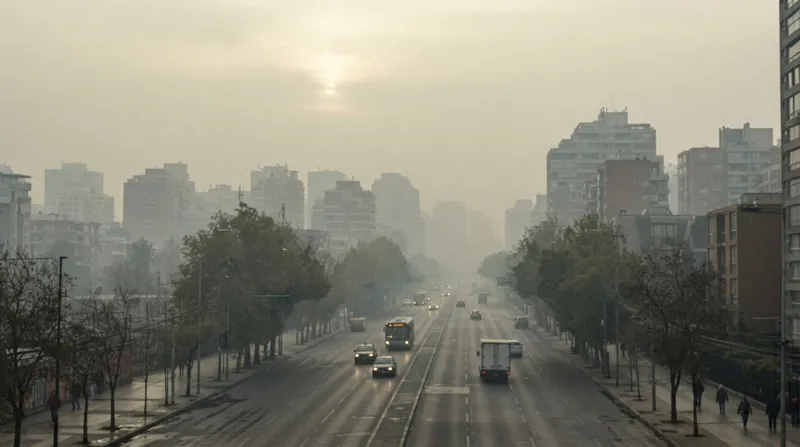
With the Air Quality Index consistently measuring above 400, residents are scrambling to secure whatever stock remains on store shelves. The hazardous smog, a recurring winter crisis driven by crop burning and stagnant weather patterns, has forced millions to remain indoors to avoid respiratory distress.[1][2]
In response to the crisis, local traders and retail associations are actively urging the central government to slash the Goods and Services Tax on air purifiers. The devices currently attract an 18% GST rate, which merchants argue makes them prohibitively expensive for working-class families.[1]
Expanding Market Reach
The geographic footprint of the demand is expanding significantly beyond the immediate Delhi-NCR boundaries. Distributors report surging orders from neighboring cities in Punjab, Haryana, and Uttar Pradesh, where the toxic haze has similarly blanketed urban centers and pushed local AQI readings past 350.[3][5]
"The demand is no longer confined to the traditional metro markets," noted an industry analyst tracking the consumer electronics sector. "We are seeing substantial volume growth in tier-two cities that previously showed minimal interest in indoor air quality management, marking a structural market shift."[3][5]
This broader adoption curve began taking shape earlier in the month, with initial sales spikes recorded around November 4. As pollution levels steadily climbed throughout the first half of the month, the early trickle of purchases transformed into a massive wave of panic buying.[4]
Manufacturers are struggling to adjust their supply chains to meet the concentrated regional demand. Several major appliance brands have diverted inventory from southern and western states to replenish depleted warehouses in the northern corridor, though logistical bottlenecks continue to delay major shipments.[2][3]
The average selling price for a standard room purifier currently ranges between ₹10,000 and ₹25,000, representing a significant capital outlay for the average Indian household. The high upfront cost is compounded by the recurring expense of replacement HEPA filters, which cost up to ₹3,000 annually.[1][2]
The Push for Tax Relief
The campaign to reduce the 18% GST levy has gained considerable momentum among consumer advocacy groups and retail federations. Proponents argue that classifying air purifiers in the same tax bracket as luxury electronics ignores the severe public health emergency unfolding across the region.[1]
"These devices are life-saving equipment for asthma patients, the elderly, and young children," a prominent Delhi-based trader stated in a petition to the finance ministry. "Taxing them at 18% during a public health crisis is fundamentally illogical and hurts the most vulnerable populations."[1]
If the government were to reclassify the devices into the 5% or 12% tax slabs, retailers estimate that overall market penetration could double within a single winter season. However, federal authorities have not yet indicated whether they will consider an emergency tax revision before December.[1][3]
The economic impact of the smog extends well beyond the consumer electronics sector. Pharmacies across the National Capital Region are simultaneously reporting widespread shortages of N95 masks, nebulizers, and respiratory medications as hospitals admit thousands of patients with acute breathing difficulties.[2][4]
The current crisis underscores a chronic failure to address the root causes of Northern India's seasonal air pollution. Despite years of policy interventions aimed at curbing agricultural stubble burning and vehicular emissions, the region's winter air quality continues to deteriorate annually, forcing private mitigation.[2][5]
Changing Consumer Behavior
Retail data indicates a marked shift in the types of filtration systems consumers are prioritizing this year. Buyers are increasingly demanding high-capacity units equipped with advanced HEPA filters and real-time digital AQI monitors, rather than basic entry-level models that lack precise particulate tracking.[3][5]
E-commerce platforms have also witnessed a massive surge in search traffic for air quality solutions, with delivery times for popular purifier models extending from 24 hours to several days. Online retailers have implemented strict purchase limits to prevent hoarding and price gouging by third-party sellers.[2][4]
The corporate sector is contributing heavily to the demand spike, as companies rush to install commercial-grade filtration systems in offices to protect returning workers. Facility managers are upgrading existing HVAC systems with specialized particulate filters to maintain safe indoor environments during the 40-hour workweek.[3][5]
"We have received bulk orders from multinational corporations and local businesses alike," a commercial distributor confirmed. "Employers recognize that maintaining acceptable indoor air quality is now a basic requirement for operational continuity during the winter months, driving a 300% increase in enterprise sales."[3][5]
Public schools and educational institutions are also attempting to procure units for classrooms, though budget constraints severely limit their purchasing power. Several parent-teacher associations have launched emergency fundraising campaigns to equip local schools with basic filtration devices before the peak winter season arrives.[2][4]
Long-Term Market Implications
The sustained growth in the air purifier segment is attracting new domestic and international players to the Indian market. Several electronics manufacturers have announced plans to establish local assembly plants to bypass import duties and reduce retail prices for the 2027 consumer cycle.[3][4]
Industry forecasts project that the Indian air purifier market will expand at a compound annual growth rate exceeding 25% over the next five years. This rapid expansion is driven almost entirely by the persistent failure to mitigate urban air pollution at the source across major metropolitan areas.[2][5]
Environmental advocates warn that the booming market for individual filtration systems represents a dystopian adaptation to systemic environmental degradation. They argue that the privatization of clean air disproportionately harms low-income communities who cannot afford the expensive technology, exacerbating existing public health inequalities.[2][3]
"While air purifiers provide necessary immediate relief, they are ultimately a band-aid solution," an environmental policy researcher noted. "We are creating a divided society where only those who can afford an 18% GST appliance get to breathe clean air, leaving millions exposed to toxic particulates."[1][2]
As the winter season progresses and weather patterns remain stagnant, the demand for air purifiers is expected to remain at record highs. Retailers are bracing for further supply chain disruptions as they attempt to secure enough inventory to last through the hazardous months ahead.[1][5]
The secondary market for refurbished air purifiers has also exploded as lower-income households seek affordable alternatives. Local repair shops report a backlog of several weeks for replacing motors and cleaning heavily soiled filters on older units that have been pulled out of storage.[2][4]
Medical professionals are increasingly prescribing air purifiers alongside traditional asthma medications, further legitimizing the devices as essential healthcare equipment. Pulmonologists across Delhi report a 40% increase in emergency room visits related to respiratory distress since the AQI crossed the 400 threshold last week.[1][3]
Sources
- [1]The Free Press Journal — Delhi AQI Crosses 400, Air Purifier Demand Jumps Fivefold As Traders Urge Centre To Slash GST Read on The Free Press Journal →
- [2]The Times of India — Pollution drives sales of air purifiers Read on The Times of India →
- [3]The Hindu — Air purifier sales surge as Delhi-NCR AQI deteriorates; demand spreads beyond traditional markets Read on The Hindu →
- [4]ETV Bharat — Air Purifier Sales Witness A Boom In India, Rise In Delhi Pollution Level Contributes To Surge Read on ETV Bharat →
- [5]NDTV Profit — Air Purifier Sales Surge As NCR AQI Deteriorates; Demand Spreads Beyond Traditional Markets Read on NDTV Profit →
What to watch
- Officials are exploring emergency interventions, including cloud-seeding trials.
- Retailers and traders are petitioning the central government to slash the 18 percent Goods and Services Tax levied on air purifiers.
Charts, maps and images
Timeline
November 2026
Northern India Air Purifier Sales Jump Fivefold as Delhi Air Quality Index Crosses 400
New Delhi Air Pollution Spikes to Hazardous Levels as City Ranks as World's Most Polluted
New Delhi Enforces Emergency Measures as Post-Diwali Smog Reaches Five-Year High
Delhi Enforces Emergency Curbs as Pre-Diwali Air Pollution Hits 10-Year High
Hazardous Smog Blankets New Delhi as Air Pollution Tops 30 Times WHO Safety Limits
How the story developed
The crisis escalated on November 4, 2026, when toxic air pollution in New Delhi surged to more than 30 times the World Health Organization's recommended daily limit. A winter thermal inversion trapped massive quantities of agricultural smoke and urban emissions directly over the megacity, posing an acute respiratory threat to its 30 million residents. In response, authorities activated emergency protocols, including strict bans on non-essential construction and restrictions on older diesel vehicles.
By Sunday morning, November 8, the Air Quality Index reached 384, marking the city's worst pre-Diwali air quality in a decade. The temperature inversion trapped local transport emissions, early firecracker smoke, and agricultural fumes close to the ground.
Following the pre-festival spike, the Commission for Air Quality Management invoked Stage III emergency measures. Primary schools across the affected districts were directed to shift to a hybrid learning model to protect children from exposure.
Following Diwali celebrations, New Delhi recorded its worst post-festival air quality in five years, with the average AQI hitting 376. Authorities invoked Stage 3 of the Graded Response Action Plan, halting non-essential construction across the region and ordering all primary schools in the capital to shift to hybrid learning.
Strong easterly winds temporarily helped disperse some pollutants and kept agricultural smoke from neighboring states at bay. However, the seasonal thermal inversion continued to trap vehicle exhaust, construction dust, and smoke from over 18,000 agricultural fires, driving the severe pollution spikes later in the month.