
full timeline
Delhi air pollution crisis
Authorities have invoked Stage 3 of the Graded Response Action Plan, halting construction and shifting primary schools to hybrid learning, after New Delhi's Air Quality Index surged past 370…
Follow Delhi air pollution crisis in the Factlen app and get an alert when there is news. Get the app
Share this story
Latest report
New Delhi Enforces Emergency Measures as Post-Diwali Smog Reaches Five-Year High
Authorities have invoked Stage 3 of the Graded Response Action Plan, halting construction and shifting primary schools to hybrid learning, after New Delhi's Air Quality Index surged past 370 following Diwali celebrations.
- New Delhi recorded its worst post-Diwali air quality in five years, with the average AQI hitting 376.
- Authorities invoked Stage 3 of the Graded Response Action Plan, halting non-essential construction across the region.
- All primary schools in the capital were ordered to shift to a hybrid learning model to protect children.
- Strong easterly winds helped disperse some pollutants, temporarily keeping agricultural smoke from neighboring states at bay.
A thick blanket of toxic smog enveloped New Delhi and surrounding regions on Monday morning following Diwali celebrations, driving the city's air quality to its worst post-festival level in five years. The Central Pollution Control Board recorded an average Air Quality Index of 376, pushing the capital firmly into the very poor category.[4][6]
The severe pollution spike was largely driven by widespread firecracker emissions, which accounted for over 40 percent of the pollution load leading into the festival. This sudden influx of toxic smoke compounded existing environmental challenges, including heavy vehicular exhaust and construction dust.[3][4]
At specific monitoring stations, the concentration of particulate matter reached staggering extremes as conditions rapidly deteriorated overnight. Fine particulate matter concentrations at the Jahangirpuri station recorded peaks of nearly 5,000 micrograms per cubic meter, far exceeding safe exposure limits.[1][6]
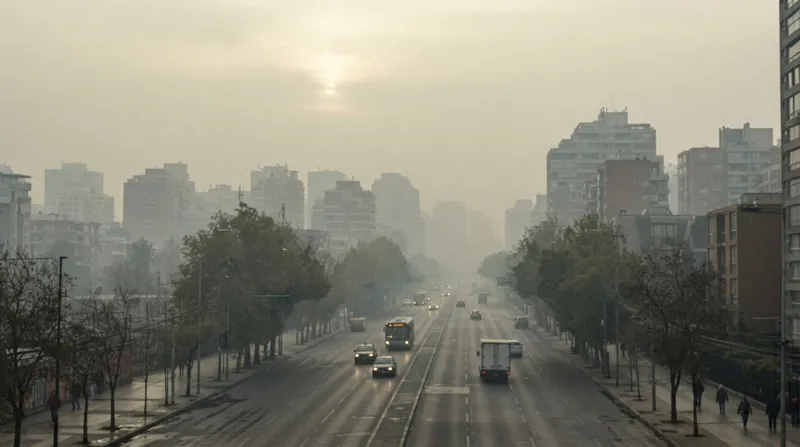
Visibility dropped significantly across the National Capital Region, leaving the skyline hazy and prompting widespread health concerns among the city's 30 million residents. The massive pollution event occurred despite the Supreme Court's ongoing restrictions on firecracker sales and usage across the capital region.[2][6]
"Delhi's air quality plunged to the edge of the 'severe' category on Monday as post-Deepavali pollution surged," reported The Hindu, noting that AQI readings soared above 400 in several localized pockets across the capital.[2]
Emergency measures activated
In response to the escalating environmental crisis, authorities invoked Stage 3 of the Graded Response Action Plan across the National Capital Region. The emergency protocol triggers a series of mandatory restrictions designed to prevent further accumulation of toxic particulates in the lower atmosphere.[3][4]
The strictest measures include a complete ban on non-essential construction and demolition activities throughout the metropolitan area. Regulators have also imposed severe restrictions on older diesel and petrol vehicles, deploying traffic police to enforce the bans at major intersections.[1][5]
To protect vulnerable populations from the toxic air, all primary schools in Delhi were ordered to shift to a hybrid learning model. Educational authorities advised parents to keep young children indoors, particularly during the early morning hours when smog concentration peaks.[4][6]
The Delhi Health Department directed hospitals to maintain detailed records of a reported surge in respiratory admissions and firecracker-related injuries. Emergency rooms across the capital have prepared for an influx of patients presenting with asthma exacerbations and acute bronchitis.[1][2]
Medical professionals warn that prolonged exposure to an AQI of 376 poses immediate cardiovascular and respiratory risks, even to healthy adults. The microscopic PM2.5 particles can penetrate deep into the lungs and enter the bloodstream, triggering systemic inflammation.[3][4]
Meteorological factors and regional spread
Meteorological experts noted that the city narrowly avoided an even worse outcome due to an unusual shift in regional weather patterns. Strong easterly winds helped disperse some of the accumulated pollutants, preventing the AQI from crossing the 400 mark citywide.[3][4]
Crucially, these easterly winds kept agricultural smoke from the neighboring states of Punjab and Haryana at bay. Stubble burning in these agrarian regions typically accounts for a significant portion of New Delhi's early November pollution load, but the wind direction provided a temporary reprieve.[4][6]
However, the pollution crisis was not confined to the National Capital Region. Smog spread across major urban centers in northern and western India, with Mumbai, Chennai, and Lucknow all waking up to hazy mornings and deteriorating air quality.[2][6]
"Post-Diwali smog chokes north India," noted The New Indian Express, highlighting that the widespread flouting of firecracker bans was a national phenomenon rather than an isolated local failure confined to the capital.[1]
As winter conditions set in, experts warn that the region continues to struggle with a toxic convergence of adverse weather and escalating local emissions. Dropping temperatures create an inversion layer that traps cold, polluted air close to the ground, preventing vertical dispersion.[3][4]
Enforcement challenges persist
The staggering pollution figures highlight the persistent difficulty of enforcing environmental regulations across a sprawling metropolis. Despite clear directives from the Supreme Court banning the sale and use of conventional firecrackers, enforcement on the ground remained highly fragmented.[2][5]
Local police forces, stretched thin during the festival period, struggled to curtail the widespread detonation of firecrackers in residential neighborhoods. The sheer volume of violations overwhelmed municipal authorities, rendering the judicial bans largely ineffective in practice.[1][4]
Environmental advocates argue that the recurring nature of this crisis points to a systemic failure in public communication and regulatory enforcement. The 2026 data tells a familiar story, with Delhi's air worsening in eight of the past nine years following the Diwali festival.[4]
"No AQI data from several air monitoring stations," reported the Times of India, pointing to technical failures that may have obscured the true scale of the pollution peak in certain highly congested commercial districts.[3]
The reliance on the Graded Response Action Plan, while necessary for emergency mitigation, is increasingly viewed as a reactive measure rather than a sustainable solution. Critics argue that halting construction and restricting vehicles only addresses the symptoms of a much deeper industrial and behavioral crisis.[3][6]
The path forward this winter
Authorities are now bracing for the next phase of the winter pollution season, which typically stretches through late January. If the wind direction shifts back to the northwest, the delayed impact of agricultural stubble burning could push the AQI back into the severe category.[4][6]
The Commission for Air Quality Management is monitoring the situation closely and has not ruled out invoking Stage 4 of the action plan if conditions deteriorate. Stage 4 would involve even more draconian measures, including a complete halt to commercial truck traffic entering the city.[1][3]
For now, the focus remains on enforcing the existing Stage 3 restrictions and ensuring compliance across the National Capital Region's porous borders. Municipal teams have been deployed to spray water on major arterial roads in an attempt to settle resuspended dust.[2][5]
The economic toll of these recurring shutdowns is also mounting, with daily wage laborers in the construction sector bearing the brunt of the emergency halts. Industry groups have repeatedly called for more predictable, year-round pollution control strategies to avoid these sudden economic shocks.[4][6]
Sources
- [1]The New Indian Express — Post-Diwali smog chokes north India; Delhi records highest post-festival AQI in five years Read on The New Indian Express →
- [2]The Hindu — AQI slips to 'severe' in Delhi; Mumbai, Chennai wake up to smog morning after Deepavali Read on The Hindu →
- [3]Times of India — Delhi pollution on Diwali rockets to worst in 5 years Read on Times of India →
- [4]Down To Earth — The morning after Diwali: Delhi-NCR's air worsened in eight of the past nine years, and 2026 tells a familiar story Read on Down To Earth →
- [5]India TV News — Delhi's air quality 'very poor' morning after Diwali as AQI hits 366, thick smog engulfs capital Read on India TV News →
- [6]ETV Bharat — Post-Diwali Smog Blankets Major Indian Cities; Delhi-NCR AQI Hits 376 Read on ETV Bharat →
Charts, maps and images
Timeline
November 2026
New Delhi Enforces Emergency Measures as Post-Diwali Smog Reaches Five-Year High
Delhi Enforces Emergency Curbs as Pre-Diwali Air Pollution Hits 10-Year High
Hazardous Smog Blankets New Delhi as Air Pollution Tops 30 Times WHO Safety Limits
How the story developed
The crisis escalated on November 4, 2026, when toxic air pollution in New Delhi surged to more than 30 times the World Health Organization's recommended daily limit. A severe winter thermal inversion trapped massive quantities of agricultural smoke and urban exhaust directly over the megacity, posing an acute respiratory threat to its 30 million residents and exacerbating long-term health risks. Emergency protocols, including strict bans on non-essential construction and restrictions on older diesel vehicles, were immediately activated across the region.
Conditions continued to deteriorate leading up to the Diwali festival. The city experienced its most severe pre-Diwali air pollution surge in a decade, driven by a combination of skyrocketing farm fires, low wind speeds, and early firecracker emissions. The Air Quality Index reached 369 on Saturday afternoon.
By Sunday morning, the index climbed to 384. The Central Pollution Control Board reported that 11 monitoring stations across the city recorded index levels above 400, placing them in the severe category. The crisis was exacerbated by a peak in stubble burning in the neighboring states of Punjab and Haryana.
To address the deteriorating air quality, the Commission for Air Quality Management invoked Stage III of the Graded Response Action Plan across the National Capital Region. The emergency measures introduced a complete ban on non-essential construction and demolition work.
Under the Stage III restrictions, older petrol and diesel light motor vehicles were prohibited from operating in Delhi and high-density districts. Additionally, authorities directed all primary schools in Delhi to shift classes up to grade five to a hybrid learning model to protect children from the toxic air.