
full timeline
US–Canada trade war
Canadian Prime Minister Mark Carney and Chinese President Xi Jinping have announced a new bilateral trade agreement easing restrictions and facilitating investment.
Follow US–Canada trade war in the Factlen app and get an alert when there is news. Get the app
Share this story
Latest report
Canada and China Formalize Bilateral Trade Agreement During Carney-Xi Meeting in Shenzhen
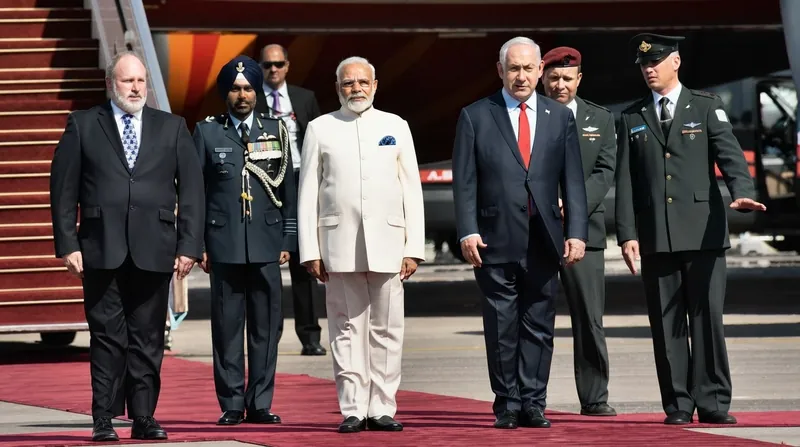
Canadian Prime Minister Mark Carney and Chinese President Xi Jinping have announced a new bilateral trade agreement easing restrictions and facilitating investment. The pact marks a significant stabilization of diplomatic ties as Ottawa seeks to diversify its export markets.
- Prime Minister Mark Carney and President Xi Jinping formalized a trade agreement during a bilateral meeting in Shenzhen.
- The pact focuses on easing mutual trade restrictions, particularly for Canadian agricultural exports and natural resources.
- The framework establishes new pathways for Chinese investment in Canada while maintaining national security oversight.
- The agreement includes cultural partnerships designed to rebuild academic and institutional ties between the two nations.
Canadian Prime Minister Mark Carney and Chinese President Xi Jinping have formalized a bilateral trade agreement, marking a definitive end to years of strained diplomatic relations. The pact, announced on November 17 during Carney’s visit to Shenzhen, eases mutual trade restrictions and establishes new frameworks for Chinese investment in Canada.[4][5]
The agreement represents a significant recalibration of Ottawa’s economic strategy in the Indo-Pacific. By securing trade concessions from Beijing, the Canadian government is actively diversifying its export markets amid shifting global trade dynamics and rising protectionist pressures.[1][6]
Official statements from both capitals emphasized a pragmatic return to economic cooperation. The Canadian Prime Minister's Office stated the deal "advances Canada's strategic partnership with China across trade, commerce, and culture," signaling a broad mandate beyond simple tariff reductions.[1]
The Shenzhen meeting served as the venue for the most substantial bilateral engagement between the two nations since the diplomatic freeze of 2018. President Xi personally endorsed the framework, underscoring Beijing's willingness to stabilize ties with a key G7 economy.[2][3]
Easing restrictions and opening markets
At the core of the new arrangement is a mutual commitment to ease existing trade restrictions that have hampered bilateral commerce. While the full text of the agreement remains unpublished, initial measures focus heavily on agricultural exports, natural resources, and consumer goods.[5]
For Canadian exporters, the easing of restrictions offers immediate relief. Sectors such as agriculture and forestry, which previously faced sudden regulatory barriers and prolonged customs delays at Chinese ports, are expected to see expedited clearance protocols under the new framework.[5][6]
In return, the agreement outlines pathways for renewed Chinese investment into specific sectors of the Canadian economy. The framework reportedly includes mechanisms to facilitate capital flows while maintaining Ottawa's national security oversight on critical minerals and advanced technology.[6]
The diplomatic package extends beyond pure economics to include new cultural partnerships. These initiatives, announced on Carney’s first day in Shenzhen, are designed to rebuild people-to-people ties and academic exchanges that deteriorated during recent diplomatic freezes.[4]
The choice of Shenzhen—China’s premier technology and manufacturing hub—as the venue for the announcement carries distinct economic symbolism. It highlights a shared focus on commercial innovation and signals Beijing's desire to integrate Canadian resources with its advanced manufacturing base.[4]
Hedging against regional volatility
Ottawa’s push for trade concessions from Beijing reflects a broader structural shift in Canadian foreign economic policy. Facing the prospect of increased protectionism from the United States, the Canadian government is accelerating efforts to secure alternative markets for its exports.[3][6]
Prime Minister Carney has prioritized economic pragmatism in his foreign policy approach. This agreement materializes his administration's stated goal of separating necessary commercial engagement from broader geopolitical disputes, leveraging his background in global finance to secure tangible market access.[1][6]
The strategy carries inherent domestic political risks for the governing party. The Canadian government must balance the clear economic benefits of expanded access to the world's second-largest economy against ongoing domestic concerns regarding foreign interference and human rights.[1][4]
To mitigate these concerns, the agreement is structured around specific, verifiable trade measures rather than a comprehensive free trade treaty. This modular approach allows Ottawa to secure economic gains without committing to a sweeping political alignment with Beijing.[4][5]
For the agricultural sector, particularly in Western Canada, the stabilization of the Chinese market is a critical priority. Producers of canola, pork, and soybeans rely heavily on predictable access to Chinese buyers to maintain profitability and plan long-term investments.[5]
Beijing's diplomatic offensive
From Beijing’s perspective, the agreement with Canada represents a tactical victory in its broader effort to prevent a unified Western economic bloc. By offering targeted trade concessions, President Xi is demonstrating that China remains open for business to countries willing to engage.[2][6]
The Chinese Ministry of Foreign Affairs highlighted the meeting as a highly positive step in bilateral relations. Official readouts framed the agreement as a mutual recognition of shared economic interests, emphasizing that cooperation directly benefits both populations.[2]
Securing stable supply chains for raw materials and agricultural products remains a foundational priority for Chinese economic planners. Canada’s vast natural resources make it an indispensable partner for a Chinese economy seeking to insulate itself from global supply shocks.[3][6]
The agreement also serves as a signal to other middle powers navigating the strategic competition between Washington and Beijing. China is actively demonstrating that nations do not need to choose between security alliances with the United States and lucrative economic ties with Asia.[2][3]
Chinese state media has amplified the Shenzhen meeting, portraying it as evidence of the failure of economic decoupling strategies. The narrative emphasizes that even close allies of the United States recognize the necessity of deep economic integration with China.[2]
Navigating allied relationships
The bilateral trade agreement will inevitably complicate Canada’s coordination with its traditional security partners. Washington has consistently pressured its allies to restrict Chinese access to critical supply chains and limit reliance on the Chinese market.[3][6]
Ottawa has attempted to thread this needle by strictly defining the scope of the new trade measures. Canadian officials maintain that the agreement focuses on non-sensitive sectors and does not compromise the country's commitments to North American security or technology controls.[1][5]
However, the facilitation of new Chinese investment into Canada will face intense scrutiny from allied intelligence agencies. The Canadian security establishment has previously warned about the risks of state-directed capital acquiring strategic assets, necessitating a rigorous review process for any incoming deals.[6]
The cultural partnerships announced alongside the trade measures are intended to provide a softer diplomatic buffer. By fostering academic and cultural exchanges, both governments aim to build institutional relationships that can withstand future political shocks.[1][4]
The success of this dual-track approach—expanding trade while maintaining security boundaries—will depend heavily on implementation. Both sides have established working groups to monitor the easing of restrictions and ensure compliance with the agreed-upon frameworks.[4][5]
The path forward for bilateral ties
The immediate test of the agreement will be the speed at which customs barriers are dismantled at Chinese ports. Canadian exporters are watching closely to see if the high-level political commitments translate into tangible improvements in shipping and regulatory clearance.[5]
For Prime Minister Carney, the Shenzhen pact is a defining moment of his early tenure. It represents a calculated gamble that the economic dividends of a stabilized relationship with China will outweigh the inevitable domestic and allied criticism.[1][4]
The agreement also sets a precedent for how middle powers might manage relations with Beijing in an era of great power competition. By compartmentalizing trade from security, Canada is attempting to construct a sustainable model for engagement.[3][6]
As the new trade measures take effect, the focus will shift to the specific sectors targeted for Chinese investment. The approval process for these investments will serve as a barometer for the actual depth of the renewed strategic partnership.[6]
Sources
- [1]Prime Minister of Canada — Prime Minister Carney advances Canada's strategic partnership with China across trade, commerce, and culture Read on Prime Minister of Canada →
- [2]Ministry of Foreign Affairs of the People's Republic of China — President Xi Jinping Meets with Canadian Prime Minister Mark Carney Read on Ministry of Foreign Affairs of the People's Republic of China →
- [3]AP News — China and Canada look for better joint trade Read on AP News →
- [4]CBC News — Canada and China announce new trade measures and cultural partnerships on Carney's 1st day in Shenzhen Read on CBC News →
- [5]Global News — Carney, Xi agree to ease trade restrictions Read on Global News →
- [6]CTV News — PM Carney, Xi set to meet amid push for trade concessions and Chinese investment Read on CTV News →
What to watch
- A 50 percent U.S. tariff on Canadian cars, trucks, auto parts, and steel is scheduled to take effect on January 1, 2027.
- Honda has indefinitely delayed an $11 billion electric vehicle and battery investment plan for Canada while weighing a shift of CR-V production to U.S. facilities.
- The U.S. Court of International Trade is reviewing a lawsuit by Gellert Global Group seeking an immediate halt to tariff collections and refunds for duties paid under Section 338.
- Congress is drafting bipartisan legislation aimed at revoking Section 338 of the 1930 Tariff Act to reclaim trade authority.
- The fourth round of U.S.-Mexico trade talks remains postponed indefinitely amid diplomatic scheduling conflicts.
Earlier updates
2 updates
White House signals U.S. and Canada are nearing a bilateral trade agreement
Key point: White House economic adviser Kevin Hassett announced that the U.S. and Canada are "very close" to finalizing a bilateral trade agreement.
The United States and Canada are nearing a bilateral trade agreement, with negotiations "gathering steam," according to White House economic adviser Kevin Hassett. Speaking on Sunday, Hassett stated that Commerce Secretary Howard Lutnick has been in regular contact with Canadian officials and that the two sides are "very close to finally having a deal."
Hassett attributed previous delays in the negotiations to recent Canadian political developments, specifically pointing to an unsuccessful referendum on Alberta's separation from Canada. He claimed the political climate had temporarily made it "essentially impossible" to negotiate with Ottawa.
The renewed momentum follows recent adjustments to U.S. tariffs on Canadian goods. The Trump administration recently waived duties on certain products to support Maine businesses ahead of the November midterms, while simultaneously imposing new 50% tariffs on other Canadian items.
US and Canada "Very Close" to Trade Agreement, White House Adviser Says
Key point: White House economic adviser Kevin Hassett announced that the US and Canada are "very close" to finalizing a trade agreement following a week of active negotiations.
AIIllustration: Prime Minister Mark Carney and President Xi Jinping formalized a new bilateral trade agreement during meetings in Shenzhen.From: Canada and China Formalize Bilateral Trade Agreement During Carney-Xi Meeting in Shenzhen The United States and Canada are nearing a comprehensive trade agreement, according to White House economic adviser Kevin Hassett. Speaking on Sunday, Hassett stated that negotiations are "gathering steam" and that Commerce Secretary Howard Lutnick has been in active discussions with Canadian officials throughout the past week.
Hassett attributed previous delays in the negotiations to recent Canadian political developments, specifically citing an election and a referendum on Alberta's secession that temporarily made talks "impossible." The renewed momentum follows the Trump administration's recent decision to remove 50% tariffs on certain Canadian goods, such as plywood and agricultural machinery, while imposing new duties on other products.
3 updates
Trump Lifts Selected Canadian Tariffs to Aid Sen. Susan Collins in Maine
Key point: President Trump has exempted certain Canadian imports from 50% tariffs to provide economic relief to border states and support Senator Susan Collins's reelection campaign.
President Donald Trump has lifted 50% tariffs on several categories of Canadian imports, including plywood, packing crates, and refrigeration equipment. The exemptions, which take effect on October 30, were announced just days before the midterm elections to provide relief to businesses in border states.
The move is widely seen as an effort to bolster Republican Senator Susan Collins of Maine, who is facing a tough reelection battle and had lobbied the administration for the changes. While removing these levies, the White House simultaneously imposed new tariffs on other Canadian goods, such as carpets and window air conditioners, continuing the ongoing trade dispute between the two nations.
Trump Swaps Plywood for Valves and Carpets in Revised Canadian Tariff Exemptions
Key point: The U.S. is adding new duties on Canadian valves and carpets to replace the tariffs recently lifted from plywood and machinery.
The Trump administration is imposing new 50 percent tariffs on Canadian valves, carpets, and waste products to replace the duties recently lifted from plywood and machinery. The revised trade measures are scheduled to take effect on October 30.
U.S. officials stated the product swap is designed to keep the overall economic impact of the tariffs unchanged. The exemptions were secured following lobbying by Republican Senator Susan Collins, who sought relief for Maine's agricultural producers ahead of a competitive midterm election.
Trump Administration Nears Trade Deal With Mexico While Adjusting Canada Tariffs
Key point: US President Donald Trump announced that a trade agreement with Mexico is nearing completion as his administration continues to adjust its tariff lists for Canadian imports.
AISenator Susan Collins of Maine has actively lobbied the administration for tariff relief to protect local businesses.From: Trump Administration Exempts Canadian Plywood and Appliances From 50 Percent Tariffs US President Donald Trump announced on Friday that his administration is close to finalizing a trade agreement with Mexico, even as it continues to adjust its 50 percent tariffs on Canadian imports. Speaking at the White House, Trump expressed optimism about the Mexican negotiations while maintaining pressure on Canada through a revised list of targeted import levies.
The negotiations with Mexico focus on reducing tariffs in the automotive and steel sectors, and Mexican President Claudia Sheinbaum has confirmed that the two nations are nearing a resolution. While Trump noted that Canada is also working toward a deal, the US continues to shuffle its Canadian tariff lists to maintain economic pressure following the breakdown of bilateral trade talks in August.
Charts, maps and images
Timeline
November 2026
Canada and China Formalize Bilateral Trade Agreement During Carney-Xi Meeting in Shenzhen
Canada Weighs Pivot to Chinese EV Manufacturing if US Trade Talks Threaten Auto Sector
Canada Rules Out US Trade Pact Lacking Auto Sector Protections

October 2026
White House signals U.S. and Canada are nearing a bilateral trade agreement
- White House signals U.S. and Canada are nearing a bilateral trade agreementKey point: White House economic adviser Kevin Hassett announced that the U.S. and Canada are "very close" to finalizing a bilateral trade agreement.
- US and Canada "Very Close" to Trade Agreement, White House Adviser SaysKey point: White House economic adviser Kevin Hassett announced that the US and Canada are "very close" to finalizing a trade agreement following a week of active negotiations.
Trump Administration Exempts Canadian Plywood and Appliances From 50 Percent Tariffs
AI- Trump Lifts Selected Canadian Tariffs to Aid Sen. Susan Collins in MaineKey point: President Trump has exempted certain Canadian imports from 50% tariffs to provide economic relief to border states and support Senator Susan Collins's reelection campaign.
- Trump Swaps Plywood for Valves and Carpets in Revised Canadian Tariff ExemptionsKey point: The U.S. is adding new duties on Canadian valves and carpets to replace the tariffs recently lifted from plywood and machinery.
- Trump Administration Nears Trade Deal With Mexico While Adjusting Canada TariffsKey point: US President Donald Trump announced that a trade agreement with Mexico is nearing completion as his administration continues to adjust its tariff lists for Canadian imports.
Food Importer Sues to Block Trump's 50% Tariffs on Canadian Goods Under 1930 Trade Law


September 2026
US Import Ban on Canadian Goods Looms as Trump Predicts Deal Within Weeks
USMCA Review Talks Postponed Indefinitely Amid Escalating US-Canada Trade War
AIEU Offers Canada 'Associate Membership' Amid Expanding US Trade War
Canadian Commercial Real Estate Investors Shrug Off Trade War, Accelerate U.S. Asset Purchases to $9 Billion
Trump Administration Threatens Ban on Bombardier Aircraft Purchases in the U.S. Amid Trade Dispute
Honda Shifts SUV Production to US Citing US-Canada Trade Tariffs




August 2026
U.S. Implements 50% Tariffs on Canadian Dairy as USMCA Trade Negotiations Collapse
How Section 338 of the Tariff Act of 1930 Reshapes Executive Power in US Trade Policy
Canada Imposes Dollar-for-Dollar Counter-Tariffs on 700+ US Products, Solidifying Trade War
How the story developed
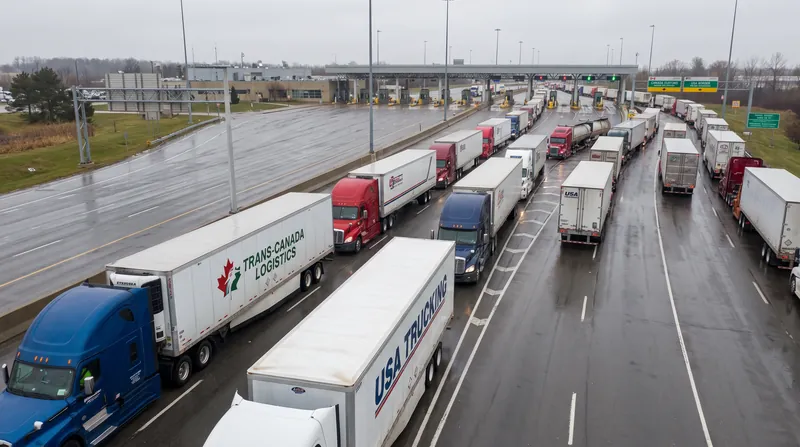
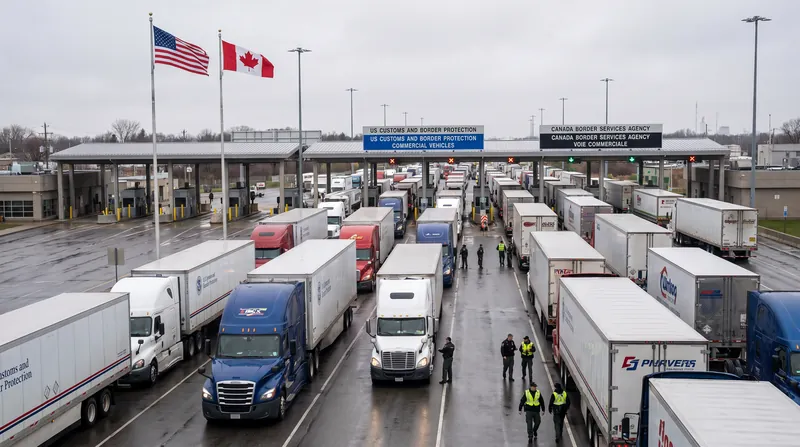
The trade dispute began on July 4, when the Trump administration formally declined to renew the United States-Mexico-Canada Agreement during its mandated six-year review, activating a sunset clause. On August 6, President Trump invoked Section 338 of the 1930 Tariff Act to levy 50 percent tariffs on $20 billion of Canadian imports, alleging Canada discriminates against American dairy, alcohol, and motor vehicle exports. The tariffs took effect at 12:01 a.m. on Saturday, August 22, after last-minute negotiations failed, leaving Canadian electronics and plastics sectors with the heaviest immediate exposure. In response, Canadian Prime Minister Mark Carney suspended trade talks and promised dollar-for-dollar retaliation.
The conflict escalated on August 24, when Trump announced a 50 percent tariff on all Canadian vehicles, auto parts, and steel, effective January 1, 2027. Shares of major automakers, including Ford and Stellantis, dropped 4 percent. The U.S. also implemented a 50 percent tariff on Canadian dairy and agricultural goods that same day. Ontario Premier Doug Ford threatened to cut off electricity and critical minerals to the U.S., though Alberta rejected the strategy. On August 28, Canada announced counter-tariffs ranging from 15 percent to 50 percent on $27.6 billion CAD of U.S. imports, effective September 8, paired with a $7.5 billion CAD relief package. By September 4, Honda began shifting production of its high-volume SUVs to U.S. plants to avoid the upcoming auto tariffs.
The U.S. executive actions faced domestic and international pushback. By August 29, Congress was drafting bipartisan legislation to revoke Section 338. On September 12, Trump threatened to ban Canadian aerospace manufacturer Bombardier from selling jets in the U.S. unless it shifted production domestically, drawing opposition from Republican senators in Kansas who cited the U.S. military's reliance on Bombardier airframes. Despite the friction, Canadian commercial real estate investors accelerated U.S. asset purchases, deploying $9 billion over the 12 months ending in June. On September 18, the European Union formally offered Canada 'associate membership' to integrate its economy into the European single market. Carney embraced the proposal, while Trump threatened the EU with reciprocal tariffs if it absorbed Canadian market share.
The fourth round of U.S.-Mexico trade talks was postponed indefinitely on September 28. A U.S. import ban on Canadian alcohol, dairy, molasses, and motorcycles then took effect at 12:01 a.m. ET on Tuesday, September 29, targeting approximately $1 billion in cross-border trade. Trump predicted Canada would agree to a new trade deal within weeks, claiming Canadian officials were eager to negotiate. However, Canadian Trade Minister Dominic LeBlanc's office stated their focus remained on diversifying partnerships away from the U.S. On October 20, New Jersey-based food importer Gellert Global Group sued the Trump administration in the U.S. Court of International Trade, arguing the executive branch exceeded its authority by reviving Section 338.
On October 24, the Trump administration exempted Canadian plywood and appliances from the 50 percent import tariffs to ease economic pressure in Maine and support Republican Senator Susan Collins's re-election campaign. Simultaneously, the U.S. added new duties on Canadian valves and carpets. Trump announced that a trade agreement with Mexico was nearing completion, and on October 25, White House economic adviser Kevin Hassett stated that the U.S. and Canada were 'very close' to finalizing a bilateral trade agreement following a week of active negotiations.