
Amtrak Breaks Ground on $1 Billion Sunnyside Yard Facility to Support New Airo Fleet
Amtrak has begun major construction on a $1 billion maintenance facility at Sunnyside Yard in Queens, New York. The project will support the introduction of the new Airo trainsets and improve turnaround times for Northeast Corridor services.
By Aarav Khanna

Share this story
Amtrak has officially broken ground on a $1 billion maintenance facility at Sunnyside Yard in Queens, New York. The massive infrastructure project is designed to service the incoming fleet of Airo trainsets, which are slated to replace passenger cars that have been in operation for over half a century. The groundbreaking marks the transition of the Sunnyside Yard modernization from the planning phase into major construction, setting the stage for a sweeping overhaul of how trains are inspected and serviced on the East Coast.[1][2][4]
The physical scope of the project focuses on expanding the yard's capacity to handle modern equipment. The modernization effort includes the construction of a new two-track maintenance and inspection facility, along with six new tracks dedicated to servicing and cleaning trains under a protective canopy. Additionally, 11 existing service platforms will be brought to a state of good repair, allowing crews to efficiently clean, prepare, and store trainsets when they are not in active passenger service.[1][3][4]
Beyond the tracks themselves, Amtrak plans to consolidate the yard's scattered support functions into a single, cohesive footprint. The project will bring together commissary operations, employee workspaces, material storage, and parking into a centralized modular office compound. This unified approach is expected to significantly improve operational efficiency and working conditions for the yard's staff, ultimately reducing the time trains spend out of service and speeding up daily turnaround cycles.[2][3]
The project represents a combined investment of more than $1 billion, primarily funded by Congress through grants administered by the Federal Railroad Administration (FRA). Federal Railroad Administrator David Fink highlighted the project as a critical infrastructure investment that prioritizes long-term reliability over short-term fixes, noting that the facility will reduce maintenance downtime and help usher in a new era of dependable passenger rail service.[2][4]
While the first Northeast Regional Airo trainset completed manufacturing in May 2026 and is expected to enter revenue service in 2027, the Sunnyside Yard facility operates on a separate, phased timeline. Construction will progress in stages, with the new maintenance, inspection, and cleaning capacities opening incrementally through 2030. Because the project is a maintenance and servicing development rather than a new passenger boarding terminal, Amtrak does not expect the construction to cause significant disruptions to current passenger schedules.[1][2]
The project is being delivered through an accelerated design-build model by a Scalamandre-Citnalta joint venture, with industrial engineering services provided by EXP. The design incorporates sustainable elements tailored to the new fleet, including pantograph electrification systems for consistent traction power and specialized refueling infrastructure for the hybrid Airo trains, which utilize clean diesel to reduce particulate emissions in the dense urban environment of Queens.[5]
Sunnyside Yard is the fifth and largest major maintenance facility to enter major construction over the past two years as part of Amtrak's nationwide fleet modernization program. It joins similar projects already underway in Philadelphia, Seattle, Washington, D.C., and Boston, all aimed at preparing the network's backend infrastructure for the Airo rollout. A sixth facility is currently in the design phase for Rensselaer Yard in upstate New York.[1][3][4]
The strategic location of Sunnyside Yard makes the upgrade particularly vital for the broader network. The East River Tunnels linking the yard to Penn Station carry more than 450 Amtrak, Long Island Rail Road, and NJ Transit trains on a typical day. By upgrading the maintenance infrastructure just east of this critical chokepoint, Amtrak aims to deliver a more resilient and comfortable travel experience for millions of passengers across the Northeast Corridor and state-supported routes.[2][5]
Where opinion splits
Federal and State Officials
Policymakers view the project as a necessary investment in regional mobility and economic growth.
Federal and state transportation officials emphasize that the Sunnyside Yard modernization is a critical step in clearing the backlog of deferred maintenance on the Northeast Corridor. FRA Administrator David Fink and local congressional representatives argue that the $1 billion investment will directly translate to fewer delays and a more resilient supply chain. By funding these heavy maintenance shops, policymakers aim to ensure that the broader introduction of the Airo fleet is not bottlenecked by inadequate servicing infrastructure.
Rail Passenger Advocates
Passenger advocacy groups highlight the direct benefits to the daily commuter experience.
Organizations like the Rail Passengers Association view the groundbreaking as a tangible victory for riders who have long endured the consequences of aging equipment. Advocates point out that while maintenance yards are not as glamorous as new station concourses, they are the backbone of reliable service. A modern facility that can quickly clean, inspect, and turn around trainsets means fewer equipment swaps, fewer late departures from Penn Station, and a consistently higher quality of travel for the millions who rely on the corridor.
Key points
- Amtrak has broken ground on a $1 billion maintenance facility at Sunnyside Yard in Queens.
- The project includes a new two-track inspection facility and six service and cleaning tracks.
- The yard will service the incoming Airo trainsets, which are scheduled to enter revenue service in 2027.
- Construction will proceed in phases, with the facility expected to be fully operational by 2030.
How we got here
1910
Sunnyside Yard opens as the principal storage facility for the Pennsylvania Railroad.
2025
Amtrak awards design-build contracts for three major East Coast rail yard modernizations.
August 2026
Amtrak breaks ground on the $1 billion Sunnyside Yard maintenance facility.
2027
The first new Airo trainsets are scheduled to enter revenue service on the Northeast Corridor.
2030
The Sunnyside Yard maintenance facility is expected to be fully completed.
- Amtrak and Federal Regulators
- Focused on modernizing backend infrastructure to support new fleets and improve long-term reliability.
- Engineering and Construction Partners
- Focused on the technical execution, sustainability, and phased delivery of the complex yard upgrades.
- Passenger Advocates and Industry Observers
- Focused on how the infrastructure improvements will translate to fewer delays and a better rider experience.
Perspectives this story doesn't cover
- Local Queens residents regarding construction noise and traffic
- Commuter rail operators (LIRR, NJ Transit) sharing the yard
Sources
Source coverage
5 outlets
3 viewpoints surfaced



- [1]Deep ArrivalAmtrak and Federal Regulators
Amtrak Sunnyside Yard Starts $1B Airo Maintenance Build
Read on Deep Arrival → - [2]Railway SupplyEngineering and Construction Partners
Amtrak Sunnyside Yard maintenance facility underway
Read on Railway Supply → - [3]Trains.comPassenger Advocates and Industry Observers
Amtrak breaks ground on New York maintenance facility
Read on Trains.com → - [4]AmtrakAmtrak and Federal Regulators
Amtrak and Partners Break Ground on New Train Maintenance Facility in New York City
Read on Amtrak → - [5]WikipediaPassenger Advocates and Industry Observers
Sunnyside Yard
Read on Wikipedia →
More in Transportation
See all →Rail Infrastructure
Amtrak and CN Sign Eight-Year Operating Agreement, Resolving Decade-Long Regulatory Dispute
5 sources
Oversight Audit
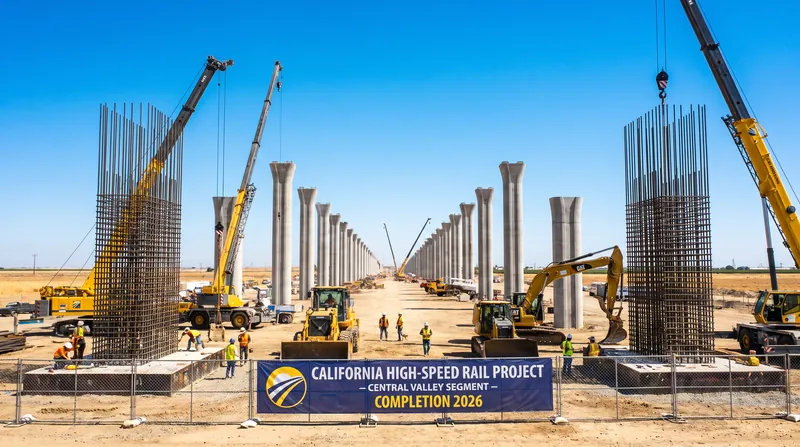
Inspector General Finds California High-Speed Rail Paid $600,000 in Unallowable Consultant Travel Expenses
6 sources
Freight Rail Safety
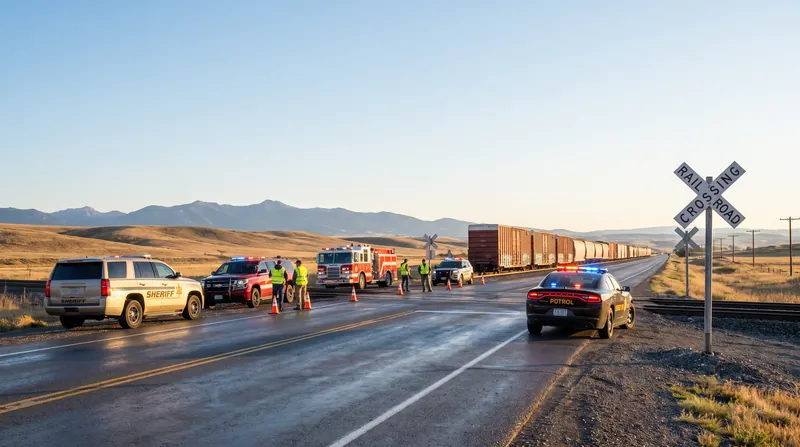
Multi-Car Train Derailment in Montana Prompts Precautionary Evacuations With No Hazardous Spills
5 sources
Break of Gauge
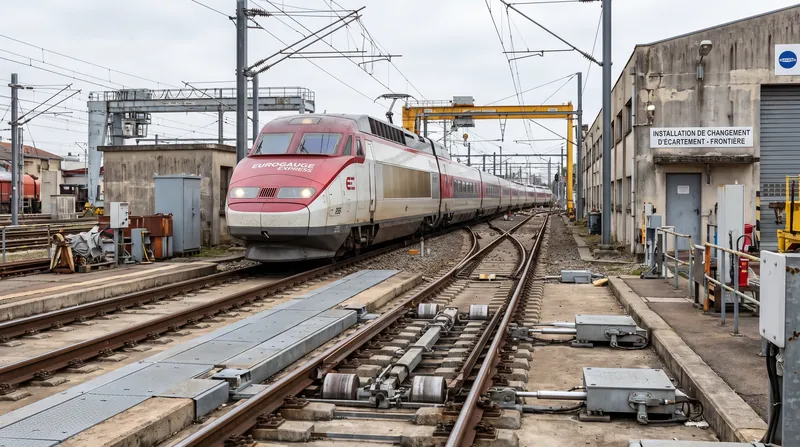
Rebuild the Track or Rebuild the Train: The Engineering Behind Variable-Gauge Railways
5 sources
Comments
Every angle. Every day.
Get Transportation stories with full source coverage and perspective breakdowns, free every day.