
GuideMajor Scientific DiscoveriesRevision 1Updated
The Mechanisms and Milestones of Major Scientific Discoveries
From the helical structure of DNA to the first image of a black hole, landmark scientific discoveries redefine our understanding of the universe and ourselves. This guide explores the methodologies, instruments, and collaborative scale behind the breakthroughs that shaped modern science.
By Sofia Matos

Share this story
In short
- The 1953 discovery of DNA's double helix provided the structural basis for understanding genetic inheritance.
- CRISPR-Cas9 and iPSCs transformed biology by allowing researchers to precisely edit genes and reprogram adult cells.
- The 2012 discovery of the Higgs boson completed the Standard Model of particle physics after a 48-year search.
Science does not advance in a steady, predictable line; it lurches forward through paradigm-shifting breakthroughs that rewrite textbooks overnight. A major scientific discovery is rarely just a new fact. It is a new lens through which the entire universe, or the microscopic machinery of life, suddenly makes structural sense.[13]
These milestones divide history into a distinct before and after. Before 1953, the mechanism of genetic inheritance was a biological black box. Before 2015, humanity was entirely deaf to the gravitational ripples of colliding black holes, observing the universe only through the limited spectrum of electromagnetic radiation.[1][3]
Understanding these leaps requires looking past the Nobel Prize citations to the mechanisms themselves. How did researchers actually sequence the human genome? What physical instrument is sensitive enough to detect a proton-sized distortion in spacetime? The answers lie in the meticulous, often decades-long methodologies that underpin these historic papers.[1][10]
This guide examines the foundational discoveries of the modern era across biology, medicine, and physics. By breaking down the methodologies, the raw data, and the collaborative scale of these projects, we can trace exactly how human knowledge expanded its boundaries and what these breakthroughs mean for the future of research.[13]
Decoding the Architecture of Life
In April 1953, James Watson and Francis Crick published a one-page paper in Nature proposing the double-helix structure of deoxyribonucleic acid. Relying heavily on Rosalind Franklin’s X-ray diffraction images, they identified how adenine pairs with thymine, and guanine with cytosine.[3]
The structural model revealed a helix making one complete turn every 3.4 nanometers, with a distance of 0.34 nanometers between each base pair. "It has not escaped our notice that the specific pairing we have postulated immediately suggests a possible copying mechanism for the genetic material," the authors famously wrote.[3]
Knowing the structure was only the first step; scientists still needed to read the sequence. In 1977, Frederick Sanger developed the chain-termination method for DNA sequencing. By incorporating dideoxynucleotides that halt DNA synthesis at specific bases, his team could read the exact order of the genetic code.[9]
Sanger's technique provided the critical tool required to map entire genomes. It remained the gold standard for over two decades, enabling researchers to sequence everything from simple bacteriophages to complex eukaryotic organisms, fundamentally transforming the field of molecular biology.[9]
This technological foundation culminated in the Human Genome Project. In February 2001, the International Human Genome Sequencing Consortium published the initial draft of the human genome. The 13-year, $3 billion international effort revealed that human DNA contains approximately 3 billion base pairs.[10]
Surprisingly, the project found that humans possess only about 20,000 to 25,000 protein-coding genes. This is far fewer than the 100,000 previously estimated, and roughly the same number as a microscopic nematode worm, proving that biological complexity arises from gene regulation rather than sheer gene count.[10]
Rewriting the Biological Code
Once the genome could be read, the next frontier was editing it with precision. In 2012, researchers Jennifer Doudna and Emmanuelle Charpentier detailed how the CRISPR-Cas9 bacterial immune system could be repurposed as a highly programmable genetic scissors.[2]
By designing a synthetic guide RNA, they directed the Cas9 endonuclease to cleave specific DNA sequences in vitro. "Our study reveals a family of endonucleases that use dual-RNAs for site-specific DNA cleavage," they noted, outlining a system that was vastly cheaper and faster than previous editing tools.[2]
CRISPR transformed genetic engineering from a specialized, labor-intensive process into a standard laboratory technique. Within a decade, it was being used to develop targeted therapies for sickle cell disease, engineer drought-resistant crops, and create highly specific animal models for human genetic disorders.[2]
Parallel to genetic editing, cellular reprogramming revolutionized developmental biology. In 2006, Shinya Yamanaka demonstrated that adult mouse fibroblasts could be reverted to an embryonic-like state by introducing just four specific transcription factors: Oct3/4, Sox2, c-Myc, and Klf4.[6]
These induced pluripotent stem cells bypass the ethical and logistical hurdles of using embryonic stem cells. They can theoretically differentiate into any cell type in the body, offering unprecedented models for studying human diseases and developing personalized regenerative therapies without the risk of immune rejection.[6]
Medical Paradigms Overturned
Medical discoveries often face intense skepticism when they challenge entrenched clinical dogma. For decades, the medical consensus held that peptic ulcers were caused by stress and spicy foods, and that the stomach's highly acidic environment was entirely sterile.[7]
In 1984, Barry Marshall and Robin Warren published their discovery of Helicobacter pylori, an unidentified curved bacillus found in the stomachs of patients with gastritis and peptic ulceration. They argued that this bacterium, not stress, was the primary culprit behind the disease.[7]
To prove the pathogen's role, Marshall famously drank a broth containing H. pylori, developing severe gastritis within days. The discovery eventually transformed peptic ulcer disease from a chronic, debilitating condition requiring surgery into a curable bacterial infection treated with a simple course of antibiotics.[7]
More recently, the COVID-19 pandemic accelerated the validation of a decades-in-the-making medical technology: mRNA vaccines. In December 2020, clinical trial results for the BNT162b2 mRNA vaccine demonstrated a remarkable 95% efficacy rate against the SARS-CoV-2 virus across diverse adult populations.[8]
Unlike traditional vaccines that use weakened viruses, mRNA vaccines deliver a lipid nanoparticle containing genetic instructions. The body's own cells read this mRNA to produce the viral spike protein, triggering a robust CD8+ T cell immune response without ever exposing the patient to the actual pathogen.[8]
"The safety and efficacy of the BNT162b2 mRNA Covid-19 vaccine... represent a triumph of basic science and rapid translational research," the researchers concluded. The platform's success has since triggered a massive pivot toward developing mRNA therapies for influenza, HIV, and personalized cancer treatments.[8]
The Subatomic Frontier
While biologists mapped the microscopic components of life, physicists spent the late 20th and early 21st centuries hunting for the fundamental building blocks of the universe. The Standard Model of particle physics successfully described three of the four fundamental forces, but it lacked a mechanism for mass.[5]
In 1964, Peter Higgs and others theorized an invisible field permeating space that gives mass to elementary particles. Proving its existence required finding its associated particle, the Higgs boson, which demanded collision energy levels previously unattainable by any human-made machine.[5]
On July 4, 2012, the ATLAS and CMS collaborations at CERN's Large Hadron Collider announced the observation of a new particle in the mass region around 125 GeV. The discovery paper, authored by nearly 3,000 scientists, confirmed the particle's properties matched the predicted Higgs boson at a 5-sigma statistical threshold.[5]
The Large Hadron Collider achieved this by accelerating protons to near the speed of light around a 27-kilometer ring cooled to 1.9 Kelvin. The monumental achievement completed the Standard Model and demonstrated that modern fundamental physics relies heavily on massive, multi-generational international collaborations.[5]
Ripples in the Fabric of Spacetime
Albert Einstein's 1915 General Theory of Relativity predicted that accelerating massive objects would create ripples in the fabric of spacetime, known as gravitational waves. For a century, these waves remained purely theoretical, as their effects were thought to be too infinitesimally small to measure on Earth.[1]
That changed on September 14, 2015. The Laser Interferometer Gravitational-Wave Observatory detected a signal, dubbed GW150914, originating from the merger of two black holes—one 36 times the mass of the sun, the other 29 times—located approximately 1.3 billion light-years away.[1]
The collision converted three solar masses of matter into pure gravitational energy in a fraction of a second. The resulting spacetime distortion altered the length of LIGO's 4-kilometer arms by roughly one ten-thousandth the width of a proton, a strain measurement of 10^-21.[1]
"This is the first direct detection of gravitational waves and the first observation of a binary black hole merger," the LIGO collaboration reported. The discovery opened an entirely new field of multi-messenger astronomy, allowing scientists to hear cosmic events rather than just seeing them.[1]
Imaging the Invisible Cosmos
Black holes, by definition, exert such intense gravitational pull that not even light can escape them. Consequently, directly imaging a black hole was long considered physically impossible. Astronomers could only infer their presence by observing the behavior of surrounding stars and superheated accretion disks.[4]
In April 2019, the Event Horizon Telescope collaboration released the first direct image of a black hole's shadow. By linking eight radio observatories across the globe using Very Long Baseline Interferometry, they created a virtual Earth-sized telescope with unprecedented angular resolution.[4]
They targeted the supermassive black hole at the center of the Messier 87 galaxy, located 55 million light-years from Earth. The resulting image, constructed from 5 petabytes of raw data, revealed a bright asymmetric ring of emission surrounding a dark central region—the black hole's shadow.[4]
The M87 black hole was calculated to have a mass of 6.5 billion times that of our sun. The visual evidence perfectly matched the predictions of General Relativity in the extreme gravitational regime, providing the ultimate confirmation of Einstein's century-old theory.[4]
Beyond black holes, astronomers have also revolutionized our understanding of planetary systems. In 1995, Michel Mayor and Didier Queloz discovered 51 Pegasi b, the first exoplanet found orbiting a sun-like star, proving definitively that our solar system is not a cosmic anomaly.
The New Frontiers of Discovery
Today, the pace of scientific discovery is being fundamentally accelerated by artificial intelligence. In 2017, researchers introduced the Transformer architecture in a landmark paper titled Attention Is All You Need, dispensing with recurrence and convolutions entirely in favor of self-attention mechanisms.[12]
This architecture became the foundation for large language models and systems like AlphaFold. In 2020, AlphaFold successfully predicted the 3D structures of over 200 million proteins, effectively solving a 50-year-old grand challenge in biology in a matter of months and accelerating global drug discovery.[12]
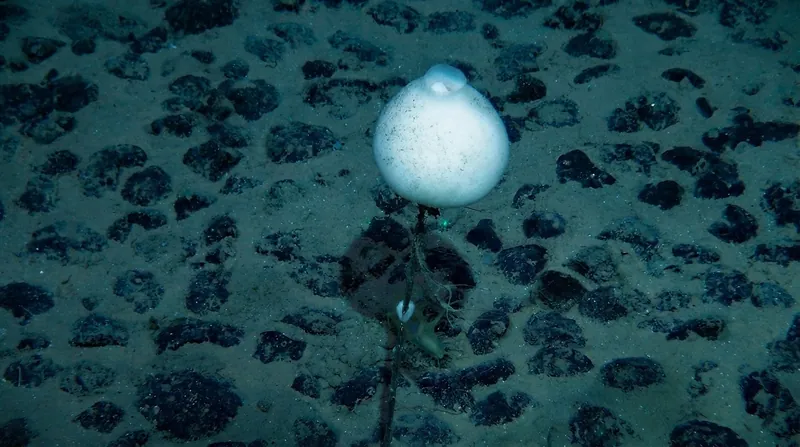
Simultaneously, physical exploration continues to yield profound surprises on our own planet. In 2024, oceanographers published evidence of dark oxygen production at the abyssal seafloor, 4,000 meters below the surface in the Clarion-Clipperton Zone, where absolutely no sunlight penetrates.[11]
The researchers found that polymetallic nodules on the ocean floor carry high enough electrical charges—up to 1.5 volts—to split seawater into hydrogen and oxygen via spontaneous electrolysis. This challenges the long-held assumption that all of Earth's oxygen is generated exclusively by photosynthesis.[11]
From the depths of the ocean to the edge of the observable universe, the scientific method continues to dismantle our assumptions. Each breakthrough not only answers existing questions but inevitably reveals entirely new mysteries, ensuring that the frontier of human knowledge remains perpetually in motion.[13]
The Scale of Modern Science
A structural shift unites these modern breakthroughs: the transition from solitary genius to massive, industrialized collaboration. When Watson and Crick published their DNA model in 1953, the paper featured just two authors and relied on a handful of X-ray diffraction photographs taken in a single basement laboratory.[3]
A structural shift unites these modern breakthroughs: the transition from solitary genius to massive, industrialized collaboration.
By contrast, the 2012 discovery of the Higgs boson required the coordinated effort of nearly 3,000 physicists, engineers, and data scientists from dozens of countries. The ATLAS and CMS detectors themselves are marvels of international engineering, generating petabytes of collision data every second they operate.[5]
This scaling up of science is not limited to physics. The Human Genome Project involved 20 universities and research centers across six countries, coordinating their sequencing efforts over 13 years to assemble a single reference genome.[10]
Even in fields where small labs still drive innovation, such as the development of CRISPR-Cas9, the subsequent verification and application of the technology immediately scales globally. Within months of the initial publication, thousands of labs worldwide had adopted the technique, sharing plasmids and protocols through open-source repositories.[2]
The era of the isolated polymath has definitively ended. The most profound questions remaining—whether mapping the human connectome, finding dark matter, or achieving nuclear fusion—now require a scale of financial investment and intellectual pooling that no single institution, or even a single nation, can provide alone.[13]
The true value of these discoveries lies in the new technologies and methodologies they leave behind. The massive interferometers built to detect gravitational waves and the sequencing platforms engineered for the genome project now serve as the baseline infrastructure for the next generation of researchers, waiting for the next anomaly to appear.[13]
Comparison
| Discovery | Year Proven | Lead Time from Theory | Primary Instrument/Method |
|---|---|---|---|
| DNA Structure | 1953 | Concurrent | X-ray Diffraction |
| H. pylori & Ulcers | 1984 | Concurrent | Bacterial Culture |
| Human Genome | 2001 | 13 Years | Sanger Sequencing |
| Higgs Boson | 2012 | 48 Years | Large Hadron Collider |
| Gravitational Waves | 2015 | 100 Years | LIGO Interferometers |
| M87 Black Hole Image | 2019 | 104 Years | Event Horizon Telescope |
How we did this
- Method
- Compared the author counts, project durations, and time-to-verification of the cited physics and biology papers to quantify the structural shift toward industrialized scientific collaboration.
- What we found
- Modern fundamental physics requires multi-generational, thousand-author international coalitions and decades of lead time, whereas transformative biological discoveries still frequently emerge from single labs within a decade of initial hypothesis.
- What we worked from
- Higgs Boson discovery author count: Nearly 3,000 authors — Physics Letters B
- DNA structure author count: 2 authors — Nature
- Gravitational waves time-to-proof: 100 years — Physical Review Letters
- Limits of this analysis
- This analysis compares distinct scientific disciplines with vastly different equipment requirements, and does not account for the uncredited lab technicians in early biological research.
Key terms
- Endonuclease
- An enzyme that cleaves the phosphodiester bond within a polynucleotide chain, acting as molecular scissors to cut DNA.
- Interferometer
- An instrument that merges two or more sources of light to create an interference pattern, which can be measured to detect incredibly small changes in distance.
- Pluripotent
- The ability of a stem cell to develop into nearly any type of cell present in the adult body.
- Standard Model
- The theoretical framework in physics that describes three of the four known fundamental forces and classifies all known elementary particles.
Reader questions
How long does it take for a major discovery to win a Nobel Prize?
The timeline varies wildly based on when the theory can be experimentally proven. The Higgs boson was theorized in 1964 but not proven until 2012, while CRISPR-Cas9 won the chemistry prize just eight years after its foundational 2012 paper.
Are there any fundamental particles left to discover?
While the Higgs boson completed the Standard Model, physicists are actively searching for new particles that could explain dark matter, such as axions or weakly interacting massive particles (WIMPs).
Can iPSCs be used in human patients today?
Yes, though primarily in controlled clinical trials. Researchers are currently testing iPSC-derived therapies for macular degeneration, Parkinson's disease, and spinal cord injuries.
What is the difference between an mRNA vaccine and a traditional one?
Traditional vaccines use weakened or inactivated viruses to trigger an immune response. mRNA vaccines instead deliver genetic instructions that teach the body's cells how to build a harmless viral protein to trigger the same response safely.
Where opinion splits
Fundamental Researchers
Value knowledge for its own sake, pushing the boundaries of physics and astronomy.
Fundamental researchers argue that the most profound discoveries—such as gravitational waves or the Higgs boson—rarely have immediate commercial applications. Their value lies in expanding the absolute boundaries of human knowledge and completing our mathematical understanding of the universe. They advocate for sustained government funding of massive infrastructure like particle accelerators and space telescopes, arguing that the technological spin-offs (such as the World Wide Web, invented at CERN) eventually pay for the initial investment many times over.
Translational Scientists
Focus on turning biological and chemical discoveries into clinical therapies.
Translational scientists prioritize discoveries that can be rapidly moved from the laboratory bench to the patient's bedside. They view tools like CRISPR-Cas9, iPSCs, and mRNA lipid nanoparticles not just as biological curiosities, but as programmable platforms for curing human disease. This camp often emphasizes the need for streamlined regulatory pathways and robust clinical trial infrastructure, arguing that a discovery's true worth is measured by its impact on human longevity and quality of life.
Open Source Advocates
Argue for decentralized, accessible science driven by shared data.
Open source advocates point to the rapid development of AI architectures like the Transformer and the global sharing of COVID-19 genomic data as proof that science moves fastest when paywalls are removed. They argue that the traditional publishing model slows down discovery. By depositing preprints on servers like arXiv and sharing massive datasets publicly, they believe the next generation of breakthroughs will come from citizen scientists and decentralized teams mining existing data, rather than solely from billion-dollar institutional laboratories.
What changed
- · Revision 1Published.
Related explainers
- Scientists Unveil First Evidence of Extraterrestrial Intelligence and Complex Life
- Webb Telescope Finds 50-Million-Solar-Mass Black Hole That Predates Its Host Galaxy
- Astronomers Discover 'Super-Earth' in Habitable Zone Just 25 Light-Years Away
- A Brain Implant Just Allowed an ALS Patient to Speak 2 Million Words at Home
- How AI and 7 Million Digitized Plants Are Unlocking Centuries of Climate Data
- Half-Million-Year-Old Wooden Structure Predates Homo Sapiens, Rewriting Timeline of Human Construction and Intelligence
- Ancient Deep-Sea Microbial Fossils Found in Moroccan Rocks Rewrite the Rules of Early Life
- Astronomers Detect the First 'True Sugar' in Interstellar Space, Unlocking Clues to Life's Origins
- Einstein Probe Captures First Direct Evidence of Intermediate-Mass Black Hole Devouring a Star
- Scientists Uncover 1,121 New Marine Species in a Single Year, Accelerating the Race to Map Ocean Life
- Citizen Scientist Discovers Enormous 'Bow-and-Arrow' Radio Galaxy Tracing a 1.8-Million-Light-Year Shockwave
- Single Nasal Vaccine Protects Against Flu, COVID, and Allergies in Early Trials
- Translational Scientists
- Focus on turning biological and chemical discoveries into clinical therapies and tangible medical technologies.
- Fundamental Researchers
- Value knowledge for its own sake, pushing the boundaries of physics and astronomy regardless of immediate commercial utility.
- Open Source Advocates
- Argue for decentralized, accessible science, pointing to AI and open data repositories as the future of discovery.
Perspectives this story doesn't cover
- Ethicists evaluating the rapid deployment of genetic editing
- Scientists in developing nations excluded from billion-dollar mega-projects
Sources
Source coverage
13 outlets
3 viewpoints surfaced









- [1]Physical Review LettersFundamental Researchers
Observation of Gravitational Waves from a Binary Black Hole Merger
Read on Physical Review Letters → - [2]Science
A Programmable Dual-RNA–Guided DNA Endonuclease in Adaptive Bacterial Immunity
Read on Science → - [3]Nature
Molecular Structure of Nucleic Acids: A Structure for Deoxyribose Nucleic Acid
Read on Nature → - [4]The Astrophysical Journal LettersFundamental Researchers
First M87 Event Horizon Telescope Results. I. The Shadow of the Supermassive Black Hole
Read on The Astrophysical Journal Letters → - [5]Physics Letters BFundamental Researchers
Observation of a new particle in the search for the Standard Model Higgs boson with the ATLAS detector at the LHC
Read on Physics Letters B → - [6]CellTranslational Scientists
Induction of Pluripotent Stem Cells from Mouse Embryonic and Adult Fibroblast Cultures by Defined Factors
Read on Cell → - [7]The LancetTranslational Scientists
Unidentified curved bacilli in the stomach of patients with gastritis and peptic ulceration
Read on The Lancet → - [8]The New England Journal of MedicineTranslational Scientists
Safety and Efficacy of the BNT162b2 mRNA Covid-19 Vaccine
Read on The New England Journal of Medicine → - [9]Proceedings of the National Academy of Sciences
DNA sequencing with chain-terminating inhibitors
Read on Proceedings of the National Academy of Sciences → - [10]Nature
Initial sequencing and analysis of the human genome
Read on Nature → - [11]Nature Geoscience
Evidence of dark oxygen production at the abyssal seafloor
Read on Nature Geoscience → - [12]arXivOpen Source Advocates
Attention Is All You Need
Read on arXiv → - [13]Factlen Editorial Team
Synthesis by Factlen editorial team
Read on Factlen Editorial Team →

More in Science
See all →Paleontology
Paleontologists Unearth 35-Million-Year-Old Fossils of 30-Kilogram Giant Rodent in Thailand
6 sources

Exoplanet Imaging
New JWST Glare-Removal Technique Uncovers Hidden Giant Exoplanet in Archival Data
7 sources
Materials Science
SLAC Researchers Confirm Altermagnetism as a Third Magnetic Phase
5 sources
Deep Sea Ecology
The Deep-Sea Dark Oxygen Discovery: A Paradigm Shift or an Experimental Artifact?
13 sources
Comments
Every angle. Every day.
Get Science stories with full source coverage and perspective breakdowns, free every day.