
Guidelocal travel and tourismRevision 1Updated
The Hidden Rules and Standards That Shape Global Travel
From aircraft cabin thermodynamics to strict border financial thresholds, an invisible architecture of international regulations governs the modern travel experience.
By Lan Xu

Share this story
In short
- Aircraft cabins are kept at 15 percent humidity to prevent exhaled moisture from freezing against the fuselage.
- Federal regulations require commercial aircraft to be capable of a full evacuation in 90 seconds using half the exits.
- The 100-milliliter liquid limit is a global standard enforced by ICAO Annex 17, not a local airport rule.
The global travel industry is a massive economic engine, but its daily operations are governed by a hidden architecture of strict regulations, thermodynamic limits, and international standards. From the exact humidity level in a commercial aircraft cabin to the precise price ceiling of a value meal in Tokyo, invisible rules shape every aspect of the modern journey.[15]
These standards do not exist by accident. They are the result of decades of engineering, security crises, and economic policy. The World Travel & Tourism Council tracks the sheer scale of this movement, noting its multi-trillion-dollar impact in its 2026 Economic Impact Research.[7]
Yet, the individual traveler rarely sees the mechanics beneath the surface. They experience the cold air of a flight, the hassle of a liquid ban at security, or the rigorous knowledge of a local guide without knowing the specific mandates that created them.[15]
Understanding these underlying rules does more than satisfy curiosity. It makes you a more capable traveler, equipping you to navigate border controls without risking civil forfeiture, to choose the right insurance limits, and to recognize the global standards that keep tourism functioning safely.[15]
This guide serves as the definitive foundation for understanding local travel and tourism. It breaks down the core pillars of the industry, from the physics of aviation and the strict borders of international finance, to the gold standards of hospitality and the thermodynamic realities of leisure flight.[15]
The Economic Engine of Domestic and Global Travel
Tourism is a structural pillar of the global economy, heavily reliant on the stability of domestic markets. The OECD's Tourism Trends and Policies 2024 report highlights that domestic travel often shields destinations from international volatility, providing a reliable baseline of revenue during geopolitical or economic crises.[1]
According to UN Tourism, domestic tourism accounts for a massive share of the industry's total volume. Their guidelines emphasize that seizing these opportunities requires robust infrastructure, targeted marketing, and unified reporting.[2]
To measure this vast impact accurately, the United Nations established the International Recommendations for Tourism Statistics in 2008. This ensures every country counts arrivals and expenditures using a unified framework, allowing for accurate global comparisons.[8]
In Europe, Eurostat data from November 2026 shows that the characteristics of tourism trips are heavily skewed toward short, domestic stays. These trips distribute wealth beyond major capital cities, supporting rural and coastal economies that rely entirely on seasonal influxes.[3]
In the United States, the U.S. Travel Association forecasts steady growth, driven by both business and leisure sectors. The National Park Service alone generates billions in economic contributions, as visitor spending ripples through gateway communities, supporting local jobs, restaurants, and infrastructure.[4][6]
Similarly, VisitBritain highlights the critical role of domestic holidays in sustaining the UK's hospitality sector, noting that local spending is the lifeblood of regional tourism. As UN Tourism notes in its guide for policy makers, "Making tourism more sustainable is not just about controlling environmental impacts, but ensuring long-term economic viability for host communities."[5][9]
Aviation Physics: Why Cabins Are Cold, Dry, and Dim
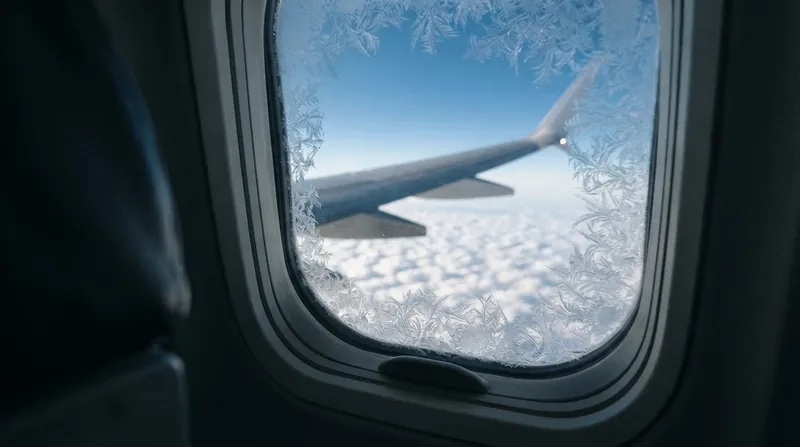
When you board a commercial flight, you enter a highly engineered microclimate. Aircraft cabins are notoriously dry, with relative humidity often capped between 5 and 15 percent, making the air drier than the Sahara Desert. This is not a design flaw, but a structural necessity to prevent fuselage freezing.[15]
During a flight, each passenger exhales roughly 100 grams of water vapor per hour. If the cabin were properly humidified, that moisture would diffuse through the insulation and contact the freezing outer skin of the aircraft, condensing into frost.[15]
When the aircraft descends into warmer air, that hidden frost melts. Over time, trapped condensation can add hundreds of pounds of dead weight to an airframe, increasing fuel burn and risking severe corrosion. To prevent this, airlines maintain bone-dry cabins, forcing passengers to hydrate manually.[15]
Cabin temperature is also deliberately suppressed, typically hovering around 68 degrees Fahrenheit. Research shows that warm cabin air, combined with the lower oxygen levels at a simulated altitude of 8,000 feet, significantly increases the risk of passenger hypoxia and fainting.[15]
Then there is the lighting. Federal regulations require that any commercial aircraft with more than 44 seats must be fully evacuated within 90 seconds. Under 14 CFR 25.803, the Federal Aviation Administration mandates that "it must be shown that the maximum seating capacity... can be evacuated from the airplane to the ground under simulated emergency conditions within 90 seconds."[14][15]
This standard, established in 1967 following crash and fire tests on a Douglas DC-7 and a Lockheed L-1649, dictates how crews prepare the cabin for landing. Dimming the cabin lights during night takeoffs and landings allows passengers' retinal rod cells to adapt to the dark.[14][15]
If an emergency occurs and the main power fails, passengers will already have their night vision, allowing them to follow the floor-proximity escape path lighting to the exits. The 90-second rule is rigorously tested.[15]
In March 2006, Airbus put 873 people inside a brand-new A380 in a darkened hangar. Using only half the exits, everyone reached the ground in just 78 seconds, proving the massive aircraft met the strict certification standard.[15]
Global Security and Border Thresholds
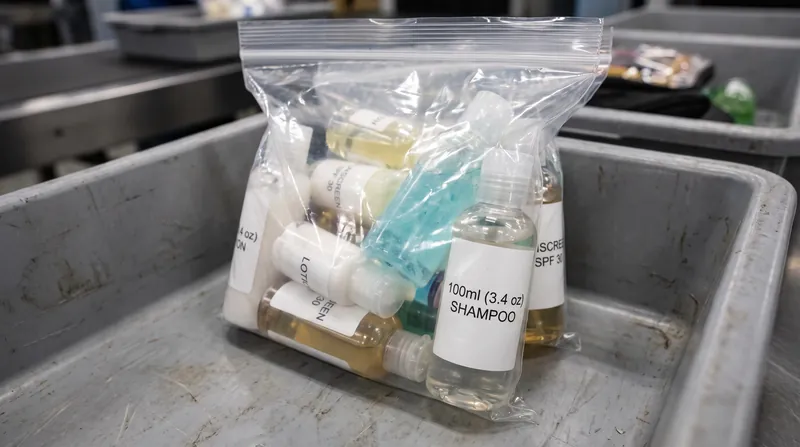
Aviation security is governed by international agreements, most notably ICAO Annex 17. This standard mandates the universal 100-milliliter limit on carry-on liquids, a rule introduced globally following a disrupted 2006 terrorist plot involving liquid explosives in the United Kingdom.[14]
The 100-milliliter rule is not a local airport policy, but a strict baseline enforced across jurisdictions. Every container must fit inside a single 1-liter transparent, resealable plastic bag, roughly 20 centimeters by 20 centimeters.[14]
While some airports with advanced CT scanners are beginning to relax this rule, allowing up to 2-liter containers to remain in bags, the ICAO standard remains the default for most of the world. Travelers must plan for the strictest checkpoint on their itinerary, especially during international connections.[14]
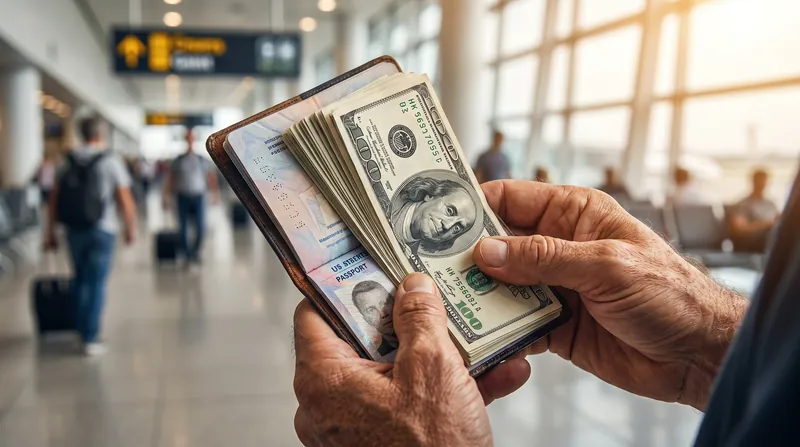
Financial borders are equally strict. The United States does not limit how much money a traveler can carry, but FinCEN Form 105 requires the declaration of any currency or monetary instruments exceeding $10,000. This applies to both inbound and outbound travel under 31 U.S.C. § 5316.[16]
The $10,000 threshold is an aggregate limit for families traveling together. If a family carries $12,000 total, they cannot split it among members to avoid reporting. This illegal practice, known as structuring, is a federal offense.[16]
Failing to file the Currency and Monetary Instruments Report can trigger accidental civil forfeiture, where Customs seizes the entire amount. Travelers often misunderstand what counts as a monetary instrument, which includes traveler's checks, endorsed money orders, and bearer bonds.[16]
Ignorance of the aggregation rules is not a valid defense against seizure, and penalties can include fines up to $500,000 and ten years in prison. This makes FinCEN 105 a critical compliance hurdle for international travelers.[16]
The Gold Standards of Hospitality and Guiding
When you reach your destination, a different set of standards takes over. The Blue Flag beach award is a prime example. To fly the ubiquitous blue pennant, a municipality must meet 33 strict criteria covering water quality, safety, and environmental management.[11]
The foundation of the Blue Flag, which started in France in 1985, is the EU Bathing Water Directive 2006/7/EC. This directive requires water quality to test as "Excellent" based on strict microbiological thresholds for E. coli and intestinal enterococci.[11]
A single failure on any mandatory criterion means the flag is revoked. In addition to water quality, Blue Flag beaches must provide at least five environmental education activities per season, ensure wheelchair access, and maintain strict zoning to protect local biodiversity.[11]
In the culinary world, the Michelin Guide enforces its own rigorous standards. Originally launched in 1900 by the French tire company to encourage driving, the guide is now the ultimate arbiter of fine dining. While famous for its stars, Michelin also awards the Bib Gourmand.[11]
To qualify for a Bib Gourmand, introduced in 1997, a restaurant must offer a three-course meal below a specific price ceiling. Because the guide is global, this ceiling adjusts for local purchasing power: roughly $40 in US cities, €36 in most European cities, and ¥5,000 in Tokyo.[11]
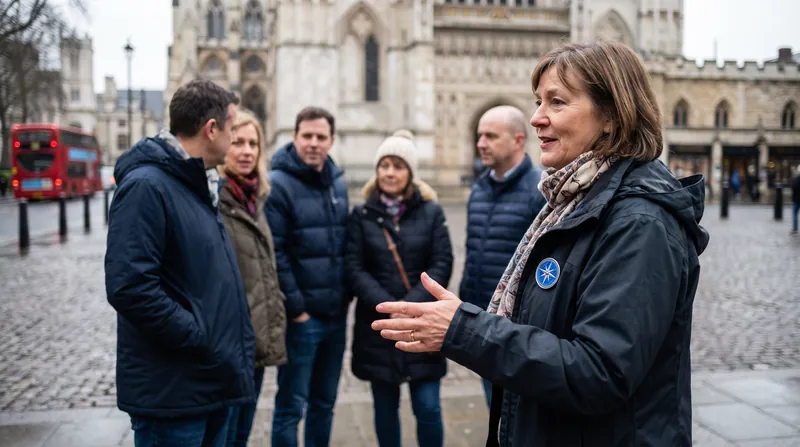
For cultural immersion, the UK's Blue Badge tourist guides represent the pinnacle of the profession. Earning this credential requires a minimum of 600 hours of study, including 360 contact hours, often spread over two years, and passing seven grueling written and practical exams.[10]
Administered by the Institute of Tourist Guiding, the Blue Badge grants guides exclusive lecturing rights at major sites like Westminster Abbey and the Tower of London. The practical exams are notoriously difficult, requiring candidates to guide live tours at the National Gallery and the British Museum.[10]
The Thermodynamics of Leisure Flight
Not all travel regulations are written by governments; some are dictated by physics. Commercial hot air balloon flights are strictly limited by the thermodynamics of liquid propane and the principles of Charles's Law, which states that gas volume is directly proportional to temperature.[12]
A hot air balloon rises because the burner heats the air inside the envelope, increasing the kinetic energy of the gas molecules. The air inside reaches between 90°C and 120°C. As the volume expands, the density drops below that of the cooler outside air, creating buoyant lift.[12]
A typical commercial balloon carrying eight passengers weighs approximately 1,500 kilograms at takeoff. The envelope is constructed from massive panels of polyester or nylon, with a fire-resistant Nomex section near the burner. To lift this mass, the burner must produce between 2 and 10 million BTU per hour.[12]
However, this process relies on vaporizing liquid propane from heavy, pressurized stainless steel cylinders. As the liquid propane evaporates to feed the burner, it pulls heat from the remaining liquid, causing the temperature and pressure inside the tank to drop significantly.[12]
This thermodynamic chilling effect creates a strict ceiling for flight duration. If the pressure drops too low, the burner cannot produce enough heat to maintain lift. Consequently, most commercial hot air balloon journeys are physically limited to under 120 minutes.[12]
To fly longer, a balloon would need more propane, which adds massive dead weight and requires an even larger envelope. To descend, the pilot either waits for the air to cool naturally or pulls a rope to open a vent at the top of the envelope, releasing hot air.[12]
Protecting the Trip: The Three Buckets of Travel Insurance
With so many variables in play, protecting a trip's financial investment is crucial. Travel insurance policies are complex contracts that divide coverage into three distinct buckets: trip cancellation, emergency medical, and baggage.[13]
Trip cancellation is a pre-departure benefit that reimburses 100 percent of prepaid, non-refundable costs if a traveler cancels for a listed reason, such as illness, injury, or severe weather. It does not cover changing your mind, unless you purchase a "Cancel for Any Reason" upgrade.[13]
A Cancel for Any Reason upgrade typically refunds 50 to 75 percent of the trip cost but must be purchased within a strict window, usually 14 to 21 days after the initial trip deposit. Similarly, a pre-existing medical condition waiver must be purchased within this same short window.[13]
The medical bucket is arguably the most critical for international travel. Standard domestic health insurance and Medicare rarely provide coverage overseas. Travel medical insurance pays for hospital stays and includes emergency evacuation, which can cost anywhere from $20,000 to over $100,000 if a specialized medical flight is required.[13]
Experts recommend securing evacuation limits between $100,000 and $500,000, especially when traveling to remote destinations. This bucket also strictly excludes high-risk activities like skydiving or backcountry skiing unless a specific hazardous sports rider is added to the policy.[13]
Finally, baggage coverage reimburses travelers for lost, stolen, or damaged items. However, this bucket contains strict single-article limits. If a policy has a $500 per-item cap, a stolen $2,000 laptop will only yield a $500 reimbursement, making it vital to keep high-value electronics in a carry-on bag.[13]
Understanding these distinct buckets allows travelers to set their medical and evacuation limits first, ensuring their physical safety is funded, before comparing the prices of the cancellation and baggage benefits. It is the final layer of preparation in navigating the complex architecture of global travel.[13]
Key terms
- FinCEN Form 105
- The federal document required to report the international transportation of currency or monetary instruments exceeding $10,000.
- Charles's Law
- A thermodynamic principle stating that the volume of a gas expands proportionally as its temperature increases.
- Cancel for Any Reason (CFAR)
- An insurance upgrade that partially reimburses trip costs if canceled for reasons not covered by a standard policy.
- Bib Gourmand
- A Michelin Guide award recognizing restaurants that serve exceptionally good food at moderate prices.
- Security Tamper-Evident Bag (STEB)
- A specialized sealed bag used by duty-free shops to allow passengers to carry large liquids through security checkpoints.
Reader questions
Why do my ears pop on an airplane?
Cabin pressure is maintained at an altitude equivalent of 8,000 feet. This lower pressure causes the air trapped in your inner ear to expand and contract during ascent and descent, creating the popping sensation.
Can I bring duty-free liquids on a connecting flight?
Yes, but only if they remain sealed in an official Security Tamper-Evident Bag (STEB) with the receipt visible. However, local airport rules may still force you to place them in checked baggage during a transfer.
Does travel insurance cover a hurricane?
Yes, if the storm makes your destination uninhabitable or halts flights. However, you must purchase the policy before the storm is officially named by meteorological agencies.
What happens if I don't declare cash at the border?
Failing to file FinCEN Form 105 for amounts over $10,000 can result in civil forfeiture, where Customs seizes the entire sum, alongside potential criminal penalties for structuring.
Where opinion splits
Aviation Regulators
Prioritize passenger survivability and strict safety thresholds over in-flight comfort.
For aviation authorities like the FAA and EASA, the primary goal of cabin design is survivability, not luxury. The 90-second evacuation rule, established in 1967, dictates everything from seat pitch minimums to the dimming of cabin lights. Regulators argue that maintaining a cold, dry cabin and enforcing strict lighting protocols are non-negotiable safety measures that prevent hypoxia and ensure passengers are physically prepared to navigate a smoke-filled fuselage.
Hospitality Standard-Bearers
Believe that rigorous, uncompromising criteria are essential to maintaining global trust in tourism brands.
Organizations like the Foundation for Environmental Education (which runs the Blue Flag program) and the Michelin Guide maintain their authority through strict, unyielding criteria. They argue that a single failure—whether it is a drop in water quality or a meal that exceeds the local price cap—must result in the immediate revocation of the award. This rigidity ensures that a Blue Flag beach in Spain offers the exact same baseline of safety and cleanliness as one in South Africa.
Travel Insurers
Emphasize risk mitigation and strict contractual definitions to manage the financial unpredictability of global travel.
The travel insurance industry operates on precise definitions of risk. Insurers argue that dividing coverage into distinct buckets—cancellation, medical, and baggage—allows them to offer affordable premiums while capping their exposure. They rely on strict single-article limits and pre-existing condition look-back periods to prevent fraud, maintaining that travelers must read the fine print to understand exactly what financial risks they are assuming.
What changed
- · Revision 1Published.
Related explainers
- Why Airlines Cap Cabin Humidity Below 15 Percent to Prevent Fuselage Freezing
- Inside the Blue Badge: The Two-Year Gauntlet Behind London's Elite Tourist Guides
- Blue Flag Beach Standards Impose 33 Strict Rules on Water Quality and Infrastructure
- The 40-Dollar Ceiling: How Michelin's Bib Gourmand Actually Adjusts for Local Purchasing Power in Global Cities
- The Biological Reason Airlines Dim Cabin Lights for the 90-Second Evacuation Window
- FinCEN 105 Rules: Why the $10,000 Border Threshold Triggers Accidental Civil Forfeiture
- Why Travel Insurance Divides Coverage Across Cancellation, Medical, and Baggage Contracts
- Why Counter-Current Fuel Combustion Limits Commercial Hot Air Balloons to 120-Minute Flights
- The 100-Milliliter Limit: How the ICAO Annex 17 Standard Actually Dictates Carry-On Liquid Restrictions at Global Airports
- Aviation Regulators
- Prioritize passenger survivability and strict safety thresholds over in-flight comfort.
- Hospitality Standard-Bearers
- Believe that rigorous, uncompromising criteria are essential to maintaining global trust in tourism brands.
- Travel Insurers
- Emphasize risk mitigation and strict contractual definitions to manage the financial unpredictability of global travel.
- Budget-Conscious Travelers
- Seek maximum value and rely on awards like the Bib Gourmand to navigate expensive global cities.
Perspectives this story doesn't cover
- Airline cabin crew
- Local tourism operators
Sources
Source coverage
16 outlets
4 viewpoints surfaced










- [1]OECD
OECD Tourism Trends and Policies 2024
Read on OECD → - [2]UN Tourism
Understanding Domestic Tourism and Seizing its Opportunities
Read on UN Tourism → - [3]Eurostat
Tourism statistics - characteristics of tourism trips
Read on Eurostat → - [4]U.S. Travel Association
U.S. Travel Forecast
Read on U.S. Travel Association → - [5]VisitBritain
Domestic tourism: latest results
Read on VisitBritain → - [6]National Park Service
Visitor Spending Effects - Economic Contributions of National Park Visitor Spending
Read on National Park Service → - [7]World Travel & Tourism Council
Economic Impact Research (EIR)
Read on World Travel & Tourism Council → - [8]United Nations
International Recommendations for Tourism Statistics 2008
Read on United Nations → - [9]UN Tourism
Making Tourism More Sustainable - A Guide for Policy Makers
Read on UN Tourism → - [10]WikipediaTravel Insurers
Blue Badge tourist guide
Read on Wikipedia → - [11]WikipediaTravel Insurers
Michelin Guide
Read on Wikipedia → - [12]WikipediaTravel Insurers
Hot air balloon
Read on Wikipedia → - [13]WikipediaTravel Insurers
Travel insurance
Read on Wikipedia → - [14]WikipediaTravel Insurers
Aviation security
Read on Wikipedia → - [15]WikipediaTravel Insurers
Financial Crimes Enforcement Network
Read on Wikipedia → - [16]Factlen Editorial TeamBudget-Conscious Travelers
Synthesis by Factlen editorial team
Read on Factlen Editorial Team →
More in Travel
See all →Aviation Security
The 100-Milliliter Limit: How the ICAO Annex 17 Standard Actually Dictates Carry-On Liquid Restrictions at Global Airports
6 sources
Guide Certification
Inside the Blue Badge: The Two-Year Gauntlet Behind London's Elite Tourist Guides
2 sources
Travel Logistics
The Definitive Guide to International Travel Destinations and Planning
13 sources

Aviation Engineering
Why Airlines Cap Cabin Humidity Below 15 Percent to Prevent Fuselage Freezing
3 sources
Comments
Every angle. Every day.
Get Travel stories with full source coverage and perspective breakdowns, free every day.