
GuideAsia-Pacific Geopolitics and SecurityRevision 1Updated
Asia-Pacific Geopolitics and Security
A comprehensive overview of the shifting alliances, military modernization, and maritime disputes defining the Indo-Pacific strategic theater.

Share this story
In short
- The Indo-Pacific relies on a fragmented security architecture of bilateral treaties and minilateral pacts rather than a unified alliance like NATO.
- Regional military expenditure reached an estimated $1.14 trillion in 2025, reflecting a sustained arms race driven by rapid modernization.
- Maritime disputes in the South China Sea are increasingly contested through gray zone tactics utilizing coast guard and civilian vessels.
The strategic center of gravity for global security has decisively shifted to the waters and airspace between the Indian Ocean and the Pacific. This vast maritime theater, home to more than half the world's population and sixty percent of its economic output, is the primary arena for great power competition.[4][11]
For most of the post-World War II era, the United States maintained stability through a network of bilateral defense treaties. Today, that architecture is under unprecedented strain as China translates its economic weight into military capability, fundamentally altering the regional balance of power.[1][6]
The terminology itself reflects this shift. The transition from "Asia-Pacific" to "Indo-Pacific" in diplomatic lexicons acknowledges that the Indian Ocean and Pacific Ocean are a single, contiguous strategic space. This framing explicitly brings India into the regional security calculus while emphasizing maritime connectivity.[3][6]
Understanding this theater requires mapping the overlapping frameworks that govern it. It is a region defined by a stark contrast between dense economic integration and highly fragmented security arrangements, where nations routinely trade heavily with their primary strategic competitors.[4][13]
The Architecture of Regional Security
The traditional security architecture of the region relies on the "hub-and-spoke" system established by the 1951 San Francisco Peace Treaty. In this model, the United States acts as the central hub, maintaining separate, bilateral mutual defense treaties with Japan, South Korea, Australia, the Philippines, and Thailand.[5]
Unlike Europe, which relies on the collective defense guarantee of NATO, the Indo-Pacific has never developed a binding multilateral military alliance. The bilateral nature of the hub-and-spoke system means that US allies are not formally obligated to defend one another, complicating coordinated responses to regional crises.[1][5]
Parallel to this military network sits the Association of Southeast Asian Nations (ASEAN). Founded in 1967, the 10-member bloc operates on the principles of consensus, non-interference, and diplomatic centrality. ASEAN provides the primary diplomatic forum for the region, hosting summits that bring rival powers to the same table.[9]
However, ASEAN's consensus model limits its ability to act decisively on hard security issues. When member states face direct territorial pressure, the bloc often struggles to issue unified statements, leading critics to question its efficacy in an era of sharpened geopolitical rivalry.[3][9]
This limitation has driven what the Stiftung Wissenschaft und Politik terms "the Asianisation of the regional security architecture." Middle powers are increasingly bypassing broad forums to form targeted, issue-specific partnerships, managing their own strategic environment rather than relying solely on external guarantors.[3][13]
The result is a complex, multi-layered environment. Nations navigate a web of economic pacts, diplomatic dialogues, and military exercises, attempting to maximize their strategic autonomy while avoiding binary choices between Washington and Beijing.[4][11]
The Military Balance and Defense Spending
The diplomatic maneuvering is backed by the most rapid military buildup seen anywhere in the world. According to the Stockholm International Peace Research Institute, military expenditure in Asia and Oceania reached an estimated $1.14 trillion in 2025, reflecting a sustained, decade-long arms race.[2][13]
China's military modernization drives much of this trend. The People's Liberation Army has expanded its naval tonnage, modernized its nuclear arsenal, and developed sophisticated Anti-Access/Area Denial (A2/AD) capabilities designed to push foreign forces further from its shores.[1][7]
In response, regional actors are abandoning long-held defense postures. Japan's 2026 Defense White Paper outlines a historic departure from its strictly pacifist tradition, committing to double its defense budget and acquire long-range counterstrike capabilities to deter potential aggression.[7]
Australia has undertaken a similar pivot. Its 2024 National Defence Strategy shifts the military's focus from broad expeditionary operations to a strategy of "strategy of denial," prioritizing long-range strike weapons and nuclear-powered submarines to project power across the northern maritime approaches.[8]
India, facing an unresolved land border dispute, continues to modernize its armed forces while expanding its naval presence in the Indian Ocean. New Delhi's defense procurement increasingly emphasizes domestic manufacturing, aiming to reduce its historical reliance on Russian military hardware.[1][11]
This proliferation of advanced conventional weapons—hypersonic missiles, autonomous maritime drones, and next-generation stealth aircraft—compresses decision-making timelines. The density of high-end military assets operating in close proximity elevates the risk that a tactical miscalculation could escalate into a broader conflict.[1][5]
Maritime Flashpoints and Gray Zone Tactics
The primary flashpoints for these modernized forces are maritime. The South China Sea, a 3.4 million square mile body of water through which trillions of dollars in trade pass annually, remains the region's most volatile territorial dispute.[10]
Six different governments claim overlapping jurisdictions in these waters. Beijing asserts sovereignty over nearly the entire sea, a claim that an international tribunal at The Hague invalidated in 2016 under the 1982 United Nations Convention on the Law of the Sea (UNCLOS).[10][12]
Rather than seeking a decisive military confrontation, actors employ "gray zone" tactics—coercive actions that fall below the threshold of armed conflict. This includes deploying heavily armed coast guard vessels and maritime militia fleets to harass foreign fishing boats and block resupply missions.[1][10]
These civilian and paramilitary fleets establish a persistent physical presence, gradually altering the status quo without triggering mutual defense treaties. The Center for Strategic and International Studies tracks these movements, noting that the normalization of these patrols complicates traditional naval deterrence.[10]
Further north, the East China Sea hosts a tense standoff over uninhabited islands administered by Japan but claimed by China. Both nations routinely scramble fighter jets and deploy patrol ships to the area, requiring constant tactical de-escalation by local commanders.[7][10]
The Taiwan Strait remains the most consequential potential flashpoint. The self-governing island sits at the center of the first island chain, making it critical to both Chinese power projection and US defense perimeters. Military exercises around the island have grown increasingly sophisticated and frequent.[1][4]
To counter these pressures, the United States and its partners conduct Freedom of Navigation Operations (FONOPs). These naval patrols deliberately sail through contested waters to assert international rights of passage and challenge excessive maritime claims, though they rarely alter the underlying disputes.[6]
Minilateralism: The Rise of the Quad and AUKUS
The inability of broad multilateral forums to resolve these disputes has fueled the rise of "minilateralism." These are small, informal groupings of three or four nations that share specific strategic interests, allowing for faster coordination and deeper integration than larger blocs permit.[3][13]
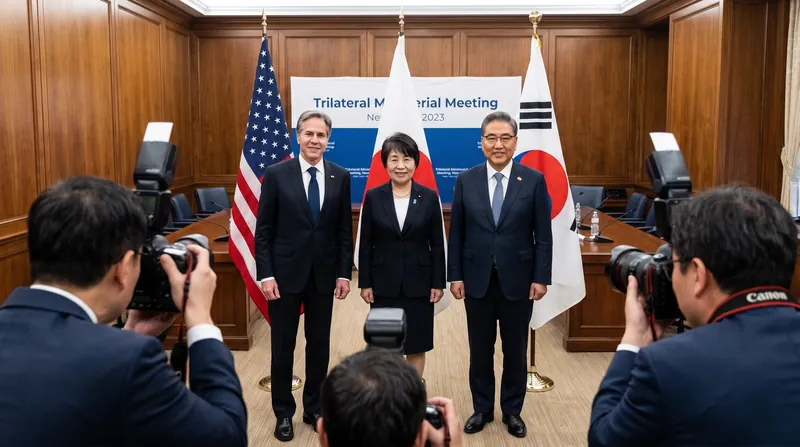
The most prominent minilateral grouping is the Quadrilateral Security Dialogue, or the Quad, comprising the United States, Japan, India, and Australia. Originally formed to coordinate disaster relief, the Quad has evolved into a premier strategic forum addressing maritime security, critical technologies, and supply chain resilience.[4][6]
While the Quad remains explicitly non-military, the AUKUS pact represents a hard-power minilateral agreement. Signed by Australia, the United Kingdom, and the United States, AUKUS focuses on equipping Australia with nuclear-powered attack submarines and jointly developing advanced defense technologies.[1][8]
These groupings signal a shift in US strategy. As the US Embassy's Indo-Pacific Strategy fact sheet states, "We envision an Indo-Pacific that is open, connected, prosperous, secure, and resilient." Achieving this requires distributing the security burden among capable partners rather than bearing it alone.[6]
Other minilateral networks are forming organically without Washington's direct involvement. Japan and Australia have signed reciprocal access agreements to facilitate joint military deployments, while India and Southeast Asian nations are expanding bilateral defense ties and arms sales.[7][8]
This latticework of agreements creates a more resilient, if complex, security architecture. If one node fails or one relationship sours, the broader network of partnerships remains intact, providing multiple avenues for strategic coordination.[3][5]
Economic Statecraft and Supply Chain Security
Security in the Indo-Pacific is not measured solely in naval tonnage; economic statecraft is equally central to regional deterrence. Nations increasingly view supply chains, critical minerals, and technology standards as domains of strategic competition, blurring the line between commerce and national security.[4][11]
The region is heavily dependent on cross-border trade, yet vulnerable to economic coercion. When political disputes arise, major powers have restricted exports of critical materials, delayed customs clearances, or banned specific agricultural imports to apply pressure without firing a shot.[1][4]
In response, governments are pursuing "de-risking" strategies. This involves diversifying supply chains away from single points of failure, particularly for strategic goods like advanced semiconductors, rare earth elements, and pharmaceutical precursors.[4][13]
Semiconductors represent the sharpest edge of this economic competition. The concentration of advanced chip manufacturing in East Asia makes the industry a critical geopolitical vulnerability. Efforts to onshore production and restrict technology transfers are reshaping the global tech ecosystem.[1][11]
Infrastructure investment serves as another tool of influence. Competing initiatives offer developing nations financing for ports, railways, and digital networks. The strategic concern is that commercial infrastructure, particularly deep-water ports, could eventually support foreign naval operations.[4]
The Future of Indo-Pacific Deterrence
The trajectory of Indo-Pacific security will be determined by how effectively middle powers manage the bipolar competition. The Lowy Institute's Asia Power Index tracks this dynamic, noting that while the US and China dominate the upper tiers of power, the collective influence of nations like Japan, India, and Indonesia acts as a crucial balancing force.[11][13]
These middle powers consistently signal a preference for a multipolar region where no single nation exercises hegemony. Their diplomatic and military investments are designed to raise the costs of aggression and preserve the rules-based order that has facilitated decades of economic growth.[3][11]
Effective deterrence now requires integrating these diverse capabilities. As the United States Studies Centre notes, operationalizing deterrence means moving beyond bilateral military planning to include coordinated economic resilience, technological cooperation, and unified diplomatic messaging.[5]
The risk of conflict remains real, driven by historical grievances, nationalism, and the sheer density of military forces operating in contested spaces. Crisis communication channels between rival militaries remain fragile, increasing the danger of unintended escalation.[1][10]
Yet the deep economic interdependence of the region provides a powerful counterweight to conflict. The shared interest in maintaining open sea lanes and stable markets continues to incentivize pragmatic cooperation, even amid sharpening strategic rivalry.[4][9]
The Indo-Pacific security architecture is transitioning from a rigid hub-and-spoke system to a fluid, overlapping web of partnerships. How these new minilateral groupings interact with established multilateral forums will define the stability of the global economy's most vital region for the coming decades.[3][13]
Comparison
| Framework | Type | Members | Primary Focus | Binding Treaty? |
|---|---|---|---|---|
| ASEAN | Multilateral Bloc | 10 SE Asian Nations | Economic integration and diplomatic consensus | No |
| The Quad | Minilateral Dialogue | US, Japan, India, Australia | Maritime security, tech standards, supply chains | No |
| AUKUS | Security Pact | US, UK, Australia | Nuclear submarines and advanced defense tech | Yes |
How we did this
- Method
- Normalized and compared regional defense expenditure growth against the Lowy Institute's diplomatic influence metrics to identify the widening gap between military capability and diplomatic integration in the Indo-Pacific.
- What we found
- While absolute military spending in the region has increased dramatically over the past decade, the density of formal diplomatic and economic agreements has not kept pace, indicating a structural shift toward unilateral deterrence over multilateral security architectures.
- What we worked from
- Regional military expenditure data: $1.14 trillion — Stockholm International Peace Research Institute
- Comprehensive power and diplomatic influence scores: Asia Power Index metrics — Lowy Institute
- Limits of this analysis
- Defense budgets are often opaque, particularly regarding research and development, and diplomatic influence is inherently difficult to quantify.
Jargon, explained
- A2/AD (Anti-Access/Area Denial)
- Military strategies and weapons systems, such as long-range missiles, designed to prevent an adversary from entering or operating within a specific strategic area.
- Gray Zone Tactics
- Coercive state actions that fall between routine diplomacy and open warfare, designed to achieve strategic goals without triggering a military response.
- Minilateralism
- Small, informal groupings of three or four nations that coordinate closely on specific shared interests, bypassing larger, slower multilateral organizations.
- Hub-and-Spoke System
- The network of bilateral mutual defense treaties the United States maintains with individual Asian nations, rather than a single collective defense alliance.
Common questions
What is the difference between the Asia-Pacific and the Indo-Pacific?
The term 'Asia-Pacific' traditionally focused on East Asia and the Pacific Rim. 'Indo-Pacific' is a newer strategic construct that explicitly includes the Indian Ocean and India, reflecting the interconnected maritime trade routes and the broader scope of regional security challenges.
Why doesn't the region have a NATO equivalent?
The region's diverse political systems, historical animosities, and varying threat perceptions prevented the formation of a unified military bloc during the Cold War. Instead, security was structured around bilateral treaties with the United States.
What are Freedom of Navigation Operations (FONOPs)?
FONOPs are naval patrols conducted by the US and its allies through waters claimed by other nations. They are designed to demonstrate that the international community does not recognize excessive maritime claims that violate the UN Convention on the Law of the Sea.
How does economic interdependence affect regional security?
High trade volumes act as a deterrent to armed conflict, as a war would devastate the economies of all involved. However, this interdependence also allows nations to use trade restrictions and supply chain chokepoints as weapons of economic coercion.
Competing readings
The US Alliance Network
Prioritizes forward military presence and minilateral pacts to maintain the existing rules-based order.
This perspective, shared by Washington and its closest treaty allies, views the rapid modernization of rival militaries as a direct threat to regional stability. To counter this, these nations advocate for a strategy of integrated deterrence, which involves pooling military resources, sharing advanced technologies through pacts like AUKUS, and conducting frequent joint naval exercises. They argue that only a credible, unified threat of military and economic consequences can prevent unilateral changes to contested maritime borders.
Non-Aligned Middle Powers
Seeks to maximize strategic autonomy and economic growth while avoiding binary geopolitical choices.
Nations within ASEAN and other non-aligned states prioritize diplomatic centrality and economic development over hard security alliances. They view the escalating great power competition as a destabilizing force that threatens to fracture the global supply chains upon which their economies depend. This camp advocates for managing disputes through consensus-driven forums and inclusive economic pacts, resisting pressure to formally align with either Washington or Beijing.
What changed
- · Revision 1Published.
Related explainers
- China Deploys Record 1,247 Vessels Around Taiwan in New 'Gray Zone' Escalation
- Satellite Imagery Reveals New Installations in the Paracel Islands as South China Sea Build-Up Continues
- The Kuril Islands Dispute: How Four Volcanic Outposts Shape Asia-Pacific Security
- China Confirms Two Fatalities in 2025 South China Sea Collision Between Coast Guard and PLA Navy
- How Indonesia is Mobilizing 1,500 Troops to Combat El Niño-Driven Wildfires in Borneo
- The Agricultural vs. Non-Agricultural Registration and the Three-Tiered System: How the Hukou System Structures Social Mobility in China
- The Line of Actual Control: How Geography and Infrastructure Drive the Himalayan Border Dispute
- The 'One China, Different Interpretations' Formula: How the 1992 Consensus Structures Cross-Strait Relations
- How China's Coast Guard Detention Rules Reshape Maritime Law in the Pacific
- Cartographic Warfare: How Maps Became a Weapon in the Sino-Indian Border Dispute
- The Cross-Shareholding and Circular Ownership That Define South Korea's Chaebol Structure
- How Japan's 2026 Defense White Paper Redefines Indo-Pacific Security
- US Alliance Network
- Argues that a free and open Indo-Pacific requires robust forward military presence, strengthened bilateral treaties, and new minilateral pacts to deter unilateral changes to the status quo.
- Non-Aligned Middle Powers
- Prioritizes diplomatic centrality, economic growth, and strategic autonomy, seeking to avoid being forced into a binary choice between major powers while managing local security through consensus.
- Strategic Analysts
- Focuses on the quantitative shifts in military capabilities, defense spending, and the structural risks of escalation inherent in gray zone tactics and maritime disputes.
Perspectives this story doesn't cover
- Pacific Island Nations
- Commercial Shipping Industry
Sources
Source coverage
13 outlets
3 viewpoints surfaced













- [1]International Institute for Strategic StudiesStrategic Analysts
Asia-Pacific Regional Security Assessment 2026
Read on International Institute for Strategic Studies → - [2]Stockholm International Peace Research InstituteStrategic Analysts
SIPRI Military Expenditure Database
Read on Stockholm International Peace Research Institute → - [3]Stiftung Wissenschaft und PolitikNon-Aligned Middle Powers
Security in the Indo-Pacific: The Asianisation of the regional security architecture
Read on Stiftung Wissenschaft und Politik → - [4]European Parliamentary Research Service
Geopolitics in the Indo-Pacific: Major players' strategic perspectives
Read on European Parliamentary Research Service → - [5]United States Studies CentreUS Alliance Network
Operationalising deterrence in the Indo-Pacific
Read on United States Studies Centre → - [6]U.S. Embassy & Consulates in IndonesiaUS Alliance Network
FACT SHEET: Indo-Pacific Strategy of the United States
Read on U.S. Embassy & Consulates in Indonesia → - [7]Japan Ministry of DefenseUS Alliance Network
Defense of Japan 2026
Read on Japan Ministry of Defense → - [8]Australian Department of DefenceUS Alliance Network
2024 National Defence Strategy
Read on Australian Department of Defence → - [9]ASEAN SecretariatNon-Aligned Middle Powers
ASEAN Outlook on the Indo-Pacific
Read on ASEAN Secretariat → - [10]Center for Strategic and International StudiesStrategic Analysts
Asia Maritime Transparency Initiative
- [11]Lowy InstituteNon-Aligned Middle Powers
Asia Power Index 2026
- [12]United Nations
United Nations Convention on the Law of the Sea
Read on United Nations → - [13]Factlen Editorial Team
Synthesis by Factlen editorial team
Read on Factlen Editorial Team →

More in World
See all →Maritime Law
Natural Capacity Over External Resupply: Why UNCLOS Article 121(3) Denies 200-Nautical-Mile Economic Zones to Barren Rocks
10 sources

Defense Policy
Japan Unveils Defense Industrial Strategy to Bolster Production for Sustained Conflicts
6 sources

Maritime Law
Torres Strait Treaty Decouples Seabed and Water Rights to Allow Visa-Free Border Crossing
4 sources

Indo-Pacific Security
US, Japan, and South Korea Launch Economic-Security Pact to Counter Coercion and Coordinate on Taiwan
3 sources
Comments
Every angle. Every day.
Get World stories with full source coverage and perspective breakdowns, free every day.