
full timeline
Valve Steam Machine pricing
Valve has closed the waitlist for the 2TB Steam Machine, warning that unprecedented memory and storage costs could force price increases on future production batches.
Follow Valve Steam Machine pricing in the Factlen app and get an alert when there is news. Get the app
Share this story
Latest report
Valve Warns of Imminent Steam Machine Price Hikes as Memory Costs Soar
Valve has closed the waitlist for the 2TB Steam Machine, warning that unprecedented memory and storage costs could force price increases on future production batches.
- Valve has closed the waitlist for the 2TB Steam Machine due to component shortages.
- The company warned that unprecedented memory and storage costs could force price hikes on future units.
- The entry-level 512GB model is now available for direct purchase without a reservation.
- Valve expects to provide another update on hardware supply and pricing in January 2027.
Valve has issued a stark warning to PC gamers regarding the future of its living-room hardware. Driven by unprecedented surges in memory and storage prices, the company can no longer guarantee the Steam Machine's production volume or its retail price.[1][2]
The immediate casualty of this supply chain crisis is the premium 2TB model. Valve has abruptly closed the waitlist for the high-capacity unit, admitting that existing customer demand already outstrips its manufacturing capabilities for the foreseeable future.[1][3]
"We are continuing to build more Steam Machine units, but memory and storage costs continue to increase at unprecedented levels," Valve stated in a November 19 community update. The announcement marks a significant shift in the company's hardware strategy.[5]
The company added a sobering caveat for prospective buyers regarding future manufacturing batches. "As a result we don't yet know the number we are able to make, and at what price we'll be able to offer them," Valve explained.[2][5]
Valve emphasized that the 2TB model in particular will be especially constrained moving forward. Even when the company manages to secure enough components to build more units, they will arrive in significantly smaller quantities than originally planned.[1][5]
The 512GB Silver Lining
For buyers willing to compromise on storage capacity, there is a temporary reprieve. Valve has successfully cleared the entire reservation queue for the entry-level 512GB Steam Machine, fulfilling all existing pre-orders for that specific configuration.[3][4]
The $1,049 base model is now available for direct purchase without a waitlist. Customers can simply add the unit to their cart on the Steam store, with shipping estimated at three to five business days.[1][4]
However, Valve warned that this open-stock status will only last until the current inventory runs dry. Once the existing 512GB units are sold, the company will mark the hardware as out of stock rather than spin up another reservation queue.[2][5]
Customers currently trapped on the frozen 2TB waitlist face a difficult choice. They can abandon their spot and purchase the available 512GB model, but doing so forfeits their place in the premium queue entirely.[1][2]
Valve noted that existing customers on the 2TB waitlist will retain their current positions in line. However, the company explicitly stated that maintaining a spot in the queue does not guarantee that every customer will eventually receive a unit.[3][5]
A Market Squeezed by Enterprise Demand
The Steam Machine's pricing crisis is a direct downstream effect of the broader technology sector's pivot toward artificial intelligence. Data center builders are aggressively buying up global supplies of DRAM and NAND storage to power massive AI infrastructure projects.[1][2]
This insatiable enterprise demand has squeezed consumer hardware manufacturers across the board, driving up the cost of essential components. Valve is simply the latest company to admit that the manufacturing math for consumer electronics no longer works.[1]
The current crisis is a continuation of the exact same supply chain issues that plagued the console's initial rollout. The Steam Machine was originally slated to launch in early 2026, but Valve was forced to delay the release until June due to early signs of the memory shortage.[1]
When the Steam Machine finally launched, the pricing already reflected these severe market pressures. The 512GB model debuted at $1,049, while the 2TB model commanded a significant premium at $1,349, neither of which included a bundled Steam Controller.[1][4]
At that time, engineers admitted that the final starting price was significantly higher than their internal targets. The cost of components had surged so aggressively that Valve had to abandon its original pricing strategy just to bring the device to market.[1]
The memory squeeze is not limited to the Steam Machine itself. Valve's broader hardware ecosystem faces similar manufacturing headwinds as the cost of essential silicon continues to climb across the entire consumer electronics industry.[1][2]
The Storage Reality for Modern Games
The overwhelming consumer preference for the 2TB model is driven by the ballooning install size of modern PC games. With major releases routinely demanding well over 100GB of storage space, a 512GB drive fills up incredibly fast.[1]
The PC Gamer report highlighted the severity of this storage crunch for modern titles. Upcoming releases like Phantom Blade Zero require an astronomical 300GB of free space just to complete the pre-install process, making smaller drives a logistical headache.[1]
While traditional PC gamers are accustomed to upgrading their own storage drives, the console-like form factor of the Steam Machine changes the equation. The out-of-the-box capacity remains a critical purchasing decision for players looking for a seamless living-room experience.[1][2]
Navigating the Hardware Uncertainty
Valve has promised to provide another update on the supply situation in January 2027. However, industry analysts project that the global memory shortage will persist well into the new year, offering little hope for a quick resolution.[3][4]
Sources
- [1]PC Gamer — Valve may raise Steam Machine prices yet again: 'Memory and storage costs continue to increase at unprecedented levels' Read on PC Gamer →
- [2]GamesRadar+ — Valve says "memory and storage costs" are so bad it won't do Steam Machine waitlists anymore, as it doesn't know how many it can make or what they'll cost Read on GamesRadar+ →
- [3]VideoCardz — Valve ends Steam Machine 2TB waitlist, 512GB model now available without reservations Read on VideoCardz →
- [4]Notebookcheck — Steam Machine 512GB can now be purchased directly, as Valve closes waitlist for the 2TB model Read on Notebookcheck →
- [5]Steam Community — Steam Machine: Reservation and waitlist updates Read on Steam Community →
What to watch
- Valve expects to provide another update on hardware supply and pricing in January 2027.
Key numbers
From: Valve Launches $1,049 Steam Machine Amid Global Memory Shortage
Charts, maps and images
Timeline
November 2026
Valve Warns of Imminent Steam Machine Price Hikes as Memory Costs Soar
June 2026
Valve Launches $1,049 Steam Machine Amid Global Memory Shortage
How the story developed
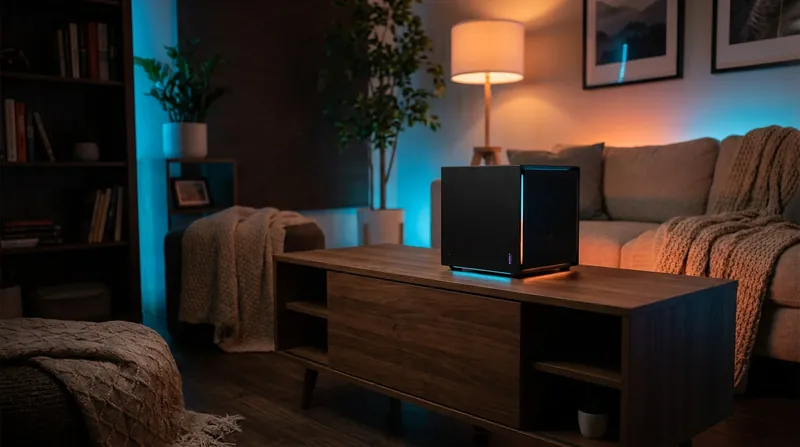
The pricing challenges for Valve's living-room PC began at its launch. On June 22, the company released the new Steam Machine with a starting price of $1,049, a figure significantly higher than initial industry estimates.
The premium price tag was driven by a global shortage of DRAM and NAND memory. This component scarcity was attributed to high demand from artificial intelligence data centers, which increased the manufacturing costs for the system.
To deliver mid-range desktop performance in a compact form factor, the system utilized a semi-custom AMD Zen 4 CPU and an RDNA 3 GPU.
Additionally, the hardware integrated AMD's AI-powered FSR 4 upscaling technology. This feature was included to help the machine achieve 4K resolutions on living room televisions despite the constraints on its physical size and components.