full timeline
US nuclear fuel cycle hub proposal
The Senate Environment and Public Works Committee is evaluating a Department of Energy initiative that offers states massive industrial investment in exchange for hosting integrated nuclear fuel and…
Follow US nuclear fuel cycle hub proposal in the Factlen app and get an alert when there is news. Get the app
Share this story
Latest report
US Senate Reviews $50 Billion Plan to Co-Locate Nuclear Reactors and Waste Storage in Regional Hubs
The Senate Environment and Public Works Committee is evaluating a Department of Energy initiative that offers states massive industrial investment in exchange for hosting integrated nuclear fuel and waste facilities.
- The Senate Environment and Public Works Committee reviewed the $50 billion Nuclear Lifecycle Innovation Campuses program on September 23.
- The initiative proposes co-locating advanced reactors, fuel recycling, and waste storage in volunteer host states.
- Six finalist states are exploring the hubs, which could generate $10 billion in local tax revenue and 25,000 jobs each.
- Experts warned that commercial fuel recycling remains economically unproven and may require continuous federal subsidies.
The push to solve the United States' nuclear waste backlog has fractured into two incompatible views of the material itself: one that sees the 90,000 metric tons of spent fuel as a hazardous liability requiring deep geological burial, and another that views it as an untapped energy asset waiting to be recycled.
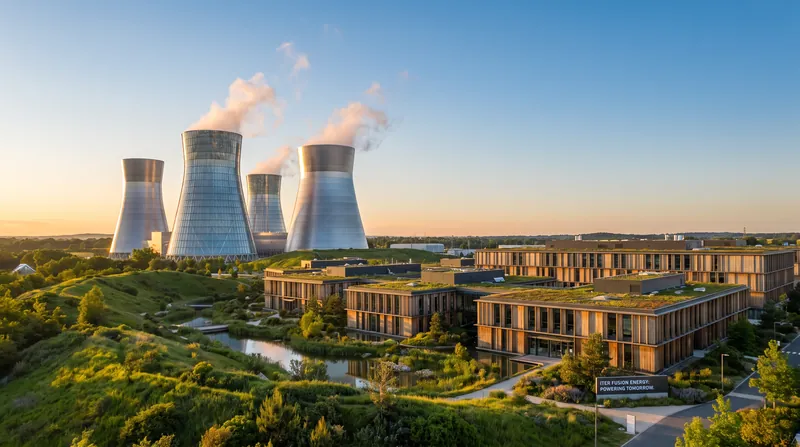
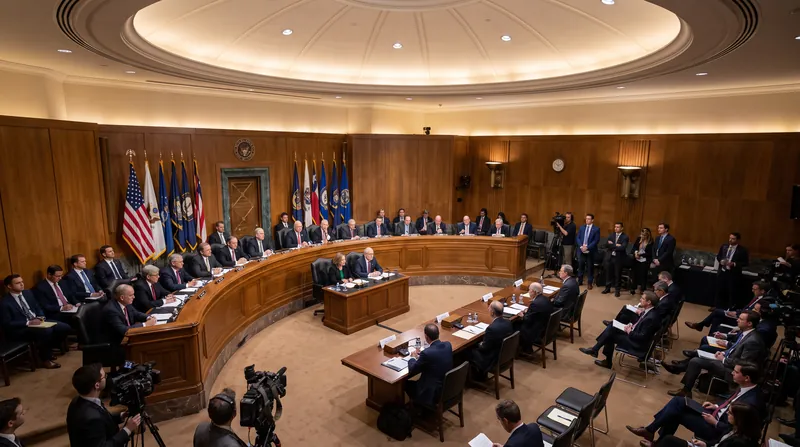
On September 23, 2026, the U.S. Senate Environment and Public Works Committee brought that tension into focus during a hearing on the Department of Energy's $50 billion Nuclear Lifecycle Innovation Campuses program. The initiative proposes co-locating advanced reactors, fuel recycling facilities, and waste storage in regional hubs, asking host states to accept the waste in exchange for massive industrial investment.[1][2][3]
Committee Chair Senator Shelley Moore Capito opened the session by declaring that the 1982 Nuclear Waste Policy Act has "failed to achieve its goals." Ratepayers have contributed more than $50 billion into the Nuclear Waste Fund over four decades, yet the federal government has not delivered a permanent disposal solution. The hearing marked a legislative pivot away from the stalled Yucca Mountain repository model toward a decentralized, consent-based approach where states volunteer to manage the fuel cycle from end to end.[2][3][4]
The Department of Energy launched the innovation campus initiative earlier this year, selecting six finalist states—Idaho, Louisiana, Oklahoma, Tennessee, Utah, and West Virginia—to explore hosting the hubs. Each campus would integrate fuel fabrication, uranium enrichment, spent fuel reprocessing, and final disposition. By clustering these operations, the federal government aims to eliminate the logistical hurdles of transporting radioactive material across state lines while providing the power needed for co-located heavy manufacturing and data centers.[1][4]
For the finalist states, the economic proposition is substantial. Proponents estimate that a single innovation campus could generate up to $10 billion in long-term local tax revenue and create 25,000 jobs. In Louisiana, local officials are already positioning the state to capture what they describe as the next big industrial play, leveraging existing infrastructure and a workforce accustomed to heavy energy projects. The Department of Energy has signed memorandums of understanding with the finalist states to continue evaluating their proposals.[1][4]
The core of the Senate's debate centers on the "back end" of the nuclear fuel cycle. The U.S. Nuclear Regulatory Commission classifies irradiated reactor fuel as high-level radioactive waste, which requires significant cooling and shielding. Currently, the nation's stockpile is stored in dry casks and pools at commercial reactor sites across the country. Lake Barrett, chair of the American Nuclear Society's Nuclear Waste Policy Task Force, testified that maintaining this temporary storage costs taxpayers and ratepayers approximately $800 million annually.[1][2][3][5]
Recycling spent fuel—a process that extracts remaining fissile material to power advanced reactors—could reduce the volume and radiotoxicity of the final waste stream. However, Kathryn Huff, a nuclear engineering professor at the University of Wisconsin-Madison, cautioned the committee that commercial fuel recycling remains economically challenging. She noted that similar reprocessing programs overseas rely heavily on government subsidies to remain viable, raising questions about the long-term financial sustainability of the campus model without continuous federal support.[1][3]
While the economic incentives are clear, the requirement to serve as a permanent or long-term storage site for nuclear waste remains a significant political hurdle. Senator John Curtis of Utah emphasized that his state's participation is strictly exploratory at this stage. State leaders are demanding greater clarity on environmental oversight, regulatory frameworks, and the precise terms of any final agreement before committing to host high-level radioactive material.[1][2]
The regulatory architecture required to oversee these integrated campuses spans multiple federal agencies. The Nuclear Regulatory Commission would serve as the primary safety regulator, but the Department of Transportation and the Environmental Protection Agency would also hold jurisdiction over specific campus operations. Witnesses at the hearing stressed that any successful policy must be built for the long term, requiring durable partnerships between the federal government and host states that can survive shifting political administrations.[2][3][5]
The Senate committee is now working to identify the most pressing legislative updates needed to reform the Nuclear Waste Policy Act and enable the campus program to proceed. The Department of Energy aims to see the first campus facilities come online as early as 2027, though that timeline depends heavily on securing congressional authorization for new disposal pathways.
Sources
- [1]Baton Rouge Business Report — Louisiana's next big industrial play could be nuclear Read on Baton Rouge Business Report →
- [2]U.S. Senate Committee on Environment and Public Works — Hearing to Examine Updating America's Nuclear Waste Management Policy Read on U.S. Senate Committee on Environment and Public Works →
- [3]ANS / Nuclear Newswire — Senate committee reviews NLIC program, nuclear waste policy Read on ANS / Nuclear Newswire →
- [4]U.S. Department of Energy — Nuclear Lifecycle Innovation Campuses Contenders Announced Read on U.S. Department of Energy →
- [5]U.S. Nuclear Regulatory Commission — Radioactive Waste
- [6]Factlen Editorial Team — Synthesis by Factlen editorial team Read on Factlen Editorial Team →
Charts, maps and images
Timeline
September 2026
US Senate Reviews $50 Billion Plan to Co-Locate Nuclear Reactors and Waste Storage in Regional Hubs
AI
August 2026
DOE Selects Five States to Explore $50 Billion Nuclear Fuel Cycle Campuses