full timeline
US drone strikes in Ecuador
A United Nations independent expert has concluded that a series of US drone strikes on Ecuadorian vessels suspected of drug trafficking plausibly meet the threshold for crimes against humanity.
Follow US drone strikes in Ecuador in the Factlen app and get an alert when there is news. Get the app
Share this story
Latest report
UN Report Finds US Strikes on Ecuadorian Fishing Boats Plausibly Constitute Crimes Against Humanity
A United Nations independent expert has concluded that a series of US drone strikes on Ecuadorian vessels suspected of drug trafficking plausibly meet the threshold for crimes against humanity. The findings escalate the legal stakes of Washington's maritime interdiction campaign as the administration signals no intent to alter its rules of engagement.
- A UN report concludes that US drone strikes on Ecuadorian fishing boats plausibly constitute crimes against humanity.
- The strikes, aimed at suspected drug trafficking vessels, resulted in the destruction of at least 11 boats in early 2026.
- The US administration defends the operations as a necessary component of its counter-narcotics strategy and plans to continue them.
- The findings escalate pressure on the Ecuadorian government, which previously suspended opposition parties over the domestic fallout.
- The UN Human Rights Council will review the findings in October to determine whether to authorize a formal commission of inquiry.
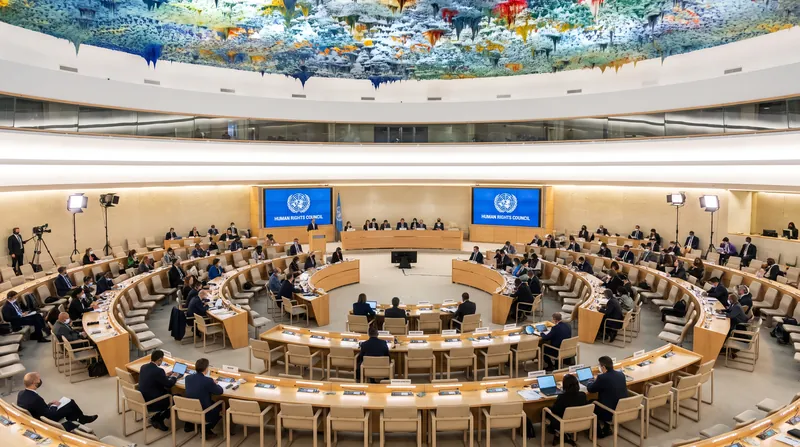
The United Nations Human Rights Council now holds the mandate to refer US maritime interdiction operations to international tribunals, following a formal report concluding that drone strikes on Ecuadorian fishing vessels plausibly constitute crimes against humanity. The Council will review the findings during its upcoming October session, where member states must decide whether to authorize a formal commission of inquiry into the attacks.[1][3]
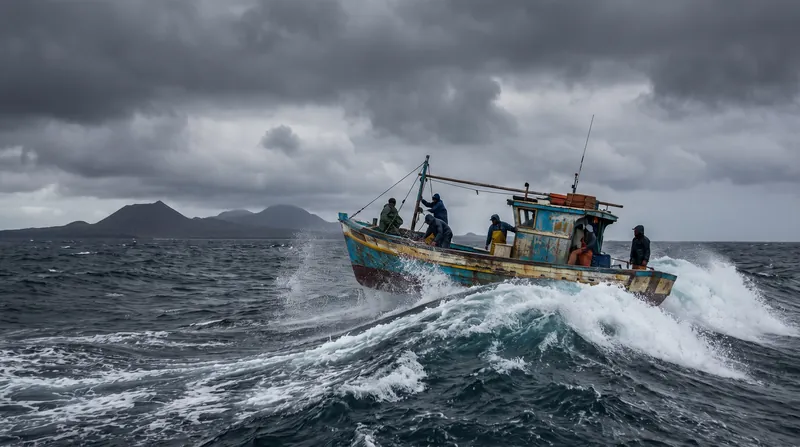
The report, authored by a UN independent expert, examines at least 11 controversial strikes conducted by US forces in early 2026 against vessels suspected of transporting narcotics off the South American coast. According to the findings, the systematic targeting of civilian infrastructure without definitive proof of hostile intent or imminent threat breaches fundamental principles of international humanitarian law.[4][5]
The available texts of the UN mandate do not provide verbatim transcripts of the expert's oral remarks in Geneva, but the structural conclusion of the filing is explicit. The assessment marks the first time an international body has formally applied the framework of crimes against humanity to the US Southern Command's expanded maritime rules of engagement.[3][6]
The Trump administration maintains that the operations are a necessary and lawful component of its aggressive counter-narcotics strategy. US officials assert that the targeted vessels were acting as logistics nodes for transnational criminal organizations, utilizing their status as fishing boats to mask the transport of illicit cargo toward North American markets.[2]
Despite the international condemnation, the administration has signaled no intention of wavering on its current operational posture. The White House retains the unilateral authority to continue the strikes under its expansive interpretation of maritime security protocols, setting up a direct confrontation with international legal bodies that lack enforcement mechanisms against non-signatories to the Rome Statute.[2]
The diplomatic fallout is particularly acute in Quito. The Ecuadorian government faces mounting domestic pressure from coastal communities and labor organizations demanding accountability for the missing and deceased fishers.[4][7]
The attacks have already triggered a severe internal political crisis. Earlier this year, the state suspended several opposition parties after they demanded a parliamentary investigation into whether the government had secretly authorized the CIA or US military to operate within its exclusive economic zone.[4]
Seafood industry representatives note that the strikes have paralyzed the local artisanal fishing sector. Crews are increasingly refusing to launch into traditional fishing grounds, citing the dual threats of cartel extortion and the risk of being misidentified as drug runners by US surveillance drones.[7]
The structural tension now centers on jurisdiction and consent. If the Ecuadorian government formally acknowledges that it did not authorize the strikes, the US operations could be classified as acts of aggression under international law.[1][4]
Conversely, if Quito admits to providing tacit approval, state officials could face domestic prosecution for complicity in the deaths of their own citizens. The political survival of the current administration hinges on maintaining ambiguity regarding its coordination with Washington.[4]
The UN report's publication forces a procedural timeline. The Human Rights Council's October review will determine whether the preliminary findings are elevated to the International Criminal Court for a jurisdictional assessment.[3][5]
While the United States does not recognize the ICC, the court's recent willingness to issue warrants against officials of non-member states ensures the legal threat remains a substantive diplomatic lever. The decision in Geneva will dictate whether the strikes remain a bilateral dispute or escalate into a structural test of international maritime law.[3][5]
Sources
- [1]Truthout — US's Boat Strikes Are “Plausibly” Crimes Against Humanity, UN Report Says Read on Truthout →
- [2]The Guardian — US strikes on Ecuadorian fishing boats raise humanitarian concerns but Trump admin not wavering Read on The Guardian →
- [3]CBC News — U.S. strikes on boats alleged to be carrying drugs may be 'crimes against humanity,' UN expert says Read on CBC News →
- [4]teleSUR — Ecuador Boat Strikes: 11 Controversial Attacks Deepen Legal Crisis Read on teleSUR →
- [5]Anadolu Agency — UN expert warns US boat strikes could amount to crimes against humanity Read on Anadolu Agency →
- [6]Al Jazeera — UN expert says US strikes on alleged drug boats may be crimes against humanity Read on Al Jazeera →
- [7]SeafoodSource — Attacks on Ecuadorian fishers in early 2026 continue to leave more questions than answers Read on SeafoodSource →
Charts, maps and images
Timeline
September 2026
UN Report Finds US Strikes on Ecuadorian Fishing Boats Plausibly Constitute Crimes Against Humanity
AI
August 2026
Ecuador Suspends Opposition Parties as Reports Allege CIA Drone Strikes on Fishing Vessels
AI