full timeline
US-China space arms race
The U.S.
Follow US-China space arms race in the Factlen app and get an alert when there is news. Get the app
Share this story
Latest report
US Space Force Confirms Deployment of Orbital Weapons as China Warns of Space Arms Race
The U.S. military has formally acknowledged deploying operational counter-space systems in orbit, prompting immediate diplomatic pushback from Beijing and Moscow over the militarization of the space domain.
- The U.S. Space Force has officially acknowledged the deployment of operational weapons in Earth's orbit.
- China issued a strong diplomatic warning, accusing the U.S. of accelerating a space arms race.
- Russia echoed the condemnation, citing concerns over the militarization of the cosmos.
- The specific capabilities of the U.S. weapons—whether electronic, directed-energy, or kinetic—remain classified.
- The announcement shifts space from a theoretical conflict zone to an active military theater.
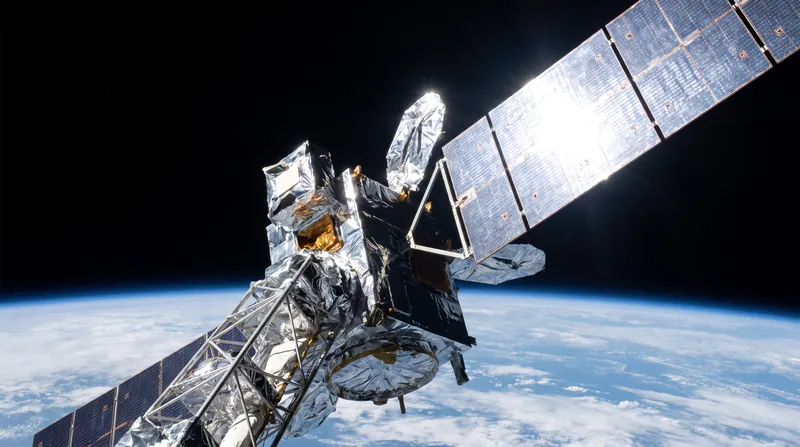
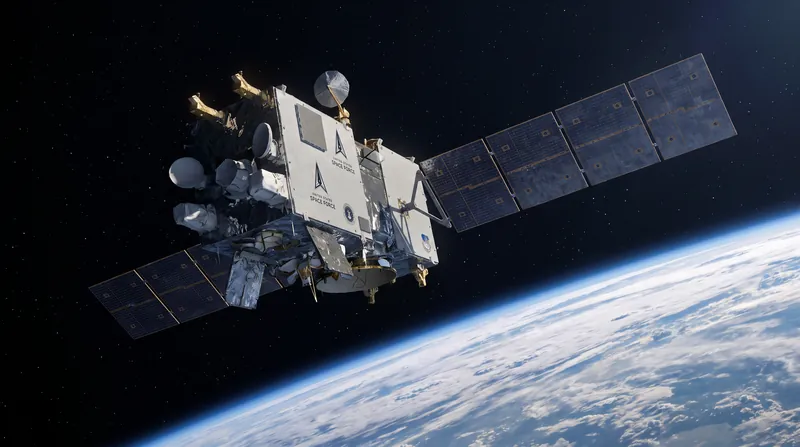
The United States now maintains active, operational weapons systems in Earth's orbit, a shift that moves space from a sanctuary of passive observation to a contested military theater. Measured against the 7,000 active satellites currently circling the globe—the basis for modern GPS, financial routing, and global communications—the introduction of offensive capabilities fundamentally alters the security calculus for every nation relying on orbital infrastructure. The U.S. Space Force has formally confirmed this deployment, marking the first time the Pentagon has openly acknowledged placing active counter-space hardware above the atmosphere.[2][3]
While the announcement carries the weight of a science-fiction milestone, the actual capability remains shrouded in classified terminology. The Space Force has not detailed whether these "operational weapons" are kinetic interceptors designed to physically destroy targets, directed-energy systems capable of blinding optical sensors, or electronic warfare payloads meant to jam communications. The distinction matters: a jamming satellite temporarily disrupts a signal, while a kinetic weapon creates thousands of pieces of orbital debris that threaten all spacefaring nations indiscriminately.[3]
The acknowledgment has triggered an immediate diplomatic response. On Thursday, Chinese officials issued a strong warning against what they characterized as a unilateral escalation, accusing Washington of accelerating a "space arms race." Beijing's foreign ministry stated that the U.S. deployment turns the cosmos into a "new arena for rivalry," demanding that the Pentagon halt its military buildup in orbit.[1][4][5]
Russia has echoed China's condemnation, with both nations pointing to the U.S. move as a violation of the spirit of the 1967 Outer Space Treaty. However, the treaty explicitly bans only the placement of weapons of mass destruction in orbit, leaving a legal gray area for conventional, electronic, or directed-energy weapons. The U.S. has long maintained that its space posture is defensive, designed to protect its critical satellite networks from anti-satellite tests previously conducted by both Moscow and Beijing.[2][6]
The timeline of this deployment suggests a gradual shift rather than a sudden launch. The Space Force's confirmation indicates that these systems are already "operational" in orbit, meaning the hardware was likely launched under classified payloads over the past several years before being formally acknowledged this month. This represents a transition from research and development to active military readiness, signaling to adversaries that U.S. orbital assets now possess active defense or retaliatory capabilities.[2][3]
The primary concern among civilian space operators is the potential for the Kessler syndrome—a cascading chain of orbital collisions. If these newly acknowledged weapons are ever used kinetically, the resulting debris field could render crucial orbital bands unusable for decades. As the commercial space sector continues to launch thousands of broadband satellites, the intersection of military posturing and civilian infrastructure in low Earth orbit has never been more crowded, or more fragile.[1][3]
The rhetoric from Beijing specifically highlights the dual-use nature of modern space technology. Chinese state media and diplomatic channels have argued that Washington is using the guise of national security to establish orbital hegemony. This diplomatic friction complicates ongoing efforts by the United Nations to establish new norms of behavior in space, as both sides accuse the other of weaponizing the void.[1][4][5][6]
The next verifiable checkpoint will be how China and Russia adjust their own space deployments in response to the U.S. confirmation. With the taboo of acknowledging orbital weapons now broken, the global aerospace industry is watching to see if other nations will publicly unveil their own counter-space systems, or if the U.S. Space Force will eventually declassify the specific nature of the hardware currently circling the planet.[2][4]
Sources
- [1]Malay Mail — China warns US against space arms race after Space Force deploys weapons in orbit Read on Malay Mail →
- [2]CBS News — U.S. confirms for the first time that it has deployed weapons in space. China and Russia have responded. Read on CBS News →
- [3]The Guardian — US confirms for first time it has deployed weapons in space Read on The Guardian →
- [4]Anadolu Agency — China warns of 'new arena for rivalry' in space after US admits deploying orbital weapons Read on Anadolu Agency →
- [5]Quartz — China warns US to halt space military buildup after weapons deployment confirmed Read on Quartz →
- [6]Dawn — US confirms deployment of orbital weapons, draws ire of Russia and China Read on Dawn →
Charts, maps and images
Timeline
September 2026
US Space Force Confirms Deployment of Orbital Weapons as China Warns of Space Arms Race
U.S. Air Force Secretary Confirms Deployment of Orbital Space-Control Weapons