
full timeline
South Korea martial law fallout
The Supreme Court remanded former Prime Minister Han Duck-soo's conviction for his role in the 2024 martial law crisis, citing insufficient evidence of intent to subvert the constitution.
Follow South Korea martial law fallout in the Factlen app and get an alert when there is news. Get the app
Share this story
Latest report
South Korea Supreme Court Overturns 15-Year Insurrection Sentence for Ex-PM Han Duck-soo
The Supreme Court remanded former Prime Minister Han Duck-soo's conviction for his role in the 2024 martial law crisis, citing insufficient evidence of intent to subvert the constitution. The ruling orders a retrial at the Seoul High Court while extending his detention.
- The Supreme Court overturned Han Duck-soo's 15-year sentence, citing insufficient evidence he intended to subvert the constitution when calling a Cabinet meeting.
- The justices left intact the lower court's findings regarding Han's administrative actions taken after martial law was declared.
- The en banc decision remands the case to the Seoul High Court for a retrial and a revised sentence.
- Han's pre-trial detention was extended by two months while he awaits the appellate proceedings.
South Korea’s Supreme Court overturned a 15-year prison sentence for former Prime Minister Han Duck-soo on Thursday, remanding his insurrection conviction tied to the December 2024 martial law crisis. The en banc decision forces a retrial at the Seoul High Court.[1][3]
The ruling fundamentally alters the legal framework surrounding the brief military takeover. Justices concluded that prosecutors presented insufficient evidence to prove Han intended to subvert the constitutional order when he convened a critical Cabinet meeting before the martial law declaration.[1][4]
The court found that the act of proposing the Cabinet meeting did not definitively demonstrate an active intent to overthrow the democratic system. The bench emphasized that criminal insurrection requires a deliberate, coordinated effort to dismantle state institutions.[1][4]
Despite vacating the primary insurrection charge, the top court did not exonerate the former prime minister entirely. The justices left intact the lower court’s findings regarding Han’s administrative actions and directives issued immediately after the military deployment began.[1][6]
Because those secondary findings remain valid, the Supreme Court extended Han’s pre-trial detention by two months. He will remain incarcerated at the Seoul Detention Center while the Seoul High Court prepares to hear the remanded case and issue a revised sentence.[1][3]
The December 3 Crisis
The charges stem from the late hours of December 3, 2024, when then-President Yoon Suk Yeol shocked the nation by declaring emergency martial law. The military briefly occupied the National Assembly before lawmakers voted to override the decree.[1][7]
As prime minister, Han occupied the second-highest executive office during the crisis. Prosecutors argued that his decision to hastily assemble the Cabinet provided the necessary procedural veneer for Yoon’s unconstitutional deployment of combat troops into central Seoul.[4][7]
During the initial trial, the Seoul Central District Court agreed with the prosecution, classifying Han as a key architect of the subversion plot. The Seoul High Court subsequently affirmed that view, handing down the 15-year sentence that has now been vacated.[1][4]
Han’s defense team consistently maintained that he was merely executing administrative duties under extreme duress. They argued he had no prior knowledge of the military deployment plans and convened the Cabinet solely because the president issued a direct, urgent order.[3][6]
The Supreme Court’s distinction between prior coordination and subsequent compliance represents a major victory for that defense strategy. By isolating the Cabinet meeting from the broader military conspiracy, the justices raised the evidentiary bar for prosecuting civilian administrators.[1][5]
Setting a New Legal Standard
Legal analysts anticipate Thursday's ruling will ripple through the ongoing trials of other former cabinet members. Dozens of civilian officials currently face insurrection charges based on their procedural compliance during the six-hour martial law window.[5][6]
Until now, lower courts have generally treated any official participation in the December 3 events as complicity in the broader plot. The Supreme Court has now mandated a stricter, individualized assessment of each official's specific intent and prior knowledge.[4][5]
Initial dispatches from the court proceedings did not carry direct quotations from the justices or Han's legal team, focusing entirely on the structural mechanics of the remand order. The available records show the court strictly separated administrative obedience from premeditated subversion.[1][4]
The ruling contrasts sharply with the judicial treatment of the crisis's primary architects. Former President Yoon Suk Yeol was previously sentenced to 30 years in prison for orchestrating the military deployment, a conviction anchored by extensive evidence of premeditation.[7]
For Han, the remand guarantees a reduction in his eventual sentence, though he still faces significant penal jeopardy. The Seoul High Court must now calculate a new prison term based solely on his actions after the martial law decree took effect.[1][6]
The Prosecution's Next Move
State prosecutors expressed deep frustration with the en banc decision, warning it could complicate efforts to hold the entire former administration accountable. They maintain that Han’s procedural facilitation was an indispensable component of the military takeover.[3][4]
The prosecution team now faces a strategic dilemma ahead of the High Court retrial. They must decide whether to introduce new evidence attempting to prove Han’s prior knowledge, or simply argue for the maximum possible sentence on the remaining, sustained charges.[3][6]
South Korean law permits prosecutors to amend their indictment during a remand trial if new facts emerge. However, finding previously undiscovered evidence regarding the December 3 Cabinet meeting nearly two years after the event presents a formidable investigative challenge.[4][6]
The defense, meanwhile, is expected to petition for Han’s release on bail, citing the collapse of the primary insurrection charge. While the Supreme Court extended his detention by two months, the High Court possesses the authority to grant conditional release during the retrial.[1][3]
Public reaction to the ruling has been sharply divided across the political spectrum. Civic groups that led the massive pro-democracy protests in December 2024 condemned the Supreme Court, accusing the judiciary of shielding high-ranking elites from the full consequences of treason.[3][7]
Political and Public Fallout
Hundreds of demonstrators gathered outside the Supreme Court building in Seocho-dong on Thursday morning. Holding banners demanding accountability for the martial law crisis, protesters chanted slogans criticizing the justices for diluting the severity of the insurrection charges.[3][7]
Conversely, conservative political factions welcomed the decision as a necessary corrective to what they view as an overzealous prosecution. Several opposition lawmakers issued statements praising the court for restoring a strict, evidence-based approach to the martial law trials.[6][7]
The ruling arrives at a sensitive moment for South Korea's judiciary, which has spent the past two years processing the immense legal fallout from the constitutional crisis. The courts have faced intense public pressure to deliver severe punishments to all involved.[5][7]
By demanding a higher standard of proof for civilian officials, the Supreme Court is asserting its independence from that public pressure. The justices signaled that the historical gravity of the December 3 events does not justify suspending standard evidentiary requirements.[4][5]
The Seoul High Court has not yet scheduled the first hearing for the remanded trial. Legal experts expect the proceedings to begin within the two-month detention window established by Thursday's Supreme Court order.[1][6]
The Path Forward
The upcoming retrial will likely focus heavily on the exact timeline of Han's actions between the president's initial order and the military's arrival at the National Assembly. Both sides will scrutinize communication logs from those critical hours.[3][6]
If the High Court strictly limits its sentencing to Han's post-declaration conduct, his 15-year term could be reduced to a single-digit figure. Such an outcome would dramatically alter the legal calculus for other civilian defendants awaiting their own appellate verdicts.[1][5]
Sources
- [1]The Korea Herald — Supreme Court overturns part of ruling that sentenced Han to 15 years, extends his detention by two months Read on The Korea Herald →
- [2]The Korea Herald — Top court to rule on ex-PM's insurrection case over martial law role Read on The Korea Herald →
- [3]The Chosun Daily — Supreme Court Overturns Han Duck-soo's Insurrection Conviction, Orders Retrial Read on The Chosun Daily →
- [4]SBS News — Supreme Court Reverses and Remands Lower Court Ruling on Han Duck-soo, Citing Partial Acquittal Read on SBS News →
- [5]SBS News — Supreme Court Ruling on Former PM Han Duck-soo Tomorrow to Set Legal Standard for Martial Law Insurrection Read on SBS News →
- [6]The Herald Business — Han Duck-soo to face retrial as Supreme Court overturns 15-year sentence Read on The Herald Business →
- [7]Associated Press — South Korea's top court overturns Han Duck-soo conviction in martial law case Read on Associated Press →
What to watch
- Former Prime Minister Han Duck-soo faces a retrial and a revised sentence at the Seoul High Court.
- Han Duck-soo will remain in pre-trial detention for an extended two-month period while awaiting appellate proceedings.
Charts, maps and images
Timeline
November 2026
South Korea Supreme Court Overturns 15-Year Insurrection Sentence for Ex-PM Han Duck-soo
June 2026
South Korea's Ex-President Yoon Sentenced to 30 Years for Drone Plot That Preceded Martial Law
How the story developed
In October 2024, covert military drone flights were conducted over North Korea. Former President Yoon Suk Yeol's defense team claimed the flights were a legitimate military response to North Korean trash balloons, while prosecutors argued the operation was designed to provoke Pyongyang and manufacture a national emergency.
The manufactured crisis was intended to justify Yoon's subsequent martial law declaration in December 2024, which ultimately failed. Following the failed declaration, Yoon was convicted of leading an insurrection and began serving a life sentence.
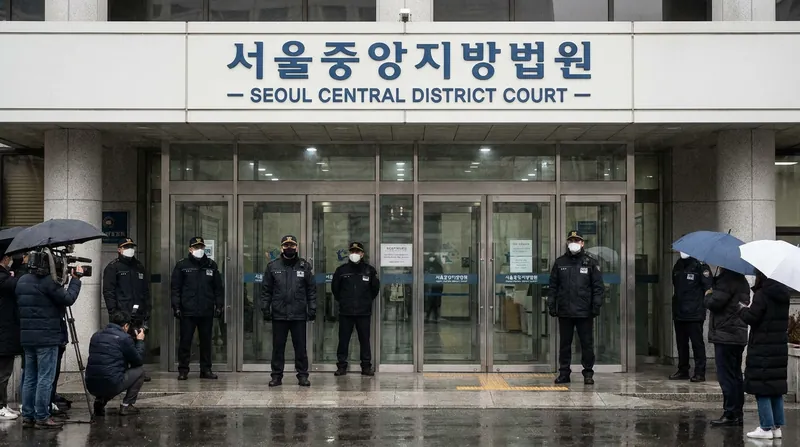
By 04:58 UTC on June 12, a court sentenced Yoon to an additional 30 years in prison for orchestrating the covert drone operation. The court ruled the flights were a deliberate attempt to provoke a military crisis to justify the martial law declaration.
Alongside Yoon, former Defense Minister Kim Yong-hyun was found guilty of aiding an adversary and abusing his power in connection with the drone plot. Former Prime Minister Han Duck-soo was also prosecuted for his role in the martial law crisis, initially receiving a 15-year sentence.