
full timeline
SoftBank tech investments in Malaysia
A consortium led by SoftBank and Grab has signed agreements to develop massive artificial intelligence computing facilities across Malaysia, though the capital will be deployed in stages tied to…
Follow SoftBank tech investments in Malaysia in the Factlen app and get an alert when there is news. Get the app
Share this story
Latest report
SoftBank, Grab, and PETROS Commit $1.85 Billion Seed Capital for Malaysia AI Infrastructure
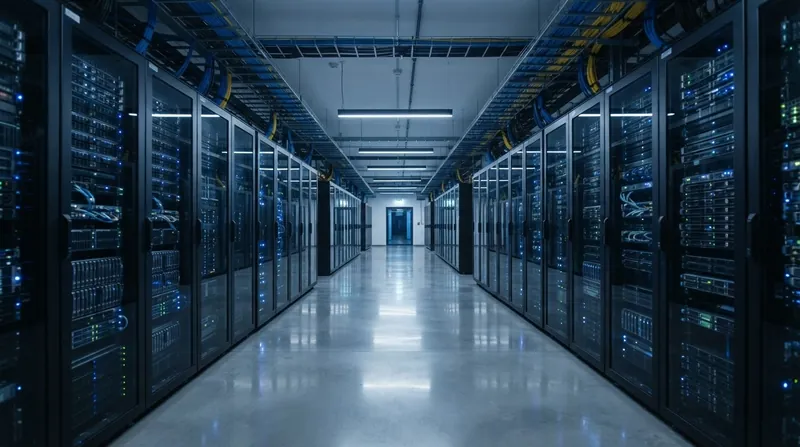
A consortium led by SoftBank and Grab has signed agreements to develop massive artificial intelligence computing facilities across Malaysia, though the capital will be deployed in stages tied to customer demand.
- SoftBank Group, Grab, and PETROS have committed $1.85 billion in initial seed capital to develop AI computing facilities across Malaysia.
- The investment is divided into a $1 billion SoftBank-led project in Sarawak and an $850 million Grab-led project in Peninsular Malaysia.
- Capital will be deployed in stages based on development milestones and binding customer contracts, rather than as a single upfront transfer.
- The consortium has set a long-term target of developing at least five gigawatts of AI computing capacity to serve the Southeast Asian market.
The headline figure is $1.85 billion, and the stated ambition is a staggering five gigawatts of artificial intelligence computing capacity. SoftBank Group, Grab Holdings, and Petroleum Sarawak Berhad (PETROS) announced joint development agreements on November 9 to build massive AI infrastructure across Malaysia.[1][2]
Yet the capital committed so far is strictly seed funding, designed to initiate development rather than complete it. The money will not arrive in a single upfront transfer. Instead, the consortium has structured the investment to be deployed in stages, contingent upon the projects hitting specific development milestones and securing binding customer contracts.[1][4]
Dividing the capital
The initiative divides the $1.85 billion into two distinct geographic projects with inverted ownership structures. In the East Malaysian state of Sarawak, SoftBank will lead a $1 billion development. The Japanese investment giant is providing $800 million of the initial capital, while Grab and state-owned energy firm PETROS are contributing $100 million each.[3][4]
Grab holds an option to increase its stake in the Sarawak facility over time. Exercising that option would dilute SoftBank's share, though the agreements stipulate that SoftBank will remain the majority shareholder regardless of Grab's future equity purchases.[1][4]
Across the South China Sea in Peninsular Malaysia, the financial dynamics are reversed. Grab is spearheading an $850 million project, supplying $650 million of the seed capital itself. SoftBank is providing the remaining $200 million for this second facility.[2][4]
Grab is positioning itself as the founding developer of the Peninsular site, but it does not intend to fund the entire buildout alone. The Singapore-based technology company plans to bring in long-term strategic co-investors as the facility scales, diversifying the funding base and relying on third-party equity and non-recourse project financing to complete the construction.[2]
The five-gigawatt ambition
The sheer scale of the consortium's long-term target—five gigawatts of computing capacity—requires context. Malaysia's total operational data center capacity stood at roughly 1.3 gigawatts in mid-2026, with projections suggesting it could reach 6.8 gigawatts by 2030. If realized, the SoftBank and Grab facilities would nearly double the country's projected national capacity.
"AI infrastructure will power the next wave of growth, and Malaysia has the talent and ambition to help lead it," SoftBank Chief Executive Officer Masayoshi Son said in a statement. Son emphasized that the capacity is necessary to support Malaysia's digital ambitions and accelerate AI innovation across the broader Southeast Asian region.[3]
For Grab, the infrastructure play represents a significant evolution from its origins as a ride-hailing and food delivery application. Founded in 2012, the company went public in 2021 and has increasingly focused on digital financial services and enterprise solutions.[4]
Grab Chief Executive Officer Anthony Tan framed the investment as a return to the company's roots. "Together with SoftBank Group, we plan to build critical AI infrastructure in Malaysia, where Grab began, for all of Southeast Asia," Tan said. He noted the hardware would allow the company to accelerate the development of localized AI solutions for its existing communities.[2][3]
Formalizing the framework
The agreements signed on November 9 formalize a preliminary framework that the three parties established in Kuching on October 8. While the joint development agreements contain binding funding obligations, the operational terms of the joint venture entities remain subject to definitive legal agreements.[1][2]
The inclusion of PETROS, Sarawak's state-owned energy company, highlights the critical role of power generation in the AI infrastructure race. Data centers require immense, uninterrupted electricity supplies, and Sarawak's abundant hydroelectric resources make it an attractive destination for energy-intensive computing facilities.[4]
Malaysia has rapidly emerged as a primary destination for hyperscale investments in Southeast Asia. The country offers abundant land and relatively low electricity costs, drawing capital that might previously have flowed to neighboring Singapore, which has implemented strict environmental restrictions on new data center construction.
Malaysian Prime Minister Anwar Ibrahim welcomed the consortium's announcement on November 10, framing the $1.85 billion commitment as a validation of the country's economic trajectory. He stated that the willingness of global investors like SoftBank to deploy capital reflects strong confidence in Malaysia's political stability and investment climate.[4]
The Prime Minister explicitly linked the SoftBank and Grab initiative to the government's National AI Action Plan 2026–2030. The administration has set a formal policy goal of transforming Malaysia into a primary regional technology cluster by the end of the decade.[4]
Securing the partnership
The corporate partnership also includes a notable financial safeguard for the joint venture. According to regulatory filings submitted to the United States Securities and Exchange Commission, SoftBank has agreed in principle to a five-year lock-up period regarding the Grab shares held directly by its group entities.[1]
This lock-up provision, subject to customary exceptions, signals SoftBank's intent to maintain a stable, long-term partnership with Grab as the infrastructure projects navigate the complex, multi-year development process.[1]
Despite the high-profile announcement, the physical reality of the five-gigawatt ambition remains years away. The initial seed capital is designed to secure land, finalize engineering designs, and begin early-stage site preparation, rather than purchase the tens of thousands of advanced graphics processing units required to run AI models.
The phased funding structure protects SoftBank and Grab from overextending capital before customer demand materializes. By tying subsequent funding tranches to binding customer contracts, the consortium ensures that the massive server halls will only be built if regional enterprises and governments actually lease the computing power.[1][4]
Economic and regional impact
If fully realized, the planned data centers are expected to be among the largest of their kind in Asia. The facilities aim to provide governments, multinational corporations, and small businesses with reliable access to advanced computing capabilities that currently lag behind North American benchmarks.[1]
The project also promises secondary economic benefits for the host nation. The consortium expects the infrastructure development to create high-value employment opportunities in engineering, architectural design, and technical maintenance fields.[2]
These jobs align with the objectives of Malaysia's National Fourth Industrial Revolution Policy and the Malaysia Digital Economy Blueprint, which seek to accelerate advanced technology adoption and improve the productivity of the domestic workforce.[2]
For Masayoshi Son, whose real-time net worth Forbes estimates at $48.4 billion, the Malaysian investment is a calculated bet on the physical foundations of the artificial intelligence boom. SoftBank has aggressively pivoted toward AI infrastructure globally, viewing compute capacity as the essential commodity of the next decade.[3]
The ultimate success of the $1.85 billion venture will depend on execution. Securing the land and the capital is only the first hurdle; the consortium must now navigate global supply chain bottlenecks for advanced cooling systems, power transformers, and the AI chips themselves.
Navigating the next phase
The regulatory filings submitted on November 9 detail that the joint development agreements contain binding development and funding obligations. However, the operational terms of the joint venture entities and the exact terms of each party's investment remain subject to definitive agreements and specific closing conditions.[1][2]
The Southeast Asian market presents a unique challenge for AI developers. While the region boasts one of the world's fastest-growing digital economies, per capita artificial intelligence consumption currently lags significantly behind North American and European benchmarks.[3]
Grab's existing ecosystem—spanning ride-hailing, logistics, and financial services across eight Southeast Asian nations—provides a massive proprietary dataset. Localizing AI models to understand regional languages, traffic patterns, and consumer behavior requires exactly the kind of high-performance computing infrastructure the consortium plans to build.[3][4]
By anchoring the physical hardware in Malaysia, Grab and SoftBank aim to reduce latency and ensure data sovereignty for regional clients who may be hesitant to process sensitive information through servers located in the United States or China.
Until the first server racks come online and the initial megawatts of power begin flowing through the facilities, the five-gigawatt target remains a highly ambitious blueprint for Southeast Asia's digital future.
Sources
- [1]SoftBank Group — SoftBank Group and Grab Sign Joint Development Agreements to Develop AI Infrastructure in Malaysia Read on SoftBank Group →
- [2]Grab — SoftBank Group and Grab Sign Joint Development Agreements to Develop AI Infrastructure in Malaysia Read on Grab →
- [3]Forbes — Billionaire Masayoshi Son's SoftBank, Grab Spending $1.85 Billion To Build AI Infrastructure In Malaysia Read on Forbes →
- [4]Business Today — Malaysia's AI Ambitions Get US$1.85 Billion Boost From SoftBank And Grab Read on Business Today →
What to watch
- The projects will be funded in stages based on development milestones and customer contracts.
- The facilities have a long-term target of reaching at least five gigawatts of computing capacity.
- Grab holds an option to increase its stake in the Sarawak site over time.
- Grab plans to bring in strategic co-investors for the Peninsular Malaysia facility as it scales.
Timeline
November 2026
SoftBank, Grab, and PETROS Commit $1.85 Billion Seed Capital for Malaysia AI Infrastructure
October 2026
SoftBank Commits $50 Billion Tech Investment Program in Malaysia

How the story developed
The initiative began on October 25, when Prime Minister Anwar Ibrahim announced that SoftBank Group had selected Malaysia for a $50 billion technology investment program. The capital injection was designed to accelerate artificial intelligence infrastructure and digital development within the Southeast Asian nation.
At the time of the initial announcement, Anwar stated that specific locations for the data centers and artificial intelligence facilities had already been selected. The commitment was positioned as reinforcing Malaysia's status as a neutral hub for global technology investment.
Malaysia has rapidly emerged as a primary destination for data center and artificial intelligence investments in Southeast Asia. The country benefits from abundant land and relatively low electricity costs, while neighboring Singapore has tightened restrictions on new facilities.
Following the formalization of the seed capital agreements, Anwar noted the partnerships directly bolster the country's National AI Action Plan 2026-2030 and reflect global confidence in its investment climate. Once fully operational, the planned data centers are expected to be among the largest of their kind in Asia, providing advanced computing capabilities to governments and businesses across the region.