full timeline
Seattle grocery surveillance pricing ban
The Seattle City Council voted 7-2 to prohibit large supermarkets from using shoppers' personal data and browsing history to set individualized prices.
Follow Seattle grocery surveillance pricing ban in the Factlen app and get an alert when there is news. Get the app
Share this story
Latest report
Seattle Becomes First US City to Ban AI-Driven 'Surveillance Pricing' in Groceries
The Seattle City Council voted 7-2 to prohibit large supermarkets from using shoppers' personal data and browsing history to set individualized prices.
- The Seattle City Council voted 7-2 to ban large grocers from using personal data to set individualized prices.
- The policy prohibits using browsing history, location, or inferred income to calculate what a specific shopper pays.
- A 2025 investigation found algorithmic pricing could cause 23% price variances, costing families up to $1,200 annually.
- Grocery retailers opposed the measure, warning it could eliminate targeted discounts and cost shoppers $100 a month.
- The ordinance, the first of its kind at the municipal level, takes effect on September 1, 2027.
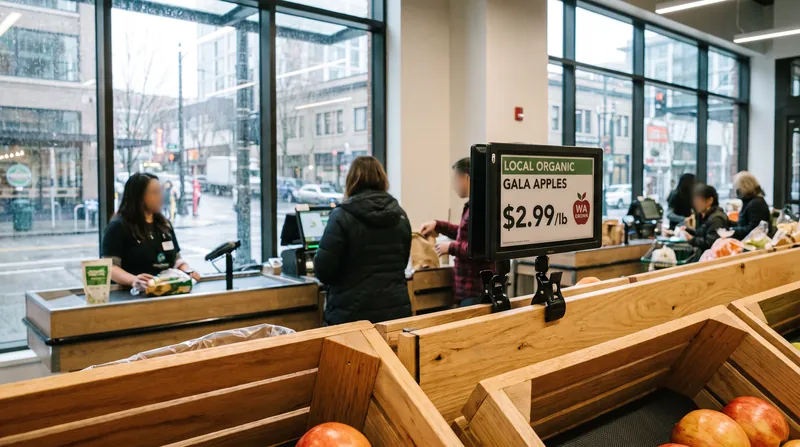
Inside the Seattle City Council chambers on Tuesday, September 22, a 7-2 vote finalized a new boundary on retail data collection, making Seattle the first US city to outlaw algorithmic grocery pricing. The Fair and Transparent Pricing policy, which now heads to Mayor Katie Wilson's desk, explicitly bans large supermarkets from using a shopper's personal data to generate individualized prices at checkout.[2][5][7]
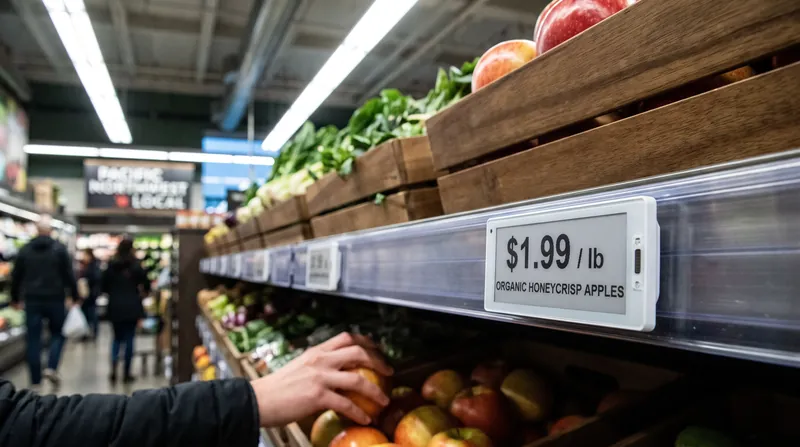
The legislation targets a practice known as "surveillance pricing," where retailers ingest a customer's browsing history, real-time location, inferred income, and even chatbot conversations to calculate the maximum amount that specific person is willing to pay. Under the new ordinance, brick-and-mortar and online grocers must post uniform prices that apply equally to all customers, ending the hidden variance that occurs when two shoppers open the same app and see different costs for the same carton of eggs.[2][5][6]
The municipal ban accelerates a regulatory push that began after a December 2025 investigation by Consumer Reports. That study dispatched nearly 400 consumers to shop for identical baskets of goods simultaneously on Instacart, revealing that algorithmic pricing experiments produced cost differences as high as 23% for the same items. For a family shopping weekly, those targeted markups could add more than $1,200 a year to their grocery bills.[1][5]
"Food is an essential good that's getting more expensive all the time," Mayor Wilson said in a statement following the vote. "People have been clear: they don't want their data fed into algorithms that decide how much they pay at the grocery store. Everyone deserves transparent pricing and equal treatment, not hidden systems that charge some shoppers more than others."[2][4]
The grocery industry mounted a heavy lobbying effort against the measure in the weeks leading up to the vote. Chains like Safeway posted in-store warnings directing Seattle shoppers to an industry-backed campaign, arguing that the broad language of the ban would force them to eliminate targeted promotions. Retail advocates warned that stripping away personalized digital coupons could cost local families an average of $100 a month in lost discounts, effectively raising the baseline cost of food.[4]
City officials and consumer advocates dispute that framing, noting the ordinance still permits traditional coupons and openly advertised group discounts, such as those for seniors or veterans. Grace Gedye, a senior policy analyst at Consumer Reports who provided technical assistance on the bill, argued the legislation simply requires transparency. "Nobody should pay more for basic necessities because a data broker is quietly collecting information about what they're searching for online, what they hover over, what their income is, or where they go," Gedye said.[2][5]
The ban also drew strong backing from organized labor, framing the opaque pricing models as a workplace issue. The United Food and Commercial Workers (UFCW) Local 3000 argued that frontline grocery workers are unfairly forced to defend algorithmic price discrepancies to frustrated customers. Union representatives celebrated the vote as a dual victory that protects both consumer wallets and employee working conditions.[2][3]
While 3 states—Maryland, Connecticut, and New Jersey—have enacted state-level restrictions on surveillance pricing, Seattle's ordinance is the first municipal law of its kind and carries strict enforcement mechanisms. The policy is scheduled to take effect on September 1, 2027, giving large grocers one year to overhaul their pricing software and loyalty applications to ensure compliance before facing municipal penalties.[4][5][7]
Sources
- [1]Quartz — Seattle bans AI surveillance pricing at grocery stores Read on Quartz →
- [2]Office of the Mayor — Seattle Becomes First City to Stop Grocery Stores from Using AI Based Personal Data to Set Prices Read on Office of the Mayor →
- [3]Supermarket News — Seattle becomes first city to ban surveillance pricing Read on Supermarket News →
- [4]The Chronicle — Seattle to ban AI grocery pricing amid warnings law could increase costs Read on The Chronicle →
- [5]Consumer Reports — Seattle City Council votes to ban surveillance pricing in sale of groceries Read on Consumer Reports →
- [6]SupplyChainBrain — Seattle Enacts Nation's First Ban On 'Surveillance Pricing' in Grocery Stores Read on SupplyChainBrain →
- [7]Trending Topics — Seattle Bans Grocery Stores From Using A.I. to Set Prices Read on Trending Topics →
Charts, maps and images
Timeline
September 2026
Seattle Becomes First US City to Ban AI-Driven 'Surveillance Pricing' in Groceries
August 2026
Seattle Advances First-of-Its-Kind Ban on 'Surveillance Pricing' by Large Grocery Chains