
full timeline
Paramount–Warner Bros. Discovery merger
Skydance will introduce a combined HBO Max and Paramount+ streaming bundle in early 2027 as part of a broader strategy to consolidate its media portfolio and offset subscriber losses.
Follow Paramount–Warner Bros. Discovery merger in the Factlen app and get an alert when there is news. Get the app
Share this story
Latest report
Skydance to Launch HBO Max and Paramount+ Streaming Bundle in Early 2027
Skydance will introduce a combined HBO Max and Paramount+ streaming bundle in early 2027 as part of a broader strategy to consolidate its media portfolio and offset subscriber losses.
- Skydance will launch a combined subscription bundle for HBO Max and Paramount+ in early 2027.
- The bundle is a transitional step toward fully merging the two streaming platforms into a single application within a year.
- The newly combined company is targeting $6 billion in cost cuts to manage its debt load and streamline operations.
- Skydance will stop reporting quarterly subscriber numbers in February 2027, shifting its focus to revenue and engagement.
Skydance has confirmed plans to launch a combined streaming bundle featuring HBO Max and Paramount+ in early 2027. The strategic move comes as the newly formed entertainment giant begins consolidating its massive media portfolio following its recent mega-merger.[2][4]
The upcoming package will allow consumers to subscribe to both premium platforms for a single, undisclosed price. It represents the company's first major consumer-facing initiative to unify its streaming footprint and simplify the viewing experience for its audience.[3][4]
“Starting in early 2027, consumers will be able to subscribe to both world-class streaming services at an even greater value,” Skydance told investors in a shareholder letter released alongside its third-quarter earnings on November 9.[2]
The bundle will serve as a transitional bridge while the company works to merge the underlying technology of both platforms. Skydance CEO David Ellison has previously stated that the long-term goal is to put the two services together into a single unified application to compete with industry leaders.[2]
The combined entity currently boasts approximately 203 million direct-to-consumer subscriptions globally across its premium platforms. However, executives cautioned that this figure includes significant overlap, as households subscribing to both HBO Max and Paramount+ are counted twice in the aggregate total.[1]
The two services enter the marriage on different trajectories. Paramount+ ended September 2026 with 82.2 million subscribers, adding 600,000 customers during the third quarter and growing its overall subscriber base by 6 percent year-over-year.[1]
Conversely, the legacy Warner Bros. Discovery streaming footprint has faced recent headwinds. Industry analysts estimate that HBO Max lost subscribers over the summer, tempering the broader company's direct-to-consumer growth as linear television declines continue to weigh heavily on the business.[1]
A Massive Sports and Entertainment Portfolio
The 2027 bundle will unite two distinct content libraries that executives believe are highly complementary. HBO Max brings prestige television franchises, premium documentaries, and the extensive Warner Bros. theatrical film catalog to the partnership.[2][4]
Paramount+ counters with a broad, populist slate anchored by the "Star Trek" franchise, Taylor Sheridan's expanding television universe, and a deep, highly-viewed library of CBS procedural dramas.[2]
For cord-cutters, the most significant impact may be in live sports aggregation. The combined Skydance portfolio now controls broadcast rights for the NFL on CBS, March Madness, and a vast array of premium athletic events under a single corporate umbrella.[1][2]
The aggregation strategy offers a discounted package designed specifically to reduce subscriber churn. By locking users into a broader ecosystem with more varied content, Skydance hopes to improve subscriber retention and compete more aggressively in the crowded streaming market.[1][4]
The $6 Billion Efficiency Drive
The streaming consolidation arrives as Skydance embarks on a severe, company-wide cost-cutting mandate. The media conglomerate is targeting $6 billion in broader cost-cutting measures across its operations to streamline the newly merged enterprise.[3]
The financial cuts will touch multiple corners of the company's massive expense base. Skydance plans to eliminate duplicate corporate overhead, consolidate its real estate footprint, and reduce management layers across the combined organization.[3]
Additional financial savings will come from unifying the streaming and broadcast technology architecture. The company also expects to trim significant costs from procurement and vendor management by centralizing its purchasing power and eliminating redundant third-party contracts.[3]
The efficiency drive is designed to offset recent subscriber losses and improve overall corporate profitability. Executives view the streaming bundle and the associated cost cuts as necessary, immediate steps to stabilize the company's financial footing.[1][3]
The End of Subscriber Transparency
As Skydance shifts its strategic focus toward long-term profitability, it is changing how it communicates with Wall Street. The company announced it will stop reporting quarterly subscriber totals for its streaming services beginning with its fourth-quarter results.[1]
The reporting change follows a broader industry trend initiated by Netflix earlier in the year. Skydance executives argued that raw subscriber counts no longer accurately reflect the financial health of the streaming business, choosing instead to emphasize revenue and engagement metrics.[1]
The standalone Paramount business provided a solid financial foundation in its final solo quarter. The platform generated $2.13 billion in quarterly revenue, while average revenue per subscriber climbed an impressive 14 percent to $8.69. Additionally, the free ad-supported service Pluto TV reached approximately 75 million monthly active users.[1]
Sources
- [1]Forbes — HBO Max Subscriber Losses Temper Skydance Streaming Growth Read on Forbes →
- [2]IGN — Skydance Reveals HBO Max and Paramount Plus Streaming Bundle Coming Early 2027 Read on IGN →
- [3]exchange4media — Skydance targets $6 billion in cost cuts, plans HBO Max-Paramount+ bundle for early 2027 Read on exchange4media →
- [4]Mediaweek — Skydance to bundle Paramount+ and HBO Max in 2027 Read on Mediaweek →
What to watch
- Jeremy Latcham will officially assume the roles of president and chief creative officer at DC Studios on December 1.
- Skydance is scheduled to debut a unified streaming bundle combining HBO Max and Paramount+ in early 2027.
- James Gunn will direct and Peter Safran will produce the "Superman" sequel "Man of Tomorrow," slated for release in 2027.
- Gunn is writing an additional, unannounced DC movie featuring characters established during his executive tenure.
Charts, maps and images
Timeline
August 2026
Hollywood Unions Split: WGA Fights to Block Paramount-WBD Merger While DGA and IATSE Seek Settlement
Federal Judge Delays Paramount-WBD Merger Antitrust Trial to March 2027
Paramount Offers to Sell CNN as Bargaining Chip to Resolve State Antitrust Lawsuit
Paramount Delays WBD Merger Closing as U.S. Antitrust Lawsuit Forces Court Battle
AIAI


July 2026
EU Approves Paramount's $110 Billion Takeover of Warner Bros. Discovery With Significant Conditions
US States Prepare Antitrust Suit Against Paramount-WBD Merger, Threatening $110 Billion Deal
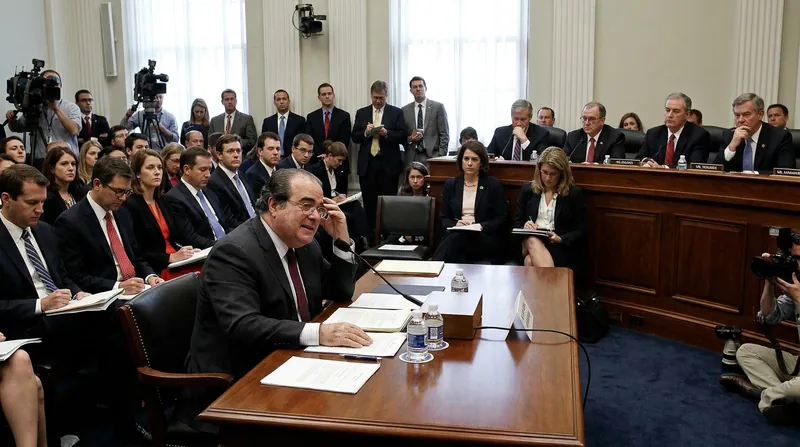
Congressional Hearing Alleges Trump Administration Politicized DOJ to Approve Paramount-Warner Bros. Merger


June 2026
Paramount Acquires Warner Bros. for $111 Billion, Will Merge HBO Max into Paramount+
DOJ Approves $111 Billion Paramount-Warner Bros. Merger, Reshaping Media Landscape
How the story developed
The U.S. Justice Department cleared Paramount Skydance's $111 billion all-cash acquisition of Warner Bros. Discovery on June 13, concluding it would not harm competition. The approval drew scrutiny, with critics and Democratic lawmakers alleging it was politically motivated by the Trump administration. During a July 7 congressional hearing, three former DOJ whistleblowers testified that the approval was contingent on White House demands for favorable editorial coverage at CBS and ABC. The Justice Department categorically denied the allegations, and Republican lawmakers dismissed the hearing as partisan theater.
The European Union approved the takeover on July 25, requiring the divestiture of 14 European linear television networks and regional sports rights. Meanwhile, the Federal Communications Commission faced scrutiny on August 3 when a government watchdog filed formal ethics complaints against three commissioners. The group alleged the commissioners accepted $45,000 in luxury gifts from Paramount executives while reviewing the merger, though the commissioners denied any wrongdoing.
A coalition of 12 state attorneys general prepared an antitrust lawsuit to block the deal, arguing it would create an illegal monopoly, reduce competition, and raise consumer prices. The Writers Guild of America also filed a federal antitrust lawsuit on August 29, citing concerns over wage suppression and job losses. On August 25, a federal judge granted a temporary restraining order freezing the merger until at least June 2027, bypassing a preliminary injunction hearing for a full antitrust trial scheduled for March 2, 2027. The delay threatened Paramount with a $7 million daily ticking fee starting October 1.
Paramount offered to sell CNN to resolve the state lawsuit, a proposal California Attorney General Rob Bonta rejected on August 15, dismissing accompanying threats by Ellison to relocate the studio as blackmail. Settlement talks temporarily collapsed on August 26 when Bonta accused Paramount of leaking confidential divestiture demands to the press. Paramount denied being the source of the leaks and subsequently requested a $1.88 billion bond from the plaintiffs to cover the mounting costs of the delay, which California and the WGA formally opposed on September 1.
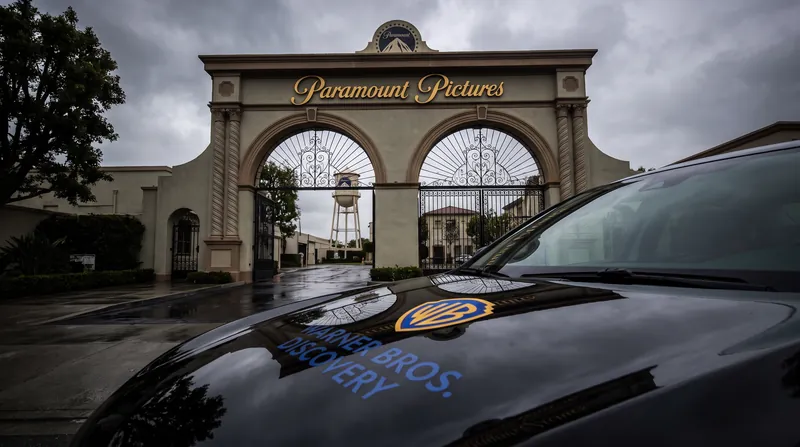
The parties reached a resolution on September 21, clearing the path for the merger. A five-year consent decree mandated that Paramount boost U.S. film production spending by $300 million annually, release at least 30 films a year, and retain its historic Los Angeles studio lots. The WGA settled its parallel lawsuit, securing $17.5 million for its health fund and zero writer layoffs at CBS News. Following a brief pause requested by Senator Cory Booker, U.S. District Judge Araceli Martínez-Olguín approved the antitrust settlement on October 3, though labor advocates warned that the merger's targeted $6 billion in cost savings would trigger massive job losses.
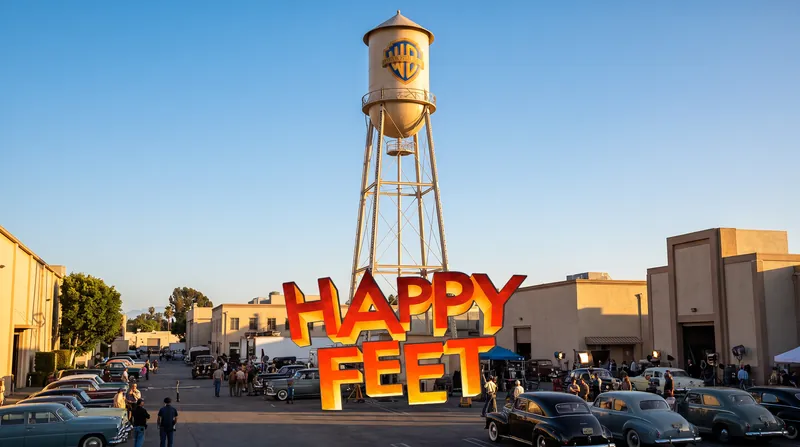
The merger officially closed on October 6, finalizing the creation of the new Skydance conglomerate. RedBird Capital Partners injected $4 billion into the final deal, adding to a previous $2 billion investment, while Paramount launched a $7.5 billion loan syndication as part of a $44.4 billion secured debt package. Former Mattel CEO Ynon Kreiz joined the integrated company as co-CEO alongside Ellison, and the iconic Warner Bros. water tower in Burbank was immediately repainted to read "A Skydance Corporation."