full timeline
FDA Food Code overhaul
The FDA's newly released 2026 Food Code modernizes restaurant safety guidelines by introducing electronic cooling monitoring and practical exceptions for double gloving.
Follow FDA Food Code overhaul in the Factlen app and get an alert when there is news. Get the app
Share this story
Latest report
FDA's 2026 Food Code Allows Alternative Cooling Process and Double Gloving Exception
The FDA's newly released 2026 Food Code modernizes restaurant safety guidelines by introducing electronic cooling monitoring and practical exceptions for double gloving.
- The FDA released the 2026 Food Code on September 17, updating model safety regulations for over one million U.S. food establishments.
- The update introduces an alternative cooling process that allows kitchens to use continuous electronic monitoring instead of manual temperature checks.
- A new targeted exception permits double gloving under specific circumstances, offering practical flexibility for prep cooks.
- The code mandates written employee illness policies and clarifies allergen cross-contact rules to protect diners with severe food allergies.
- The Food Code is not an instant federal law; it must be adopted by state and local health departments to become binding.
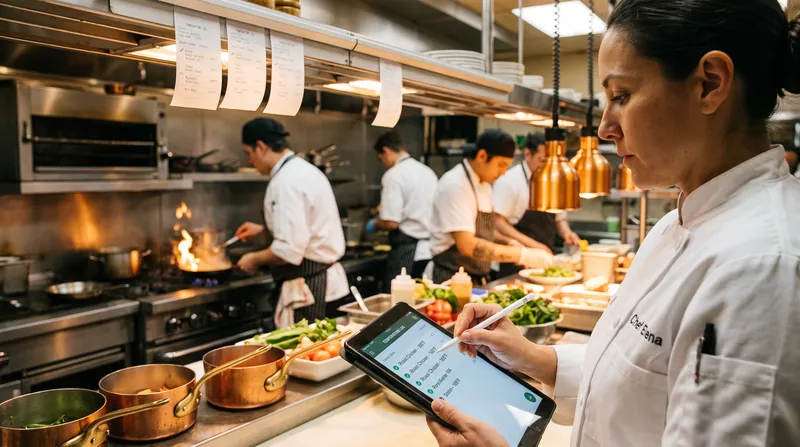
When a restaurant kitchen cools down a steaming, 50-gallon batch of roasted tomato soup under the 2022 Food Code, the process requires rigid, manual temperature checks and strict single-layer glove rules to keep the food safe as it moves through the temperature danger zone. The 2026 Food Code, published by the U.S. Food and Drug Administration on September 17, shifts that approach in one crucial respect: it trades manual rigidity for technological flexibility.
The Food Code is typically updated on a 2-year cycle to reflect advances in food safety science, and this new edition permits an alternative cooling process for retail foods while carving out a targeted exception for double gloving, giving chefs new ways to handle food safely without breaking their rhythm.[1][3][4]
The FDA Food Code is not an instant federal law that immediately changes how every local diner operates. Instead, it serves as a comprehensive model that state, local, tribal, and territorial health departments use to update their own binding regulations.
Once adopted by local jurisdictions, these guidelines dictate the daily routines of more than 1 million restaurants, grocery stores, school cafeterias, and vending operations across the country. Because adoption happens at the local level, the rollout of the 2026 provisions will ripple through different cities and states over the coming months and years.[1][2][4]
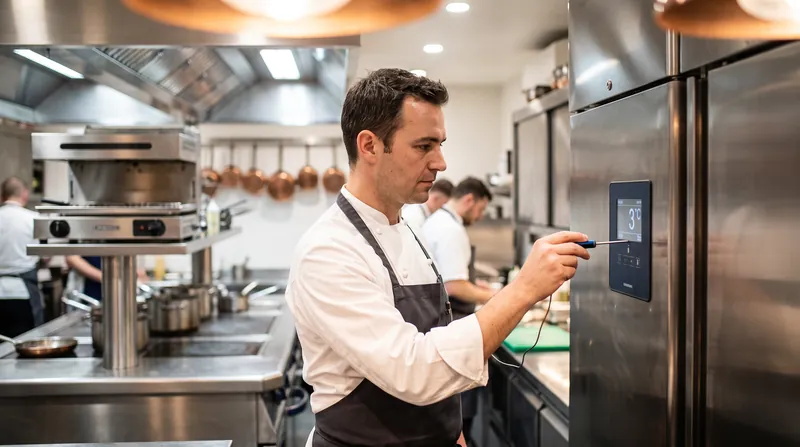
Cooling hot food safely—typically dropping it from 135°F to 41°F in a strict two-stage process—is one of the most critical, time-sensitive tasks in any commercial kitchen, designed to push ingredients through the bacterial danger zone before pathogens can multiply. The 2026 update introduces a highly anticipated alternative method for cooling cooked retail foods.
While previous iterations relied heavily on staff manually probing cooling trays with thermometers every few hours, the new code establishes an alternative cooling process that accommodates modern kitchen technology and continuous monitoring systems. Additionally, the updated regulations explicitly add a provision allowing food to be cooled by spreading it at a shallow depth of no more than 2 inches, maximizing surface area for rapid heat loss.[1][2][3][4]
The tactile experience of preparing food also sees a shift with new guidelines around hand protection. Historically, the code has been highly prescriptive about single-use gloves to prevent cross-contamination. The 2026 edition introduces a specific exception that allows for double gloving under certain circumstances. For a prep cook moving between handling raw proteins and assembling ready-to-eat salads, these clarifications offer a more practical framework for maintaining a sterile barrier without constantly washing and drying hands between every minor task.[1][2][3]
Beyond cooling and gloving, the 2026 Food Code requires a more formalized approach to kitchen management and employee health. The update mandates a new requirement for written employee illness policies that must be maintained and made readily available for health inspectors, ensuring that staff who are sick with communicable diseases are properly excluded from handling food. The latest code also addresses a range of environmental safety topics, including updated requirements for waste receptacles, vending machine controls, and sanitizer temperatures.[1][3]
For diners navigating severe food allergies or celiac disease, the updated code provides crucial clarification on allergen cross-contact. The FDA has expanded its guidance to better differentiate cross-contact—where shared production equipment transfers trace amounts of an allergen—from intentional ingredient use. The 2026 edition also modernizes the definition of a "mobile food establishment," acknowledging the exploding popularity of food trucks and pop-up commissaries, and introduces new parameters for food donations and specialty mushroom hazards.[1][2][3][4]
The 2026 Food Code reflects a restaurant industry that is increasingly reliant on complex, multi-step food preparation. "The 2026 FDA Food Code reflects updates intended to improve public health, regulatory clarity, and implementation," the FDA stated in its September 17 release.
By allowing alternative cooling processes and clarifying the rules around double gloving and allergen cross-contact, the agency is giving kitchens the tools to maintain rigorous safety standards while operating more efficiently. The next step rests with state and local health departments, who will now begin the lengthy process of writing these updated models into the binding health codes that govern every local kitchen.[1][2][3]
Sources
- [1]U.S. Food and Drug Administration — The FDA Releases 2026 Food Code Read on U.S. Food and Drug Administration →
- [2]U.S. Food and Drug Administration — FDA Food Code Read on U.S. Food and Drug Administration →
- [3]Powder & Bulk Solids — FDA Releases 2026 Edition of the Food Code Read on Powder & Bulk Solids →
- [4]Citadel HSG — FDA Food Code Updates 2026 Read on Citadel HSG →
Charts, maps and images
Timeline
September 2026
FDA's 2026 Food Code Allows Alternative Cooling Process and Double Gloving Exception
August 2026
FDA to Release Updated Food Code in 2026, Overhauling Safety Rules for Every US Restaurant