full timeline
EU Entry-Exit System rollout
The European Union has allowed nine member states, including France and Italy, to indefinitely postpone the full rollout of mandatory biometric border checks following severe airport bottlenecks and…
Follow EU Entry-Exit System rollout in the Factlen app and get an alert when there is news. Get the app
Share this story
Latest
On November 9, it became public that the European Union's IT agency, eu-LISA, filed a lawsuit against technology firms IBM, Atos, and Leonardo over repeated delays in delivering the bloc's new biometric border control system. The legal action, which was filed in Estonia in December 2025, targets the consortium originally contracted to develop the Entry/Exit System.
Internal correspondence reveals a long-running dispute over missed deadlines and financial penalties. The contractors are contesting the fines, arguing that external factors such as the COVID-19 pandemic contributed to the delays, and they objected to revised delivery schedules set by eu-LISA in early 2022. Despite the legal proceedings, eu-LISA stated that the dispute concerns only the development phase and does not affect the system's current operations. A new consortium led by Sword Services has since taken over the maintenance and future development of the central system.
How the story developed
The Entry/Exit System was designed to replace manual passport stamping with digital checks for non-EU travelers entering the 29-country Schengen area. By collecting biometric data such as fingerprints and facial photographs, the automated system aims to identify individuals who overstay their visas, combat identity fraud, and enhance border security. The original consortium was awarded a €142 million contract in 2019, which later increased to €212 million, to build the core infrastructure.
The system was originally slated to launch in 2022 but faced years of setbacks. When the system was eventually deployed, it was plagued by software bugs and hardware issues, including malfunctioning fingerprint scanners that caused hours-long queues and missed flights at airports across Europe.
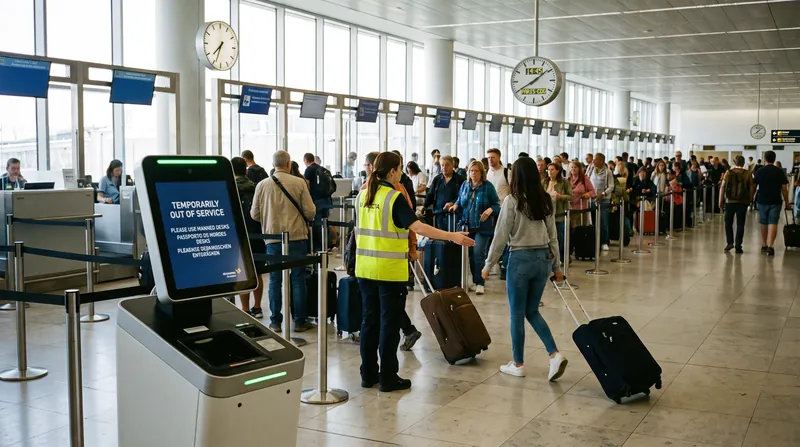
By August 10, major European airports were temporarily turning off the biometric system during peak hours and reverting to manual passport stamps to prevent massive border delays. When lines reached critical thresholds, travelers were routed to traditional desks.
An EU waiver allowing these suspensions, part of a 150-day grace period, expired on September 6. Following the expiration, processing times nearly tripled at major hubs like Rome and Frankfurt due to software errors and inadequate kiosk infrastructure.
On September 19, the European Union informally allowed nine member states, including France and Italy, to indefinitely postpone the full rollout of mandatory biometric border checks.
What to watch
- Airlines and industry groups are lobbying for a formal extension of the delay in full implementation until at least April 2027.
- The aviation industry is lobbying to make emergency bypass flexibility a permanent operational tool.
Where things stand
EU Sues IBM, Atos, and Leonardo Over Chronic Delays to Entry/Exit Border System
Key point: The EU's IT agency has taken IBM, Atos, and Leonardo to court over years of delays and disputes during the development of the bloc's new biometric border control system.
AITravelers pass through an airport arrivals hall. Nine EU countries have paused the full rollout of biometric border checks to prevent severe terminal bottlenecks.From: Nine EU Countries Delay Full Implementation of Biometric Entry/Exit System Due to Technical Failures The European Union's IT agency, eu-LISA, has filed a lawsuit against technology firms IBM, Atos, and Leonardo over repeated delays in delivering the bloc's new biometric border control system. The legal action, which was filed in Estonia in December 2025 but became public on Monday, targets the consortium originally contracted to develop the Entry/Exit System (EES).
The consortium was awarded a €142 million contract in 2019, which later increased to €212 million, to build the core infrastructure of the EES. Internal correspondence reveals a long-running dispute over missed deadlines and financial penalties, with the contractors contesting fines and arguing that external factors such as the COVID-19 pandemic contributed to the delays. The companies also objected to revised delivery schedules set by eu-LISA in early 2022.
The lawsuit escalates the fallout from the troubled rollout of the EES, which was originally slated to launch in 2022 but faced years of setbacks. When the system was eventually deployed, it was plagued by software bugs and hardware issues, including malfunctioning fingerprint scanners that caused hours-long queues and missed flights at airports across Europe. Despite the legal proceedings, eu-LISA stated that the dispute concerns only the development phase and does not affect the system's current operations.
The Entry/Exit System is designed to replace manual passport stamping with digital checks for non-EU travelers entering the 29-country Schengen area. By collecting biometric data such as fingerprints and facial photographs, the automated system aims to identify individuals who overstay their visas, combat identity fraud, and enhance border security. A new consortium led by Sword Services has since taken over the maintenance and future development of the central system.
Charts, maps and images
Timeline
November 2026
EU Sues IBM, Atos, and Leonardo Over Chronic Delays to Entry/Exit Border System
- EU Sues IBM, Atos, and Leonardo Over Chronic Delays to Entry/Exit Border SystemKey point: The EU's IT agency has taken IBM, Atos, and Leonardo to court over years of delays and disputes during the development of the bloc's new biometric border control system.
September 2026
Nine EU Countries Delay Full Implementation of Biometric Entry/Exit System Due to Technical Failures
AI
August 2026
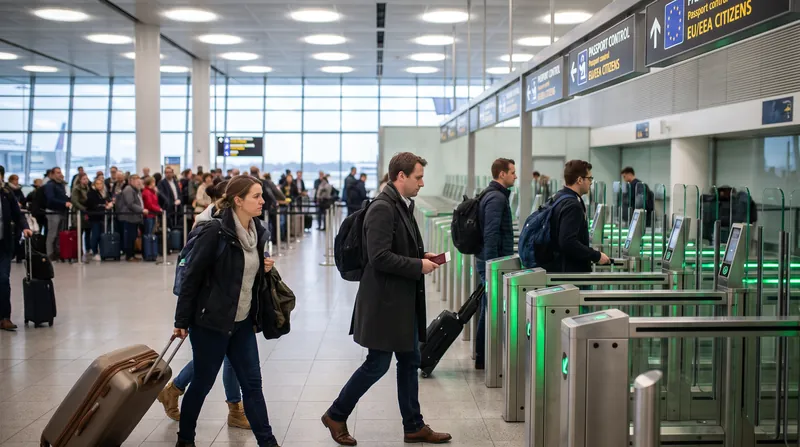
The Mechanics of the EES Failure: How European Airports Are Suspending Biometric Border Checks to Avoid Travel Chaos
AI