
Seven Major US Airlines Face Class-Action Lawsuits Over Algorithmic Fare Collusion
Two proposed class actions allege that major US carriers pooled non-public shopping and pricing data through an industry clearinghouse. The plaintiffs claim the shared analytics dashboard allowed airlines to monitor competitors and artificially inflate domestic ticket prices.
By Marina Lopez

Share this story
On November 4, 2026, two airline passengers filed a proposed class-action lawsuit in a Washington federal court accusing seven major US carriers of running a hub-and-spoke price-fixing conspiracy. The filing followed a similar complaint lodged a day earlier in Virginia. Both lawsuits allege that the carriers pooled confidential shopping and pricing data to artificially inflate domestic airfares.[1][3]
The Washington case names American, Delta, United, Southwest, Alaska, Hawaiian, and JetBlue as defendants. It also targets the Airline Tariff Publishing Company and its data subsidiary, 3Victors. The plaintiffs, represented by the law firm Hagens Berman, claim they paid artificially inflated fares for tickets purchased from Southwest and United.[1][3]
The Virginia complaint, filed on November 3, targets five of those airlines alongside the data companies, omitting United and treating Hawaiian as part of Alaska Airlines. Four passengers brought the Virginia case, seeking trebled damages under the Clayton Act. Neither court has yet ruled on the allegations or certified the classes.[3][4]
The data pipeline
At the center of both lawsuits are three data products operated by 3Victors, a company the publishing group acquired in late 2023. The complaints focus on Iris, a shopping data repository, and PriceEye, an analytics dashboard. Airlines allegedly contribute their own search and pricing data to Iris in exchange for access to competitive benchmarking.[1][3]
The arrangement operates on a give-to-get model, according to the complaints. The plaintiffs quote 3Victors as stating that participation in Iris is based on the principle that the more an airline contributes, the more it receives. This exchange allegedly allows carriers to monitor rivals' pricing strategies hour by hour.[1][3]
The Virginia complaint also highlights DemandView, a product launched on October 5, 2026. The plaintiffs say DemandView draws on more than 1.4 billion daily search records to show where passenger demand is building before it translates into actual bookings. Sharing these demand signals reduces the incentive for airlines to discount seats, the lawsuits argue.[3]
The publishing company has historically functioned as the central clearinghouse for public airline fares, distributing them to booking sites and travel agents. However, the plaintiffs argue the organization crossed a legal line by moving from public filed fares into pooling non-public shopping data. They allege the conspiracy began no later than July 25, 2023.[3][4]
The cost to consumers
To demonstrate the financial impact on travelers, the Virginia complaint cites an analysis of data from the Bureau of Transportation Statistics. The passenger-weighted average one-way fare across 693 US routes rose 30.7 percent over a four-year period. Fares climbed from $198.71 in the first quarter of 2022 to $259.66 in the first quarter of 2026.[3]
The plaintiffs attribute this $60 increase directly to the data-sharing arrangement. They argue that dynamic pricing was originally intended to allow airlines to compete using individualized offers. Instead, the shared dashboard allegedly undermined that secrecy, making it easier for carriers to detect and respond to any competitor's price cuts.[1][3]
The publishing company maintains that it does not influence how much travelers pay. In a December 2024 statement published before the lawsuits, the organization wrote that it has no input into the prices individual airlines charge. The company added that each airline makes its own pricing decisions and merely uses the platform to distribute fares.[3]
The domestic airline market remains highly concentrated, which the plaintiffs argue makes the alleged collusion more effective. According to federal data for the twelve months ending July 2026, Delta, American, United, and Southwest control nearly 70 percent of domestic revenue passenger miles. Alaska and JetBlue account for another 11.7 percent of the market.[3]
A history of antitrust scrutiny
This is not the first time the fare clearinghouse has faced federal price-fixing allegations. On December 21, 1992, the US Department of Justice sued the company and eight major airlines. The government accused the carriers of using the fare dissemination system to float trial balloon price increases and negotiate the removal of discounts.[3][4]
The Justice Department estimated that the 1990s scheme cost travelers more than $1 billion between 1988 and 1992. The airlines ultimately settled the case without going to trial, signing consent decrees that banned the practice of filing fares with future start dates. Those court orders expired after ten years.[3][4]
The clearinghouse has stated that it closed the loophole identified by the Justice Department in the 1990s and that the fix remains active in its systems today. The current lawsuits, however, focus on a newer layer of data entirely. The plaintiffs argue that modern analytics tools have recreated the same anticompetitive environment through different technical means.[3][4]
The legal challenges arrive during a period of heightened regulatory attention on airline pricing. The Federal Trade Commission is already investigating how Delta, United, and JetBlue set their fares. Meanwhile, holiday ticket prices remain at their highest levels in a decade, despite falling fuel costs across the aviation sector.[4]
What happens next
Both class actions are in their earliest procedural stages, and the airlines have not yet filed formal responses in court. If the cases proceed, they could force a fundamental restructuring of how airlines handle their internal shopping data. For now, the data-sharing products remain active across the industry.[3][4]
The Virginia plaintiffs are asking the court for a permanent injunction to dismantle the data pipeline. The requested order would bar the defendants from exchanging any current or forward-looking non-public pricing, inventory, or shopping data. This prohibition would apply whether the data flows through the clearinghouse, its subsidiaries, or any other third-party platform.[3]
Key points
- Two class-action lawsuits accuse seven major US airlines of sharing non-public pricing data to keep fares high.
- The complaints center on an analytics dashboard that allegedly lets airlines monitor competitors' pricing strategies hour by hour.
- Plaintiffs claim the data-sharing arrangement contributed to a 30.7 percent increase in average one-way fares between 2022 and 2026.
- The lawsuits seek a permanent injunction to dismantle the data pipeline and demand trebled damages for affected passengers.
Unanswered questions
- Neither court has decided whether the cases can proceed as class actions, which would determine how many travelers are eligible for potential damages.
- The airlines and the data clearinghouse have not yet filed their formal legal responses to the allegations.
- It remains unclear exactly which airlines contribute data to the specific analytics products named in the complaints.
How we got here
Dec 1992
The US Department of Justice sues ATPCO and eight airlines over using the fare system to coordinate price increases.
Jul 2023
The alleged hub-and-spoke data conspiracy begins, according to the plaintiffs' timeline.
Dec 2023
ATPCO acquires 3Victors, the data subsidiary that operates the Iris and PriceEye analytics tools.
Nov 2026
Passengers file proposed class-action lawsuits in Virginia and Washington federal courts.
- Consumer Advocates
- Argue that data-sharing platforms allow airlines to collude indirectly and keep fares artificially high.
- Aviation Industry
- Maintains that data clearinghouses merely distribute fares and that airlines set prices independently.
Perspectives this story doesn't cover
- Federal antitrust regulators
- Independent travel booking platforms
Sources
Source coverage
7 outlets
2 viewpoints surfaced







- [1]Courthouse News ServiceConsumer Advocates
Airlines accused of sharing pricing data to inflate fares
Read on Courthouse News Service → - [2]VitalLawAviation Industry
Major airlines hit with ticket price-fixing allegations
Read on VitalLaw → - [3]PilotinQConsumer Advocates
US: Airlines and ATPCO sued over alleged fare data sharing
Read on PilotinQ → - [4]The ContrailConsumer Advocates
Airline price fixing lawsuit: American, Delta, United, Southwest, Alaska, Hawaiian and JetBlue are accused of sharing fare data. What it claims.
Read on The Contrail → - [5]Legal World HubAviation Industry
Ward v. ATPCO (No. 2:26-cv-04289) says Delta, United, American, Alaska, Southwest and JetBlue shared pricing data to raise fares. See the claims, classes and next steps.
Read on Legal World Hub → - [6]OpenClassActionsAviation Industry
Airline Tariff Publishing Company (ATPCO) Fare Data Price-Fixing Class Action Lawsuit
Read on OpenClassActions → - [7]ArcaMaxAviation Industry
Seattle lawsuit alleges airlines shared fare data, inflating prices
Read on ArcaMax →
More in Transportation
See all →Aviation Safety
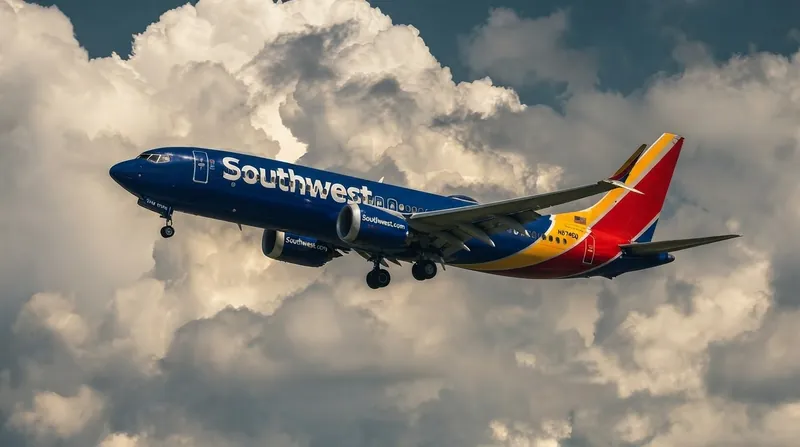
NTSB Rejects One-Third of FAA Safety Responses to Washington National Airport Crash
6 sources
Airline Consolidation
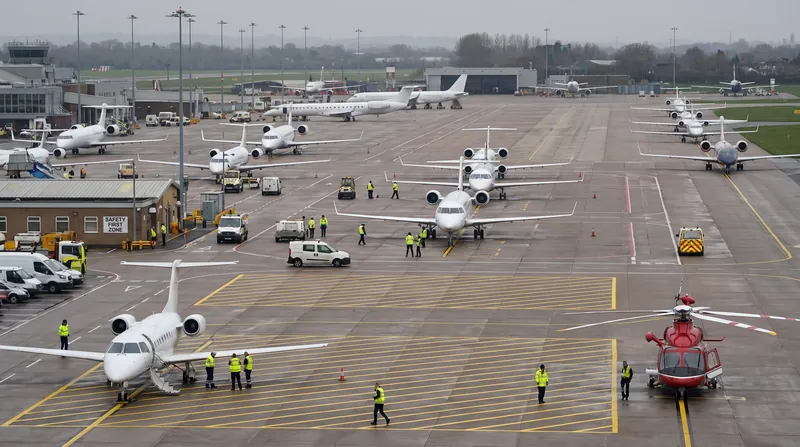
Lufthansa Formalizes €1.2 Billion Agreement to Acquire 44.9% Stake in TAP Air Portugal
3 sources
Aviation Sanctions
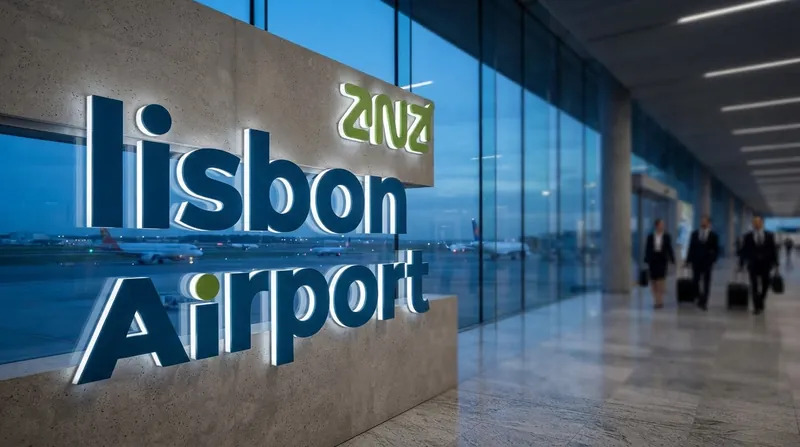
US Authorizes Boeing to Supply Parts to Belarusian Airline Despite Russian Diversion Warnings
6 sources
Aviation Infrastructure
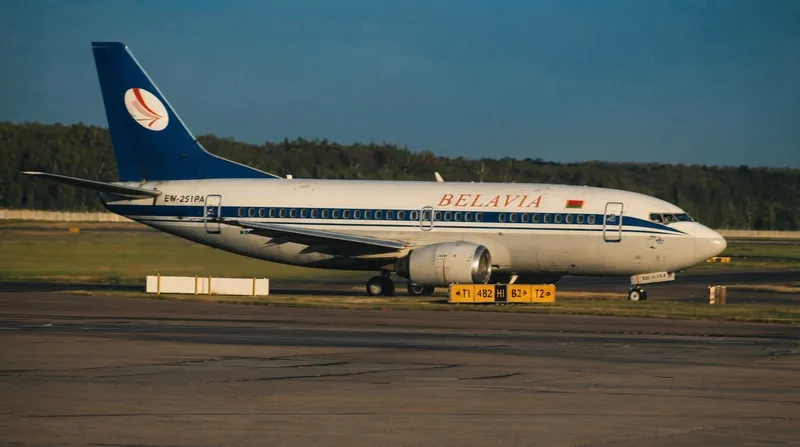
Western Sydney International Airport Opens as First Jetstar Flight Departs
9 sources
Comments
Every angle. Every day.
Get Transportation stories with full source coverage and perspective breakdowns, free every day.