full timeline
US–Iran tensions and oil markets
Fluctuations in global crude oil prices remain closely tied to diplomatic relations and shifting geopolitical tensions between the United States and Iran.
Follow US–Iran tensions and oil markets in the Factlen app and get an alert when there is news. Get the app
Share this story
Latest
On November 9 at 22:21 UTC, global crude oil prices fell to a 10-week low following comments from United States President Donald Trump indicating that further military strikes against Iran are improbable. Brent crude futures dropped nearly 5 percent during the session to below $94 a barrel, while the U.S. West Texas Intermediate benchmark fell to approximately $87. The market reaction followed a Sunday interview in which Trump stated it was highly unlikely he would authorize renewed attacks on Iranian targets as long as diplomatic negotiations to end the conflict continue to advance.
Despite the easing of immediate military fears, physical supply risks remain active. Over the weekend preceding November 9, both the U.S. and Iran reported new attacks on commercial shipping near the Strait of Hormuz. Additionally, Iran-aligned Houthi forces claimed responsibility for a strike on a Saudi Aramco corporate office in Riyadh, while drone attacks targeted energy infrastructure in Iraq and Russia.
The decline in oil prices compounds a 16 percent drop in the Brent benchmark during the previous week, which was driven by expectations that the Democratic victory in the U.S. midterm elections would force a swift political resolution to the war. Industry analysts note the global oil market is showing signs of excess supply, with a JPMorgan report estimating a worldwide surplus of 1.4 million barrels per day in October.
How the story developed
Tensions affecting global energy markets escalated on September 2 at 15:49 UTC, when the Trump administration formally rejected the terms of a proposed memorandum of understanding with Iran. The collapse of these diplomatic talks stalled efforts to secure the Strait of Hormuz, leaving commercial shipping vulnerable to geopolitical tensions.
Following the rejection of the memorandum, crude oil prices surged past $90 a barrel. Brent crude jumped 2 percent, and global equities dropped as investors weighed the inflationary impact of sustained high energy costs on the global economy.
The conflict maintained a geopolitical risk premium on oil prices, with the U.S. president previously suggesting that a large-scale American military operation could resume immediately following the U.S. midterm elections.
Market dynamics shifted significantly in early November. During the week prior to November 9, the Brent benchmark plunged 16 percent, marking its steepest weekly drop since the onset of the COVID-19 pandemic. This sell-off was largely driven by expectations that the Democratic victory in the midterm elections would force a swift political resolution to the war.
By November 9, energy traders aggressively unwound the geopolitical risk premium as diplomatic negotiations advanced. Recovering Middle Eastern oil flows and rising production from other nations pushed global supply above consumption levels, contributing to the downward pressure on prices despite ongoing regional attacks on energy infrastructure and commercial shipping.
What to watch
- The advancement of diplomatic negotiations to end the conflict between the United States and Iran.
Where things stand
Crude Oil Drops to 10-Week Low as Trump Signals Restraint on Iran
Key point: Oil prices tumbled to a 10-week low after President Trump stated that renewed U.S. military strikes on Iran are highly unlikely while diplomatic talks progress.
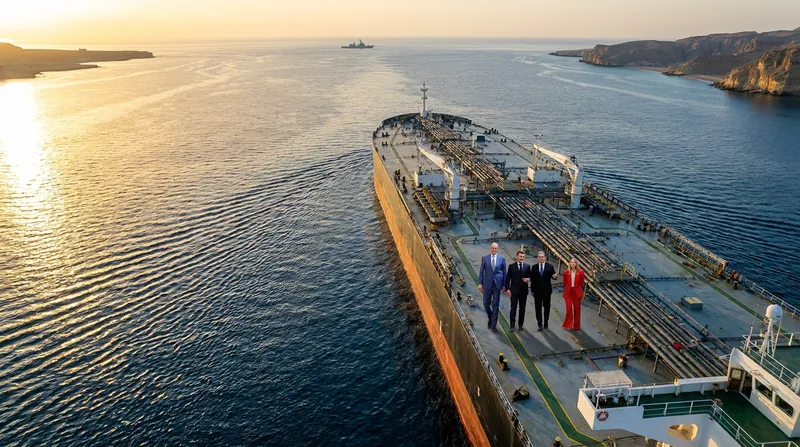
AICommercial shipping in the Strait of Hormuz faces renewed uncertainty following the collapse of the US-Iran MOU.From: Oil Prices Jump 2% as Trump Administration Rejects Iran MOU Terms Global crude oil prices tumbled to a 10-week low on Monday after U.S. President Donald Trump indicated that further military strikes against Iran are improbable. Brent crude futures fell nearly 5 percent during the session, dropping below $94 a barrel, while the U.S. West Texas Intermediate benchmark fell to roughly $87, extending a massive market sell-off that began late last week.
The sharp market reaction followed Trump's comments during a Sunday interview, in which he stated it was "highly unlikely" he would authorize renewed attacks on Iranian targets as long as diplomatic negotiations to end the conflict continue to advance. The remarks marked a significant shift in tone from the president, who had previously suggested that a large-scale American military operation could resume immediately following the U.S. midterm elections.
This diplomatic pivot has prompted energy traders to aggressively unwind the geopolitical risk premium that had kept oil prices elevated during the active phases of the conflict. The decline compounds a 16 percent plunge in the Brent benchmark last week—its steepest weekly drop since the onset of the COVID-19 pandemic—which was largely driven by expectations that the Democratic victory in the midterms would force a swift political resolution to the war.
Despite the easing of immediate military fears between Washington and Tehran, physical supply risks remain highly active across the region. Both the U.S. and Iran reported fresh attacks on commercial shipping near the critical Strait of Hormuz over the weekend, while Iran-aligned Houthi forces claimed responsibility for a strike on a Saudi Aramco corporate office in Riyadh. Additional drone attacks targeted energy infrastructure in Iraq and Russia, highlighting the fragile security environment that continues to threaten global energy infrastructure.
Adding further downward pressure to prices, industry analysts noted that the global oil market is already showing strong signs of a return to excess supply. Recovering Middle Eastern oil flows and rising production from other nations have pushed global supply well above current consumption levels, with a recent JPMorgan report estimating a worldwide surplus of 1.4 million barrels per day in October.
Timeline
November 2026
Fluctuations in global crude oil prices remain closely tied to diplomatic relations and shifting geopolitical tensions between the United States and Iran.
- Crude Oil Drops to 10-Week Low as Trump Signals Restraint on IranKey point: Oil prices tumbled to a 10-week low after President Trump stated that renewed U.S. military strikes on Iran are highly unlikely while diplomatic talks progress.
September 2026
Oil Prices Jump 2% as Trump Administration Rejects Iran MOU Terms