
full timeline
DHS student visa duration rule
A U.S.
Follow DHS student visa duration rule in the Factlen app and get an alert when there is news. Get the app
Share this story
Latest report
Federal Judge Strikes Down Trump Administration Limits on Student and Journalist Visas
A U.S. federal court has vacated a Department of Homeland Security rule that sought to impose fixed time limits on foreign students, exchange visitors, and journalists. The ruling preserves the decades-old "duration of status" framework, allowing individuals to remain in the country while maintaining their academic or professional standing.
- A federal judge vacated a DHS rule that would have capped student and exchange visitor visas at four years and journalist visas at 240 days.
- The decision preserves the decades-old 'duration of status' framework, allowing visa holders to remain in the U.S. while maintaining their academic or professional standing.
- The court ruled the policy violated the Administrative Procedure Act, finding the government failed to justify the restrictions or evaluate their costs.
- Higher education advocates argued the fixed-term policy would have disrupted legitimate research and deterred global talent from American universities.
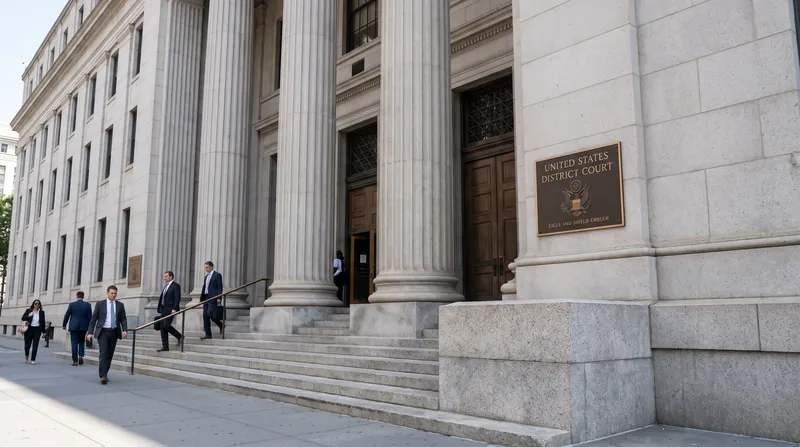
On November 16, 2026, U.S. District Judge F. Dennis Saylor IV vacated a Trump administration rule that would have imposed strict time limits on visas for international students, exchange visitors, and foreign journalists. The decision permanently blocks the Department of Homeland Security from replacing the longstanding "duration of status" framework with fixed admission periods.[1][3]
The ruling, issued in the District of Massachusetts, concluded that the DHS policy violated the Administrative Procedure Act. Judge Saylor described the regulation as "arbitrary, capricious, an abuse of discretion, and otherwise not in accordance with law," effectively ending the government's attempt to overhaul the system.[3][5]
"Put bluntly, DHS is seeking to prevent or discourage the very activity—providing educational opportunities for foreign students in the United States—that Congress sought to permit and encourage," Judge Saylor wrote in his memorandum. He added that the statute did not grant the agency open-ended authority to undermine the F-1 visa program.[1]
The invalidated rule, published in the Federal Register on July 17, 2026, would have capped F-1 student and J-1 exchange visitor visas at four years. Foreign journalists holding I visas would have been restricted to 240-day stays, while students in language training programs faced a strict 24-month limit.[3][4]
Under those proposed changes, individuals needing more time to complete a degree or assignment would have been forced to apply for an extension through U.S. Citizenship and Immigration Services. The court noted that this discretionary renewal system lacked an appeals process for denials, creating immense uncertainty for visa holders.[4][5]
Maintaining Duration of Status
By vacating the rule, the court preserved a system that has governed international academic and media admissions since the early 1990s. Foreign nationals in these categories will continue to be admitted for "duration of status," meaning they can remain in the United States as long as they comply with their visa terms.[1][5]
For the more than 1.1 million international students currently enrolled in American institutions, the decision removes a significant administrative hurdle. Doctoral candidates, whose programs routinely require five to seven years to complete, will not face the threat of deportation simply because their research demands additional time.[1][3]
The lawsuit challenging the restrictions was filed in August 2026 by a broad coalition of higher education institutions and labor organizations. The plaintiffs included the Presidents' Alliance on Higher Education and Immigration, the American Federation of Teachers, and the United Auto Workers.[5]
These groups argued that the DHS failed to properly analyze the economic and academic costs of the new rules. They maintained that the fixed-term policy would disrupt legitimate educational pursuits, restrict academic mobility, and damage the broader U.S. higher education sector by deterring global talent.[3][5]
The government had defended the regulation as a necessary measure to combat visa fraud and strengthen national security. DHS officials argued that the existing open-ended system allowed individuals to exploit their student status by repeatedly enrolling in courses to remain in the country indefinitely.[1][3]
Evaluating Security Claims
Judge Saylor systematically dismantled the government's national security rationale in his final judgment. He found that the DHS failed to establish a rational link between the sweeping restrictions and the specific objectives it claimed the policy would achieve.[3][5]
The court emphasized that the government had not adequately considered less burdensome alternatives to a blanket time limit. Specifically, the ruling pointed to the existing Student and Exchange Visitor Information System, known as SEVIS, which already tracks and monitors foreign students across U.S. campuses.[1][5]
Saylor noted that the agency did not explain how an unreviewable renewal system would meaningfully enhance its ability to root out fraud. He concluded that the supposed benefits of the new framework did not outweigh the immense costs of abandoning a functional, decades-old system.[3][5]
The ruling also highlighted the severe restrictions the policy would have placed on academic mobility. The invalidated rule would have prohibited graduate students from easily changing their academic concentrations or transferring between universities, fundamentally altering how higher education operates in the United States.[1][4]
Immigration advocates celebrated the decision as a critical victory for the American research ecosystem. The Foundation for India and Indian Diaspora Studies stated that the court had protected the future of U.S. science, technology, and innovation by ensuring international talent could remain in the country.[1][4]
Protections for Foreign Journalists
Beyond the academic sector, the ruling carries significant implications for international press freedom. The proposed 240-day cap on I visas would have forced foreign correspondents to repeatedly justify their presence in the United States to immigration officials, creating a chilling effect on reporting.[3][4]
Media organizations warned that such short-term limits could be weaponized to expel journalists reporting critically on the administration. By striking down the rule, the court ensured that foreign reporters can continue covering U.S. affairs without the looming threat of an arbitrary visa expiration.[4][5]
The decision marks the culmination of a legal battle that began shortly after the rule's publication. Judge Saylor had previously issued a nationwide preliminary injunction on September 14, 2026, pausing the regulation just one day before its scheduled September 15 implementation date.[3][5]
While the government appealed that initial injunction to the First Circuit Court of Appeals, Monday's ruling serves as a final decision on the merits of the case. The nationwide vacatur means the proposed limits are entirely void, though the administration retains the option to appeal the final judgment.[3][5]
The defeat of the visa limits represents another judicial setback for the Trump administration's broader immigration agenda. The administration has faced repeated legal challenges over its use of executive authority to bypass Congress in reshaping the U.S. immigration system.[3][5]
Next Steps for the Administration
Legal analysts note that the ruling underscores the limits of administrative policymaking. The court made clear that while the executive branch can manage immigration procedures, it cannot implement regulations that actively undermine the statutory purpose of visa programs established by Congress.[1][3]
Universities and research institutions are now advising their international populations that no immediate action is required regarding their visa status. Campus officials are reassuring students that the duration of status framework remains fully operational and legally protected following the court's decisive intervention.[1][4]
The Department of Homeland Security has not yet indicated whether it will pursue an appeal of the final judgment. If the government chooses to challenge the ruling, it would need to convince an appellate court that the agency properly weighed the economic and academic consequences of the policy.[3][5]
For now, the focus shifts to how the administration will handle other pending immigration regulations. With congressional checks strengthened following the midterm elections, executive actions are expected to face continued and intense judicial scrutiny in the months ahead.[3]
The preservation of the duration of status rule provides immediate stability for the upcoming academic year. Admissions offices across the country can now recruit international scholars without the caveat of a looming four-year expiration, ensuring the United States remains competitive in the global market for higher education.[1][4]
Sources
- [1]The Hindu — U.S. federal court strikes down fixed terms for student, exchange visas Read on The Hindu →
- [2]The Hankyoreh — US court strikes down DHS rule that would've limited stays for foreign students, journalists Read on The Hankyoreh →
- [3]The Chosun Ilbo — Judge rules Trump's visa policy violated Administrative Procedure Act, blocking nationwide restrictions Read on The Chosun Ilbo →
- [4]Outlook India — Trump's US Visa Rule For Foreign Students, Journalists Struck Down By Court: What It Means For Indians Read on Outlook India →
- [5]Punch Nigeria — US court strikes down Trump's four-year limit on foreign students Read on Punch Nigeria →
Charts, maps and images
Timeline
November 2026
Federal Judge Strikes Down Trump Administration Limits on Student and Journalist Visas
September 2026
Federal Judge Blocks DHS Rule Ending 'Duration of Status' for Foreign Students and Journalists
AIDHS Replaces 'Duration of Status' With Fixed-Term Admission for F-1 International Students
How the story developed
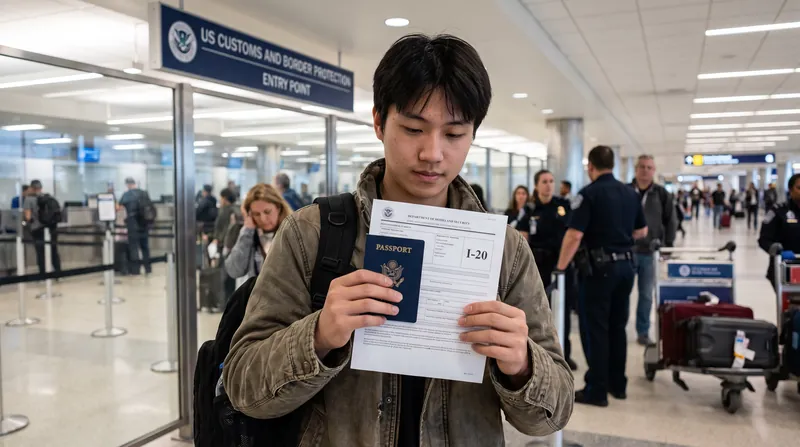
The Department of Homeland Security initially announced that it would replace the flexible "duration of status" policy for F-1 and J-1 visas with fixed-term admissions starting on September 15. Under the planned rule, new admissions for international students would be capped at four years, requiring formal extensions for longer academic programs such as PhDs. The policy also reduced the post-graduation grace period from 60 days to 30 days.
The rule included specific provisions for different groups. Student visas would be capped at two years for citizens of countries with high overstay rates. Additionally, foreign journalists on I visas would have been restricted to 240-day stays. Current students were to be protected by transition rules until they traveled internationally, though long-term students faced new risks of becoming U.S. tax residents after five years.
Prior to the rule's implementation, a federal lawsuit was filed seeking to block the policy. Universities argued that the rule would devastate international enrollment and cost the U.S. economy billions of dollars.
On September 15, a federal judge issued a preliminary injunction halting the Department of Homeland Security policy. The injunction stopped the implementation of the strict two- and four-year limits nationwide while the underlying lawsuit proceeded, leading to the final ruling that ultimately struck down the Trump administration limits.