
full timeline
Chinese yuan appreciation
More than six Chinese commercial banks have sharply increased their US dollar deposit yields to over 4 percent, aiming to encourage exporters to hold dollars rather than convert them.
Follow Chinese yuan appreciation in the Factlen app and get an alert when there is news. Get the app
Share this story
Latest report
Chinese Banks Hike Dollar Deposit Rates Past 4% to Curb Yuan Rally
More than six Chinese commercial banks have sharply increased their US dollar deposit yields to over 4 percent, aiming to encourage exporters to hold dollars rather than convert them. The coordinated rate hikes follow the central bank's recent move to raise the foreign exchange reserve requirement ratio to 6 percent.
- Several state-owned and joint-stock banks raised one-year US dollar deposit rates above 4 percent, with some reaching 4.5 percent for large balances.
- The aggressive pricing removes a de facto cap on state banks' dollar rates, contrasting sharply with local currency deposit yields of just 0.95 percent.
- The yuan has gained roughly 10 percent against the dollar since early 2025, fueled by record Chinese trade surpluses.
- The deposit rate hikes complement the People's Bank of China's decision to raise the foreign exchange reserve requirement ratio from 4 percent to 6 percent on November 15.
The binding constraint on China's currency management is the widening gap between domestic and offshore yields, and state lenders are now moving aggressively to close it. More than six Chinese commercial banks have sharply increased their US dollar deposit rates to levels not seen since 2023.[1][3]
Some yields have now surpassed US benchmarks in a coordinated effort to slow the yuan's rapid appreciation. One major state-owned bank raised its one-year rate on balances exceeding $50,000 to top 4 percent in early November. Another institution pushed its premium offering to 4.5 percent in late October.[1][4]
A third state lender offered to match the US Secured Overnight Financing Rate, which currently sits at 3.97 percent. "The unusually swift rate hikes signal an end to a de facto cap on state banks' dollar rates," noted a foreign exchange trader based in Shanghai.[1][4]
The pricing shift represents an escalating effort by financial authorities to temper the yuan's prolonged rally. It encourages exporters and corporate savers to hold dollars rather than converting them to local currency, delaying the capital flows that drive the exchange rate higher.[1][2]
Removing the de facto cap
The aggressive dollar pricing stands in stark contrast to domestic yields, highlighting the structural imbalance banks are trying to navigate. Local currency deposit rates at major state lenders currently sit at just 0.95 percent. Authorities are now weaponizing that massive differential to retain offshore currency.[3]
For much of the past year, Chinese regulators maintained an informal ceiling on the dollar deposit rates that state-owned banks could offer. That guidance was designed to prevent destructive competition for foreign currency deposits among domestic lenders. The sudden removal of this cap underscores the urgency of Beijing's current intervention.[1][4]
The deposit rate hikes are not happening in isolation; they complement direct regulatory action from the central bank. The People's Bank of China announced it will raise the foreign exchange reserve requirement ratio from 4 percent to 6 percent. That mandate takes effect on November 15.[5][6]
By forcing financial institutions to hold more foreign currency in reserve, the PBOC effectively reduces the supply of dollars available in the domestic market. The central bank is deploying both volume and price tools simultaneously to drain onshore dollar liquidity.[5][6]
The exporter margin squeeze
The previous foreign exchange reserve requirement ratio of 4 percent had been in place since late 2023, when the PBOC actually cut the rate to support a weakening yuan. The reversal to 6 percent marks a definitive shift in the central bank's posture.[5]
The underlying driver of this coordinated intervention is the relentless strength of the Chinese currency in global markets. The yuan has gained roughly 10 percent against the US dollar since early 2025. That sustained rally has been fueled by record Chinese trade surpluses.[3]
While a strong currency lowers the cost of imported commodities, it severely penalizes the manufacturing sector that drives China's economic growth. This rapid appreciation has begun to squeeze the wafer-thin margins of Chinese exporters. Many manufacturers price their goods in dollars but pay their workers in yuan.[1][3]
When exporters repatriate their overseas earnings and convert them into local currency, a stronger yuan means they receive fewer domestic notes for every dollar earned. "If the exchange rate moves 5 percent in a month, that wipes out the entire profit margin for a low-end electronics assembler," an industry representative stated.[1]
Managing the trade surplus
By offering 4.5 percent yields on dollar deposits, commercial banks are giving these exporters a lucrative alternative to immediate conversion. The strategy effectively parks the trade surplus in foreign currency accounts, delaying the conversion pressure that would otherwise drive the yuan even higher.[1][4]
China's trade dynamics have created a structural headache for the central bank, as export volumes continue to outpace domestic import demand. The resulting trade surplus floods the onshore market with foreign currency, creating natural upward pressure on the exchange rate.[3]
The participation of joint-stock and foreign institutions alongside state-owned banks indicates a broad, systemic shift in liability management. More than six lenders have adjusted their pricing matrices in the first week of November alone. This synchronized movement suggests strong window guidance from regulators.[1][2]
Corporate treasurers are already responding to the new rate environment by altering their cash management strategies. Several large export firms have reportedly paused their scheduled currency conversions, opting instead to lock in the 4 percent yields on one-year dollar deposits.[1][4]
Global rate differentials
The effectiveness of this strategy depends heavily on the trajectory of US monetary policy over the coming quarters. If the Federal Reserve maintains elevated interest rates, Chinese banks can comfortably offer 4 percent yields without taking on excessive duration risk.[1]
However, if global benchmark rates begin to decline, Chinese lenders will face a margin squeeze of their own. Paying 4.5 percent on dollar deposits while global yields fall would force state banks to absorb the difference. For now, the priority is clearly currency stability over bank profitability.[1][4]
The PBOC's willingness to lean on commercial bank balance sheets highlights the limited options available for managing a massive trade surplus. Direct intervention in the foreign exchange market carries political risks and can trigger currency manipulator designations from trading partners.[5][6]
Adjusting domestic deposit rates offers a quieter, market-adjacent mechanism. Market participants are closely monitoring the daily fixing rate set by the PBOC for signs of further administrative pushback. The central bank has consistently set the daily reference rate weaker than market models predicted.[1][5]
Calibrating the intervention
The ultimate success of these measures will be judged by whether the yuan's ascent slows to a manageable glide path. Authorities are not necessarily trying to engineer a depreciation, but rather to break the one-way speculative momentum.[1][3]
A stable currency allows exporters to price future contracts with reasonable certainty. The sheer scale of China's export sector means that even minor shifts in corporate conversion ratios can move global currency markets.[3]
If thousands of mid-sized manufacturers collectively decide to hold their dollars for an extra six months, billions in conversion flows are delayed. That aggregate delay relieves the immediate upward pressure on the exchange rate.[1][4]
Financial regulators are also mindful of the psychological impact of a rapidly appreciating currency on domestic asset markets. While a strong yuan can attract foreign portfolio investment, excessive volatility deters long-term foreign direct investment.[5]
The next policy checkpoints
The November 15 implementation date for the 6 percent foreign exchange reserve requirement ratio serves as the next major liquidity checkpoint. Banks are currently scrambling to ensure they have sufficient dollar reserves to meet the new regulatory threshold.[5][6]
Looking ahead, the PBOC retains additional macro-prudential tools if the current combination of reserve hikes and deposit rate increases proves insufficient. The central bank could adjust the cross-border financing macro-prudential multiplier, which dictates how much foreign debt domestic companies can take on.[5][6]
Sources
- [1]StreetInsider — Exclusive-Chinese banks boost dollar deposit rates, sources say, as Beijing seeks to smooth yuan rally Read on StreetInsider →
- [2]Startup Fortune — Chinese banks lift dollar deposit rates to slow the yuan rally, Reuters says Read on Startup Fortune →
- [3]BigGo — Chinese Banks Sharply Raise Dollar Deposit Rates, One-Year Yields Top 4% to Curb RMB's Continued Rise Read on BigGo →
- [4]MarketScreener — Chinese banks boost dollar deposit rates, sources say, as Beijing seeks to smooth yuan rally Read on MarketScreener →
- [5]The Standard — China to raise FX RRR to slow pace of yuan gains Read on The Standard →
- [6]RegMemo — PBOC lifts the foreign currency reserve ratio to 6% to slow the yuan's rise Read on RegMemo →
What to watch
- The People's Bank of China's increase of the foreign exchange deposit reserve ratio from 4 percent to 6 percent will take effect on November 15.
Charts, maps and images
Timeline
November 2026
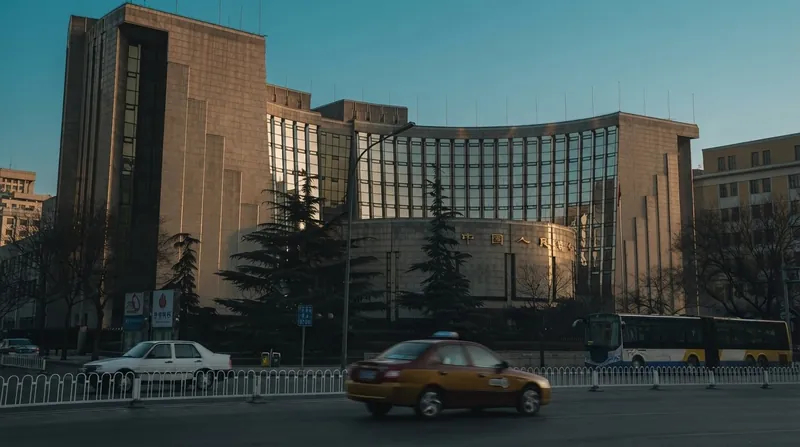
Chinese Banks Hike Dollar Deposit Rates Past 4% to Curb Yuan Rally
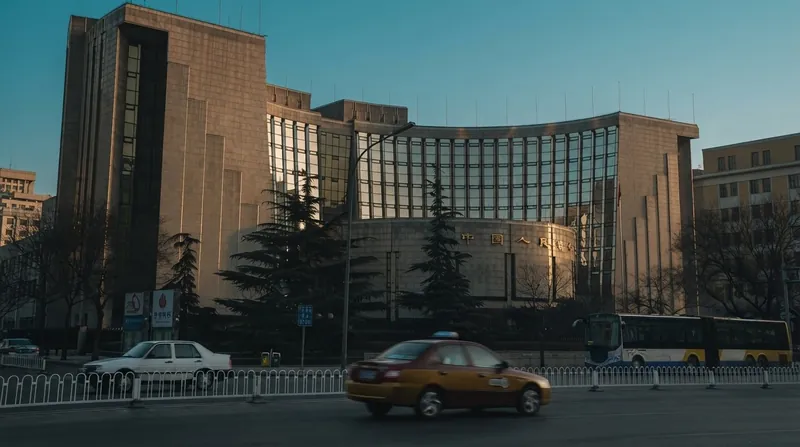
China Hikes Foreign Exchange Deposit Reserve Ratio to 6% to Curb Yuan Gains
October 2026
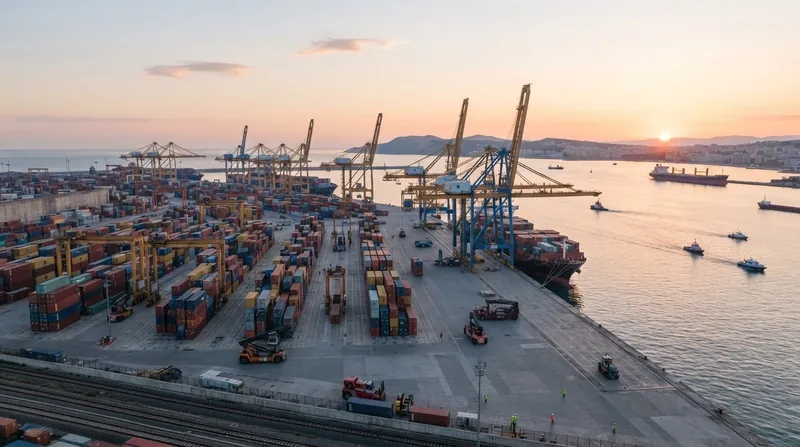
Chinese Yuan Reaches Four-Year High Against US Dollar on Export Strength
How the story developed
The Chinese yuan gained roughly 10 percent against the US dollar from early 2025 through late 2026, driven by record trade surpluses. Global demand for AI infrastructure heavily drove export growth, with September exports surging 36.3 percent year-over-year to $447.18 billion.
On October 21, the onshore Chinese yuan reached 6.6765 per US dollar, marking its strongest level since June 2022. The milestone followed the People's Bank of China's decision to hold benchmark lending rates steady for a 17th consecutive month.
The currency's upward momentum was reinforced by corporate treasurers accelerating the conversion of dollar receipts into yuan. The surge overpowered sluggish domestic consumption but raised concerns about the competitiveness of the country's export sector.
In response to the currency's four-year high, the People's Bank of China announced on November 3 a technical tightening measure to reduce onshore dollar liquidity. The central bank stated it would increase the amount of foreign currency banks must hold in reserve by two percentage points, raising the foreign exchange deposit reserve ratio from 4 percent to 6 percent.
While the direct liquidity impact of the reserve ratio adjustment is relatively modest, markets view the move as a clear policy signal from Beijing to slow the currency's appreciation and put downward pressure on the yuan.