
full timeline
Bayer Roundup cancer litigation
A state court has finalized a $7.25 billion class-action agreement to resolve tens of thousands of lawsuits alleging the herbicide Roundup causes non-Hodgkin lymphoma.
Follow Bayer Roundup cancer litigation in the Factlen app and get an alert when there is news. Get the app
Share this story
Latest report
Missouri Judge Approves $7.25 Billion Bayer Settlement for Nationwide Roundup Cancer Claims
A state court has finalized a $7.25 billion class-action agreement to resolve tens of thousands of lawsuits alleging the herbicide Roundup causes non-Hodgkin lymphoma. The ruling provides a structured payout system for current plaintiffs while establishing a framework for future claims against the German pharmaceutical giant.
- A Missouri judge finalized a $7.25 billion class-action settlement between Bayer and plaintiffs alleging Roundup causes cancer.
- The agreement establishes a compensation framework for tens of thousands of current claims and a reserve fund for future diagnoses.
- Bayer acquired the Roundup brand through its $63 billion purchase of Monsanto in 2018, inheriting the sprawling litigation.
- The settlement does not cover all plaintiffs, as a specific cohort opted out to pursue individual jury trials in state courts.
After years of sprawling litigation that erased billions in corporate valuation, Bayer has secured judicial authorization to close the largest chapter of its herbicide legal battles. The formal sign-off activates a massive compensation fund for individuals diagnosed with non-Hodgkin lymphoma following agricultural or residential exposure.[1][4]
The judicial order formally activates a compensation framework that Bayer negotiated to manage the legal docket it inherited from its 2018 acquisition of Monsanto. The ruling establishes a binding resolution for the vast majority of pending cases across the United States.[3][6]
While the agreement covers most of the consolidated dockets, it does not entirely eliminate Bayer's legal exposure. The settlement structure allows certain plaintiffs to opt out, leaving a residual pool of cases that will proceed to individual trials in state courts.[1][3]
"The ruling, in a nationwide class-action suit, is expected to end tens of thousands of lawsuits by people claiming that Roundup caused non-Hodgkin lymphoma," reported The New York Times.[7]
Structuring the Payouts
The $7.25 billion package is divided into distinct tranches designed to address both immediate and future liabilities. The largest portion is allocated to individuals who have already filed suit and received a qualifying cancer diagnosis prior to the settlement date.[4][6]
A secondary reserve fund is established within the total amount to cover agricultural workers and consumers who may develop the disease in the coming years. This forward-looking mechanism was a critical requirement for the court to certify the class and approve the final terms.[6]
Disbursement schedules dictate that the initial payments will begin flowing to verified claimants by the second quarter of 2027. Independent claims administrators will evaluate medical records and exposure histories to determine individual award amounts based on a tiered severity matrix.[1]
None of the cited court documents or initial corporate filings provided an immediate direct quotation from the presiding judge or Bayer executives regarding the final signature. The company has historically maintained that glyphosate, the active ingredient in Roundup, is safe when used as directed.[2]
Financial Toll on Bayer
The finalization of the $7.25 billion payout marks a definitive financial checkpoint in what has become one of the most expensive corporate acquisitions in history. Bayer purchased Monsanto for $63 billion in June 2018, acquiring the Roundup brand just as the first major cancer trials reached verdicts.[3]
Shares of Bayer trading in Frankfurt under the ticker BAYN GY reacted to the final approval as investors digested the certainty of the cash outflow. The company had previously set aside more than $16 billion in litigation reserves to manage the total anticipated cost of the Roundup fallout.[5]
Funding the $7.25 billion settlement will require Bayer to draw heavily on its free cash flow and existing credit facilities over the next 36 months. Analysts noted the structured payout schedule prevents an immediate liquidity crisis for the German conglomerate.[4]
The financial burden has already forced Bayer to implement aggressive cost-cutting measures across its pharmaceutical and crop science divisions. The company slashed its dividend to the legal minimum of —0.11 per share earlier in 2026 to preserve capital for these exact legal obligations.[3][5]
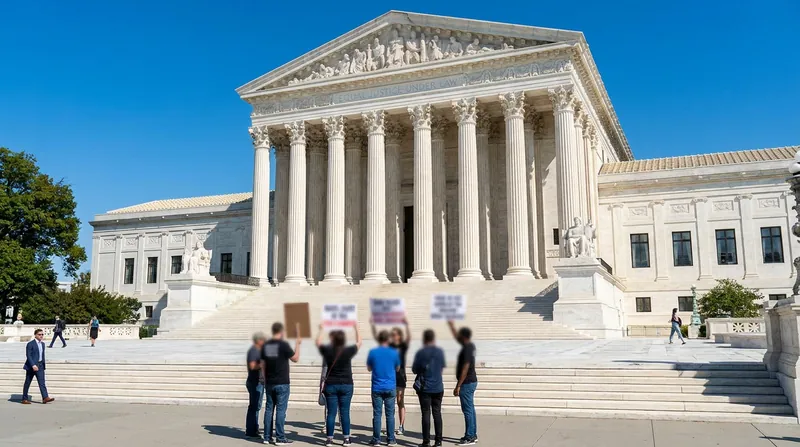
This settlement approval arrives as a new chapter in a complex legal saga that recently reached the highest levels of the federal judiciary. The litigation landscape shifted significantly following a recent Supreme Court ruling regarding federal preemption limits on corporate liability.[1]
The Preemption Battle
Bayer had argued that because the Environmental Protection Agency approved Roundup's label without a cancer warning, state-level failure-to-warn claims should be preempted by federal law. The courts have repeatedly navigated the tension between federal regulatory approval and state consumer protection statutes.[2][7]
By securing this $7.25 billion class-action approval, Bayer effectively bypasses the unpredictable nature of jury trials for the participating plaintiffs. Previous individual verdicts had occasionally resulted in multi-billion-dollar punitive damage awards, though judges routinely reduced those figures on appeal.[3]
The settlement does not require Bayer to add a cancer warning label to Roundup products sold for agricultural use. The company has, however, transitioned the residential lawn and garden versions of the weedkiller to alternative active ingredients to limit future liability.[1][2]
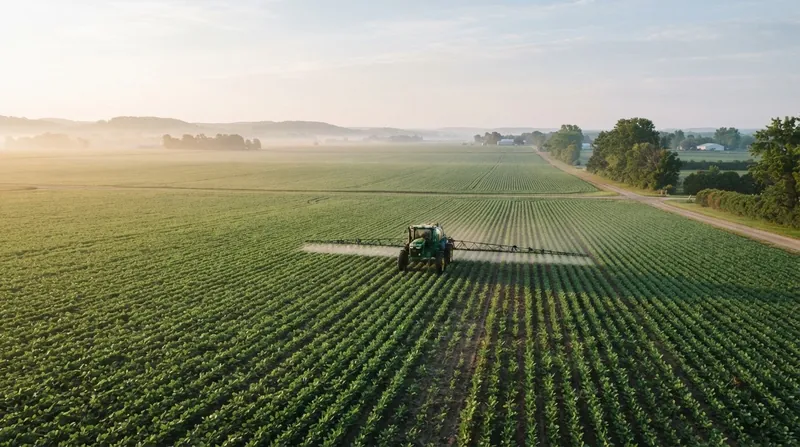
Glyphosate remains the most widely used herbicide in global agriculture, deeply integrated into farming practices for corn, soybeans, and cotton. The chemical is applied to more than 298 million acres of farmland annually across the American Midwest to manage weed resistance.[6]
Agricultural Market Impact
Commodity markets have closely monitored the Roundup litigation, as any regulatory ban or market withdrawal would force a massive restructuring of modern agronomy. The settlement ensures that commercial farmers will retain access to the herbicide without immediate supply disruptions.[4]
Competitors in the agrochemical sector have accelerated the development of alternative weed management systems in response to Bayer's legal vulnerabilities. However, no single chemical has yet matched the cost-effectiveness and broad-spectrum efficacy of glyphosate for large-scale commercial operations.[3]
The Missouri court's approval does not close the book on Roundup litigation entirely. A specific cohort of plaintiffs, primarily those pursuing cases in state courts with favorable evidentiary standards, have formally opted out of the class-action framework.[1][6]
These opt-out cases will require Bayer to continue defending the safety of glyphosate in front of juries throughout 2027. The company has secured defense verdicts in several recent individual trials, providing leverage in negotiating settlements for the remaining docket.[2][3]
Remaining Legal Exposure
Bayer has faced roughly 165,000 claims overall since the litigation began, making the administration of this settlement a massive logistical undertaking. The claims administrators will spend the next several years processing medical records and distributing the allocated funds.[1][4]
The ultimate financial ceiling for the Roundup saga remains dependent on how many future claims materialize against the secondary reserve fund. For now, the $7.25 billion approval provides the clearest boundary yet on the liabilities stemming from the 2018 Monsanto acquisition.[4][5]
The foundation of the litigation rests on a sharp divergence between different international scientific and regulatory bodies regarding glyphosate's safety. In 2015, the International Agency for Research on Cancer classified the chemical as a probable human carcinogen, sparking the initial wave of lawsuits.[3]
Conversely, the Environmental Protection Agency and the European Food Safety Authority have repeatedly concluded that glyphosate does not pose a carcinogenic risk to humans. Bayer has relied heavily on these regulatory endorsements to defend the product in court and maintain its market presence.[2][4]
The $7.25 billion settlement allows Bayer to avoid litigating this complex scientific dispute in front of thousands of individual juries. Presenting epidemiological data and toxicological studies to laypersons had proven highly unpredictable for the company's defense teams in early trials.[1][3]
While the Missouri court's approval applies strictly to claims filed within the United States, the resolution sends a strong signal to international markets. European regulators recently renewed glyphosate's authorization for another decade, though individual member states retain the right to restrict its use.[4][5]
Sources
- [1]AP News — Court approves $7.25 billion settlement with Bayer for Roundup cancer claims Read on AP News →
- [2]AFP — US judge approves $7.25 bn Roundup cancer settlement Read on AFP →
- [3]The Guardian — Judge approves $7.25bn Bayer payout to settle claims that Roundup causes cancer Read on The Guardian →
- [4]Euronext — Missouri judge approves Bayer's $7.25 billion Roundup settlement Read on Euronext →
- [5]Newsquawk — US judge approves Bayer's (BAYN GY) USD 7.25bln Roundup settlement Read on Newsquawk →
- [6]MLQ.ai — Missouri judge approves Bayer's $7.25 billion Roundup settlement covering current and future cancer claims Read on MLQ.ai →
- [7]NYT — Judge Approves $7 Billion Settlement Over Claims That Roundup Caused Cancer Read on NYT →
What to watch
- Individual jury trials in state courts for the specific cohort of plaintiffs who opted out of the class-action settlement.
- The administration of the reserve fund established for future Roundup cancer diagnoses.
Charts, maps and images
Timeline
November 2026
Missouri Judge Approves $7.25 Billion Bayer Settlement for Nationwide Roundup Cancer Claims
June 2026
FACT CHECK: Supreme Court Ruling on Federal Preemption Limits Corporate Liability in Roundup Cancer Lawsuits
How the story developed
The sprawling litigation against Bayer centers on allegations that the herbicide Roundup causes non-Hodgkin lymphoma. Bayer inherited the lawsuits following its $63 billion purchase of Monsanto in 2018, which included the acquisition of the Roundup brand.
A central issue in the litigation has been whether the manufacturer failed to warn consumers about the product's cancer risks. The Environmental Protection Agency has consistently maintained that glyphosate is unlikely to cause cancer in humans.
On June 29, the Supreme Court ruled 7-2 that federal pesticide laws override state-level lawsuits accusing Bayer of failing to warn consumers. The decision blocked claims that Bayer should have included a cancer warning on Roundup labels, prioritizing the EPA's safety assessments over state jury verdicts.
The Supreme Court decision effectively neutralized tens of thousands of pending claims against Bayer by limiting corporate liability in failure-to-warn lawsuits. Justices Jackson and Gorsuch dissented, arguing that state tort remedies should remain available.
On November 21, a Missouri state court finalized the $7.25 billion class-action settlement between Bayer and plaintiffs. The agreement established a compensation framework for tens of thousands of current claims and a reserve fund for future diagnoses, while leaving a specific cohort of plaintiffs to pursue individual state court trials.