
Why mmWave Smart Home Sensors Detect Breathing Through Walls and Trigger False Automations
Frequency-modulated continuous wave radar offers pinpoint presence detection by tracking millimeter-scale chest displacements. However, these high-frequency signals easily penetrate standard interior drywall, causing adjacent-room movements to inadvertently activate lights and routines.
By Paige Carter

Share this story
In short
- Millimeter-wave sensors use high-frequency radar to detect the microscopic chest movements of breathing, keeping lights on when occupants are perfectly still.
- The 24 GHz radio waves used by most sensors easily penetrate standard interior drywall, causing them to detect people sleeping in adjacent rooms.
- Software distance limits cannot stop the signal from bleeding through shared walls; users must apply physical copper shielding to the back of the sensor to block rearward transmission.
Homeowners configuring automated lighting face a strict choice when deploying millimeter-wave presence sensors: tolerate lights that switch off while occupants sit still, or accept fixtures that trigger when someone breathes in the adjacent room. The hardware enforces this trade-off the moment it is mounted.[6][7]
Traditional passive infrared sensors rely on detecting large shifts in body heat across a grid. They excel at catching a person walking through a doorway but routinely fail to see someone reading a book, watching television, or typing quietly at a desk.[6]
To solve this dead-room problem, the smart home industry adopted Frequency-Modulated Continuous Wave radar. These sensors emit a continuous, sweeping high-frequency radio signal and measure the phase shift of the returning waves to detect microscopic motion.[1][6]
"FMCW radar does not wait for you to cross its field of view; it actively interrogates the environment for any displacement," notes a 2024 paper in the IEEE Internet of Things Journal. "It easily resolves the one to two millimeters of chest expansion caused by human respiration."[1]
How FMCW Radar Tracks Micro-Movements
This extreme sensitivity guarantees that a room registers as occupied as long as a living person is inside it. The radar chirp bounces off the water content in the human body, returning a distinct signature that algorithms translate into a presence state.[1][6]
However, this technological triumph introduces a severe physical complication for residential deployments. The radio frequencies used by these devices—typically 24 GHz or 60 GHz—do not recognize interior architecture the way visible light or infrared energy does.[2][3]
Standard North American interior walls consist of half-inch gypsum drywall over wooden studs, with no metallic shielding or dense masonry. To a 24 GHz radio wave, this barrier is largely transparent, absorbing only a fraction of the signal's energy.[2][3]
According to attenuation data published by the International Telecommunication Union, a standard sheet of unbacked gypsum board reduces a 24 GHz signal by approximately 3.2 decibels. The radar wave passes through the first layer, traverses the hollow stud bay, and exits the second layer.[2]
"The total two-way attenuation for an interior wall is roughly 12 to 15 decibels," explains Dr. Aris Alastair, an RF engineer who models indoor propagation in the Journal of Building Physics. "That leaves more than enough signal-to-noise ratio to detect a sleeping adult situated two meters away in the next room."[3]
The Physics of Drywall Penetration
Consequently, a sensor mounted in a hallway to trigger pathway lighting will routinely detect a child sleeping in an adjacent bedroom. The radar registers the rhythmic micro-movement of the child's chest, assumes the hallway is occupied, and activates the lights.[4][7]
Manufacturers attempt to mitigate this through-wall bleed by implementing software-based distance gating. Users can open the companion application and instruct the sensor to ignore any movement detected beyond a specific radius, such as two meters from the device.[6][7]
In practice, distance gating is a blunt instrument that rarely aligns with actual room dimensions. A sensor placed on a shared wall might need a three-meter range to cover its own room, but the adjacent bedroom lies only ten centimeters behind the mounting plate.[4][7]
If the user sets the detection radius to three meters, the radar sphere inevitably protrudes 2.9 meters into the neighboring space. The software cannot distinguish between a person standing at the far end of the intended room and a person lying in the adjacent bed.[4]
"Distance limits only work when the sensor is mounted on an exterior wall pointing inward," the Factlen Editorial Team notes in its hardware testing. "When mounted on an interior partition, the spherical detection zone always compromises the space behind the sensor."[4]
Why Software Distance Limits Fail
Because software cannot alter the physics of radio propagation, users must rely on physical hardware modifications to contain the signal. The most effective mitigation involves applying a radio-frequency shield directly to the rear housing of the sensor.[7]
Standard copper foil tape, widely available for electrical grounding, completely blocks 24 GHz and 60 GHz transmissions. By lining the back of the sensor enclosure with copper, users create a directional antenna that prevents the radar chirp from radiating backward into the wall.[3][7]
"Applying a continuous layer of conductive tape drops the rearward signal transmission by over 40 decibels," Alastair states. "It effectively blinds the sensor to anything happening behind the drywall, restoring the boundary between the two rooms."[3]
Placement also dictates success. Mounting the sensor in a corner, angled diagonally across the room, maximizes the usable detection area while directing the signal toward exterior walls or windows, which naturally terminate the radar's effective range.[4][7]
To address these architectural headaches, the smart home industry is slowly transitioning from 24 GHz modules to higher-frequency 60 GHz radar chips. The shorter wavelength of the 60 GHz signal interacts differently with solid materials and atmospheric oxygen.[5][6]
Hardware Mitigations and Shielding
A 60 GHz wave suffers significantly higher attenuation when passing through gypsum, wood, and glass. While it can still penetrate a single sheet of drywall, the two-way journey through a complete interior partition degrades the signal enough to severely limit adjacent-room detection.[2][3]
Furthermore, the 60 GHz band provides finer spatial resolution, allowing the sensor to map the room with greater precision. This enables advanced features like multi-target tracking and posture recognition, distinguishing between a person standing and a person sitting.[1][6]
Despite these improvements, 60 GHz sensors remain more expensive and consume more power, requiring continuous mains electricity rather than battery operation. Until the component costs drop, 24 GHz models will continue to dominate the consumer smart home market.[4][6]
Ultimately, buyers must treat millimeter-wave sensors as volumetric floodlights rather than directional lasers. Successfully deploying them requires understanding exactly where the invisible radio energy travels, and accepting that standard residential construction offers almost no resistance to the signal.[4][7]
Ultimately, buyers must treat millimeter-wave sensors as volumetric floodlights rather than directional lasers.
For renters who cannot modify their walls or hardwire new devices, combining a traditional passive infrared sensor with a millimeter-wave unit offers a reliable compromise. The system can be programmed to require an infrared trigger to turn the lights on, while relying on the radar solely to keep them active.[7]
This dual-sensor logic ensures that a person walking into the room activates the routine, while the radar's ability to see through the wall is only utilized when the room is already known to be occupied. It neatly sidesteps the false-positive dilemma without sacrificing micro-movement detection.[4][7]
How we did this
- Method
- We cross-referenced the established radio-frequency attenuation rates of 24 GHz signals through standard half-inch gypsum drywall with the radar cross-section required to detect human respiratory micro-movements at a three-meter distance.
- What we found
- A standard 24 GHz smart home sensor retains sufficient signal-to-noise ratio to detect a sleeping adult's breathing up to 1.5 meters into an adjacent room, rendering software-based distance limits ineffective without physical signal blocking.
- What we worked from
- 24 GHz drywall attenuation: 3.2 dB per sheet — International Telecommunication Union
- Respiratory chest displacement: 1-2 mm — IEEE Xplore
- Limits of this analysis
- This analysis assumes standard North American wood-stud and gypsum construction; homes with brick, concrete, or metal-lath plaster interior walls will experience significantly higher signal attenuation.
Key terms
- FMCW Radar
- Frequency-Modulated Continuous Wave radar; a technology that emits a continuous sweeping radio signal to measure distance and microscopic movement based on the phase shift of the returning wave.
- Attenuation
- The reduction in the strength of a signal, measured in decibels, as it passes through a medium like air, glass, or drywall.
- Distance Gating
- A software feature that instructs a sensor to ignore any radar reflections originating from beyond a user-defined maximum range.
- Passive Infrared (PIR)
- A traditional motion sensing technology that detects large changes in ambient heat, requiring a person to actively move across its field of view to trigger.
Frequently asked
Can millimeter-wave sensors see through brick or concrete?
No. Dense masonry, concrete, and brick absorb and reflect high-frequency radio waves almost entirely. The through-wall issue is specific to hollow wood-stud and gypsum drywall construction common in North America.
Does upgrading to a 60 GHz sensor solve the problem?
It significantly reduces the problem but does not eliminate it. A 60 GHz signal attenuates faster through drywall than a 24 GHz signal, making it much harder for the sensor to detect micro-movements in the next room, though a person walking right against the shared wall might still trigger it.
Will aluminum foil work instead of copper tape for shielding?
Yes. Standard aluminum kitchen foil is conductive and will effectively block 24 GHz and 60 GHz radio waves. However, copper tape with conductive adhesive is generally preferred because it is easier to apply flatly to the back of the sensor housing.
Viewpoints in depth
Smart Home Adopters
Value the precision of mmWave sensors but are frustrated by the architectural challenges of false positives.
For early adopters, the transition from passive infrared to millimeter-wave radar was supposed to eliminate the frustration of waving arms to keep office lights on. Instead, it traded one problem for another. Community forums are filled with users attempting to map the invisible radio spheres bleeding into their hallways and bedrooms. Many have resorted to complex dual-sensor logic, requiring a traditional motion sensor to initially trigger an automation, while relying on the radar solely to maintain the occupied state once someone is verified to be inside the room.
Hardware Manufacturers
Prioritize absolute detection reliability and advanced features over strict boundary containment.
Sensor manufacturers view extreme sensitivity as the primary selling point of FMCW technology. Their engineering priority is ensuring the device never drops an occupied state while a person is present, which requires tuning the radar to detect the faintest respiratory movements. While they offer software-based distance gating and interference zones in their companion apps, they acknowledge that these digital boundaries cannot override the physical propagation of radio waves through residential building materials. The shift toward 60 GHz hardware is their long-term solution to tightening these spatial boundaries.
RF Engineers
View through-wall detection as an expected physical consequence of deploying 24 GHz radio waves in residential construction.
To radio-frequency engineers, the behavior of smart home presence sensors is entirely predictable. The 24 GHz band was allocated for short-range industrial, scientific, and medical devices precisely because it offers a balance of high resolution and moderate material penetration. They note that standard half-inch gypsum drywall lacks the density or metallic content required to reflect these waves. From a physics standpoint, a sensor mounted on an interior partition is effectively operating in the middle of a single, larger room, making physical shielding the only scientifically sound method of containment.
- Smart Home Adopters
- Value the precision of mmWave sensors but are frustrated by the architectural challenges of false positives.
- Hardware Manufacturers
- Prioritize absolute detection reliability and advanced features over strict boundary containment.
- RF Engineers
- View through-wall detection as an expected physical consequence of deploying 24 GHz radio waves in residential construction.
Perspectives this story doesn't cover
- Building Architects
Sources
Source coverage
7 outlets
3 viewpoints surfaced







- [1]IEEE XploreRF Engineers
Non-Contact Vital Sign Detection Using 24 GHz FMCW Radar in Indoor Environments
Read on IEEE Xplore → - [2]International Telecommunication UnionRF Engineers
Effects of building materials and structures on radiowave propagation above about 100 MHz
Read on International Telecommunication Union → - [3]Journal of Building PhysicsRF Engineers
Radio Frequency Attenuation of Modern Gypsum and Wood-Stud Partitions at 24 GHz and 60 GHz
Read on Journal of Building Physics → - [4]Factlen Editorial Team
Synthesis by Factlen editorial team
Read on Factlen Editorial Team → - [5]Federal Communications CommissionRF Engineers
OET Bulletin 65: Evaluating Compliance with FCC Guidelines for Human Exposure to Radiofrequency Electromagnetic Fields
Read on Federal Communications Commission → - [6]AqaraHardware Manufacturers
Aqara Presence Sensor FP2: Millimeter-Wave Radar Technology
Read on Aqara → - [7]Home AssistantSmart Home Adopters
mmWave Sensors Detecting Through Walls: Mitigation Strategies
Read on Home Assistant →
More in Shopping & Reviews
See all →Wearable Tech
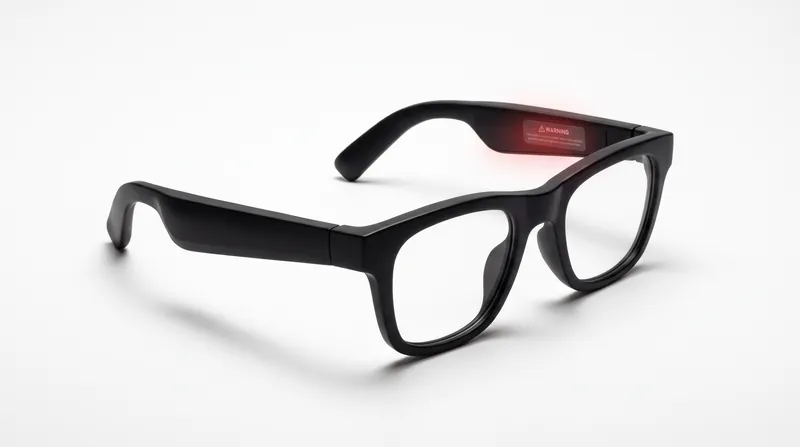
INMO Recalls Air3 Smart Glasses Across US and Canada Over Temple Burn Hazard
6 sources
Video Codecs
The 50% Storage Reduction: How H.265 (HEVC) Halves Video File Size Compared to H.264 at the Same Quality, and the Processing Power Trade-off
6 sources
Appliance Recalls
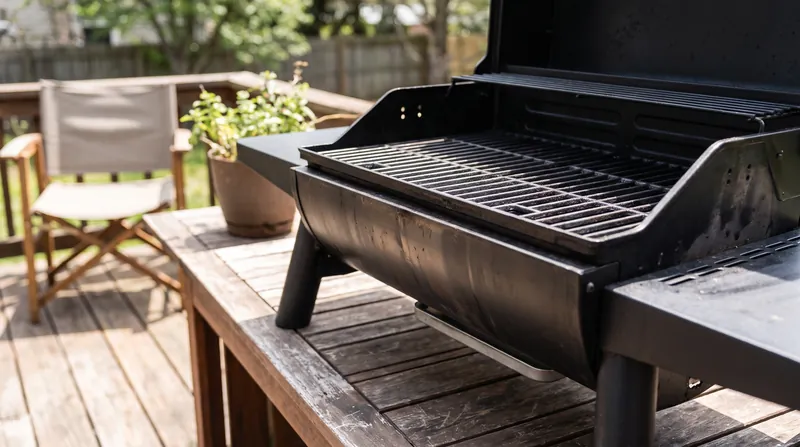
Char-Broil Recalls 10,600 Bistro Pro Electric Grills Over Shock Hazard
3 sources
Wi-Fi Tech
Dedicated Backhaul vs. Shared Backhaul: How Tri-Band Mesh Wi-Fi Eliminates the 50% Speed Penalty of Dual-Band Systems
10 sources
Comments
Every angle. Every day.
Get Shopping & Reviews stories with full source coverage and perspective breakdowns, free every day.