
full timeline
US–China AI competition
The United States and China have formally agreed that human operators must remain involved in all major military actions directed by artificial intelligence.
Follow US–China AI competition in the Factlen app and get an alert when there is news. Get the app
Share this story
Latest report
US and China Agree to Retain Human Control Over Major Military AI Decisions
The United States and China have formally agreed that human operators must remain involved in all major military actions directed by artificial intelligence. The bilateral pact establishes a critical boundary against fully autonomous warfare amid an escalating technological rivalry.
- The US and China formally agreed that human operators must retain control over all major military decisions involving artificial intelligence.
- The pact, finalized at the APEC summit in Shenzhen, draws a bilateral red line against fully autonomous warfare and algorithmic escalation.
- President Trump explicitly rejected broader global AI regulations, arguing they would stifle American innovation and disadvantage US technology companies.
- The agreement expands upon a late-2024 understanding that humans must maintain absolute control over the deployment of nuclear weapons.
The binding constraint on any bilateral arms control is the ability to define the weapon. On November 19, 2026, the United States and China established their first shared boundary for military artificial intelligence, formally agreeing that human operators must retain control over major combat decisions.[1][2]
The agreement, finalized during a bilateral meeting at the Asia-Pacific Economic Cooperation summit in Shenzhen, draws a red line against fully autonomous warfare. It marks a rare point of consensus between the two leading artificial intelligence powers amid an escalating technological rivalry that has fractured global supply chains.[1][5]
Treasury Secretary Scott Bessent confirmed the pact on November 20 following his return from the summit, briefing reporters on the diplomatic breakthrough. He stated that both administrations recognized the catastrophic risks of delegating strategic military authority to machine-speed systems that operate beyond human comprehension.[1][3]
"I think it was very important that President Trump and President Xi agreed that humans should always be involved in any military decisions that SI makes," Bessent told CNBC. He used the Trump administration's preferred term, "super intelligence," to describe advanced generative models and autonomous agents.[1][2]
Bessent emphasized the operational limit established by the two leaders during their closed-door session. "The SI should not be allowed to be autonomous for major military actions," he said, noting that the restriction applies regardless of the broader commercial and geopolitical competition between Washington and Beijing.[1][2]
Contrasting Visions for Governance
The military agreement emerged despite fundamentally opposed views on how artificial intelligence should be governed globally. During the Shenzhen talks, the two leaders presented contrasting frameworks for managing the technology's rapid evolution and its integration into civilian infrastructure, financial markets, and military networks.[4]
President Donald Trump used the summit to explicitly reject international oversight frameworks, framing them as a direct threat to American dominance. He argued that multilateral treaties would inherently disadvantage American technology companies and stifle domestic innovation as they compete with Chinese state-backed laboratories.[4]
"We oppose any form of globalist regulation or anything to control and stifle SI, and we won't allow that to happen, frankly," Trump stated during the conference. His administration has consistently prioritized maintaining a decisive developmental lead over Beijing, viewing algorithmic supremacy as a core national security imperative.[4]
Chinese President Xi Jinping countered by advocating for a multilateral approach, warning against the monopolization of the technology by a single nation. Chinese state media reported that Xi urged the United States to cooperate on shared safety risks and ensure the systems remain strictly under human control.[4]
"The development of artificial intelligence should not be a solo performance by any single country but rather a symphony of global cooperation," Xi said. He also criticized American export controls, framing them as an overextension of national security concerns designed to suppress China's legitimate economic development.[4]
The Notification Mechanism
The human-in-the-loop agreement builds upon a diplomatic foundation laid earlier in the year. In September 2026, the two nations agreed to establish a direct communication channel designed specifically to handle urgent artificial intelligence incidents and prevent accidental escalation in contested theaters like the South China Sea.[4]
That mechanism functions similarly to a traditional nuclear hotline, allowing either government to promptly alert the other if an advanced model behaves unpredictably or breaches critical infrastructure. The system aims to prevent rapid, unintended military escalations triggered by algorithmic errors or unauthorized autonomous actions.[4]
Bessent noted that the ongoing dialogue is intended to guard against shared dangers and prevent fatal misunderstandings between the two distinct military architectures. Both sides expect to exchange best practices for evaluating and testing advanced models before their deployment into live operational environments.[1]
The diplomatic progress follows years of Track II dialogues convened by institutions like the Brookings Institution and Tsinghua University. Since 2019, those unofficial talks have worked to establish a shared glossary of terms and identify practical steps to manage algorithmic risks before they manifest on the battlefield.
Expanding the Nuclear Baseline
The Shenzhen pact represents a significant expansion of previous bilateral understandings regarding automated warfare. In late 2024, Washington and Beijing reached a foundational agreement that humans, not artificial intelligence, must retain absolute control over the decision to deploy and detonate nuclear weapons.
Military strategists have increasingly worried that advanced models could compromise nuclear command, control, and communications networks. A machine-speed cyberattack on those systems could blind a nation's strategic deterrent, forcing leaders into rapid, catastrophic retaliatory decisions before human verification of the threat is even possible.
By extending the human-control requirement to "major military actions," the new agreement attempts to place a ceiling on conventional autonomous escalation. It addresses the deployment of drone swarms, automated targeting matrices, and algorithmic battle management systems that process battlefield data faster than human commanders can read it.[1]
However, the precise definition of a "major" military action remains ambiguous in the public statements. Analysts note that while strategic launches are clearly covered, the agreement leaves dangerous gray areas regarding tactical autonomous engagements and defensive interceptor systems operating at speeds beyond human reaction times.
The Hardware Choke Point
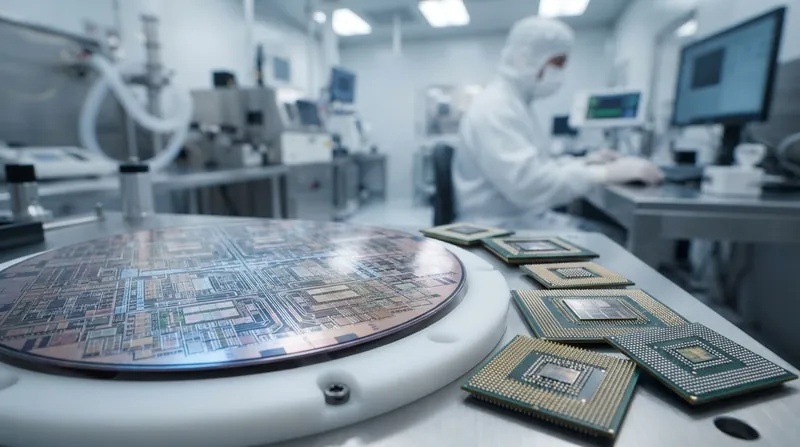
The diplomatic breakthrough on military deployment occurs alongside an intensifying American campaign to restrict China's access to the hardware required to train these models. The Trump administration has systematically tightened export controls on advanced semiconductors, viewing the silicon supply chain as a critical strategic vulnerability.[1]
Bessent confirmed that the United States will maintain its strict licensing requirements for high-performance processors. He noted that Chinese orders for Nvidia's H200 chips—the most advanced tier currently permitted for export under the restricted licenses—have been notably sparse in recent months, signaling a shift in procurement strategies.[1]
The Treasury Secretary suggested that Beijing is attempting to build out its own domestic semiconductor stockpiles to circumvent American restrictions. The broader economic discussions at the summit also touched on a proposed Board of Trade intended to manage mutual tariff reductions on $30 billion of non-sensitive goods.[1]
Despite the military agreement, Washington views maintaining a generational hardware lead as its primary defense against adversarial models. "There's nothing to do with competition when it says that both sides agree that no major military operation should be launched without a human being involved," Bessent clarified.[1]
International Pressure Mounts
The bilateral nature of the Shenzhen agreement highlights the absence of a binding global treaty on lethal autonomous weapons. The United Nations has repeatedly attempted to broker a comprehensive ban on systems capable of selecting and engaging targets without human intervention, but those efforts have stalled.[4]
UN High Commissioner for Human Rights Volker Türk recently warned that delegating life-and-death decisions to machines poses an existential threat to global stability. He cautioned that the technology is currently being deployed in a "medieval" manner driven by geopolitical power rather than established ethical frameworks.[4]
Canadian Prime Minister Mark Carney echoed those concerns during the APEC summit, stating that the lack of comprehensive international governance poses an "enormous risk." Middle powers continue to push for a Geneva Convention-style framework for algorithmic warfare, rejecting the superpower duopoly over military technology standards.[4]
For now, the global architecture relies entirely on the bilateral restraint of the two superpowers. As military laboratories in both nations race to integrate generative models into their command structures, the durability of the Shenzhen agreement will face immediate technical tests in the coming months.
Sources
- [1]Defense News — Trump, Xi agreed that military AI decisions should involve humans, Bessent says Read on Defense News →
- [2]Cyprus Mail — Trump and Xi agreed that military AI decisions 'should involve humans' Read on Cyprus Mail →
- [3]Anadolu Agency — Trump, Xi agreed humans must stay in charge of AI military decisions, Bessent says Read on Anadolu Agency →
- [4]Euronews — Trump rejects global AI regulation as Xi calls for safety cooperation Read on Euronews →
- [5]CBS News — Trump and Xi are set to meet in China amid tensions over AI. Here's what to know. Read on CBS News →
What to watch
- The United States and eight allied nations will map their supply chains and coordinate on alternative sourcing for critical artificial intelligence materials.
Charts, maps and images
Timeline
November 2026
US and China Agree to Retain Human Control Over Major Military AI Decisions
US and Eight Allies Sign Pact to Shield AI Supply Chains From China

October 2026
Beijing Grants Overseas Export Approvals to DeepSeek and MiniMax AI Models
China Proposes Export Controls on 23 AI Technologies Spanning Foundation Models and Intelligent Agents
AI


August 2026
US to Force Allies to Choose Between Competing US and Chinese Global AI Governance Coalitions
July 2026
US and China Expand Tech War With Reciprocal Export Controls on Advanced AI Models
How the story developed
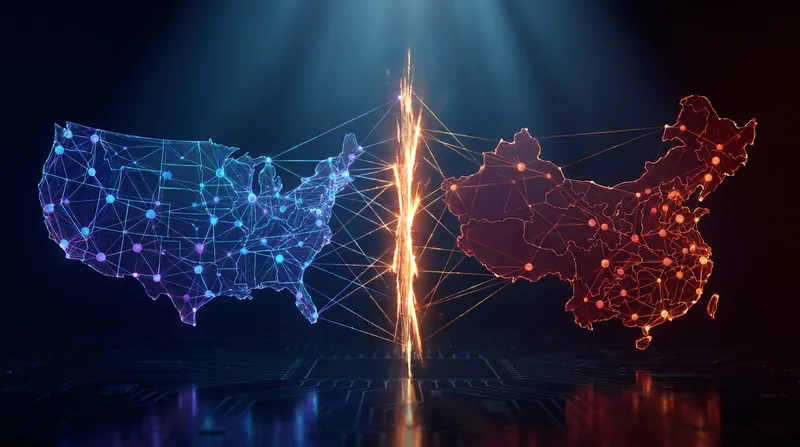
The technological rivalry between the US and China expanded from semiconductor hardware to artificial intelligence software models on July 14. Washington initiated the shift by restricting foreign access to Anthropic's latest frontier models over cybersecurity concerns. In response, Beijing began drafting reciprocal countermeasures to block overseas access to its own highly capable, low-cost AI systems. The proposed restrictions threatened a cost shock for Western startups reliant on cheap Chinese compute, while regulators faced technical challenges in enforcing export controls on digital software weights.
On August 18, the US State Department drafted a letter warning 35 allied nations that they would be excluded from Washington's AI coalition if they also joined a competing framework led by China. The ultimatum targeted signatories of the US AI Opportunity Statement, explicitly forbidding dual membership in competing frameworks. The move was catalyzed by Kazakhstan, which had recently joined both the US-led Pax Silica initiative and China's WAICO. Washington aimed to starve China of critical minerals and semiconductor access needed for advanced AI development. Chinese officials condemned the draft, arguing that forcing exclusive alliances would stifle global artificial intelligence progress.
Beijing escalated the conflict on October 16 by proposing to add 40 technologies to its export control list, including 23 artificial intelligence categories spanning foundation models and intelligent agents. The draft rules required government approval to export model weights and source code for systems exceeding two trillion parameters. Technologies already in the public domain were exempt, and Chinese firms could continue serving foreign users through cloud APIs and software-as-a-service platforms. A temporary pre-export registration requirement took effect immediately.
On October 25, Chinese regulators officially cleared artificial intelligence startups DeepSeek and MiniMax to export their large language models to international markets. State media confirmed the registrations were completed days after Beijing finalized its outbound technology rules. The approvals marked the first authorized overseas deployments under the country's new framework, granting the companies the legal right to offer open-source and commercial licenses internationally and sign binding commercial contracts with global enterprises without violating domestic export controls.