
full timeline
US–China AI competition
The United States and eight allied nations have finalized an agreement to coordinate the protection of artificial intelligence supply chains from Chinese influence.
Follow US–China AI competition in the Factlen app and get an alert when there is news. Get the app
Share this story
Latest report
US and Eight Allies Sign Pact to Shield AI Supply Chains From China
The United States and eight allied nations have finalized an agreement to coordinate the protection of artificial intelligence supply chains from Chinese influence. The pact establishes a framework for identifying vulnerabilities and securing critical AI infrastructure ahead of upcoming diplomatic talks.
- The US and eight allied nations have signed a pact to coordinate the security of their AI supply chains.
- The agreement establishes a framework to identify vulnerabilities and secure critical hardware and software components.
- The pact was finalized ahead of scheduled diplomatic talks between the US and China.
- Participating nations will map their supply chains and coordinate on alternative sourcing for critical materials.
The United States and eight partner nations have formally agreed to coordinate the defense of their artificial intelligence supply chains against Chinese integration. The pact, finalized this weekend, establishes a joint framework to identify vulnerabilities across the hardware and software layers that power frontier AI models.[1][4][5]
The agreement marks a shift from unilateral export controls to a synchronized allied strategy. Participating nations will share intelligence on supply chain dependencies and work to secure critical components, from advanced semiconductors to data center infrastructure, before they can be compromised or restricted.[1][2]
The timing of the accord places a structural barrier ahead of upcoming diplomatic engagements. The pact was signed just before scheduled talks between the US administration and Chinese leadership, establishing a unified allied position on technology security that cannot easily be unpicked in bilateral negotiations.[4]
Mapping the dependencies
The declaration expands on the existing "Pax Silica" framework, moving beyond broad governance principles to target the physical and digital logistics of AI development. It requires signatories to actively map their supply chains and coordinate on alternative sourcing for critical materials currently dominated by Chinese suppliers.[3]
The focus on supply chains reflects a growing recognition that controlling the export of finished chips is insufficient if the underlying infrastructure remains vulnerable. The pact aims to secure the entire lifecycle of AI development, including the specialized equipment required for semiconductor manufacturing and the vast energy resources needed for data centers.[1][6]
While the agreement outlines a coordinated approach, the specific mechanisms for enforcement and the extent of intelligence sharing remain under development. The success of the pact will depend on the willingness of participating nations to align their domestic regulations and potentially absorb the economic costs of decoupling from established supply networks.[2][5]
A bifurcated ecosystem
The allied move is likely to accelerate the bifurcation of the global technology ecosystem. As the US and its partners tighten controls over their AI supply chains, China is expected to double down on its efforts to achieve technological self-sufficiency, further separating the two spheres of AI development.[4][6]
The immediate impact of the pact will be felt by multinational technology companies, which must now navigate a more complex and fragmented regulatory landscape. The agreement signals that the era of frictionless global supply chains for advanced technology is over, replaced by a system where security considerations dictate sourcing decisions.[1][3]
Sources
- [1]Seeking Alpha — U.S., allies agree to coordinate AI supply chain security Read on Seeking Alpha →
- [2]The News International — US, allies sign accord to protect AI supply chains: Key details to know Read on The News International →
- [3]AIstratica — Pax Silica widens its AI supply-chain pact with a new declaration Read on AIstratica →
- [4]FourWeekMBA — US, 8 Partners Sign AI Supply Pact Before Trump-Xi Talks Read on FourWeekMBA →
- [5]Financial Times — US and allies sign accord to protect AI supply chains from China Read on Financial Times →
- [6]Bloomberg — US, Allies Agree to Guard AI Supply Chains From China, FT Says Read on Bloomberg →
What to watch
- Diplomatic talks between the United States and China are scheduled to take place.
Charts, maps and images
Timeline
November 2026
US and Eight Allies Sign Pact to Shield AI Supply Chains From China

October 2026
Beijing Grants Overseas Export Approvals to DeepSeek and MiniMax AI Models
China Proposes Export Controls on 23 AI Technologies Spanning Foundation Models and Intelligent Agents
AI


August 2026
US to Force Allies to Choose Between Competing US and Chinese Global AI Governance Coalitions
July 2026
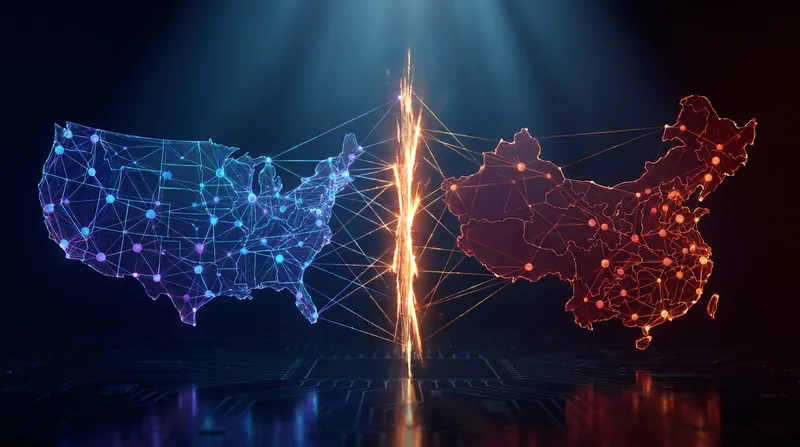
US and China Expand Tech War With Reciprocal Export Controls on Advanced AI Models
How the story developed
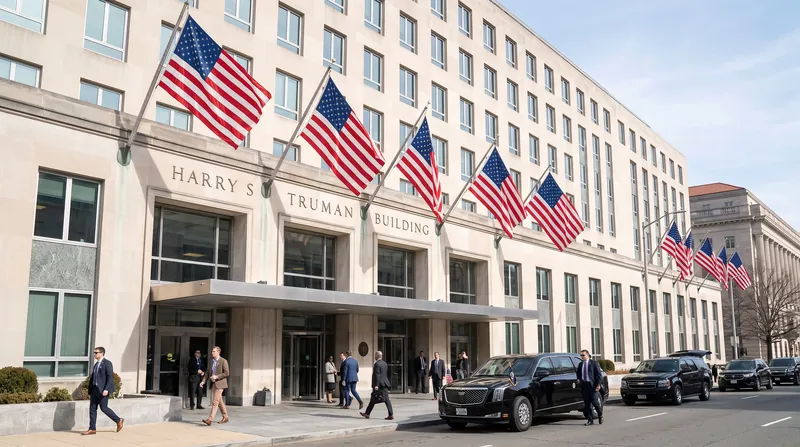
On August 18, 2026, the United States State Department drafted a letter issuing a warning to thirty-five allied nations regarding global artificial intelligence governance. The communication stated that these nations would be excluded from Washington's artificial intelligence coalition if they chose to join a competing framework led by China.
The ultimatum was specifically directed at signatories of the United States AI Opportunity Statement. The drafted letter explicitly forbade dual membership in competing international artificial intelligence frameworks.
The diplomatic action was catalyzed by Kazakhstan's geopolitical positioning. Kazakhstan had recently joined both the United States-led Pax Silica initiative and China's WAICO, prompting Washington to enforce coalition exclusivity.
Through these measures, Washington aimed to starve China of critical minerals and semiconductor access necessary for advanced artificial intelligence development. Chinese officials condemned the draft, arguing that forcing exclusive alliances will stifle global artificial intelligence progress.