
UN Approves First Global Standard for L4 Autonomous Driving Systems, Clearing Path for Mass Deployment
The UNECE has adopted the world's first globally harmonized regulatory framework for fully driverless vehicles, ending years of fragmented rules and establishing a unified safety standard for automakers.

Share this story
The decade-long wait for a unified rulebook for self-driving cars is finally over. On June 24, 2026, the United Nations Economic Commission for Europe (UNECE) achieved a historic milestone, adopting the world's first globally harmonized regulatory framework for Level 4 Automated Driving Systems (ADS). Approved by the World Forum for Harmonization of Vehicle Regulations (WP.29), the mandate clears the most significant bureaucratic roadblock standing between autonomous vehicle prototypes and mass commercial deployment.[1][5]
Until now, the autonomous vehicle industry has been trapped in a regulatory labyrinth. Automakers and technology providers have poured an estimated $200 billion into developing self-driving systems, only to face a fragmented patchwork of local laws. A robotaxi designed for the streets of San Francisco could not be legally deployed in Munich or Tokyo without undergoing entirely different certification processes. This geographical fragmentation skyrocketed development costs and forced manufacturers to build bespoke systems for individual markets, severely limiting the scale required to make autonomous driving profitable.[2][3]
The new UN framework fundamentally rewrites this dynamic. By establishing a unified global standard, it bridges the historical divide between "type-approval" markets—like the European Union, Japan, and the United Kingdom, which require pre-market certification—and "self-certification" markets like the United States and Canada. Delegations from these major automotive hubs, alongside China, spent nearly eight years negotiating this alignment. The result is a single, globally recognized standard that allows original equipment manufacturers to design and validate an autonomous system once, and deploy it worldwide.[3][6]
To understand the gravity of the WP.29 regulation, one must first understand what Level 4 autonomy actually entails. Unlike Level 2 or Level 3 systems, which require a human driver to remain attentive and ready to take control, Level 4 represents a paradigm shift.
In a Level 4 system, the vehicle performs the entire dynamic driving task—steering, braking, accelerating, and monitoring the environment—without any human intervention, provided it remains within its defined Operational Design Domain. If the vehicle encounters a situation it cannot handle, it must automatically execute a minimum-risk maneuver, such as pulling over safely, rather than dumping the problem into the lap of an unprepared passenger.[4][7]
Because the vehicle is entirely responsible for the driving task, traditional methods of automotive regulation—like crash-testing a physical chassis—are no longer sufficient. You cannot simply crash-test an algorithm. Instead, the UN regulation adopts a performance-based, technology-neutral approach. It does not dictate whether a manufacturer must use lidar, radar, or pure vision cameras. It simply mandates that the automated driving system must match or exceed the safety and performance of a competent, careful human driver.[2][5]
To prove this, the framework introduces the concept of the "Safety Case." Manufacturers are now required to present a structured, evidence-based argument that their system poses no unreasonable safety risk. This represents a massive shift away from pure physical testing toward process accountability. Automakers must maintain a traceable chain of documentation from initial software requirements through design, testing, and validation. Regulators will audit these safety cases to ensure the underlying engineering is sound before a vehicle ever touches a public road.[3][4]
The validation process itself has been modernized to reflect the realities of software-defined vehicles. The UN standard requires a multi-pillar approach to testing. Manufacturers must demonstrate compliance through a combination of closed-course track testing, real-world public road trials, and, crucially, massive-scale digital simulation.
Because rare "edge cases" are difficult to encounter reliably in the real world, manufacturers must use virtual environments to prove their systems can handle highly complex, dangerous scenarios. The regulation sets strict credibility criteria for these virtual testing tools to ensure the simulated results accurately reflect real-world physics.[1][3][5]
But the regulatory oversight does not end once the vehicle is sold. The WP.29 framework introduces mandatory In-Service Monitoring and Reporting. This requires manufacturers to continuously monitor the real-world performance of their automated vehicles after deployment. If a software update alters the vehicle's behavior, or if the fleet encounters unexpected hazards in a new city, the manufacturer must report these findings and demonstrate that the safety case remains valid. This creates a continuous lifecycle of safety oversight, rather than a one-time stamp of approval.[1][7]
To facilitate this ongoing monitoring, the regulation mandates the installation of a Data Storage System for Automated Driving (DSSAD). Functioning much like the "black box" flight recorders used in commercial aviation, the DSSAD records all safety-relevant data generated by the vehicle's autonomous systems. In the event of a collision or a traffic violation, investigators will be able to access the DSSAD to determine exactly what the vehicle's sensors perceived, what decisions the algorithm made, and why it took a specific action.[1][4][5]
Alongside the primary ADS framework, the UN working group adopted amendments to roughly ninety existing vehicle regulations. These updates clarify how traditional automotive rules apply to vehicles that may no longer have steering wheels, brake pedals, or traditional driver controls. By updating the broader regulatory ecosystem, the UN is ensuring that innovative, fully driverless cabin designs can be legally manufactured and sold without running afoul of decades-old rules written for human drivers.[1]
The global consensus behind the regulation is perhaps its most remarkable feature. In an era of increasing geopolitical technological friction, the world's largest automotive markets chose collaboration over isolation. China, for instance, is already finalizing its own mandatory national standard for autonomous driving, which explicitly aligns with the UN's Global Technical Regulation. By adapting the international framework to local conditions, China is ensuring its booming domestic EV and autonomous sector remains compatible with global export markets.[6][7]
For technology providers and software developers, the clarity provided by the UN framework is a catalyst for the next phase of industry growth. Companies building the underlying infrastructure for autonomous driving—from sensor manufacturers to simulation platform developers—now have a concrete rulebook against which to build their products. This predictability is expected to unlock a new wave of investment and consolidation, as the industry shifts its focus from navigating legal ambiguities to solving the remaining technical and infrastructural challenges.[2]
While the regulation is expected to enter into force by August 2026, it will not put millions of driverless cars on the road overnight. The UN framework serves as a template; individual nations must now integrate these standards into their domestic legislative structures. However, for the first time in the history of the automotive industry, governments have a unified, globally endorsed blueprint for how to do so safely.[2][5]
The adoption of the Level 4 standard marks the end of the autonomous vehicle industry's experimental phase and the beginning of its commercial maturity. By demanding rigorous safety cases, continuous monitoring, and transparent data logging, the UN has established a high bar for entry. It is an acknowledgment that the future of mobility depends not just on artificial intelligence, but on the public's trust that these algorithms are governed by rules that protect human life above all else.[5][6]
Key points
- The UN's WP.29 adopted the first global regulatory framework for Level 4 fully autonomous driving systems.
- The framework bridges the gap between 'type-approval' and 'self-certification' markets, allowing OEMs to build to a single standard.
- Manufacturers must present an evidence-based 'Safety Case' proving their system matches or exceeds human driving performance.
- Vehicles must be equipped with a Data Storage System (DSSAD) and undergo continuous in-service monitoring.
What we don’t know
- How quickly individual nations, particularly the United States, will formally integrate the UN framework into their domestic laws.
- How insurance liability will be standardized globally when a Level 4 system, rather than a human driver, is at fault in a collision.
How we got here
2015
The UNECE establishes a dedicated program under its Intelligent Transport Systems group to focus on automated driving.
2018
A Task Force on Automated Vehicle Testing is formed to develop a regulatory testing regime for self-driving cars.
February 2026
China publishes its draft mandatory national standard for automated driving, explicitly aligning with the upcoming UN framework.
June 24, 2026
The UN WP.29 officially adopts the global regulatory framework for Level 4 Automated Driving Systems.
- Global Automakers & OEMs
- Advocate for unified global standards to reduce development costs and enable the scaling of autonomous fleets across borders.
- Safety Regulators
- Prioritize verifiable proof of safety, demanding continuous data logging, process accountability, and rigorous simulation testing.
- Autonomous Tech Providers
- Favor a technology-neutral, performance-based approach that allows for innovation in sensor suites and software architectures.
Perspectives this story doesn't cover
- Consumer Rights Advocates
- Traditional Human Drivers
Sources
Source coverage
7 outlets
3 viewpoints surfaced







- [1]UNECESafety Regulators
World's first driverless-vehicle regulation — UNECE's WP.29 has approved the first global framework
Read on UNECE → - [2]TomTom NewsroomAutonomous Tech Providers
UN adopts the first global regulation allowing fully autonomous vehicles
- [3]Applied IntuitionGlobal Automakers & OEMs
The End of Fragmented AV Regulation: What the New UN Framework Means for OEMs
- [4]ElectriveGlobal Automakers & OEMs
New global rules clear the road for driverless vehicles
- [5]UN NewsSafety Regulators
A UN vehicle standards forum has approved the first global regulations for fully autonomous driving systems
- [6]OrientAutonomous Tech Providers
The UN adopts ADS GTR, the first global autonomous driving standard
- [7]China InsightsSafety Regulators
China proposes its first mandatory national safety standard covering both L3 and L4 automated driving systems

More in Automotive & Transportation
See all →AV Regulation
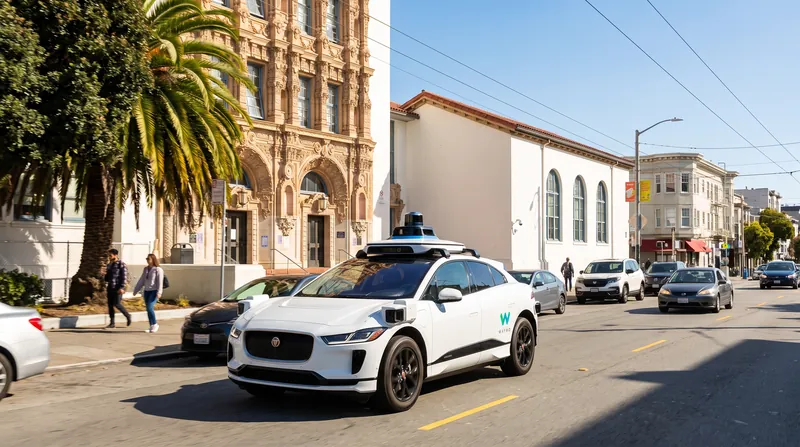
California DMV Finalizes AV Deployment Rules, Requiring 100,000 Autonomous Miles for Robotaxis
5 sources
eVTOL Procurement
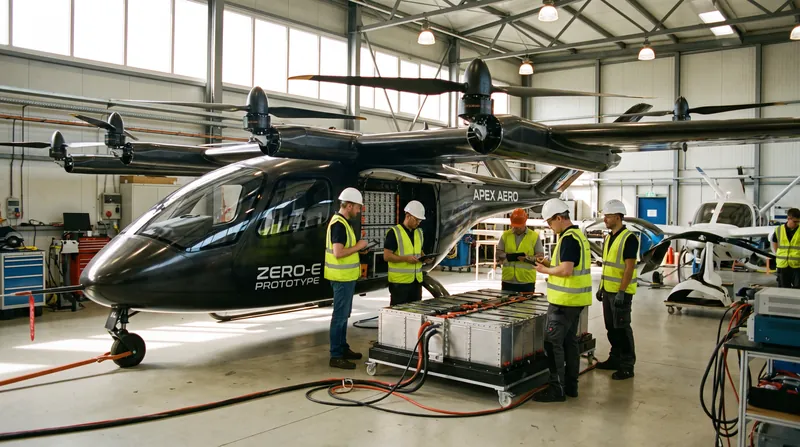
CATL Clears Major eVTOL Safety Hurdle: The Battery Trade-Offs Facing Fleet Buyers
6 sources
EV Price War
Ford CEO Warns Chinese EVs Will Breach US Market, Details New Affordable EV Strategy
6 sources

AV Regulation
NHTSA Grants First Commercial Robotaxi Exemption to Zoox, Launches Effort for National AV Safety Standard
4 sources
Comments
Every angle. Every day.
Get Automotive & Transportation stories with full source coverage and perspective breakdowns, free every day.