
UK Prime Minister Keir Starmer Resigns After Less Than Two Years in Office
British Prime Minister Keir Starmer announced his resignation following a mounting rebellion within the Labour Party and plummeting approval ratings. He will remain as caretaker prime minister until a new leader is chosen, paving the way for the UK's seventh premier in a decade.

Share this story
British Prime Minister Keir Starmer announced his resignation on Monday, bringing an abrupt end to a premiership that began with a historic landslide victory less than two years ago. Speaking outside 10 Downing Street, an emotional Starmer conceded that he had lost the confidence of his party following a disastrous round of local elections and a mounting internal rebellion.[1][2]
“The question my party is asking now is whether I am best placed to lead us into the next general election,” Starmer said from the lectern, his voice choking near the end of his brief statement. “I have heard the answer of my parliamentary party to that question, and I accept that answer with good grace.” He confirmed he had informed King Charles III of his decision earlier in the morning.[1]
Starmer will remain in office as a caretaker prime minister until the Labour Party selects a new leader. The transition process is expected to move swiftly, with nominations opening on July 9 and a new prime minister likely installed by the time Parliament returns from its summer recess in September. The leadership change will make the incoming premier the United Kingdom's seventh prime minister in a single decade.
The catalyst for Starmer's departure was the decisive victory of Andy Burnham in the Makerfield parliamentary by-election last week. Burnham, the popular former mayor of Greater Manchester, secured a return to the House of Commons, immediately positioning him to mount a leadership challenge that Starmer appeared certain to lose. Burnham has already confirmed his intention to run, promising an “orderly and responsible” transition of power.[1][2]
Burnham's path to 10 Downing Street was cleared further when Health Secretary Wes Streeting, long considered a potential rival for the leadership, announced he would throw his weight behind the former mayor. Streeting's endorsement makes a coronation highly likely, sparing the Labour Party a protracted and bruising internal contest.[1]
Starmer's downfall marks a stunning reversal of fortune. In July 2024, he led the Labour Party out of the political wilderness, securing a massive parliamentary majority and ending 14 years of Conservative rule. He campaigned on a promise of stability and economic competence, vowing to restore trust in government after the chaotic final years of the Tory administration.[2]
However, his popularity plummeted as his government struggled to deliver promised economic growth, repair strained public services, and ease a persistent cost-of-living crisis. Labour alienated progressive voters by pursuing cuts to disability benefits and maintaining arms-export licenses to Israel, while simultaneously facing pressure from the right over immigration controls. The resulting dissatisfaction culminated in severe losses during the May 2026 local elections.[3]
The political turbulence has drawn international attention, with U.S. President Donald Trump weighing in on the resignation. In a social media post on Sunday, Trump preempted Starmer's official announcement, claiming the British leader had “failed badly on two very important subjects—IMMIGRATION AND ENERGY.” Starmer's relationship with the U.S. administration had soured in recent months, exacerbated by diplomatic friction and policy divergences.[2][4]
European leaders reacted with a mix of tribute and concern. An upcoming EU-UK summit, originally intended as a major reset of post-Brexit relations, has been postponed due to the leadership change. European Council President António Costa confirmed the delay, noting that the bloc would reassess the opportunity to hold the summit once a new prime minister is in place.[1][3]
As the Labour Party prepares for its leadership transition, the incoming prime minister will inherit a daunting inbox. The UK continues to grapple with stagnant economic growth, strained public finances, and a deeply fractured electorate that has shown increasing willingness to punish incumbent governments. For Starmer, his legacy will likely be defined by his success in making Labour electable again in 2024, overshadowed by his inability to govern effectively once in power.[2]
Where opinion splits
Labour Renewal Advocates
Supporters of a leadership change argue that the party needs a more relatable figurehead to reconnect with the electorate.
Many within the Labour Party felt that Starmer, despite his success in 2024, lacked the personal charisma and political agility needed to navigate the UK's ongoing economic crises. Advocates for renewal point to the recent local election losses as proof that the public was losing faith in his administration's ability to deliver tangible improvements to public services and the cost of living. They view Andy Burnham as a more folksy, grounded alternative who can bridge the gap between the Westminster establishment and working-class voters.
Conservative & Right-Wing Critics
Opponents argue that Starmer's resignation is the inevitable result of failed policies on immigration and the economy.
From the political right, Starmer's downfall is seen as a direct consequence of his government's inability to control borders and stimulate economic growth. Critics, including international figures like Donald Trump, highlight Labour's vulnerability to right-wing populist movements like Reform UK, which capitalized on voter frustration during the May elections. They argue that changing the leader will not solve the underlying ideological flaws of the Labour government's approach to energy, taxation, and national security.
International Observers
Global analysts view the resignation as another symptom of the UK's chronic political instability.
For international allies and markets, the primary concern is the sheer turnover rate at 10 Downing Street. With the UK preparing to swear in its seventh prime minister in a decade, observers worry about the country's ability to maintain consistent foreign policy and economic strategy. The immediate postponement of the EU-UK summit underscores how domestic political turmoil continues to hamper Britain's efforts to project stability and reliability on the world stage.
Key points
- Keir Starmer announced his resignation as UK Prime Minister and Labour Party leader.
- He will serve as a caretaker prime minister until a successor is chosen by September.
- Andy Burnham is the leading candidate to replace him after winning a recent by-election.
- Starmer's departure follows severe local election losses and plummeting approval ratings.
Unanswered questions
- Whether Andy Burnham will face any serious challengers for the Labour leadership or if his ascension will be an uncontested coronation.
- How the leadership transition will impact the UK's ongoing diplomatic negotiations, particularly the postponed EU-UK reset summit.
- What specific policy shifts a new Labour leader will implement to address the cost-of-living crisis and public service shortfalls.
How we got here
July 2024
Keir Starmer leads the Labour Party to a landslide victory, becoming Prime Minister.
May 2026
The Labour Party suffers severe losses in local and regional elections amid growing public dissatisfaction.
June 18, 2026
June 22, 2026
Keir Starmer officially announces his resignation as Prime Minister and leader of the Labour Party.
July 9, 2026
Nominations for the Labour Party leadership contest are scheduled to open.
- Labour Renewal Advocates
- Argues that Starmer failed to connect with working-class voters and believes a more relatable leader like Andy Burnham is necessary to revive the government's fortunes.
- Labour Party Establishment
- Emphasizes Starmer's legacy of rescuing the party from its 2019 defeat and stresses the need for an orderly, stable transition of power.
- Conservative Critics
- Views Starmer's downfall as proof that his government failed on key issues like immigration, energy policy, and economic growth.
- International Observers
- Focuses on the geopolitical implications of the UK's chronic political instability and the revolving door of leadership at 10 Downing Street.
Perspectives this story doesn't cover
- UK Green Party and progressive voters alienated by Starmer's centrist policies
- Reform UK supporters who capitalized on Labour's recent local election losses
Sources
Source coverage
4 outlets
4 viewpoints surfaced




- [1]The GuardianLabour Party Establishment
Keir Starmer resigns as prime minister after days of intense pressure
Read on The Guardian → - [2]The Washington PostLabour Renewal Advocates
U.K. Prime Minister Starmer resigns as Labour government seeks reboot
Read on The Washington Post → - [3]Al JazeeraInternational Observers
Are UK Prime Minister Keir Starmer’s political days numbered?
Read on Al Jazeera → - [4]ForbesConservative Critics
What's Next For The UK After Keir Starmer Resigns As Prime Minister?
Read on Forbes →
More in News & Politics
See all →Armed Attacks
Gunmen Kill Seven and Wound Ten in Attack on Greek Orthodox Church in Southern Jordan
7 sources

Sakharov Prize
European Parliament Awards 2026 Sakharov Prize to International Criminal Court Amid US Sanctions
8 sources

Abortion Rights
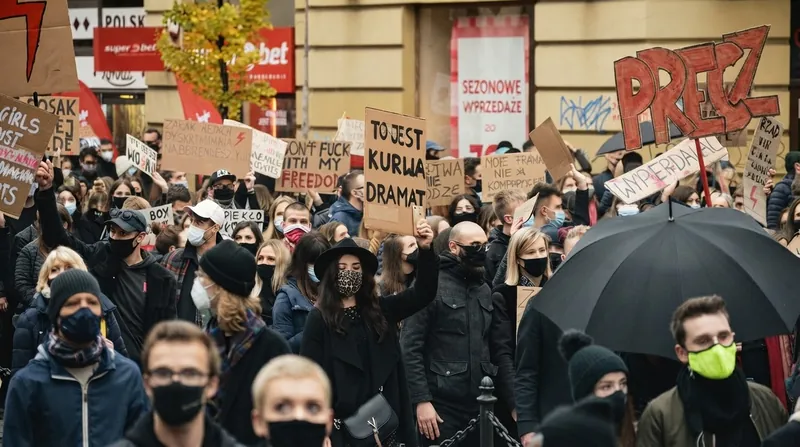
Thousands Rally Across Polish Cities Demanding Restoration of Legal Abortion Access
7 sources
Tibet Earthquake
Magnitude 7.0 Earthquake Strikes Tibet, Leaving at Least 16 Dead and Dozens Injured
5 sources

Comments
Every angle. Every day.
Get News & Politics stories with full source coverage and perspective breakdowns, free every day.