
U.S. Army Corps Approves Federal Permit for $1.8 Billion Louisiana International Terminal
The U.S. Army Corps of Engineers has granted a federal permit for the Louisiana International Terminal, clearing the way for a new deepwater container port designed to bypass existing bridge restrictions on the Mississippi River.

Share this story
The U.S. Army Corps of Engineers has officially issued a federal permit for the $1.8 billion Louisiana International Terminal, clearing the final major regulatory hurdle for the first new greenfield container port on the Gulf Coast in nearly two decades.
The approval allows the Port of New Orleans and its private-sector partners to transition from years of environmental review into active construction. Positioned in St. Bernard Parish, the project represents a structural shift in how cargo will enter the American South and Midwest, introducing a high-capacity gateway designed to bypass the physical constraints that have historically limited the region's maritime growth.[1][2][4]
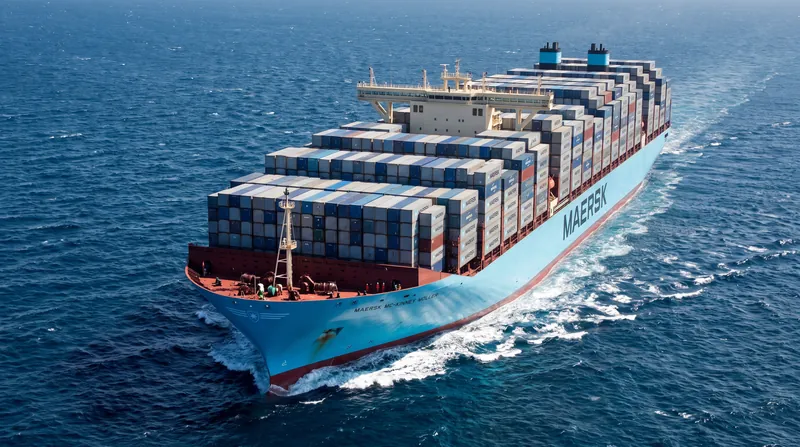
For years, the Port of New Orleans has faced a strict physical ceiling on its container operations: the Crescent City Connection bridge. Opened in 1958, the twin-span bridge crosses the Mississippi River with a maximum air draft clearance of 170 feet. While that height easily accommodated the freighters of the mid-20th century, it has become a hard bottleneck in the era of ultra-large container ships. Modern vessels carrying more than 16,000 twenty-foot equivalent units (TEUs) simply cannot fit beneath the steel structure to reach the port’s existing upriver container facilities.[1][2][3]
Because of this clearance limit, the largest ships in the global fleet—some of which now exceed 24,000 TEUs—have been forced to bypass New Orleans entirely. This dynamic has routinely diverted massive cargo volumes to competing gateways like Houston, limiting Louisiana's ability to capture a larger share of international trade. The Louisiana International Terminal solves this geographic constraint by fundamentally moving the port's center of gravity. Located in Violet, Louisiana, the new 400-acre facility sits entirely downriver from the Crescent City Connection, removing the bridge from the navigational equation.[1][2][4]
By positioning the terminal closer to the Gulf of Mexico, the project eliminates the air-draft restriction while taking full advantage of the recently deepened 50-foot Lower Mississippi River Ship Channel. This combination of deep water and unobstructed airspace will allow the facility to handle two ultra-large container vessels simultaneously. When ships arrive, they will plug into a logistical network that is structurally unique to the region: New Orleans remains the only deepwater port in the United States served directly by all six Class I railroads.[1][2][4][5]
Cargo unloaded at the new Violet facility will have immediate multimodal connections to the interstate highway system and the national rail network, providing direct market access to more than 30 states across the American heartland.
Planners also intend to integrate the terminal with the region's extensive container-on-barge network, utilizing the Mississippi River to move freight inland efficiently and reduce the carbon footprint of surface transportation. To build this infrastructure, the Port of New Orleans has assembled a massive public-private partnership, teaming with Ports America and Terminal Investment Limited (TiL), the terminal-operating arm of the Geneva-based Mediterranean Shipping Company.[1][3][4]
The two private operators have committed $800 million toward the development, which is further supported by $300 million in federal grants and additional state funding allocations. This capital will fund the phased construction of a facility expected to handle an initial capacity of up to 280,000 TEUs, eventually scaling to 2 million TEUs annually at full build-out over the next 25 years. Securing the Army Corps permit required extensive environmental and economic reviews, beginning with a formal application in December 2021.[1][2][3]
During the multi-year review process, the Army Corps evaluated the terminal's projected impact on local traffic, wetlands, and the quality of life in St. Bernard Parish, where some residents had voiced opposition to the industrial expansion.
To mitigate community impact, the state has committed to designing the St. Bernard Transportation Corridor, a dedicated roadway connecting the terminal directly to the interstate system to keep heavy truck traffic out of residential neighborhoods. With the federal permit now secured, the project timeline accelerates, with construction slated to begin in 2026 and the port targeting 2028 for the opening of the first berth.[1][2][4]
For the broader U.S. supply chain, the terminal introduces critical redundancy and capacity at a time when global shipping networks are under increasing strain. By establishing a new high-volume gateway on the Gulf Coast, the national logistics infrastructure becomes significantly less vulnerable to localized disruptions, labor disputes, or weather events at any single port facility.
Viewpoints in depth
Port & Regional Planners
Economic developers view the terminal as essential to Louisiana's maritime survival.
For regional planners, the Louisiana International Terminal is an existential requirement rather than just an expansion. Without a facility capable of handling ultra-large container vessels, Louisiana risks permanently losing market share to competing Gulf Coast ports like Houston and Mobile. By capitalizing on the state's unique access to all six Class I railroads, planners believe the new terminal will re-center the American supply chain around the Lower Mississippi River, generating billions in tax revenue and thousands of logistics jobs.
Maritime Logistics Operators
Shipping companies see an opportunity to maximize economies of scale.
Global shipping operators are increasingly reliant on massive vessels exceeding 16,000 TEUs to lower the per-container cost of transport. The 170-foot air draft restriction of the Crescent City Connection has long frustrated these operators, forcing them to split cargo or bypass New Orleans entirely. For private partners like TiL and Ports America, the $800 million investment is justified by the operational efficiency of a 50-foot deepwater berth with unobstructed airspace, allowing them to deploy their largest assets directly into the American heartland.
Local Communities
Residents of St. Bernard Parish are focused on mitigating the impacts of heavy industrialization.
While the economic benefits are broadly touted, local residents in Violet and the wider St. Bernard Parish have raised concerns about the realities of living next to a 2-million-TEU port. The primary friction points involve increased heavy truck traffic, noise pollution, and potential impacts on local wetlands. In response, the state and port authorities have committed to building the St. Bernard Transportation Corridor—a dedicated roadway designed to funnel port traffic directly to the interstate, bypassing residential neighborhoods entirely.
What we don’t know
- Whether the construction of the $50 million St. Bernard Transportation Corridor will be completed in time to handle the initial surge of truck traffic when the port opens in 2028.
- How aggressively competing ports like Houston and Mobile will adjust their own expansion plans to retain market share against the new Louisiana facility.
- Regional Economic Planners
- Argue that the terminal is a generational necessity to keep Louisiana competitive in global trade and prevent cargo from diverting to Texas.
- Maritime Logistics Operators
- Emphasize the operational efficiency of bypassing bridge restrictions and connecting 24,000-TEU vessels directly to six Class I railroads.
- Local Communities
- Focus on ensuring the industrial expansion does not degrade local quality of life, prioritizing the construction of dedicated truck corridors to divert traffic.
Sources
Source coverage
5 outlets
3 viewpoints surfaced





- [1]gCaptainMaritime Logistics Operators
Army Corps Greenlights Major New Container Terminal on Mississippi River
Read on gCaptain → - [2]The Maritime ExecutiveLocal Communities
New Orleans Gets Federal Approval for Construction of Container Terminal
Read on The Maritime Executive → - [3]FreightWavesMaritime Logistics Operators
U.S. Army Corps of Engineers Grants Federal Permit for Louisiana International Terminal
Read on FreightWaves → - [4]Port of New OrleansRegional Economic Planners
U.S. Army Corps of Engineers Grants Federal Permit for Louisiana International Terminal, Authorizing Construction of America’s Next Great Deepwater Port
Read on Port of New Orleans → - [5]Greater New Orleans, Inc.Regional Economic Planners
U.S. Army Corps of Engineers Grants Federal Permit for Louisiana International Terminal
Read on Greater New Orleans, Inc. →
More in Transportation
See all →Port Infrastructure
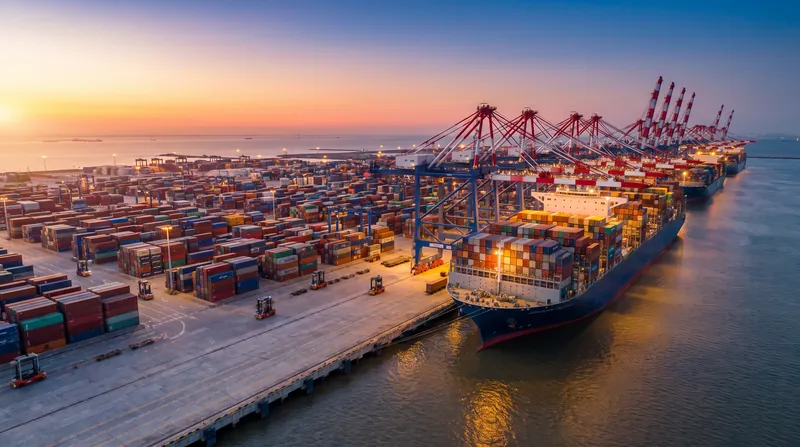
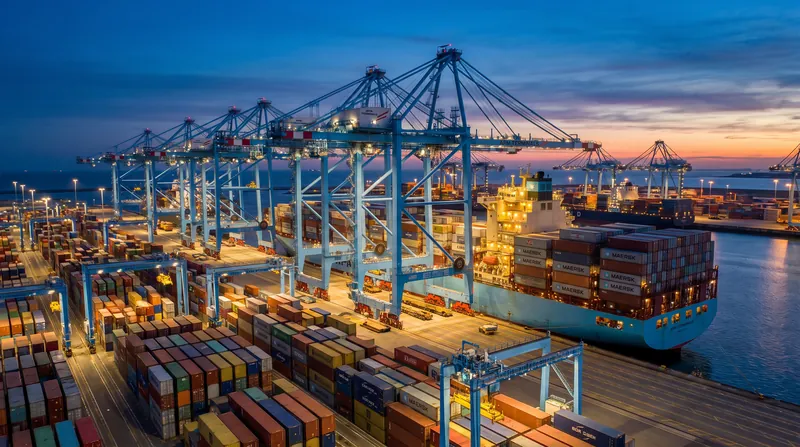
Maersk Sells 25% Stake in Rotterdam Terminal to Hapag-Lloyd in Major Carrier Infrastructure Deal
4 sources
Ammonia Bunkering
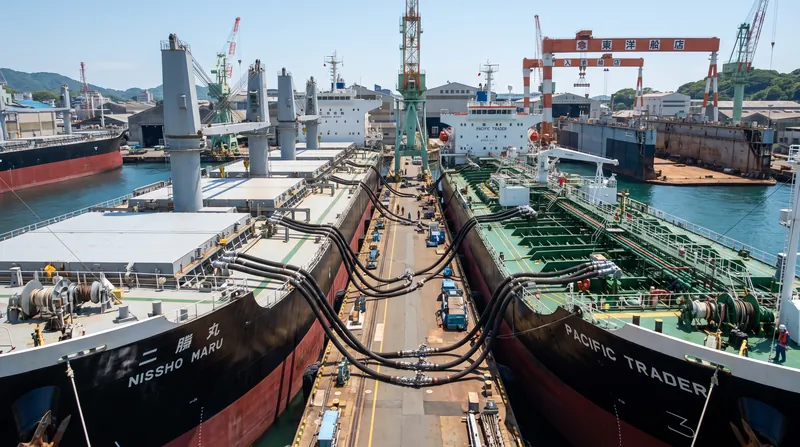
World's First Ammonia Ship-to-Ship Bunkering Completed in Japan
7 sources
Fluid Dynamics
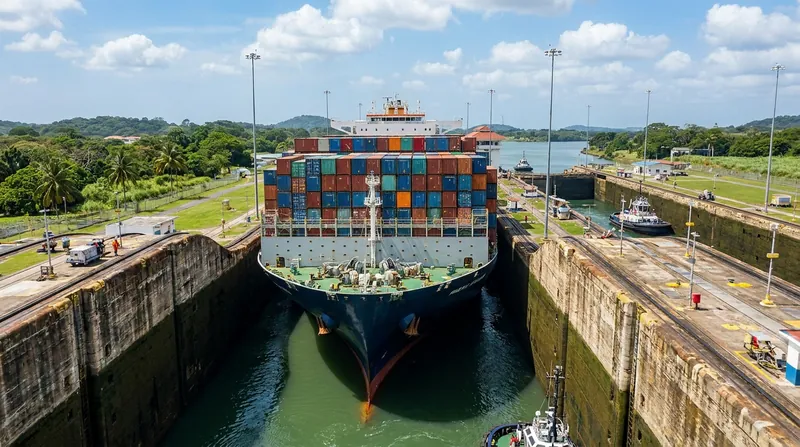
The 1.025 Specific Gravity and the 20-Foot Draft That Define the Panama Canal's Neopanamax Limits
5 sources
Maritime Trade
Maersk Reverses Strategy With $5 Billion Order for 26 New Container Ships
7 sources
Comments
Every angle. Every day.
Get Transportation stories with full source coverage and perspective breakdowns, free every day.