
Transformer Co-Author Noam Shazeer Leaves Google DeepMind for OpenAI in Major Talent Shift
Less than two years after Google paid $2.7 billion to bring him back, the foundational AI researcher is departing to lead architecture research at OpenAI.
By Logan Price
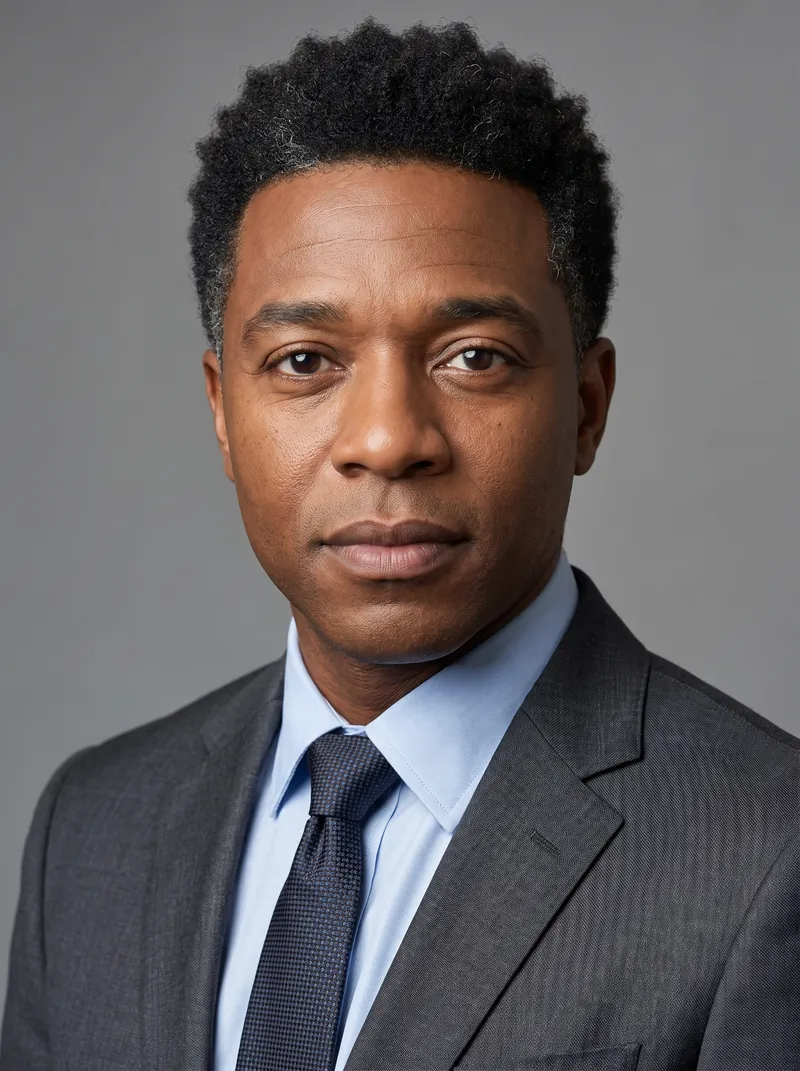
The architect behind the fundamental technology powering the generative AI boom is changing teams. Noam Shazeer, the co-inventor of the Transformer neural network architecture, has announced his departure from Google DeepMind to join OpenAI as Lead for Architecture Research.[1]
The move marks a seismic shift in the AI industry's ongoing talent wars. Shazeer, who most recently served as vice president of engineering and co-lead of Google's flagship Gemini models, shared the news on the social platform X, calling it a "difficult decision" but expressing excitement to work with OpenAI's "exceptional team."[1][2]
OpenAI CEO Sam Altman publicly celebrated the hire, stating that Shazeer is one of the people he has most wanted to work with since OpenAI was founded, adding that the recruitment "only took 10 years." The high-profile acquisition arrives as OpenAI prepares for its anticipated initial public offering, signaling to investors that the lab remains the premier destination for generational AI talent.[2]
For Google, the departure represents a staggering return on investment failure. Less than two years ago, in August 2024, the search giant paid a reported $2.7 billion to license technology from Character.AI—the consumer chatbot startup Shazeer co-founded—in a deal widely understood by industry analysts as an elaborate acqui-hire designed specifically to bring him back into the Google fold.[1][2]
Shazeer's legacy in the field is virtually unmatched. In 2017, he was one of eight Google researchers who co-authored "Attention Is All You Need," a seminal paper that introduced the Transformer architecture. By allowing models to process sequential data in parallel and weigh the context of different words simultaneously, the Transformer replaced older recurrent neural networks and became the engine for almost all modern large language models, including ChatGPT, Claude, and Gemini.[1][3][4]
His career has been characterized by a push for rapid deployment and consumer-facing innovation. During his first two-decade stint at Google, Shazeer and colleague Daniel De Freitas developed a highly capable conversational chatbot named Meena. When Google, exercising caution over safety and reputational risks, declined to release the product to the public, the frustrated duo left the company in 2021.[2][4]
That departure led to the creation of Character.AI, which quickly achieved a $1 billion valuation by offering users the ability to converse with customized AI personas. The startup's massive popularity forced Google's hand, leading to the multi-billion-dollar 2024 licensing agreement that returned Shazeer to the company to help close the performance gap between Gemini and OpenAI's GPT-4.[1][2]
During his second tenure, Shazeer was instrumental in refining the Gemini architecture, working alongside Google veterans Jeff Dean and Oriol Vinyals. His engineering expertise, particularly in scaling Mixture-of-Experts (MoE) models, helped Google DeepMind stabilize its foundation models and deploy them across the company's vast product ecosystem.[4]
However, the corporate structure of a legacy tech giant often clashes with the agile, research-driven culture top AI scientists prefer. Industry analysts note that Shazeer's exit highlights a broader retention crisis at Google. In the same week as Shazeer's announcement, John Jumper—the Nobel-winning researcher who led the AlphaFold protein-prediction project—also announced his departure from Google DeepMind to join rival lab Anthropic.[3]
At OpenAI, Shazeer is expected to tackle the industry's most pressing technical bottlenecks. As AI labs push the limits of current scaling laws, researchers are increasingly looking beyond the standard Transformer to new architectures that can handle massive context windows and complex reasoning more efficiently. Shazeer's new role as Lead for Architecture Research places him at the vanguard of this effort.[4]
The financial mechanics of the AI talent war have reached unprecedented heights. With Meta reportedly offering $100 million signing bonuses to poach OpenAI staff, and Google spending billions on licensing deals that function as recruitment tools, the market for elite AI researchers has decoupled from traditional tech compensation structures.[1][2]
Ultimately, Shazeer's move underscores a fundamental truth of the generative AI era: while compute power and data are critical, the architectural breakthroughs required to reach artificial general intelligence still rely on a remarkably small pool of human visionaries. By securing one of the field's founding architects, OpenAI has fortified its technical leadership for the next phase of the AI race.[3]
Viewpoints in depth
OpenAI Strategists
View the hire as a massive victory that could accelerate OpenAI's architectural breakthroughs.
For OpenAI and its supporters, recruiting a foundational architect like Shazeer is a strategic masterstroke. Proponents argue that as current AI models hit pretraining scaling bottlenecks, the industry desperately needs new architectural paradigms beyond the standard Transformer. They view Shazeer's appointment as Lead for Architecture Research as the catalyst OpenAI needs to solve these efficiency challenges and maintain its lead over rivals like Anthropic and Google.
Industry Analysts
Focus on the staggering cost of the AI talent war and Google's retention challenges.
Market analysts view the departure through a financial and organizational lens, noting the incredible leverage held by top AI researchers. They point out that Google effectively paid $2.7 billion in 2024 to bring Shazeer back, only to lose him less than two years later. This camp argues that legacy tech giants are struggling to provide the agile, unbureaucratic environments that elite researchers demand, forcing them to rely on wildly expensive acqui-hires that offer no guarantee of long-term retention.
AI Research Community
Emphasizes Shazeer's legacy and anticipates his next technical contributions.
Within the academic and open-source AI communities, the focus remains on Shazeer's technical track record. Researchers revere his contributions to the 2017 'Attention Is All You Need' paper and his subsequent work on Mixture-of-Experts models. Rather than focusing on corporate rivalries, this camp is primarily interested in what Shazeer will build next, speculating that his move to OpenAI signals an upcoming shift in how foundation models are structured and trained.
Key points
- Transformer co-inventor Noam Shazeer is leaving Google DeepMind to join OpenAI as Lead for Architecture Research.
- The move comes less than two years after Google paid $2.7 billion to license Character.AI and bring Shazeer back.
- Shazeer co-authored the seminal 2017 paper that introduced the architecture powering almost all modern AI models.
- OpenAI CEO Sam Altman celebrated the hire, stating he had wanted to work with Shazeer for a decade.
What we don’t know
- It remains unclear what specific architectural changes Shazeer plans to implement at OpenAI.
- The exact financial compensation and equity package OpenAI offered to secure Shazeer has not been disclosed.
- It is unknown how Google DeepMind will restructure the leadership of its Gemini models following his departure.
How we got here
2000
Noam Shazeer joins Google as one of its early employees.
2017
Shazeer co-authors 'Attention Is All You Need,' introducing the Transformer architecture.
2021
Frustrated by Google's caution in releasing chatbots, Shazeer leaves to co-found Character.AI.
August 2024
Google pays $2.7 billion to license Character.AI technology, bringing Shazeer back to co-lead Gemini.
June 2026
Shazeer announces his departure from Google to join OpenAI as Lead for Architecture Research.
- Industry Analysts
- Focus on the staggering cost of the AI talent war and Google's retention challenges.
- OpenAI Strategists
- View the hire as a massive victory that could accelerate OpenAI's architectural breakthroughs.
- AI Research Community
- Emphasizes Shazeer's legacy and anticipates his next technical contributions.
Perspectives this story doesn't cover
- Google DeepMind Leadership
- Character.AI Investors
Sources
Source coverage
4 outlets
3 viewpoints surfaced




- [1]Fast CompanyOpenAI Strategists
Google AI leader Noam Shazeer leaves company for OpenAI
Read on Fast Company → - [2]QuartzIndustry Analysts
Google's top Gemini engineer is leaving for OpenAI less than two years after a $2.7 billion return
Read on Quartz → - [3]MintAI Research Community
Transformer Architect Noam Shazeer Leaves Google for OpenAI
Read on Mint → - [4]WikipediaAI Research Community
Noam Shazeer
Read on Wikipedia →

More in Artificial Intelligence
See all →AI Leadership
DeepMind CEO Demis Hassabis Steps Down to Focus on 'Big Picture' AGI Strategy
4 sources

AI Search
Publishers Push Back Against Google's AI-Generated Headlines Over Misinformation and Control
5 sources

AI Infrastructure
Amazon Completes $50 Billion Investment for 5% Stake in OpenAI, Securing AWS as Exclusive Cloud Partner
9 sources

AI Regulation
UK Adopts Lifecycle Regulation to Continuously Monitor AI Medical Devices Across NHS
5 sources

Comments
Every angle. Every day.
Get Artificial Intelligence stories with full source coverage and perspective breakdowns, free every day.