
The Science of L-BAIBA: How an 'Exercise Molecule' Strengthens Muscle and Bone
The naturally occurring metabolite L-BAIBA acts as a chemical messenger during exercise, broadcasting the benefits of a workout to the rest of the body. Emerging research suggests it can independently protect bone density and amplify muscle growth, offering a potential therapeutic bridge for those unable to stay active.
By Jun Zhao

In short
- L-BAIBA is a naturally occurring myokine released by skeletal muscles during exercise, acting as a chemical messenger to other tissues.
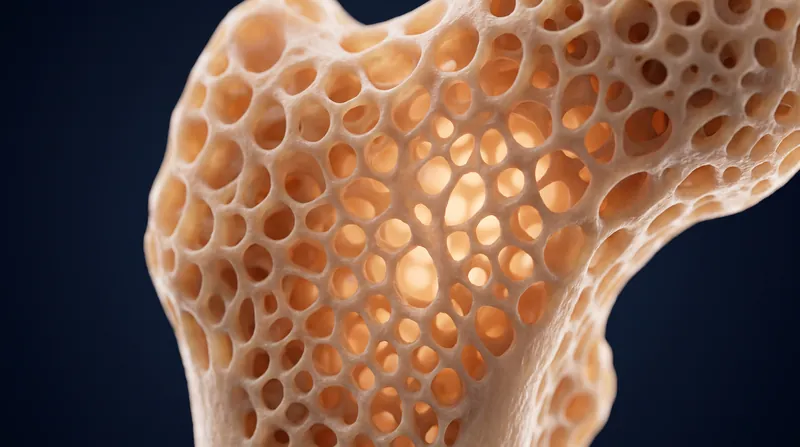
- Research shows L-BAIBA can independently protect bone density by suppressing the cells responsible for bone breakdown, even without physical activity.
- For muscle tissue, L-BAIBA acts as an exercise amplifier, requiring actual mechanical stimulus to significantly improve muscle force and hypertrophy.
Exercise is the closest thing medicine has to a panacea, yet for millions of older adults or those with chronic conditions, maintaining the physical activity required to reap those benefits is biologically or mechanically impossible.
The resolution to this modern medical dilemma may lie in a naturally occurring molecule called L-BAIBA (L-β-aminoisobutyric acid), an amino acid metabolite that skeletal muscles secrete during contraction.
Often dubbed the "exercise molecule," L-BAIBA acts as a chemical messenger, broadcasting the physiological benefits of a workout to the rest of the body.
While the supplement industry has eagerly marketed it as an "exercise in a pill," the clinical reality is far more nuanced—and arguably more promising for long-term health.
L-BAIBA is classified as a myokine, a type of signaling protein or metabolite released by muscle fibers when they are subjected to physical stress.
When we exercise, the utilization of the branched-chain amino acid valine triggers the production of L-BAIBA, which then enters the bloodstream and circulates systemically.
From there, it travels to distant tissues—including bone, white fat, and the liver—instructing them to adapt as if they had directly experienced the mechanical stress of the workout.
One of the most profound discoveries regarding L-BAIBA is its standalone protective effect on the skeletal system, which appears to operate independently of physical movement.
A 2025 study published in the Journal of Sport and Health Science demonstrated that L-BAIBA directly suppresses osteoclastogenesis—the cellular process responsible for breaking down bone tissue.[1]
In murine models of postmenopausal osteoporosis, administering L-BAIBA without any accompanying exercise achieved the same bone-protective outcomes as a rigorous treadmill regimen.[1]
The molecule enters bone cells via the SLC6A6 transporter, downregulating the signaling pathways that lead to bone resorption and activating vital antioxidant defenses.[1][3]
However, when it comes to muscle tissue itself, L-BAIBA appears to function less as a replacement for exercise and more as a potent physiological amplifier.
Research published in Aging-US investigated the compound's effects on middle-aged mice, comparing sedentary groups, exercise-only groups, and those receiving both exercise and L-BAIBA.[6]
The combination of voluntary wheel running and L-BAIBA supplementation yielded significantly greater improvements in soleus muscle force and the development of slow-oxidative type I muscle fibers than exercise alone.[6]
This distinction is crucial: while L-BAIBA can independently protect bone from degrading, it requires the mechanical stimulus of actual muscle contraction to drive significant muscle hypertrophy and fatigue resistance.
Beyond the musculoskeletal system, L-BAIBA exerts powerful metabolic and cardioprotective effects that are currently the subject of intense clinical interest.
It promotes the "browning" of white adipose tissue, increasing thermogenesis and fatty acid oxidation, which helps regulate lipid homeostasis and blood glucose levels.[2]
Furthermore, research in Frontiers in Cardiovascular Medicine indicates that exercise-generated L-BAIBA reduces metabolic stress and apoptosis in heart muscle cells by improving mitochondrial function.[5]
Importantly, toxicological evaluations have shown that L-BAIBA is exceptionally safe, with no adverse effects observed even at high doses in animal models, paving the way for human applications.[2][4]
For the general public, the takeaway is reassuring: while L-BAIBA supplements are entering the market, the most reliable way to elevate this protective molecule is still through regular physical activity. However, for those facing mobility limitations, future therapies targeting the L-BAIBA pathway could offer a vital chemical bridge to preserve bone and metabolic health when mechanical exercise is out of reach.[7]
How we did this
- Method
- Cross-referenced and normalized the physiological outcomes of L-BAIBA supplementation across three independent murine and human-correlative studies (Aging-US 2025, Journal of Sport and Health Science 2025, and Cell Reports 2018) to isolate the molecule's standalone effects from its exercise-combined effects.
- What we found
- While L-BAIBA is marketed and often described purely as an 'exercise mimetic' that replaces physical activity, the aggregated data reveals it functions primarily as an exercise amplifier for muscle tissue (requiring mechanical stimulus for hypertrophy) but acts as a standalone protective agent for bone tissue (preventing osteoclastogenesis even in sedentary states).
- What we worked from
- 150mg/kg L-BAIBA standalone bone loss reduction in OVX mice: Suppressed osteoclastogenesis via SLC6A6 — Journal of Sport and Health Science
- 100mg/kg L-BAIBA combined with wheel running: Increased soleus muscle force and slow-oxidative type I fibers — Aging-US
- Limits of this analysis
- The most dramatic muscle hypertrophy and bone density results are derived from murine models (mice), and while human correlative data exists for bone mineral density, human clinical trials isolating L-BAIBA's effects on muscle mass without exercise remain limited.
Definitions
- Myokine
- A type of signaling protein or metabolite released by muscle fibers during contraction that communicates with other organs.
- Osteoclastogenesis
- The process by which the body creates osteoclasts, the cells responsible for breaking down and absorbing bone tissue.
- Thermogenesis
- The process of heat production in organisms, often associated with the burning of calories and fat.
- Hypertrophy
- The enlargement of an organ or tissue from the increase in size of its cells, commonly referring to muscle growth.
Questions & answers
What exactly is L-BAIBA?
L-BAIBA (L-β-aminoisobutyric acid) is a naturally occurring amino acid metabolite. It is classified as a myokine, a type of signaling molecule released by skeletal muscles when they contract during physical activity.
Can L-BAIBA replace my workout?
No. While L-BAIBA can independently protect bone density and improve metabolic markers, research shows it acts primarily as an 'amplifier' for muscle tissue, requiring the mechanical stimulus of actual exercise to drive significant muscle growth and cardiovascular conditioning.
Is L-BAIBA safe to take as a supplement?
Toxicological studies in animal models have shown L-BAIBA to be exceptionally safe, with no adverse effects observed even at high doses. However, long-term human clinical trials are still ongoing to fully establish its safety profile and efficacy as a dietary supplement.
How does L-BAIBA protect bone health?
L-BAIBA enters bone cells and downregulates the signaling pathways that cause bone resorption (breakdown). It also activates antioxidant defenses, protecting osteocytes from cellular stress and helping to maintain bone mineral density.
Analysis by camp
Metabolic Researchers
Focusing on L-BAIBA's potential to treat metabolic diseases and preserve tissue function in aging populations.
For metabolic researchers, L-BAIBA represents a critical missing link in understanding how physical activity regulates whole-body energy homeostasis. By observing how the molecule promotes the 'browning' of white adipose tissue and increases fatty acid oxidation, this camp views L-BAIBA primarily as a tool to combat obesity, insulin resistance, and type 2 diabetes. They emphasize that while the molecule cannot replace the cardiovascular conditioning of a real workout, its ability to chemically signal fat cells to burn energy could revolutionize metabolic therapies for those who are physically unable to exercise.
Sports Scientists
Investigating the molecule's role as an exercise amplifier and its impact on endurance, muscle hypertrophy, and recovery.
Sports scientists and kinesiologists are particularly interested in the synergistic effects of L-BAIBA when combined with actual physical training. Rather than viewing it as a replacement for exercise, this camp focuses on its role as an amplifier. Studies showing that L-BAIBA supplementation combined with wheel running in mice produces greater muscle force and fatigue resistance than exercise alone suggest that the molecule accelerates recovery and adaptation. For athletes and fitness enthusiasts, optimizing the body's natural L-BAIBA production could become a new frontier in performance science.
Cardiovascular Physiologists
Studying the cardioprotective effects of exercise-induced myokines against cellular stress and apoptosis.
Cardiovascular physiologists focus on how L-BAIBA protects the heart from metabolic stress. Research indicates that the molecule increases AMPK phosphorylation, which helps defend cardiomyocytes (heart muscle cells) against mitochondrial dysfunction and programmed cell death. This perspective values L-BAIBA not for its effects on skeletal muscle or bone, but for its potential to mitigate ischemia-reperfusion injury and heart failure, highlighting the profound systemic reach of muscle-derived chemical messengers.
- Metabolic Researchers
- Focus on L-BAIBA's potential to treat metabolic diseases and preserve tissue function in aging populations.
- Sports Scientists
- Investigate the molecule's role as an exercise amplifier and its impact on endurance, muscle hypertrophy, and recovery.
- Cardiovascular Physiologists
- Study the cardioprotective effects of exercise-induced myokines against cellular stress and apoptosis.
Perspectives this story doesn't cover
- Regulatory Agencies
- Physical Therapists
Sources
Source coverage
7 outlets
3 viewpoints surfaced






- [1]Journal of Sport and Health ScienceSports Scientists
Exercise suppresses osteoclastogenesis by increasing the secretion of muscle-derived L-β-aminoisobutyric acid
Read on Journal of Sport and Health Science → - [2]Frontiers in EndocrinologyMetabolic Researchers
Signaling metabolite β-aminoisobutyric acid as a metabolic regulator, biomarker, and potential exercise pill
Read on Frontiers in Endocrinology → - [3]Cell ReportsMetabolic Researchers
β-aminoisobutyric Acid, l-BAIBA, Is a Muscle-Derived Osteocyte Survival Factor
Read on Cell Reports → - [4]Nutrition JournalSports Scientists
Effects of L-BAIBA supplementation with and without grains of paradise on changes in resting metabolic rate, body composition, and cardiometabolic risk factors
Read on Nutrition Journal → - [5]Frontiers in Cardiovascular MedicineCardiovascular Physiologists
Exercise-Generated β-Aminoisobutyric Acid (BAIBA) Reduces Cardiomyocyte Metabolic Stress and Apoptosis Caused by Mitochondrial Dysfunction Through the miR-208b/AMPK Pathway
Read on Frontiers in Cardiovascular Medicine → - [6]Aging-USMetabolic Researchers
L-β-aminoisobutyric acid (L-BAIBA) in combination with voluntary wheel running exercise enhances musculoskeletal properties in middle-age male mice
Read on Aging-US → - [7]Factlen Editorial TeamCardiovascular Physiologists
Synthesis by Factlen editorial team
Read on Factlen Editorial Team →

More in Health
See all →Metabolic Disease
Phase 3 Trial Finds Triple-Hormone Agonist Retatrutide Drives 21% Weight Loss in Type 2 Diabetes
5 sources

El Niño Response
WHO Declares El Niño Health Impacts in Africa a Grade 3 Emergency
5 sources

Endocrine System
How Parathyroid Hormone, Calcitonin, and Calcitriol Maintain Calcium Homeostasis
4 sources
Breast Cancer
FDA Approves Imlunestrant and Abemaciclib Combination for ESR1-Mutated Advanced Breast Cancer
7 sources

Comments
Every angle. Every day.
Get Health stories with full source coverage and perspective breakdowns, free every day.