
The Psychology of Cluttercore: Why Homeowners Are Abandoning Minimalism for Curated Abundance
After a decade of stark minimalism, a shift toward 'cluttercore' is changing how people organize their homes, replacing hidden storage with the intentional display of personal items.
By Tao Yang

Share this story
In short
- After a decade of minimalism, homeowners are increasingly adopting 'cluttercore,' a design trend that embraces the visible display of personal items.
- While unmanaged clutter elevates cortisol and causes visual stress, intentionally curated abundance can foster a sense of security and identity.
- The 2020 pandemic lockdowns accelerated the shift, as people sought comfort and nostalgia in their residential environments.
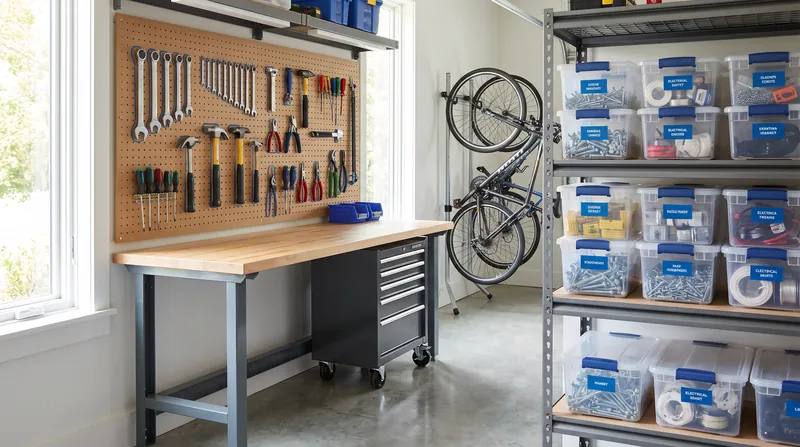
The era of the pristine, empty living room is officially over. After a decade of purging closets and hiding everyday objects in labeled bins, homeowners are actively reversing the minimalist aesthetic, intentionally filling their spaces with visible, curated collections of personal items. This shift fundamentally changes how people organize their homes, moving the baseline away from sterile perfection toward a lived-in, layered environment where objects are displayed rather than stored.[1]
The movement, widely dubbed "cluttercore," represents a sharp departure from the stark, Scandinavian-inspired minimalism that dominated the 2010s. Rather than striving for empty countertops and hidden storage, residents are now displaying their books, art, vintage finds, and sentimental objects across all four walls of a room. It is a deliberate design choice that embraces abundance, transforming everyday accumulation into a form of personal storytelling.[1][3]
For renters and buyers, this trend alters the calculus of home organization. Instead of investing heavily in closed cabinetry or off-site storage units, people are utilizing open shelving, gallery walls, and layered surfaces. The focus has shifted from eliminating possessions to arranging them thoughtfully, dividing the home into two distinct psychological categories: the functional workspace and the curated sanctuary.[1][6]
The psychological underpinnings of this shift are profound. For years, the prevailing wisdom held that physical clutter directly caused mental distress. Research has indeed shown that disorganized, chaotic environments can elevate cortisol levels and reduce working memory. When the brain is confronted with random, unstructured visual stimuli, it struggles to filter out the noise, leading to a constant, low-grade stress response within 200 milliseconds of entering a messy room.
However, psychologists draw a sharp distinction between unmanaged clutter and curated maximalism. Joseph Ferrari, a psychology researcher at DePaul University who has spent decades studying the effects of clutter, notes that while holding onto unused items causes anxiety, intentionally displaying meaningful objects serves a completely different psychological function. A home's primary role is to function as a nest, and surrounding oneself with cherished items can foster a deep sense of security and identity.[4]
"Minimalism has garnered significant attention for its mental health benefits and streamlined aesthetics, but it's important to acknowledge that the tenets of minimalism may not resonate universally," writes psychologist Mark Travers in a 2023 analysis. For many, the sterility of a minimalist space feels cold and uninviting. In contrast, the warmth and layered beauty of maximalism can act as a remedy, providing the sensory stimulation and emotional connection that a sparse room lacks.[3]
This distinction is crucial for anyone trying to organize their living space. Unintentional clutter—the pile of unpaid bills, the random keys, the laundry on the chair—overwhelms the senses because it lacks rhythm and purpose. It is a byproduct of delayed decisions. Cluttercore, on the other hand, is highly intentional. It involves grouping similar items, creating focal points, and building visual layers that invite the eye to explore rather than panic.[1]
The 2020 pandemic lockdowns played a significant role in accelerating this transition. Trapped inside their homes for months, many people realized that their carefully curated, minimalist spaces felt more like waiting rooms than sanctuaries. They lacked the texture and accumulated debris of actual living. In response, there was a collective pivot toward environments that offered comfort and nostalgia, utilizing possessions as a tangible means of creating a protective, cocoon-like atmosphere.[3]
A foundational 2015 study published in Perspectives on Psychological Science emphasized that our residential environments are deeply intertwined with our psychological well-being, calling for a broader understanding of how residential space shapes human behavior. When a home is filled with objects that tell a personal narrative, it reinforces the resident's sense of self. This is why the cluttercore aesthetic relies so heavily on items gathered over a 20- or 30-year period—vintage rugs, mismatched ceramics, towering stacks of books—rather than matching sets purchased all at once.[1][5][6]
To implement this approach without crossing into chaos, a 15-minute daily reset is often recommended to maintain the boundary between curated display and actual mess. The key is curation. Designers often rely on the "rule of three"—grouping three related objects together—to create visual balance without overwhelming the eye.
Confining the most exuberant displays to one dedicated area, like a den or a home office, prevents the abundance from feeling claustrophobic. It is about finding a common thread that ties the room together, ensuring that the space feels considered rather than neglected.[2][6]
The rise of cluttercore offers a more forgiving and realistic approach to home organization. It acknowledges the difficulty of maintaining a flawless, minimalist household in the face of daily life and consumerism. By giving people permission to keep and display the things they love, the movement shifts the goal of home organization from achieving emptiness to managing abundance.[6]
Key terms
- Cluttercore
- An interior design movement that embraces the intentional display of abundant, meaningful personal items to create a cozy, lived-in atmosphere.
- Curated Maximalism
- A design approach that utilizes bold colors, patterns, and a high volume of objects, but relies on structure and deliberate arrangement to prevent visual chaos.
- Cortisol
- A hormone produced by the adrenal glands that regulates the body's response to stress, which can be elevated by disorganized environments.
- Cognitive Load
- The total amount of mental effort being used in the working memory, which can be overwhelmed by excessive, unstructured visual stimuli.
Frequently asked
What is the difference between clutter and maximalism?
Clutter is the unintentional accumulation of items that lack a designated home, causing visual stress. Maximalism is the deliberate, structured display of abundant objects to tell a personal story.
Does a messy room actually cause anxiety?
Yes, research shows that unstructured visual chaos can trigger a stress response in the brain within 200 milliseconds, elevating cortisol levels and reducing the ability to focus.
How can I embrace cluttercore without my home feeling messy?
Interior designers recommend grouping similar items, establishing clear boundaries for collections, and maintaining a daily 15-minute reset routine to keep the abundance organized.
Why did minimalism become so popular in the first place?
Minimalism gained traction as a way to reduce cognitive load and combat consumerism, offering a streamlined aesthetic that many found calming and easier to maintain.
Viewpoints in depth
The Minimalist Perspective
The argument that reducing physical possessions is essential for mental clarity.
Advocates for minimalism argue that the modern home is overwhelmed by consumerism, and that reducing the sheer volume of objects is the only reliable way to lower cognitive load. From this viewpoint, every item in a room demands a fraction of the brain's attention. By keeping surfaces clear and storing items out of sight, residents can create a calm, distraction-free environment that promotes focus and reduces the baseline level of stress associated with managing a household.
The Maximalist Perspective
The belief that a home should visually reflect the complex, layered lives of its inhabitants.
Maximalist designers and cluttercore enthusiasts view the home as a deeply personal sanctuary rather than a sterile showroom. They argue that surrounding oneself with cherished objects, art, and collections provides emotional warmth and a sense of grounding. From this perspective, the goal of home organization is not to hide the evidence of daily life, but to arrange it in a way that tells a story, turning everyday accumulation into an evolving, comforting narrative.
The Psychological Perspective
The scientific distinction between intentional curation and unmanaged chaos.
Environmental psychologists emphasize that the brain's reaction to a space depends heavily on structure and intentionality. While random, unmanaged clutter triggers a measurable stress response by overwhelming the visual cortex, deliberately arranged collections do not carry the same cognitive penalty. Researchers note that when items are grouped by color, height, or theme, the brain processes them as a single cohesive unit rather than a chaotic jumble, allowing residents to enjoy abundance without the associated anxiety.
- Maximalist Designers
- Advocate for self-expression, warmth, and the intentional display of meaningful objects to create a personalized sanctuary.
- Minimalist Advocates
- Argue that reducing physical possessions is essential for maintaining mental clarity, reducing stress, and minimizing cognitive load.
- Environmental Psychologists
- Focus on how the arrangement of a space affects cortisol levels, emphasizing that the impact of clutter varies based on individual sensitivity and intentionality.
Perspectives this story doesn't cover
- Professional organizers who specialize in downsizing and estate clearing
- Real estate staging professionals who rely on minimalism to sell homes
Sources
Source coverage
6 outlets
3 viewpoints surfaced





- [1]Apartment TherapyMaximalist Designers
People Actually Want More Clutter in Their Homes — Here’s Why
Read on Apartment Therapy → - [2]Apartment TherapyMaximalist Designers
I Got Rid Of Unnecessary Kitchen Clutter in 15 Minutes, Thanks to This Decluttering Rule
Read on Apartment Therapy → - [3]ForbesMaximalist Designers
2 Reasons To Embrace The Creative Chaos Of 'Maximalism' And 'Cluttercore'
Read on Forbes → - [4]American Psychological AssociationEnvironmental Psychologists
Speaking of Psychology: The psychology of clutter, with Joseph Ferrari, PhD
Read on American Psychological Association → - [5]Perspectives on Psychological ScienceEnvironmental Psychologists
The psychology of home environments: a call for research on residential space
Read on Perspectives on Psychological Science → - [6]Factlen Editorial Team
Synthesis by Factlen editorial team
Read on Factlen Editorial Team →

More in Home
See all →5S Framework
The Sort, Set in Order, Shine, Standardize, Sustain Sequence: How the 5S Methodology Actually Organizes a Home
4 sources
Septic Systems
Why a 6-to-60-Minute Percolation Rate Dictates Septic Drain Field Sizing
5 sources

Foundation Science
The Plastic Limit and Liquid Limit: How Soil Moisture Actually Dictates Foundation Cracking
8 sources

Aging in Place
Why Aging in Place Demands Ruthless Decluttering Instead of Downsizing
6 sources

Comments
Every angle. Every day.
Get Home stories with full source coverage and perspective breakdowns, free every day.