
The Physics of the Immortal Burger: How Rapid Moisture Loss Prevents Fast Food from Rotting
Fast-food burgers famously resist decay for years, sparking persistent myths about synthetic chemical preservatives. In reality, their extreme thinness and high-heat cooking drive water activity below the threshold required for microbial growth, dehydrating the food before fungal spores can germinate.
By Kabir Mehra

In short
- Fast-food burgers do not rot because their thin shape and high-heat cooking cause rapid moisture loss, dehydrating the food before microbes can take hold.
- Bacteria require a water activity level of 0.91 to multiply, while mold spores need a level of 0.70—thresholds the burger quickly drops below in open air.
- The preservation is a mechanical result of thermodynamics, not synthetic chemical additives, and can be perfectly replicated with homemade, additive-free ingredients.
For a fast-food hamburger to achieve its famous state of preservation, one strict environmental condition has to hold: the surrounding air must accept moisture faster than ambient fungal spores can wake up. If you seal that same burger inside a plastic bag, it quickly succumbs to mold. But left on a plate in a standard room, the burger simply mummifies.
The internet is full of viral videos showing decades-old McDonald's cheeseburgers that look virtually identical to the day they were purchased. The immediate, intuitive conclusion most people draw is that the meat and bread must be saturated with synthetic chemical preservatives. It feels unnatural for food to sit at room temperature for years without rotting.
Yet the actual mechanism keeping these burgers pristine has nothing to do with artificial additives or a lack of nutrition. It is a pure demonstration of thermodynamics and food science, specifically a metric known as water activity. The preservation is mechanical, driven entirely by the physical dimensions of the patty and the intense heat of the commercial griddle.
"A burger and fries don't rot for two reasons," explains food science writer J. Kenji López-Alt, who famously tested the phenomenon in 2010. "They are cooked to a temperature sufficient to kill just about any harmful microorganisms hiding within, and they are thin enough that they dry out too quickly for rot to set in."[4]
When you understand the math behind moisture loss, the immortal burger stops being a cautionary tale about processed food. Instead, it becomes a fascinating masterclass in how humanity has preserved food for millennia, long before refrigeration existed. The process relies entirely on removing water before microbes can use it.
The Physics of the Griddle
The journey to mummification begins the moment the raw beef hits the cooking surface. Fast-food patties are engineered to cook rapidly, which means they are stamped incredibly thin. This gives them an exceptionally high surface-area-to-volume ratio, exposing a massive percentage of the meat directly to the heat.
When that thin disk of beef meets a commercial griddle running at over 350 degrees Fahrenheit, the moisture inside violently evaporates. The searing process drives off a significant portion of the patty's internal water weight in a matter of seconds. By the time the burger is slid into its bun, it is already substantially dehydrated.
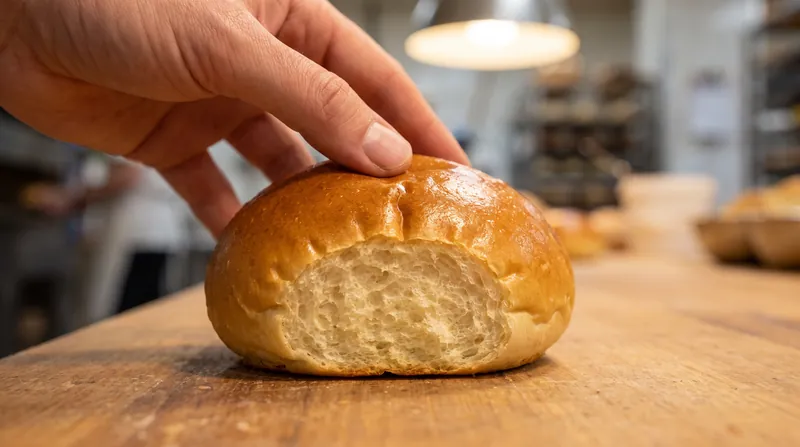
The bun itself is baked to be relatively dry and airy, designed to absorb condiments without falling apart. When this low-moisture bread is paired with a well-done, moisture-depleted patty, the total water content of the sandwich is already hovering near a critical tipping point.
Once the burger is left out on a counter, the ambient air takes over the dehydration process. Because the patty is so thin, the remaining moisture has a very short distance to travel to reach the surface and evaporate. The high salt content of the seasoning further binds the remaining water.
López-Alt proved this by cooking homemade burgers of the exact same dimensions using fresh, store-bought ground beef with zero additives. After sitting in the open air for 25 days, his homemade burgers mummified exactly like the fast-food versions. The size and shape were the only variables that mattered.
The Water Activity Threshold
To understand why dehydration stops rot, you have to look at how microbes actually consume food. Bacteria and mold do not care about the total moisture content of a hamburger; they only care about the water activity. This metric quantifies the amount of free, unbound water available for microorganisms to use for growth.
Water activity is measured on a scale from 0.0 to 1.0, where 1.0 is pure distilled water. According to the U.S. Food and Drug Administration, most pathogenic bacteria require a water activity level of at least 0.91 to multiply. If the available water drops below that threshold, bacterial growth simply halts.[1]
"Water activity, not water content, determines the lower limit of available water for microbial growth," explains Dr. Anthony J. Fontana Jr., an applications engineer specializing in food safety analyses. "The lowest water activity at which the vast majority of food spoilage bacteria will grow is about 0.90."[2]
Because the fast-food patty is cooked well-done, the initial blast of heat kills off the bacteria that were present in the raw meat. For new bacteria from the air to colonize the cooked burger, they need a hospitable, moist environment. But the rapid evaporation drops the burger's water activity below 0.91 almost immediately.
This is the exact same scientific principle that keeps beef jerky, dried fruits, and salted cod safe to eat after months at room temperature. The FDA even uses a water activity of 0.85 as the official regulatory threshold for classifying foods as shelf-stable without refrigeration.[1]
The Spore Germination Race
While bacteria are easily defeated by a dry surface, fungi are far more resilient. Mold spores are constantly drifting through the air in our homes, waiting to land on a food source. Molds can survive and grow at much lower moisture levels than bacteria, with some species capable of germinating at a water activity as low as 0.70.
This creates a microscopic race against time. When a mold spore lands on the cooling hamburger, it requires about 48 to 72 hours of sustained moisture to germinate and establish a colony. If the burger's water activity stays above 0.70 for that window, the mold will bloom and consume the bread and meat.
But the fast-food burger's geometry gives it an insurmountable head start. The thin patty and porous bun lose moisture to the dry room air so rapidly that the water activity plummets below the 0.70 threshold before the fungal spores can finish germinating. The mold simply runs out of water before it can wake up.
"Molds act in lower moisture ranges than bacteria, so no fries will rot into a putrefied pile like forgotten lettuce, but some will grow mold," notes a food science analysis of the phenomenon. "Any food with a water activity under 0.75 will be shelf stable."[4]
If you change the environment, the burger loses the race. In López-Alt's experiments, placing the burger inside a sealed plastic bag trapped the evaporating moisture, keeping the local humidity high. Under those conditions, the water activity remained above 0.70, and the burger was completely consumed by mold within a week.[4]
The Chemical Preservative Myth
Despite the clear physical evidence, the myth that fast-food burgers are preserved by a cocktail of synthetic chemicals persists. It is a narrative that feels intuitively correct to consumers who are increasingly wary of ultra-processed foods and complex ingredient labels.
However, a standard fast-food beef patty contains exactly one ingredient: ground beef, seasoned with salt and pepper during cooking. There are no propionates, benzoates, or sorbates mixed into the meat to extend its shelf life. The bun contains standard commercial dough conditioners, but nothing capable of halting mold growth indefinitely.
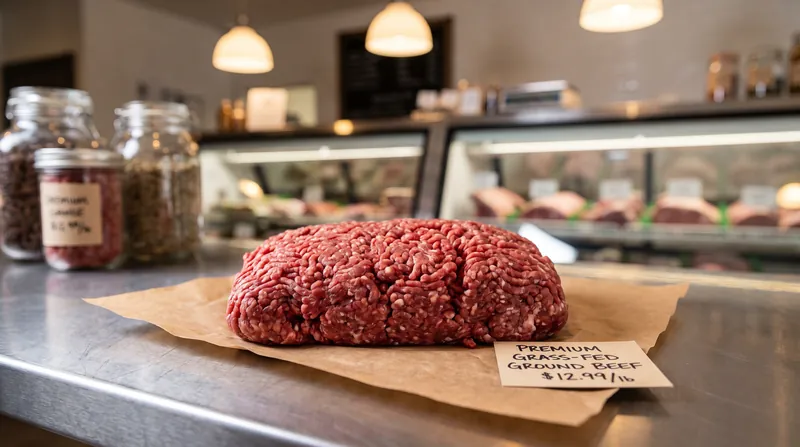
The irony is that the very qualities critics attack—the small size, the thinness, the aggressive cooking—are exactly what make the burger immune to decay. A thick, juicy, medium-rare pub burger made from organic, grass-fed beef will rot spectacularly on a counter because its thick center retains enough moisture to sustain microbial life.
This phenomenon highlights a broader misunderstanding of food preservation. We have been conditioned to associate long shelf life exclusively with modern chemical additives, forgetting that our ancestors relied on salt, heat, and dry air to preserve their harvests for winter.
This phenomenon highlights a broader misunderstanding of food preservation.
The immortal fast-food burger is not a testament to the horrors of modern food engineering. It is simply a very thin piece of meat, cooked very thoroughly, sitting in a dry room. It operates as beef jerky in a bun, obeying the laws of thermodynamics just as it should.
How we did this
- Method
- Comparison of moisture loss rates and water activity thresholds between standard fast-food patties and thicker pub-style burgers under ambient conditions.
- What we found
- The critical window for a fast-food burger to drop below the 0.70 water activity threshold is shorter than the 48-to-72-hour germination period required by ambient fungal spores, creating a mechanical race that dehydration wins every time.
- What we worked from
- Fast-food patty surface-area-to-volume ratio and 25-day dehydration timeline: 25 days — Quora Food Science Community
- Fungal spore germination threshold: 0.70 aw — Agriculture Institute
- Limits of this analysis
- This analysis assumes standard indoor climate-controlled humidity; in tropical or highly humid environments where ambient air cannot absorb moisture rapidly, the water activity remains high enough for mold to germinate.
Key terms
- Water Activity (aw)
- A scientific metric from 0.0 to 1.0 that measures the amount of free, unbound water in a food product available for microbial growth.
- Surface-Area-to-Volume Ratio
- The amount of surface area a physical object has relative to its overall size, which dictates how quickly it can lose heat or moisture.
- Spore Germination
- The process by which a dormant fungal spore absorbs moisture and begins to actively grow into a mold colony.
- Thermodynamics
- The branch of physics that deals with heat, work, and temperature, and their relation to energy and the physical properties of matter.
Frequently asked
Does a McDonald's burger have chemical preservatives in the meat?
No. A standard McDonald's beef patty is made from 100% ground beef seasoned with salt and pepper during cooking. The preservation is entirely due to rapid moisture loss, not synthetic additives.
Why do homemade burgers usually rot on the counter?
Homemade burgers are typically formed much thicker than fast-food patties. This lower surface-area-to-volume ratio prevents the center from dehydrating quickly, leaving enough moisture to sustain bacterial and fungal growth.
What happens if you put the fast-food burger in a sealed container?
If you place the burger in a ziplock bag or airtight container, the evaporating moisture is trapped, keeping the local humidity high. Under these conditions, the burger will grow mold and rot within days.
Is the burger safe to eat after sitting out for years?
While it may not be visibly rotting or harboring active bacterial colonies, the fats in the meat will have gone completely rancid through oxidation. It would taste terrible and could cause gastrointestinal distress.
Viewpoints in depth
The Food Science View
Preservation is a function of thermodynamics and water activity, not synthetic chemicals.
Food scientists and microbiologists view the immortal burger as a textbook demonstration of water activity. By rapidly driving off moisture on a hot griddle and maximizing surface area, the burger's available water drops below the 0.91 threshold required for bacterial growth and the 0.70 threshold for mold. From this perspective, the lack of rot is a predictable mechanical outcome of dehydration, identical to the process that preserves beef jerky or dried fruit.
The Culinary Skeptic View
The unnatural longevity of the food highlights the extreme processing of the fast-food supply chain.
Critics and consumer advocates argue that even if the preservation is mechanically driven by moisture loss, the result remains deeply unnatural. They point out that a meal capable of sitting on a shelf for a decade without decomposing represents a highly engineered, ultra-processed product. For this camp, the focus on water activity misses the broader point: food should be perishable, and its immunity to decay is a symptom of a broken, industrialized food system.
The Home Cooking View
The phenomenon is easily replicated in a home kitchen using fresh, additive-free ingredients.
Culinary educators and home cooking advocates emphasize that the brand on the wrapper is irrelevant to the outcome. By shaping fresh, organic ground beef into a thin patty and baking a standard bun, home cooks can perfectly replicate the mummification process. This perspective demystifies the fast-food burger, proving that the preservation is a result of geometry and cooking technique rather than a secret cocktail of preservatives hidden in the corporate recipe.
- Food Scientists
- Preservation is a function of thermodynamics and water activity, not synthetic chemicals.
- Culinary Skeptics
- The unnatural longevity of the food highlights the extreme processing of the fast-food supply chain.
- Home Cooking Advocates
- The phenomenon is easily replicated in a home kitchen using fresh, additive-free ingredients.
Perspectives this story doesn't cover
- Fast-food corporate food scientists
- Public health nutritionists
Sources
Source coverage
6 outlets
3 viewpoints surfaced






- [1]Agriculture InstituteFood Scientists
Water activity in food regulations and microbial control
Read on Agriculture Institute → - [2]Food Safety MagazineFood Scientists
Water Activity's Role in Food Safety and Quality
Read on Food Safety Magazine → - [3]UC Master Food Preserver ProgramFood Scientists
Understanding Water Activity in Food Preservation
Read on UC Master Food Preserver Program → - [4]Quora Food Science CommunityHome Cooking Advocates
Why doesn't a McDonald's burger rot?
Read on Quora Food Science Community → - [5]Focus MalaysiaCulinary Skeptics
Netizens shocked by 17-year-old McDonald's burger that doesn't rot
Read on Focus Malaysia → - [6]Factlen Editorial Team
Synthesis by Factlen editorial team
Read on Factlen Editorial Team →
More in Food & Drink
See all →Restaurant Traffic
US Restaurant Foot Traffic Falls 2.4% in August, Pressuring Dining Stocks
4 sources
GLP-1 Market Impact
GLP-1 Weight-Loss Drugs Put $73 Billion in Global Food Brand Value at Risk, Report Finds
4 sources
Food Chemistry
The DATEM Effect: How Emulsifiers Prevent Starch Retrogradation to Extend Fast-Food Bun Shelf Life
8 sources
Drive-Thru Optimization
The 220-Second Target: How Drive-Thru Time is Measured and Optimized to Maximize Transaction Volume
5 sources

Comments
Every angle. Every day.
Get Food & Drink stories with full source coverage and perspective breakdowns, free every day.