
The Physical Footprint of Artificial Intelligence: Quantifying the Energy, Water, and Labor Costs of Generative Models
The transition from retrieving digital information to generating it requires ten times the electricity per interaction, fundamentally altering the environmental burden of global computing. A comprehensive U.S. Government Accountability Office assessment reveals how this architectural shift strains power grids, consumes vast water resources, and accelerates hardware obsolescence.

Key numbers
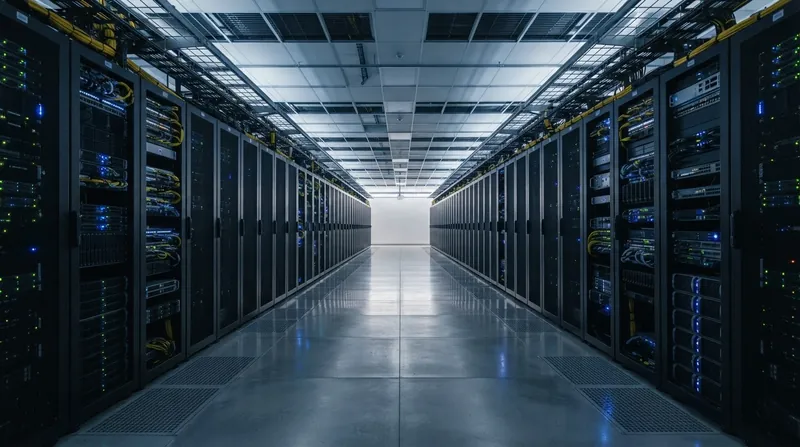
The physical infrastructure required to answer a digital question has fundamentally expanded, shifting the environmental burden of computing from passive data storage to active generation. This transition carries profound implications for global energy grids and water resources.[1]
A standard internet search requires about 0.3 watt-hours of electricity to retrieve an indexed result from existing databases. This highly optimized process has defined the energy baseline of the consumer internet for more than twenty years.[1]
Asking a generative artificial intelligence model to synthesize a novel answer consumes roughly 3 watt-hours, representing a tenfold increase in energy demand per interaction. Multiplied across billions of daily users, this architectural shift demands unprecedented physical resources.[1]
This operational penalty sits at the center of a comprehensive technology assessment published by the U.S. Government Accountability Office. The agency evaluated the cascading effects of the technology across physical infrastructure, labor markets, and public services.[1]
The April 2025 report, designated GAO-25-107172, quantifies the environmental and human effects of generative systems as they scale across the global economy. It reveals a landscape defined by massive resource consumption and critical gaps in corporate transparency.[1]
The Energy Mechanics of Inference
The disparity in energy consumption stems from the mathematical difference between retrieval and generation. Traditional search engines match keywords against a pre-compiled index, a highly optimized process that requires minimal active computation to execute.[1]
Generative models, by contrast, calculate the probabilistic distribution of every subsequent word across billions of parameters in real time. This continuous matrix multiplication keeps thousands of specialized processors running at peak capacity for the duration of the query.[1]
The Government Accountability Office notes that these applications already consume between 10 and 20 percent of total data center electricity. Financial research groups project that artificial intelligence workloads will account for a full 20 percent of data center power by 2030.[1]
The cumulative effect of billions of daily queries threatens to overwhelm existing grid infrastructure in key technological hubs. As deployment scales, the electricity required to run the models begins to rival the power needed to train them.[1]
"As generative AI becomes integrated into industry products and services, differentiating between energy and water use by generative AI, other AI, and non-AI capabilities could be difficult," the federal report states.[1]
This lack of granular reporting obscures the true ecological cost of the technology from policymakers and grid operators. Without precise telemetry, utility providers struggle to forecast localized demand spikes driven by intensive computing workloads.[1]
The International Energy Agency estimates that United States data center electricity consumption represented approximately 4 percent of total domestic demand in 2022. That figure is projected to reach 6 percent by the end of 2026.[1][4]
More aggressive models from the Lawrence Berkeley National Laboratory suggest total power demand for data centers could consume up to 12 percent of United States electricity by 2028. This growth trajectory is heavily influenced by the adoption rate of generative tools.[1][3]
The Upfront Cost of Model Training
Before a model can generate a single response, it must undergo a training phase that requires immense, concentrated energy. This upfront investment represents the most visible segment of the technology's carbon footprint.[1]
Training involves feeding massive datasets through an optimization process to adjust the model's internal weights, a procedure that can take months. The energy required scales exponentially with the size of the model and the volume of its training data.[1]
The 176-billion parameter BLOOM model, released in July 2022, consumed 433.2 megawatt-hours of electricity during its training run. This process generated an estimated 50.5 metric tons of carbon dioxide equivalent.[1]
OpenAI's GPT-3, featuring 175 billion parameters, required an estimated 1,287 megawatt-hours to train in 2020. This earlier architecture produced 552.1 metric tons of carbon emissions during its initial optimization phase.[1]
By July 2024, Meta's Llama 3.1 model with 405 billion parameters consumed 21,588 megawatt-hours of electricity. The training run produced 8,930 metric tons of carbon dioxide equivalent, illustrating the escalating cost of frontier models.[1]
The carbon intensity of this training depends entirely on the geographic location of the data center and its local power grid. Developers can significantly reduce their Scope 2 emissions by strategically placing facilities near renewable energy sources.[1]
A facility in the northwestern United States utilizing hydropower generates significantly fewer emissions than a Midwestern facility relying on coal generation. This geographic variability complicates efforts to standardize environmental reporting across the industry.[1]
Despite these massive figures, commercial developers rarely release comprehensive energy consumption data for their most advanced systems. Independent researchers must rely on hardware specifications and estimated training durations to calculate the environmental toll.[1][2]
Embodied Carbon and the Hardware Lifecycle
The electricity consumed during training and inference represents only a portion of the technology's total environmental footprint. The physical hardware required to perform these calculations carries a substantial burden of embodied carbon.[1]
These Scope 3 emissions include the extraction of raw materials, the fabrication of silicon wafers, and the transportation of finished servers. The manufacturing process for advanced semiconductors is notoriously energy-intensive.[1]
The Government Accountability Office cites research indicating that hardware manufacturing adds an additional 50 percent to the carbon footprint of training and using artificial intelligence. This embodied carbon is often excluded from top-line sustainability reports.[1]
The specialized graphics processing units that power these systems have a relatively short operational lifespan. The intense thermal and electrical stress degrades the silicon pathways over continuous use.[1]
Industry experts estimate that a typical processing unit reaches the end of its guaranteed performance window after just four years of continuous operation. This rapid obsolescence cycle forces data center operators to constantly replace their computing infrastructure.[1]
The disposal and recycling of these complex electronic components present significant environmental challenges. Extracting rare earth metals from decommissioned servers remains economically and technically difficult, leading to substantial electronic waste.[1][2]
Furthermore, the construction of the data centers themselves requires massive quantities of steel and concrete. The chemical processes used to manufacture cement release large volumes of carbon dioxide directly into the atmosphere.[1]
Recent environmental reporting from major developers reveals double-digit emissions increases, driven largely by investments in new data center infrastructure. Decarbonizing the physical supply chain remains a primary hurdle for the industry.[1]
The Hidden Water Footprint
The intense heat generated by thousands of processors operating simultaneously requires robust cooling systems to prevent hardware failure. These thermal management solutions represent a massive, often hidden drain on local resources.[1]
Data centers traditionally rely on evaporative cooling towers, which consume vast quantities of fresh water to maintain optimal operating temperatures. Up to 40 percent of a facility's total energy usage can be dedicated to pumping water and cooling air.[1]
The water usage effectiveness metric tracks the ratio of a facility's annual water consumption to the electricity used by its computing equipment. A lower ratio indicates a more efficient thermal management system.[1]
Training a state-of-the-art generative model can directly evaporate up to 700,000 liters of fresh water. This volume is roughly equivalent to 25 percent of an Olympic-sized swimming pool, consumed entirely by a single computational run.[1]
The operational phase also exacts a steady toll on local water resources, particularly in arid regions where data centers are often located. Every query processed contributes to the facility's ongoing evaporative losses.[1]
Academic estimates suggest that a generative system consumes approximately 0.5 liters of water for every 10 to 50 user queries. The exact figure varies widely based on the data center's efficiency and local climate conditions.[1]
Commercial developers rarely disclose specific water consumption figures categorized by workload, obscuring the true ecological cost of the technology. This opacity complicates municipal planning for communities hosting large computing facilities.[1][2]
To mitigate this demand, engineers are increasingly exploring liquid cooling solutions, including immersion systems that submerge hardware directly in specialized dielectric fluids. These closed-loop systems drastically reduce the need for continuous fresh water intake.[1]
Human Augmentation and Labor Shifts
Beyond its physical footprint, the deployment of generative systems introduces profound shifts in labor markets and workforce productivity. The technology alters the fundamental nature of knowledge work across multiple sectors.[1]
The technology functions primarily as an augmentation tool, enhancing human capabilities rather than fully automating complex professional roles. It excels at summarizing large volumes of content and drafting routine communications.[1]
A 2023 study of a Fortune 500 software firm revealed that customer service representatives using an artificial intelligence assistant resolved significantly more issues per hour. The tool monitored chats and offered real-time suggestions for responses.[1]
The productivity gains were unevenly distributed, with new and low-skilled workers experiencing the highest improvements. Experienced and highly skilled staff saw minimal changes to their overall resolution rates.[1]
This dynamic suggests that generative tools can rapidly elevate baseline performance, potentially altering the traditional trajectory of skill acquisition. It allows junior employees to perform at levels previously reserved for veterans.[1][2]
However, the automation of administrative tasks and routine content generation raises concerns about job insecurity and the displacement of entry-level positions. This shift could severely impact future generations entering the workforce.[1]
The integration of these systems into the workplace also introduces the risk of surveillance-style environments. The continuous amalgamation of worker data can erode privacy, dignity, and overall work quality if poorly managed.[1]
Organizations must balance the drive for efficiency with the need for extensive workforce training and the preservation of human subject matter expertise. Over-reliance on automated systems risks degrading critical thinking capabilities over time.[1]
Systemic Risks and the Black Box Problem
The rapid adoption of generative tools across public services and educational institutions amplifies the inherent risks of the technology. Deploying these systems in high-stakes environments requires rigorous evaluation and continuous monitoring.[1]
These models operate as black boxes, meaning that even their developers cannot fully explain how specific outputs are generated from the underlying neural networks. This lack of interpretability severely complicates accountability.[1]
When systems produce inaccurate information, confabulations, or biased content, users have limited options for recourse. The opacity of the training data makes it nearly impossible to trace the origin of a specific error.[1]
In one documented instance, a municipal chatbot incorrectly advised users that city buildings were not required to accept Section 8 housing vouchers. The city's official government web page clearly stated the opposite.[1]
The models are also vulnerable to sophisticated cybersecurity threats, including prompt injection attacks that bypass safety guardrails. Bad actors can manipulate the systems to extract sensitive data or generate malicious code.[1]
Training datasets scraped from the public internet often contain personal information, creating persistent privacy risks for users interacting with the systems. A privacy-enhanced architecture is required to allow individuals control over their digital identities.[1]
Unintentional bias embedded in the training data can lead to inequitable outcomes, particularly for non-English speakers or marginalized communities. Systems trained primarily on Western internet data often fail to capture diverse cultural contexts.[1]
Commercial developers attempt to mitigate these risks through extensive red teaming, data filtering, and the implementation of strict internal safety policies. However, the efficacy of these common practices remains difficult to independently verify.[1][2]
Efficiency and the Jevons Paradox
Policymakers and industry leaders face a complex optimization problem as they attempt to scale the technology sustainably. Balancing the immense potential benefits against the severe resource costs requires coordinated intervention.[1]
Algorithmic innovations, such as pruning unnecessary parameters and quantizing numerical precision, can significantly reduce the computational complexity of the models. These techniques lower the energy required for both training and inference.[1]
Hardware manufacturers continue to release more efficient processors, with some platforms claiming a 25-fold reduction in energy consumption compared to previous generations. These advancements are critical to curbing the exponential growth in power demand.[1]
However, these efficiency gains often trigger the Jevons Paradox, where reduced operational costs lead to a disproportionate increase in overall demand. Cheaper queries encourage wider deployment, ultimately increasing total energy consumption.[1][2]
To secure reliable, low-carbon electricity for this expanding footprint, major technology companies are increasingly turning to nuclear power. This shift represents a fundamental realignment of the digital economy's energy strategy.[1]
In late 2024, several developers signed agreements to purchase electricity from restarted nuclear facilities and planned small modular reactors. These zero-carbon baseload sources are uniquely suited to the continuous power demands of massive data centers.[1]
The Government Accountability Office outlines several policy options to manage this transition, including improving data collection and encouraging the use of standardized risk frameworks. Maintaining the status quo risks exacerbating existing environmental and social harms.[1]
What we don’t know
- The exact portion of current data center electricity consumption specifically dedicated to generative AI workloads.
- The precise water consumption figures for commercial models during the inference phase.
- The full environmental impact of end-of-life hardware disposal and electronic waste.
Key points
- Generative artificial intelligence queries consume approximately ten times more electricity than standard keyword searches.
- Hardware manufacturing and infrastructure construction add an estimated 50 percent to the total carbon footprint of the technology.
- The rapid obsolescence of specialized processing units, which typically last four years, exacerbates the environmental cost of data center expansion.
- While generative tools significantly augment worker productivity, their black-box nature complicates accountability and introduces systemic privacy risks.
- Environmental Researchers
- Focuses on the escalating energy, water, and carbon footprint of data centers, advocating for transparent reporting and sustainable infrastructure.
- Industry Developers
- Prioritizes algorithmic efficiency, hardware innovation, and securing zero-carbon nuclear power to meet the exponential demand for compute.
- Policy Analysts
- Advocates for standardized risk frameworks, rigorous safety evaluations, and regulatory oversight to mitigate the systemic risks of black-box models.
- Labor Economists
- Analyzes the shift in workforce dynamics, highlighting how generative tools augment junior staff while risking the displacement of entry-level roles.
Perspectives this story doesn't cover
- Local communities hosting large data centers
- Utility grid operators managing localized power spikes
Sources
Source coverage
4 outlets
4 viewpoints surfaced




- [1]U.S. Government Accountability OfficePolicy Analysts
Artificial Intelligence: Generative AI's Environmental and Human Effects (GAO-25-107172)
Read on U.S. Government Accountability Office → - [2]Factlen Editorial TeamPolicy Analysts
Synthesis by Factlen editorial team
Read on Factlen Editorial Team → - [3]Lawrence Berkeley National LaboratoryEnvironmental Researchers
2024 United States Data Center Energy Usage Report
Read on Lawrence Berkeley National Laboratory → - [4]International Energy AgencyEnvironmental Researchers
Electricity 2024: Analysis and forecast to 2026
Read on International Energy Agency →

More in Artificial Intelligence
See all →Compute Governance
Physical Excludability and Measurable FLOPs: Why AI Governance Frameworks Target Compute Over Data or Algorithms
4 sources
AI Regulation
Trump and Tech CEOs Sign Voluntary White House Accord on 'Super Intelligence' Safety Standards
5 sources

Defense Procurement
Federal Appeals Court Upholds Pentagon Blacklist of Anthropic Over AI Safety Rules
5 sources

AI Compliance
The Five Steps of an Algorithmic Impact Assessment Regulators Use to Mandate AI Risk Mitigation
3 sources

Comments
Every angle. Every day.
Get Artificial Intelligence stories with full source coverage and perspective breakdowns, free every day.