
full timeline
East Asia Air Defense Incursions
South Korean and Japanese fighter jets were scrambled on November 24 after Russian military aircraft, initially suspected to be accompanied by North Korean planes, entered Seoul's air defense zone.
Follow East Asia Air Defense Incursions in the Factlen app and get an alert when there is news. Get the app
Share this story
Latest report
South Korea Scrambles Jets, Orders Evacuation Over Suspected Russian and North Korean Air Breach
South Korean and Japanese fighter jets were scrambled on November 24 after Russian military aircraft, initially suspected to be accompanied by North Korean planes, entered Seoul's air defense zone. The incursion triggered a rare, brief evacuation order for residents of Ulleung Island.
- South Korea and Japan scrambled fighter jets after Russian military aircraft entered the Korea Air Defense Identification Zone on November 24.
- Authorities issued a rare evacuation order for Ulleung Island after initially suspecting North Korean aircraft were flying alongside the Russian formation.
- The shelter-in-place alert was lifted three minutes later as the aircraft departed, and the military confirmed no North Korean planes were involved.
- The incursion marks the second Russian breach of the defense zone in a week, prompting formal diplomatic protests from Seoul and Tokyo.
South Korean and Japanese fighter jets scrambled on November 24 after a formation of Russian military aircraft breached the Korea Air Defense Identification Zone. The unannounced flight over the East Sea prompted a rapid military response and a rare civilian evacuation order.[1]
The incident was severely escalated by the novel involvement of what authorities initially suspected were North Korean military aircraft flying alongside the Russian planes. This unprecedented suspected joint formation triggered immediate panic, leading local governments to issue emergency alerts to civilians.[5]
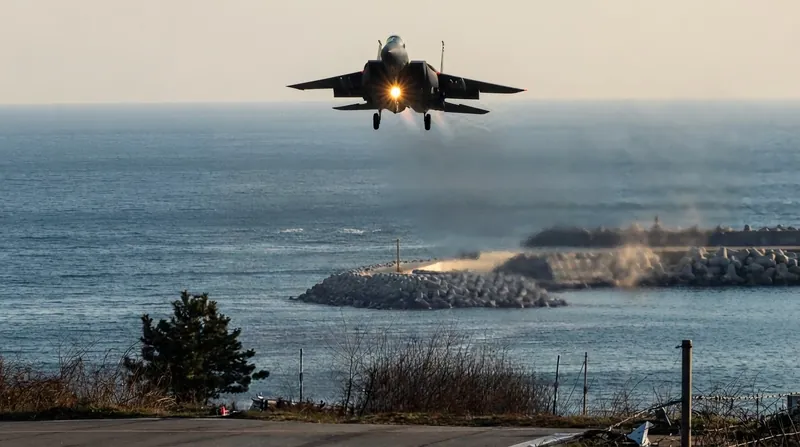
South Korea’s Joint Chiefs of Staff deployed F-15K fighter jets to conduct tactical maneuvers as the foreign aircraft approached the country's eastern territories. The military tracked the formation before it crossed into the air defense buffer, moving to intercept the flight path.[2]
The Russian aircraft flew perilously close to South Korean sovereign airspace near Ulleung Island, located approximately 130 kilometers east of the Korean Peninsula. The proximity of the heavy bombers and fighter escorts forced Seoul to take immediate defensive measures.[1][3]
Evacuation order on Ulleung Island
At 7:52 a.m. local time, the Ministry of the Interior and Safety issued a sudden air raid warning for Ulleung Island. The island’s 9,000 residents were urgently instructed to evacuate to underground facilities and fortified buildings as the aircraft approached.[5]
The emergency alert specifically cited the suspected presence of North Korean military aircraft, elevating the perceived threat from a routine Russian patrol to a potential act of war. A North Korean airspace violation would represent a massive escalation on the divided peninsula.[4][5]
The warning revived traumatic memories for the island's population, who endured a similar evacuation order in 2022 when North Korea fired more than 20 ballistic missiles into the surrounding waters. Sirens blared across the island as local officials scrambled to manage the crisis.[1]
Authorities lifted the shelter-in-place order just three minutes later, at 7:55 a.m., after the foreign aircraft altered their course and departed the immediate danger zone. The brief but intense panic left local residents and provincial authorities demanding clearer communication from the military.[2]
The Joint Chiefs of Staff later clarified that the radar signatures initially suspected to be North Korean planes were actually part of the Russian formation. The military confirmed that no North Korean aircraft ultimately crossed into the operational area, attributing the evacuation to the mistaken identity.[2][5]
Addressing the widespread public confusion, the Joint Chiefs of Staff issued a formal clarification regarding the radar contacts and the subsequent alerts. “Some media reports that a flying object believed to be a North Korean aircraft violated South Korean airspace are not true,” the military said in a brief statement.[2][4]
Coordinated regional response
The airspace breach extended beyond the Korean Peninsula, prompting a simultaneous military response from neighboring Japan. The Japanese Air Self-Defense Force scrambled its own fighter jets as the Russian warplanes continued their flight path toward Japan's southwestern coast.[1]
Tokyo issued a formal diplomatic protest to Moscow later that day, condemning the aggressive maneuvers near its territorial airspace. Japanese defense officials noted that two suspected Russian aircraft had probed their defensive perimeters, mirroring the tactics used against South Korea.[1][3]
The Japanese government has grown increasingly vocal about the strain these incursions place on its defense forces. The Air Self-Defense Force is forced to scramble interceptors hundreds of times a year to ward off Russian and Chinese aircraft approaching its airspace.[1]
In Seoul, the Ministry of National Defense summoned Colonel Nikolai Marchenko, the defense attaché at the Russian Embassy, to lodge a stern formal complaint. South Korean diplomats demanded an immediate halt to unannounced flights that threaten regional stability and civilian safety.[1]
The Russian Defense Ministry routinely dismisses such protests, maintaining that its aerospace forces operate strictly within international airspace over neutral waters. Moscow does not recognize South Korea’s unilaterally declared air defense zone and refuses to submit advance flight plans.[3][4]
Russian strategic bombers, typically Tu-95s escorted by Su-35 fighter jets, regularly conduct long-range patrols over the Sea of Japan and the East China Sea. These flights are designed to project Russian aerospace power and demonstrate the reach of its nuclear-capable fleet.[3][5]
An Air Defense Identification Zone extends beyond a nation’s 12-nautical-mile sovereign airspace, serving as an early warning buffer. Under international aviation norms, foreign military aircraft are expected to identify themselves and state their intentions before entering the zone.[2]
Deepening Russia-North Korea ties
While the suspected North Korean aircraft were ultimately ruled out, the initial misidentification reflects deep anxieties over the expanding military alliance between Moscow and Pyongyang. The two heavily sanctioned nations have drastically increased their strategic cooperation over the past year.[4][5]
Intelligence officials in Seoul and Washington have repeatedly warned that Russian technical assistance is modernizing North Korea’s aging conventional military forces. The prospect of joint Russian and North Korean air patrols is viewed as a worst-case scenario for regional defense planners.[3][4]
The November 24 incident occurred against a backdrop of heightened border tensions, following a recent landmine explosion in the Demilitarized Zone that injured three South Korean soldiers. The peninsula remains on high alert, making any ambiguous radar contact a potential trigger for conflict.[4]
Defense analysts argue that Russia frequently uses these unannounced bomber patrols to test the response times and radar capabilities of the trilateral alliance between Washington, Seoul, and Tokyo. By flying complex routes, Moscow forces allied militaries to reveal their intercept tactics.[1][3]
A pattern of airspace incursions
This latest breach is part of a sustained campaign of aerial provocations by the Russian military in the Asia-Pacific region. Just one week prior, on November 17, South Korea was forced to scramble jets to repel another Russian formation over the exact same waters.[3]
The frequency of these incursions has surged as global geopolitical fault lines harden. Between 2020 and 2024, Russian military aircraft entered the South Korean defense zone without notice more than 60 times, often coordinating their flights with the Chinese military.[4]
In June 2026, a massive joint drill saw approximately 10 Chinese and Russian warplanes enter the South Korean defense zone simultaneously. That coordinated show of force forced Seoul to deploy dozens of fighter jets to monitor the armada as it skirted territorial limits.[4]
The most severe incident occurred in July 2019, when a Russian A-50 early warning aircraft explicitly violated South Korean sovereign airspace near the disputed Dokdo islets. South Korean F-16s fired hundreds of warning shots to force the Russian plane out of the area.[3]
While the November 24 flight did not cross the final 12-nautical-mile threshold into sovereign airspace, the Joint Chiefs noted it came dangerously close. The military declined to specify the exact distance, but confirmed the Russian planes flew right up to the territorial edge.[1][4]
The rapid deployment of South Korean and Japanese interceptors demonstrates the heightened readiness of allied forces in the region. However, the confusion surrounding the evacuation alert highlights critical vulnerabilities in civilian communication during fast-moving aerospace incidents.[2][5]
As Moscow continues to leverage its strategic bomber fleet to project power in the Pacific, Seoul faces mounting pressure to refine its early warning systems. Ensuring accurate aircraft identification will be vital to preventing a catastrophic miscalculation on the volatile Korean Peninsula.[5]
Sources
- [1]The Japan Times — South Korea scrambles jets as Russian warplanes enter air zone Read on The Japan Times →
- [2]Associated Press — South Korea says several Russian aircraft flew into its air defense zone Read on Associated Press →
- [3]The Moscow Times — South Korea Says Russian Military Planes Entered Its Air Defense Zone Read on The Moscow Times →
- [4]Al Arabiya English — South Korea says Russian jets entered air defense zone Read on Al Arabiya English →
- [5]Militarnyi — Russian Aircraft Mistaken for North Korean Planes, Triggering Evacuation in South Korea Read on Militarnyi →
What to watch
- A trilateral summit is scheduled to take place in Shenzhen between the leaders of Russia, China, and the United States.
Charts, maps and images
Timeline
November 2026
South Korea Scrambles Jets, Orders Evacuation Over Suspected Russian and North Korean Air Breach
Japan and South Korea Scramble Fighter Jets After Russian Military Aircraft Incursions
June 2026
South Korea and Japan Scramble Fighter Jets as Chinese and Russian Warplanes Enter Air Defense Zones
How the story developed
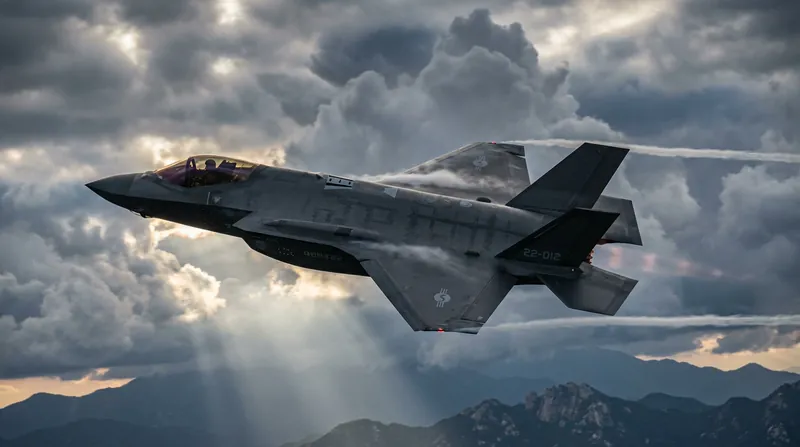
The incursions began on a Saturday in June when more than 10 Chinese and Russian military aircraft entered South Korea's air defense identification zone. The formation included H-6 and Tu-95 strategic bombers, along with fighter escorts. In response, South Korea and Japan scrambled fighter jets to monitor the aircraft.
During the June patrol, no sovereign territorial airspace was violated. China stated the flight was a routine joint strategic patrol intended to safeguard regional peace, while the maneuver was widely seen as a counter to the deepening military alliance between the United States, Japan, and South Korea.
Tensions escalated early on Tuesday, November 17, when two suspected Russian military aircraft breached Japanese territorial airspace near Fukuoka's Okinoshima island. The aircraft remained in the airspace for about three minutes.
Japan's Air Self-Defense Force scrambled jets and issued warnings during the breach, and Tokyo lodged a formal diplomatic protest with Moscow. Separately, South Korea deployed fighters after detecting several Russian aircraft entering its air defense identification zone over the East Sea.