
Sebastien Patrice Holds Firm at World No. 1 in Men's Sabre Standings as Oh Sanguk Closes the Gap
Following a dramatic 2025–2026 season, France's Sébastien Patrice retains the top spot in the FIE Men's Sabre world rankings, fending off reigning Olympic champion Oh Sanguk and a surging pack of international challengers.
By Xia Wu
- French Fencing Supporters
- Celebrate Patrice's unorthodox, highly athletic style and the resurgence of the French men's sabre team.
- South Korean Traditionalists
- Back Oh Sanguk's classical precision and unmatched Olympic pedigree as the true gold standard of the sport.
- Emerging Nation Advocates
- Focus on Ferjani, Elsissy, and Heathcock as proof that the sport's center of gravity is shifting away from Europe.
- Neutral Analysts
- Emphasize the unprecedented parity and depth of the current field, noting that any of the top ten can win on a given day.
Perspectives this story doesn't cover
- Grassroots fencing coaches adapting to new styles
- Athletes struggling to fund travel for the dense World Cup circuit
The race for the top of the FIE Men's Sabre world rankings has reached a fever pitch as the 2025–2026 season concludes. France's Sébastien Patrice has firmly cemented his status as World No. 1, amassing 198.000 points to hold off a surging pack of international challengers. In a discipline renowned for its lightning-fast rhythm and razor-thin margins, Patrice's grip on the top spot reflects a year of remarkable consistency and tactical evolution.[1][6]
Patrice's campaign was highlighted by two major Grand Prix victories that showcased his unique approach to the piste. In January, he topped a grueling field of 175 fencers in Tunis, Tunisia. Utilizing his unorthodox, highly effective footwork—often characterized by explosive, perpetual motion—he neutralized Hungary's Krisztián Rabb 15–11 in the final, securing his first Grand Prix gold after previously winning three World Cup titles.[3][6]
He followed that breakthrough with a triumphant performance at the Incheon Grand Prix in May. In a showcase of French depth, Patrice defeated his own teammate, Maxime Pianfetti, to secure his second Grand Prix gold of the season. The back-to-back victories provided the crucial points buffer needed to maintain his No. 1 ranking heading into the summer's championship events.[1][5]
But the French star's reign is far from uncontested. South Korean legend Oh Sanguk, the reigning Olympic Champion and 2019 World Champion, remains the most formidable threat in the standings. Oh entered the late-season stretch in peak form, having captured individual victories at the Cairo World Cup and the Asian Championships, making him the most successful individual sabreur of the season by sheer volume of wins.[2][4]
Oh's classical, precision-based style provides a stark contrast to Patrice's jumping, athletic attacks, setting the stage for a compelling clash of philosophies at the top of the sport. This individual rivalry recently spilled over into the team format at the 2026 World Championships in Hong Kong. France, anchored by Sébastien and his brother Jean-Philippe Patrice, delivered a masterclass performance to capture the Men's Team Sabre Gold.[1][2][6]
This individual rivalry recently spilled over into the team format at the 2026 World Championships in Hong Kong.
The French squad defeated Oh Sanguk's South Korean team in a highly anticipated final that pitted the modern form team against the reigning Olympic champions. The victory served as a definitive statement for the French program, which has been steadily building momentum and refining its tactical approach since securing a team bronze medal on home soil at the Paris 2024 Olympics.[2][4][6]
Beyond the Patrice-Oh duel, the men's sabre field is currently experiencing unprecedented competitive density. FIE analysts note that at least ten fencers possess the firepower to claim gold on any given weekend, with no single dominant force suffocating the bracket. Tunisia's Fares Ferjani, who secured a historic silver medal at the 2024 Olympics by upsetting Egypt's Ziad Elsissy, continues to be a major factor in the upper echelon of the rankings.[2]
Ferjani's transparent focus on mental conditioning and tactical patience has made him a role model for a rising generation of African and Arab fencers, proving that the pathway to the top ten is no longer restricted to traditional European academies. Alongside Ferjani, Egypt's Elsissy and rising teenage star Ahmed Hesham—who took bronze in Tunis—ensure that North Africa remains a powerhouse region in the weapon.[3]
The standings also reflect the rapid ascent of new challengers from across the globe. American Colin Heathcock has enjoyed a breakout campaign, highlighted by a gold medal in Algiers, injecting a fresh, aggressive style into the top tier. Meanwhile, Georgia's Sandro Bazadze, the defending 2025 World Champion, remains a constant podium threat, utilizing his imposing physical presence to grind down opponents and keep himself mathematically in the hunt for No. 1.[2][6]
For fencing enthusiasts, this era of men's sabre is a golden age of parity. The traditional European dominance is being tested at every tournament by elite athletes from Asia, Africa, and North America. As the new season approaches, Sébastien Patrice will have a massive target on his back. With Oh Sanguk, Ferjani, Bazadze, and a hungry pack of rising stars all within striking distance, the battle for World No. 1 is destined to be a high-octane sprint from the very first touch.[1][2][6]
Key points
- Sébastien Patrice of France holds the World No. 1 ranking in FIE Men's Sabre with 198.000 points.
- Patrice secured his lead with major Grand Prix victories in Tunis and Incheon during the 2026 season.
- Reigning Olympic champion Oh Sanguk of South Korea remains the primary challenger, having won the Cairo World Cup.
- France recently defeated South Korea to claim the Men's Team Sabre Gold at the 2026 World Championships.
- The top of the standings features unprecedented parity, with rising stars from Tunisia, Egypt, and the US challenging European dominance.
- 198.000
- Sébastien Patrice's World No. 1 points total
- 2
- Grand Prix titles won by Patrice this season
- 10+
- Top-tier challengers mathematically in the mix for podiums
How we got here
July 2024
Oh Sanguk wins individual gold at the Paris Olympics; France takes team bronze.
July 2025
Sandro Bazadze of Georgia wins the World Championship, claiming the No. 1 spot.
January 2026
Sébastien Patrice wins the Tunis Grand Prix, overtaking the top ranking.
May 2026
Patrice wins the Incheon Grand Prix, defeating teammate Maxime Pianfetti.
July 2026
France defeats South Korea to win the Men's Team Sabre Gold at the Hong Kong World Championships.
Key terms
- Sabre
- A thrusting and cutting weapon where points can be scored with the edge of the blade, targeting the entire upper body.
- Right of Way
- The rule in sabre and foil that determines who receives the point if both fencers hit simultaneously, based on who initiated the attack.
- Grand Prix
- Top-tier international fencing tournaments that award 1.5 times the ranking points of standard World Cup events.
- Flunge
- An explosive forward attacking movement used to close distance rapidly; in sabre, crossing the feet is illegal, so fencers use a flying lunge instead.
Sources
Source coverage
6 outlets
4 viewpoints surfaced




- [1]FIE International Fencing FederationNeutral Analysts
World Ranking Tracker: Sebastien Patrice
Read on FIE International Fencing Federation → - [2]FIE International Fencing FederationNeutral Analysts
Men's Sabre Titans Converge in Hong Kong for Heroic World Championship Clash
Read on FIE International Fencing Federation → - [3]FIE International Fencing FederationNeutral Analysts
Aline Mikhailova and Sebastien Patrice Win Gold at Tunis Sabre Grand Prix 2026
Read on FIE International Fencing Federation → - [4]Olympics.comSouth Korean Traditionalists
Republic of Korea defend men's sabre team title
Read on Olympics.com → - [5]FencingTVFrench Fencing Supporters
Sebastien Patrice takes his second Grand Prix win of the season in Incheon
Read on FencingTV → - [6]Factlen Editorial TeamNeutral Analysts
Synthesis by Factlen editorial team
Read on Factlen Editorial Team →
Comments
More in Sports
See all →Binding Mechanics
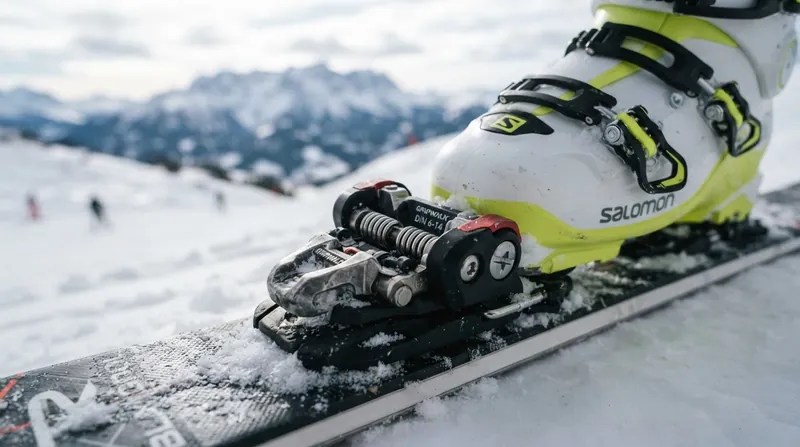
The 7-Millisecond Torsional Release Threshold: How the ISO 11088 Standard Calculates Ski Binding Release Values to Prevent Tibial Fractures
9 sources
Power ranking
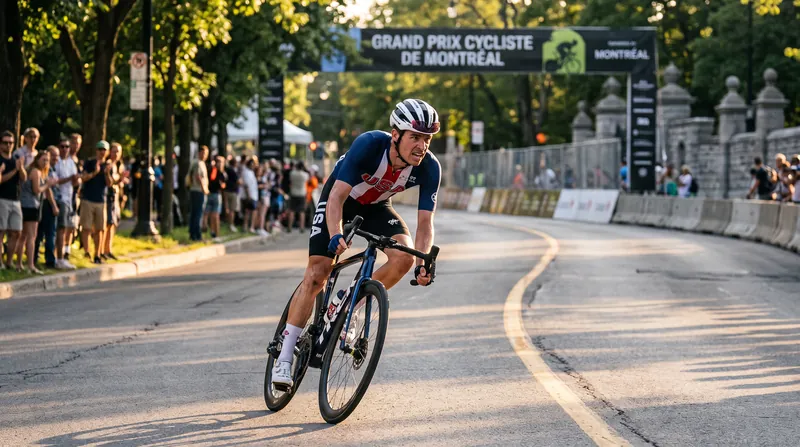
Post-Montreal Cycling Power Rankings: McNulty and Vollering Surge as Pogačar Holds the Throne
5 sources
Preview
2026 Alfred Dunhill Links Championship Preview: MacIntyre Defends as LIV Stars Return to St Andrews
6 sources

Standings
The Math of the WTA Finals Cutoff: How Noskova's Wimbledon Exemption Forces Swiatek Into a High-Stakes Asian Swing Chase
4 sources
Every angle. Every day.
Get Sports stories with full source coverage and perspective breakdowns delivered to your inbox.