
Replacing Histidine-143 With Serine Weakens 2,3-BPG Binding, Allowing Fetal Hemoglobin to Extract Oxygen
Fetal hemoglobin secures oxygen from the mother not by pulling it harder, but by ignoring the chemical signal that forces adult blood to let go. A single amino acid substitution removes the positive charges needed to bind the allosteric inhibitor 2,3-BPG.
By Rohan Kapoor

Share this story
In short
- Fetal hemoglobin extracts oxygen from maternal blood by ignoring 2,3-BPG, the chemical signal that forces adult hemoglobin to release its oxygen.
- Replacing positively charged Histidine-143 with neutral Serine removes the electrical anchors needed to bind 2,3-BPG in the protein's central cavity.
- Maternal red blood cells increase 2,3-BPG production by 30 percent during pregnancy, ensuring the mother's blood readily surrenders oxygen at the placenta.
When maternal and fetal blood meet across the placental barrier, the fetus must win a molecular tug-of-war for oxygen. The intuitive explanation is that fetal blood simply pulls harder, exerting a stronger intrinsic grip on oxygen molecules. The structural biology explanation, however, is exactly the opposite.[4]
Fetal hemoglobin does not pull oxygen harder; it simply ignores the chemical off-switch that forces maternal hemoglobin to let go. The difference between suffocating in the womb and extracting enough oxygen to build a human brain comes down to a single missing electrical charge.[1][4]
To understand how a fetus breathes liquid, you have to look at the adult red blood cell. Adult hemoglobin, known as HbA, is a tetramer made of two alpha chains and two beta chains. Its primary job is not just to bind oxygen in the lungs, but to release it in the tissues.[2]
If hemoglobin never let go of oxygen, the body would asphyxiate despite having fully oxygenated blood. To force the release, red blood cells manufacture a highly negatively charged molecule called 2,3-bisphosphoglycerate, or 2,3-BPG. This molecule acts as a wedge, locking hemoglobin into a state that expels oxygen.[2][3]
"2,3-BPG binds in the central cleft of the T state of hemoglobin, stabilizing it and promoting oxygen release," notes the Pearson Higher Education biochemistry curriculum. Without this allosteric regulator, adult hemoglobin would hold onto its oxygen far too tightly, starving active muscles during exercise.[2]
The placental oxygen problem
The placenta presents a unique physiological challenge. Maternal and fetal blood vessels run side by side, separated by a thin membrane, but the blood never mixes. For the fetus to survive, oxygen must diffuse across this gap, moving from the mother's red blood cells into the fetal circulation.[4]
If the fetus used the exact same hemoglobin as the mother, the two blood supplies would reach an equilibrium, and the fetus would only extract half the available oxygen. To thrive, the fetal blood must possess a higher affinity for oxygen, shifting the balance in its favor.
Evolution solved this problem not by redesigning the oxygen-binding sites, but by altering the central cavity where 2,3-BPG docks. Fetal hemoglobin, or HbF, replaces the two beta chains found in adults with two gamma chains. This subtle swap fundamentally changes the protein's electrostatic environment.[1][3]
In adult hemoglobin, the central cavity is lined with positively charged amino acids that perfectly attract the five negative charges of 2,3-BPG. The most critical of these anchors is Histidine-143, located on the beta chain. This positively charged residue acts like a molecular magnet for the off-switch.[3]
The serine substitution
In the fetal gamma chain, that crucial Histidine-143 is replaced by a different amino acid: Serine. Serine is a neutral, uncharged molecule. By swapping just this one residue, fetal hemoglobin loses two positive charges from its central binding pocket, one from each of its two gamma chains.[3]
Because it lacks those positive anchors, fetal hemoglobin cannot effectively bind the negatively charged 2,3-BPG molecule. The wedge fails to insert. As a result, fetal hemoglobin remains in its relaxed, oxygen-hungry state, completely ignoring the chemical signal that forces adult hemoglobin to surrender its cargo.[1][3]
"Fetal hemoglobin has reduced BPG binding due to a Ser143 substitution, resulting in higher oxygen affinity," the Pearson curriculum explains. This passive resistance to the off-switch is what allows the fetal blood to strip oxygen away from the maternal supply at the placental interface.[2]
The numbers highlight the stark difference in binding strength. The partial pressure of oxygen required to saturate 50 percent of adult hemoglobin, known as the P50, is roughly 27 millimeters of mercury. For fetal hemoglobin, the P50 drops to just 19 millimeters of mercury.
The maternal compensation
The mother's body actively assists in this uneven exchange. During pregnancy, maternal red blood cells increase their production of 2,3-BPG by approximately 30 percent. This floods the mother's hemoglobin with the off-switch molecule, forcing her blood to release oxygen even more readily when it reaches the placenta.[3]
The combination of the mother's increased 2,3-BPG and the fetus's immunity to it creates a steep gradient. The maternal blood arrives at the uterus primed to dump oxygen, while the fetal blood arrives perfectly calibrated to hoard it. This dual mechanism ensures fetal survival in a low-oxygen environment.[3][4]
This elegant system is not without its postnatal consequences. After birth, the infant suddenly has access to atmospheric oxygen and must begin delivering it efficiently to growing tissues. The high-affinity fetal hemoglobin, which was a lifesaver in the womb, becomes a liability in the outside world.[4]
Within the first six months of life, the infant's body rapidly shuts down gamma chain production and ramps up beta chain synthesis. The fetal hemoglobin is systematically replaced by adult hemoglobin, restoring the Histidine-143 anchors and allowing the baby's blood to respond to 2,3-BPG.
Clinical implications in prematurity
For premature infants, this transition can be dangerously disrupted. A 2021 review in Frontiers in Pediatrics noted that fetal hemoglobin is the principal oxygen carrier in both preterm and term neonates, and its unique properties directly impact how doctors monitor tissue oxygenation in the neonatal intensive care unit.
Premature babies frequently require blood transfusions to survive. Because these transfusions come from adult donors, they flood the infant's system with adult hemoglobin months before the natural transition would occur. This sudden introduction of 2,3-BPG-sensitive blood fundamentally alters how the infant's tissues receive oxygen.
"Red blood cell transfusions from adult donors have been shown to accelerate the replacement of HbF with adult hemoglobin," the Frontiers researchers observed. This premature shift can increase retinal oxygen exposure, potentially disrupting vascular development and contributing to retinopathy of prematurity, a leading cause of childhood blindness.
The Serine-143 substitution also explains why humans can survive at high altitudes. When an adult travels to a high elevation, their body compensates for the thin air by synthesizing more 2,3-BPG. This forces their hemoglobin to release a higher percentage of its bound oxygen to the tissues.[3]
The Serine-143 substitution also explains why humans can survive at high altitudes.
A masterclass in subtraction
If our hemoglobin lacked the Histidine-143 anchor permanently, we would be trapped with fetal-like blood, unable to adapt to altitude or exercise. The temporary use of the Serine mutation during gestation is a masterclass in evolutionary subtraction, solving a complex transport problem by simply removing a docking site.[3][4]
The discovery of this mechanism fundamentally shifted how biologists view protein function. It proved that you do not need to build a stronger magnet to win a chemical tug-of-war. Sometimes, the most effective way to gain an advantage is to simply break the mechanism that forces you to let go.[4]
Today, researchers are looking at ways to artificially reactivate fetal hemoglobin in adults. For patients with sickle cell disease, whose adult beta chains are genetically deformed, turning the gamma chains back on can provide a healthy, high-affinity alternative that prevents their red blood cells from collapsing.[4]
How we did this
- Method
- Derivation of the net electrostatic charge difference in the central binding cavity between HbA and HbF, and its direct correlation to 2,3-BPG binding affinity.
- What we found
- The fetal advantage in oxygen extraction is entirely subtractive: by losing two positive charges in the central cavity, HbF passively disables the 2,3-BPG off-switch rather than actively enhancing its oxygen-binding heme groups.
- What we worked from
- Adult hemoglobin (HbA) beta chain position 143 residue: Histidine (positive charge) — Pearson Higher Education
- Fetal hemoglobin (HbF) gamma chain position 143 residue: Serine (neutral charge) — Tuscany Diet Biochemistry
- Limits of this analysis
- This analysis focuses on the primary electrostatic mechanism of 2,3-BPG binding and does not account for secondary conformational changes in the globin chains.
Jargon, explained
- Hemoglobin
- The iron-containing protein in red blood cells that transports oxygen from the lungs to the body's tissues.
- 2,3-Bisphosphoglycerate (2,3-BPG)
- A highly negatively charged molecule in red blood cells that forces hemoglobin to release its bound oxygen.
- Allosteric regulation
- The process where a molecule binds to a protein at a site other than its main active site, changing the protein's shape and function.
- Histidine
- A positively charged amino acid that helps anchor 2,3-BPG inside the central cavity of adult hemoglobin.
- Serine
- A neutral amino acid found in fetal hemoglobin that fails to attract the negatively charged 2,3-BPG molecule.
- P50
- The partial pressure of oxygen at which hemoglobin is 50 percent saturated; a lower number indicates a higher affinity for oxygen.
Common questions
Why doesn't the mother's body just pump more oxygen to the fetus?
The placenta is a barrier where maternal and fetal blood vessels run parallel but do not mix. Oxygen must diffuse across this gap, requiring the fetal blood to actively pull it away from the maternal red blood cells.
Does fetal hemoglobin persist after birth?
Yes, but it declines rapidly. By the time an infant is six months old, almost all of their fetal hemoglobin has been replaced by the adult variant, which is better suited for releasing oxygen to active muscles.
Why do pregnant women produce more 2,3-BPG?
Maternal red blood cells increase 2,3-BPG production by about 30 percent during pregnancy. This forces the mother's hemoglobin to release oxygen more easily when it reaches the placenta, ensuring the fetus has a steady supply.
Can adults produce fetal hemoglobin?
Normally, adults produce only trace amounts. However, in certain genetic conditions like sickle cell disease, therapies are used to artificially reactivate fetal hemoglobin production to compensate for defective adult hemoglobin.
Competing readings
The Intrinsic Affinity View
The historical assumption that fetal hemoglobin possesses a fundamentally stronger magnetic pull for oxygen molecules.
Early physiological models assumed that to win the placental tug-of-war, fetal hemoglobin had to be built with a stronger active grip on oxygen. Under this view, the heme groups themselves were thought to be structurally modified to bind oxygen more tightly. This intuitive model dominated early textbooks because it mirrored how most biological transport proteins are upgraded: by increasing the direct chemical affinity between the carrier and its cargo.
The Allosteric Inhibition View
The modern structural biology consensus that fetal hemoglobin achieves higher oxygen saturation by ignoring the chemical signal to let go.
X-ray crystallography revealed that the heme groups in fetal and adult hemoglobin are functionally identical. The difference lies entirely in the central cavity. By replacing positively charged Histidine-143 with neutral Serine, fetal hemoglobin eliminates the docking site for 2,3-BPG, the molecule that normally wedges hemoglobin open and forces oxygen out. The fetus does not pull harder; it simply removes the molecular wedge, allowing the hemoglobin to remain in its naturally oxygen-hungry state.
- Structural Biologists
- Focus on the exact amino acid substitutions and electrostatic interactions that govern protein shape changes.
- Neonatal Physiologists
- Analyze how the oxygen dissociation curve impacts fetal development, tissue oxygenation, and premature infant care.
- Evolutionary Biologists
- Examine the maternal-fetal oxygen transfer mechanism as an elegant evolutionary adaptation to placental reproduction.
Perspectives this story doesn't cover
- Maternal-Fetal Medicine Specialists
Sources
Source coverage
4 outlets
3 viewpoints surfaced


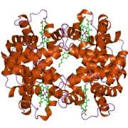

- [1]RCSB Protein Data BankStructural Biologists
Fetal Hemoglobin Structure and Function
Read on RCSB Protein Data Bank → - [2]Pearson Higher EducationEvolutionary Biologists
Allosteric Regulation of Hemoglobin
Read on Pearson Higher Education → - [3]Tuscany Diet BiochemistryStructural Biologists
2,3-Bisphosphoglycerate: an in-depth look at its metabolic impact
Read on Tuscany Diet Biochemistry → - [4]Factlen Editorial TeamEvolutionary Biologists
Synthesis by Factlen editorial team
Read on Factlen Editorial Team →
More in Perspectives
See all →Soundproofing Physics
Splitting Wall Cavities With a Third Drywall Leaf Shifts Resonance Into Audible Bass
7 sources

Consumer Electronics
Why Every Quartz Watch Ticks at Exactly 32,768 Hertz
5 sources

Railway Engineering
Stretching Continuous Welded Rail to 105°F: Why Heat Kinks Strike Blind
6 sources

Roadway Design
Why Modern Roundabouts Cut Intersection Fatalities by 80 Percent
6 sources

Comments
Every angle. Every day.
Get Perspectives stories with full source coverage and perspective breakdowns, free every day.