
NATO Assesses Russia Preparing Orbital Launch of Nuclear-Armed Satellite
Western intelligence agencies have warned NATO allies that Russia is in the final stages of preparing to launch a nuclear-armed anti-satellite weapon into low Earth orbit by the end of the year. The deployment would violate the 1967 Outer Space Treaty and threaten the global satellite infrastructure that underpins modern communications and military targeting.
By Hailey Scott

Share this story
NATO intelligence has circulated a classified assessment warning member states that Russia is in the final stages of preparing an orbital launch of a nuclear-armed anti-satellite weapon. The deployment, which German security sources indicate could occur before the end of December 2026, marks a severe escalation in the militarization of space.[1][2]
The intelligence assessment, first detailed by the German newspaper Die Zeit, concludes that Moscow has moved beyond the research and development phase that alarmed Western officials in early 2024. The weapon system is now reportedly mated to its launch vehicle at a Russian cosmodrome, awaiting final political authorization.[1][3]
"We are no longer looking at a theoretical capability or a long-term development program," a senior European intelligence official noted in the briefing materials. "The hardware is assembled, the orbital parameters are calculated, and the launch window is open."[1]
If launched, the payload would not be designed to strike terrestrial targets, but rather to orbit the Earth as a dormant space-to-space weapon. Its primary mechanism of destruction would be the generation of a massive electromagnetic pulse in low Earth orbit, capable of disabling unshielded satellites across vast distances.[2][4]
The mechanics of an orbital detonation
Low Earth orbit, spanning altitudes between 160 and 2,000 kilometers, has become the congested backbone of modern global infrastructure. It houses everything from the International Space Station to the thousands of commercial broadband satellites that route global internet traffic.[4]
A nuclear detonation in this environment behaves differently than one within the Earth's atmosphere. Without air to generate a traditional blast wave, the explosion releases an intense burst of gamma rays and X-rays, which interact with the Earth's magnetic field to produce a devastating electromagnetic pulse.[4]
This pulse would induce massive electrical currents in the circuitry of nearby satellites, instantly frying their onboard computers and communication arrays. Because the radiation would spread unhindered by atmospheric attenuation, a single detonation could indiscriminately disable hundreds of satellites simultaneously.[4]
Beyond the immediate electromagnetic damage, the explosion would create a persistent radiation belt that could linger for months or years. This artificial radiation would slowly degrade the solar panels and electronics of surviving satellites, drastically shortening their operational lifespans.[4]
The physical destruction of the weapon and its immediate targets would also generate a massive cloud of high-velocity shrapnel. Traveling at orbital speeds exceeding 27,000 kilometers per hour, this debris would pose a lethal, cascading threat to all other objects in low Earth orbit.[4]
Violating a decades-old space treaty
The deployment of a nuclear weapon into orbit would constitute a direct and undeniable violation of the 1967 Outer Space Treaty. The agreement, which forms the foundation of international space law, was ratified by the Soviet Union, the United States, and the United Kingdom at the height of the Cold War.
Article IV of the treaty explicitly prohibits state parties from placing "in orbit around the earth any objects carrying nuclear weapons or any other kinds of weapons of mass destruction." It also bans the installation of such weapons on celestial bodies or stationing them in outer space in any other manner.
For nearly six decades, this prohibition has held, keeping the domain of space free from the presence of nuclear arms even during periods of intense geopolitical friction. A Russian launch would shatter this long-standing taboo, potentially triggering a new and destabilizing arms race beyond the atmosphere.
Moscow has consistently denied that it is developing or preparing to deploy such a weapon. In February 2024, when the United States first declassified intelligence regarding the program, Russian officials dismissed the assertions as a malicious fabrication.[2]
At the time, the Kremlin accused the White House of inventing the threat to frighten the US Congress into passing a stalled $60 billion military aid package for Ukraine. Russian President Vladimir Putin publicly stated that Russia's activities in space were strictly limited to peaceful purposes and conventional military observation.[2][3]
Moscow's strategic calculus
Western military analysts suggest that Russia's pursuit of an orbital nuclear capability is driven by its acute awareness of NATO's overwhelming reliance on space-based assets. The United States and its allies depend heavily on satellite constellations for secure communications, precision targeting, and early warning systems.[4]
As Russia's conventional military forces have been severely degraded during the prolonged conflict in Ukraine, Moscow has increasingly leaned on its strategic deterrents to project power. An orbital nuclear weapon serves as the ultimate asymmetric threat, capable of leveling the playing field in a hypothetical direct conflict with NATO.[3][4]
"It is a weapon of last resort, designed to hold the entire architecture of modern warfare hostage," explained a defense analyst cited in the recent intelligence reports. "By threatening to blind the US military, Russia aims to deter Western intervention in its sphere of influence."[1][3]
The indiscriminate nature of the weapon, however, complicates its strategic utility. A detonation would not distinguish between American military satellites, European weather monitors, or China's rapidly expanding Tiangong space station and commercial constellations.[4]
This reality has led some analysts to question whether Beijing, Moscow's most crucial geopolitical partner, has been briefed on the impending launch. China has invested hundreds of billions of dollars into its own space infrastructure, which would be equally vulnerable to the fallout of a Russian orbital detonation.[4]
The threat to global infrastructure
The consequences of an orbital nuclear detonation would extend far beyond the military domain, causing catastrophic disruptions to the civilian global economy. Modern society is deeply intertwined with space-based services, many of which operate invisibly in the background of daily life.[4]
The Global Positioning System, while operating in medium Earth orbit, relies on signals that could be disrupted by the electromagnetic interference and radiation belts created by a low Earth orbit detonation. A loss or degradation of GPS would cripple global logistics, aviation, and maritime navigation.[4]
Furthermore, the precise timing signals provided by GPS satellites are essential for synchronizing global financial networks. Without these microsecond-accurate timestamps, international banking transactions, stock market trades, and ATM networks would face immediate and severe synchronization failures.[4]
Commercial satellite internet providers, which maintain vast constellations of thousands of small satellites in low Earth orbit, would bear the brunt of the physical and electromagnetic damage. The loss of these networks would sever connectivity for millions of remote users and critical infrastructure facilities worldwide.[4]
The cascading debris field, often referred to as the Kessler syndrome, could render specific orbital bands entirely unusable for generations. This would not only destroy existing assets but prevent the launch of replacement satellites, effectively trapping humanity beneath a lethal shell of high-speed shrapnel.[4]
Diplomatic and military countermeasures
In response to the imminent threat, NATO defense ministers have convened emergency consultations to discuss potential diplomatic and military countermeasures. The alliance is reportedly sharing the declassified portions of the intelligence assessment with non-NATO nations, including India and Brazil, to build a broad coalition of condemnation.[1][2]
Diplomatic channels are being utilized to pressure Moscow directly, warning of severe and unprecedented economic sanctions should the launch proceed. Western diplomats are also quietly urging China to leverage its influence over Russia, emphasizing the shared risk to Beijing's orbital assets.[3]
Militarily, the United States Space Command is accelerating the deployment of resilient, distributed satellite architectures designed to withstand localized attacks. However, defense officials acknowledge that there is currently no reliable defense against the widespread electromagnetic effects of an orbital nuclear detonation.[4]
"We are entering a highly volatile period where the foundational norms of space exploration are being openly challenged," the NATO intelligence briefing concluded. "The window to deter this launch is closing rapidly, and the consequences of failure will alter the strategic environment for decades."[1]
Key points
- NATO intelligence assesses that Russia is preparing to launch a nuclear-armed anti-satellite weapon into orbit, potentially by December 2026.
- The weapon is designed to generate an electromagnetic pulse in low Earth orbit, which would indiscriminately disable unshielded satellites.
- Deploying a nuclear weapon in space would directly violate Article IV of the 1967 Outer Space Treaty.
- A detonation would severely disrupt global communications, GPS navigation, and international financial networks.
What we don’t know
- Whether the satellite payload contains a live nuclear warhead or a mock-up designed for testing orbital parameters.
- If the Chinese government has been briefed by Moscow on the impending launch, given the threat to Beijing's own space assets.
- Whether diplomatic pressure or the threat of unprecedented economic sanctions will be enough to deter the launch before the December window closes.
How we got here
Feb 2024
The United States declassifies initial intelligence indicating Russia is developing a space-based nuclear anti-satellite weapon.
Apr 2024
Russia vetoes a UN Security Council resolution drafted by the US and Japan reaffirming the ban on weapons of mass destruction in space.
Nov 2026
NATO circulates a classified assessment warning that the Russian weapon is assembled and could be launched by the end of the year.
- NATO and Western Intelligence
- Views the Russian orbital weapon as a catastrophic escalation and a weapon of last resort designed to hold global infrastructure hostage.
- Space Policy Experts
- Deeply concerned about the indiscriminate nature of an orbital electromagnetic pulse and the long-term risk of rendering low Earth orbit unusable.
- Russian Federation
- Denies the existence of the weapon program, characterizing Western intelligence reports as fabricated hysteria to justify military spending.
Perspectives this story doesn't cover
- Commercial satellite operators whose assets would be destroyed
- The Chinese government, whose space infrastructure is equally vulnerable
Sources
Source coverage
4 outlets
3 viewpoints surfaced




- [1]DIE ZEITNATO and Western Intelligence
Russland will laut Medienberichten einen atomar bewaffneten Satelliten ins Weltall bringen
Read on DIE ZEIT → - [2]The Jerusalem PostNATO and Western Intelligence
Russia plans to launch nuclear-armed satellite this year - report
Read on The Jerusalem Post → - [3]HromadskeNATO and Western Intelligence
Russia may be preparing to launch a satellite carrying a nuclear weapon
Read on Hromadske → - [4]Center for Strategic and International StudiesSpace Policy Experts
Space Threat Assessment 2024
Read on Center for Strategic and International Studies →

More in News & Politics
See all →Postwar Security
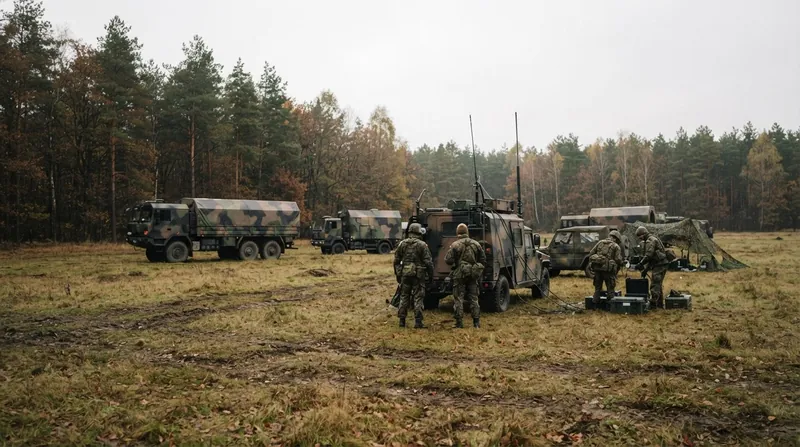
European Militaries Begin Joint Rehearsals in Poland for Potential Postwar Ukraine Deployment
6 sources
Airspace Security
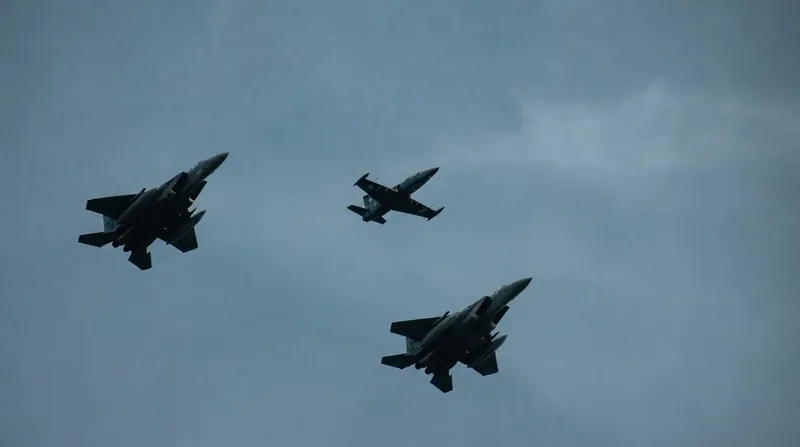
Latvia Scrambles NATO Jets and Interceptor Drones After Airspace Breach Near Russian Border
5 sources
Nuclear Deterrence
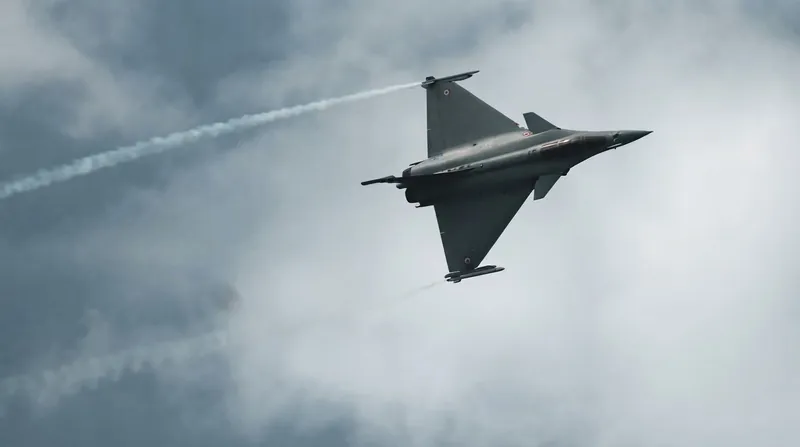
British Warplanes Join French Nuclear Strike Drill for the First Time
8 sources
Defense Economics
The 2% of GDP and the Seven Categories: How NATO Defines and Measures Member Defense Spending
8 sources

Comments
Every angle. Every day.
Get News & Politics stories with full source coverage and perspective breakdowns, free every day.