
MLS Plans Radical Playoff Overhaul for 2028, Introducing Double-Elimination and 20-Team Field
Major League Soccer is preparing a massive restructuring of its postseason for 2028, expanding the field to 20 teams and introducing a double-elimination bracket for top seeds.
By Meera Iyer

Twenty teams. A single unified table. A double-elimination safety net for the elite. Major League Soccer is quietly preparing to tear up its postseason blueprint.[1]
In 2028, alongside the highly anticipated move to a fall-to-spring calendar, MLS plans to abandon its traditional Eastern and Western Conferences. Instead, the league will operate a single 30-team table divided into five regional divisions, fundamentally altering the path to a championship.[1][3]
At the end of the grueling regular season, the top 20 teams across that single table will advance to the postseason. The bottom eight of those qualifiers will immediately face off in a sudden-death play-in round, whittling the field down to a final 16 in a matter of days.[1][2]
But the true radical shift happens at the top of the table. The top eight teams will enter a double-elimination bracket—a format heavily inspired by the Australian Football League (AFL) that introduces a completely new dynamic to American soccer.[1]
The mechanics are unforgiving for the weak but protective of the strong. A win in the opening round sends a top-eight team directly to the quarterfinals. A loss, however, does not end their season; they drop into a lower bracket for a second chance against the survivors of the play-in rounds.[1][4]
This architecture creates a massive, tangible incentive to finish in the top eight. Currently, top seeds often face the danger of a single bad night ending a dominant season. The double-elimination format acts as an insurance policy, a second life earned exclusively through regular-season excellence.[1][2]
The proposed system is a high-wire act of competing priorities, sparking intense debate over the trade-offs. On one side of the ledger, the expansion to 20 teams ensures that two-thirds of the league's markets remain mathematically alive in the playoff hunt until the final weeks of the season.[4]
The financial reality driving this expansion is undeniable. More teams mean more playoff inventory for broadcast partner Apple TV, fulfilling contractual obligations for high-stakes matches while keeping stadiums full and merchandise moving across the continent in late April and May.[4]
The counter-argument is rooted in competitive scarcity. Traditionalists argue that allowing 20 out of 30 teams into the postseason severely dilutes the value of the regular season. If a team can finish in the bottom third of the league and still compete for MLS Cup, the jeopardy of the 34-game schedule evaporates.[4]
Furthermore, a double-elimination bracket with reseeding after every round introduces a level of complexity rarely seen in global soccer. While the AFL has perfected this model over decades, translating it to American soccer audiences accustomed to straightforward knockout brackets presents a significant marketing hurdle.[1][4]
Squeezing this expanded, multi-tiered format into a condensed three-week window in May—culminating in the MLS Cup Final on May 21, 2028—will require a relentless cadence of matches. It will test the depth, tactical flexibility, and sheer physical endurance of the surviving squads.[1]
Ultimately, the 2028 overhaul is a bold, calculated compromise. It attempts to marry the American sports appetite for expanded, inclusive playoffs with a structural reward that honors the European ideal of regular-season supremacy. Whether it achieves that delicate balance will depend entirely on how fiercely teams are willing to fight for those coveted top-eight spots.[1][3]
Where opinion splits
The Expanded Field Model (20 Teams)
The case for maximizing market engagement and broadcast inventory.
FOR: Expanding the field to 20 teams ensures that the vast majority of MLS markets remain mathematically alive late into the season, driving ticket sales and local engagement. It guarantees a high volume of playoff matches, satisfying broadcast requirements and generating significant matchday revenue. AGAINST: It severely dilutes the regular season. When 66% of the league qualifies for the postseason, mediocrity is rewarded, and the stakes of mid-season matches plummet. EVIDENCE: Leagues with highly inclusive playoffs often see a drop in regular-season television ratings, as fans realize early results have little bearing on ultimate elimination. FITS WELL WHEN: The league's primary goal is maximizing late-season inventory and keeping casual fans engaged in as many cities as possible. DOES NOT FIT WHEN: The objective is to create a highly exclusive, prestige-driven championship where only elite teams compete.
The Double-Elimination Safety Net (Top 8)
The case for rewarding regular-season dominance with a structural advantage.
FOR: By granting the top eight teams a double-elimination lifeline, the format heavily incentivizes finishing at the top of the single table. It protects elite teams from being eliminated by a single fluke result, ensuring the highest-quality squads advance deeper into the tournament. AGAINST: It introduces significant complexity and potential fatigue. A top seed that loses its first match must play an extra game in a condensed three-week window, potentially negating their physical advantage. Furthermore, it breaks the traditional 'do-or-die' tension that makes soccer knockouts globally popular. EVIDENCE: The Australian Football League (AFL) successfully uses a similar model, which consistently produces finals featuring the league's genuinely best teams, though it requires a steep learning curve for new fans. FITS WELL WHEN: The league wants to protect its best teams and ensure the regular season has massive, tangible rewards at the top of the table. DOES NOT FIT WHEN: Audiences demand straightforward, single-elimination jeopardy where any team can be knocked out on any given night.
Key points
- MLS plans to expand its playoff field to 20 teams starting in the 2028 season.
- The league will shift to a single 30-team table, eliminating the East/West conference split.
- The top eight teams will enter a double-elimination bracket, offering a safety net for top seeds.
- The format heavily mirrors the Australian Football League (AFL) finals structure.
Unanswered questions
- How the condensed three-week playoff schedule will impact player fatigue and injury rates.
- Whether the double-elimination format will confuse casual fans accustomed to single-elimination brackets.
- How the exact tie-breakers and reseeding mechanics will function after the play-in rounds.
- Expansion Advocates
- Argue that more playoff teams keep more markets engaged and generate necessary revenue.
- Format Traditionalists
- Argue that allowing two-thirds of the league into the playoffs cheapens the regular season.
- Competitive Integrity Proponents
- Support the double-elimination aspect as a fair reward for regular-season excellence.
Perspectives this story doesn't cover
- The MLS Players Association (MLSPA) regarding the physical toll of the condensed playoff schedule.
- Broadcast partner Apple TV on the marketability of a complex double-elimination bracket.
Sources
Source coverage
5 outlets
3 viewpoints surfaced





- [1]The GuardianCompetitive Integrity Proponents
Double-elimination, reseeding and 20 teams: MLS plans potential overhaul of playoffs
Read on The Guardian → - [2]ForbesExpansion Advocates
Hypothetical 2028 MLS Postseason Format
Read on Forbes → - [3]Verde All DayExpansion Advocates
Is this MLS 4.0?: Changes afoot with the calendar and divisions, plus a fanciful look at expanded playoffs
Read on Verde All Day → - [4]RedditFormat Traditionalists
Double-elimination, reseeding and 20 teams: MLS plans overhaul of playoffs
Read on Reddit → - [5]PolitomixCompetitive Integrity Proponents
Double-elimination, reseeding and 20 teams: MLS plans overhaul of playoffs
Read on Politomix →
More in Sports
See all →UEFA Nations League
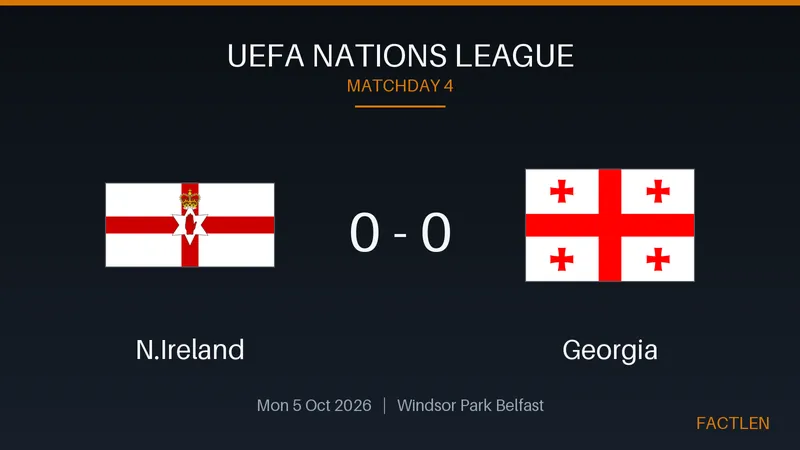
Northern Ireland Held to 0-0 Draw by Georgia as Mamardashvili Saves Late Penalty
2 sources
Standings
MLS Playoff Bubble Boils Over: Three-Way Tie in the East as Decision Day Looms
3 sources

UEFA Nations League
Northern Ireland Chases Nations League Promotion Against Struggling Georgia
6 sources
UEFA Nations League
Ukraine and Hungary Face Defining Nations League Clash in Trnava
6 sources
Comments
Every angle. Every day.
Get Sports stories with full source coverage and perspective breakdowns, free every day.