
Lancet Series Calls for Arts and Cultural Engagement to Be Integrated Into Global Health Systems
A landmark framework published in The Lancet demands that global health systems formally integrate and fund arts and cultural engagement as a core medical intervention.
By Tara Reddy
- Medical Researchers
- Advocates for treating arts engagement as a measurable, evidence-based health intervention.
- Arts & Health Practitioners
- Professionals focused on translating clinical evidence into accessible community and therapeutic programs.
Perspectives this story doesn't cover
- Health Insurance Providers
- National Health Ministry Officials
Why it matters
By categorizing cultural engagement as a core health behavior alongside diet and exercise, this framework provides the medical and political justification needed for governments to fund arts programs through public health budgets.
When the World Health Organization published its landmark 2019 report synthesizing over 900 studies conducted between the years 2000 and 2019 on the health benefits of the arts, the medical establishment largely treated it as a fascinating, if peripheral, academic exercise—a nice idea for a hospital lobby, perhaps, but not a substitute for a pharmacy. The newly launched Lancet Global Collection on Arts and Health, unveiled at the Skirball Center for the Performing Arts in New York on September 22, 2026, differs in one uncompromising respect: it is not asking for the arts to be admired, but for them to be integrated, funded, and prescribed as a core component of global healthcare.[3][6]
Produced in partnership with the Jameel Arts & Health Lab and the World Health Organization, the collection elevates cultural engagement from the margins of medicine to its center. The initiative comprises four distinct components, including a policy comment by former UN High Commissioner for Human Rights Dr. Michelle Bachelet and a visual essay featuring 32 examples of arts and health practices from around the world. But the intellectual weight of the project rests on two cornerstone papers that outline a sweeping global framework for public health.[3][6]
The first paper, titled “The arts as a global health resource: key priorities for future research,” synthesizes evidence showing that music, dance, visual arts, and theater contribute to mental and physical health across the human life course. It moves beyond the 2019 WHO baseline to argue that decades of isolated studies have brought the field to a critical stage. The authors contend that the medical community no longer needs more pilot programs; it needs strategic, systems-level integration where arts engagement is embedded directly into health policy.[5][6]
The second paper, “Developing roadmaps for advancing practice, research, and policy in the arts and health,” translates that evidence into a concrete action plan. It outlines specific policy recommendations, calling for equitable access to arts engagement and its formal inclusion in population-level prevention strategies. The framework proposes that arts engagement should be recognized as a health-enhancing behavior, comparable in clinical importance to physical activity, diet, and sleep—a categorization that might finally give a choir rehearsal the same medical gravitas as a treadmill session.[1][6]
The second paper, “Developing roadmaps for advancing practice, research, and policy in the arts and health,” translates that evidence into a concrete action plan.
“This is a historic moment for medicine,” said Professor Agustín Ibáñez of the Global Brain Health Institute at Trinity College Dublin, a co-author of both cornerstone papers. “For the first time, arts and cultural engagement are being brought together within a global medical framework spanning health promotion, prevention, treatment and care. We are moving from seeing the arts as an optional complement to health towards recognising cultural engagement as part of how we understand, protect and improve human health.”[3][6]
The roadmap emphasizes the creation of stronger community pathways that connect patients to arts-based programs outside hospital walls, alongside evidence-based arts interventions within clinical care itself. This means structured cultural activities could routinely complement conventional treatments for conditions ranging from cognitive decline to cardiovascular disease, provided they are culturally grounded and locally adapted.[1][6]
“Health emerges from the interaction of biological, psychological, social and cultural environments,” Ibáñez noted, stressing the holistic nature of the new framework. “Arts and culture are part of those processes. The challenge now is to build the evidence, policies and health systems that recognise this.”[3][6]
The launch event, held from 1:30 PM to 5:30 PM at 566 LaGuardia Place during the UN General Assembly’s Healing Arts week, which ran from September 19 to September 26, signals a deliberate political ambition. The organizers intend the collection to be read not only by clinicians and academics but by government agencies with the power to embed arts engagement in national health budgets.[6]
The immediate test for the 2026 framework will be whether national health ministries allocate specific funding lines for cultural prescribing in their upcoming annual budgets. As researchers advocate for making academic work matter in real-world settings, the roadmap demands that health and cultural institutions stop operating in silos, requiring policymakers to back their rhetorical support for the arts with hard cross-sector investment.[2][6]
What to know
- A new Lancet Global Collection demands that arts and cultural engagement be integrated into mainstream global healthcare.
- The framework proposes recognizing arts participation as a health-enhancing behavior comparable to diet, sleep, and physical activity.
- Two cornerstone papers outline specific policy roadmaps for embedding the arts in population-level prevention and clinical care.
- The initiative was launched during the UN General Assembly's Healing Arts week to target government policymakers and health ministries.
Sources
Source coverage
6 outlets
2 viewpoints surfaced





- [1]The LancetMedical Researchers
Developing roadmaps for advancing practice, research, and policy in the arts and health
Read on The Lancet → - [2]Times Higher EducationArts & Health Practitioners
What the movement to integrate the arts and health can teach us about making research matter
Read on Times Higher Education → - [3]Trinity College DublinMedical Researchers
Landmark Lancet series brings arts and cultural engagement into mainstream global health
Read on Trinity College Dublin → - [4]myScienceMedical Researchers
Landmark Lancet series brings arts and cultural engagement into mainstream global health
Read on myScience → - [5]The LancetMedical Researchers
The arts as a global health resource: key priorities for future research
Read on The Lancet → - [6]EurekAlert!Medical Researchers
Landmark Lancet series brings arts and cultural engagement into mainstream global health
Read on EurekAlert! →
Comments
More in Culture
See all →Timekeeping Systems
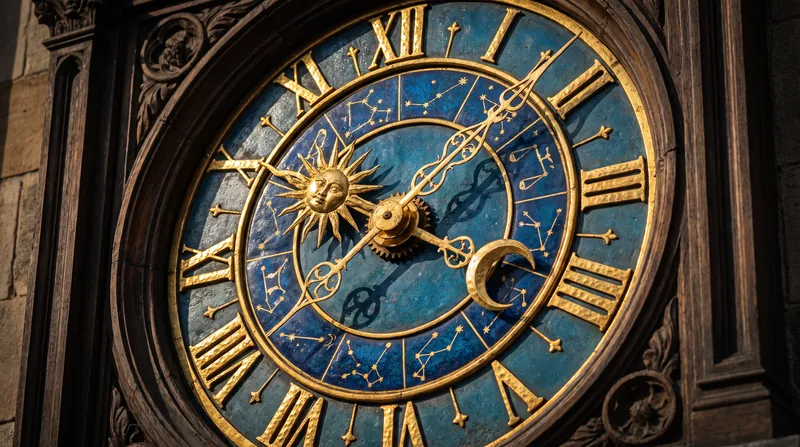
The Solar, Lunar, and Lunisolar Principles That Govern Global Calendar Systems
7 sources
Papal Visit
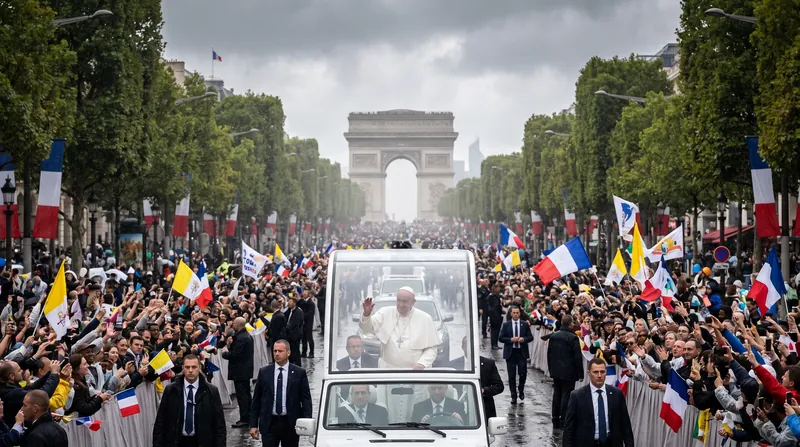
Pope Leo XIV Draws 800,000 to Mass on Paris' Champs-Élysées in Historic Visit
5 sources
AI Regulation
Bill Gates Warns AI Could Cause a 'Billion Deaths,' Demands Federal Regulation
7 sources
Conservation Science
The 50/70 Climate Trap: Why Museums Are Abandoning the Strictest Rule in Art Conservation
6 sources
Every angle. Every day.
Get Culture stories with full source coverage and perspective breakdowns delivered to your inbox.