
full timeline
US–Iran Gulf Crisis
US President Donald Trump has warned he is prepared to resume major military strikes against Iran in 2027 if stalled negotiations fail to produce a permanent agreement.
Follow US–Iran Gulf Crisis in the Factlen app and get an alert when there is news. Get the app
Share this story
Latest report
Trump Sets New Year Deadline for Iran Deal, Threatens 2027 Strikes and Sinking of Ships
US President Donald Trump has warned he is prepared to resume major military strikes against Iran in 2027 if stalled negotiations fail to produce a permanent agreement. The ultimatum comes as Washington tightens its naval blockade and Israel pushes for an immediate bombing campaign.
- President Trump has set a New Year deadline for Iran to reach a permanent diplomatic agreement, threatening renewed military strikes in 2027.
- Trump warned that Iranian vessels attempting to breach the ongoing US naval blockade will be sunk by American forces.
- Israeli Prime Minister Benjamin Netanyahu is lobbying Washington to abandon negotiations and immediately launch strikes against Iranian nuclear facilities.
- Gulf allies are pressing for a negotiated settlement, fearing that a renewed US bombing campaign could trigger Iranian retaliation against their energy infrastructure.
US President Donald Trump has established a strict New Year deadline for diplomatic negotiations with Iran, warning that Washington is prepared to resume major military strikes in 2027 if a permanent agreement is not reached. The ultimatum signals a potential end to the current operational pause.[1][2][3][4][5][6]
The president delivered the warning during a weekend telephone interview with Fox News, marking a significant escalation in the rhetoric surrounding the months-long conflict. The war, which began with joint US and Israeli airstrikes in February 2026, has settled into a tense maritime standoff.[1][5][6]
Trump expressed deep frustration with the pace of indirect talks, accusing Tehran of deliberately stalling the diplomatic process while simultaneously escalating regional hostilities. He insisted that any final deal must permanently dismantle Iran's nuclear weapons program in a way future administrations cannot reverse.[1][4]
"They talk all the time. All they do is talk, but it's all BS," Trump told Fox News correspondent Trey Yingst. The president described the Iranian delegation as "professional tap dancers" who engage in endless discussions without making meaningful concessions toward a ceasefire.[1][2]
Beyond the diplomatic deadlock, the president issued a stark warning regarding the ongoing US naval blockade of Iranian ports. The maritime cordon, enforced by US Central Command since April, has severely restricted the country's oil exports and commercial shipping traffic through the Strait of Hormuz.[1][4][6]
Responding to Iranian state media reports suggesting that Tehran might attempt to break the blockade with a convoy of tankers, Trump threatened immediate and overwhelming naval retaliation. He indicated that US forces have standing orders to destroy any vessels challenging the established perimeter.[1][4][6]
"I hope they do, they'll all be at the bottom of the sea like the rest of the navy," Trump said during the broadcast. The remarks follow reports that Iranian hardliners are pushing to send unsanctioned oil shipments to China in defiance of the embargo.[6]
Pressure from allies and Congress
The decision to delay potential strikes until 2027 comes amid intense lobbying from Israeli Prime Minister Benjamin Netanyahu, who strongly opposes the waiting period. The Israeli government views the current diplomatic track as a dangerous delay tactic by Tehran.[5]
Netanyahu has been pushing Washington to abandon the stalled negotiations and immediately launch a fresh bombing campaign. Israeli defense officials want the US military to target Iranian nuclear facilities, ballistic missile sites, and critical energy infrastructure before Tehran can harden its defenses.[5]
Last week, the Israeli leader dispatched Mossad chief Roman Gofman to Washington and Miami for urgent consultations. Gofman met with CIA Director John Ratcliffe and White House envoy Steve Witkoff to present specific strike scenarios and intelligence on Iranian nuclear advancements.[5]
The Israeli delegation reportedly urged the Pentagon to target the Pickaxe Mountain nuclear facility, along with key bridges and power plants. The White House has subsequently requested evaluations from intelligence agencies on how Tehran might retaliate across the various strike scenarios drawn up by military planners.[5]
Despite the mounting pressure from Jerusalem, Trump indicated to Axios aboard Air Force One that he intends to maintain the current holding pattern through the end of December. He emphasized that the administration is evaluating its options carefully rather than rushing into a renewed offensive.[5]
"I am not rushing into any decision," Trump said following his departure from the APEC Summit in China. "We will see what happens after the beginning of the year. We've got time," he added, signaling that the military option remains on the table but is not imminent.[5]
The New Year timeline coincides with a major political shift in Washington, as the 120th US Congress is scheduled to convene on January 3, 2027. The incoming legislature will feature a fundamentally different balance of power following the November 3 midterm elections.[1]
Democrats, who secured majorities in both the Senate and the House of Representatives, are expected to heavily scrutinize the administration's war powers upon taking office. The new congressional leadership is likely to demand greater oversight of military funding and operations in the Middle East.[1]
A tightening maritime chokehold
The US naval blockade remains the centerpiece of Washington's strategy to force Tehran into a comprehensive and irreversible agreement. The operation involves guided-missile destroyers, dozens of aircraft, and thousands of military personnel patrolling the Gulf of Oman and the Arabian Sea.[6]
Imposed in mid-April following the collapse of the Islamabad Talks, the blockade has effectively paralyzed Iranian oil exports. The International Maritime Organization previously reported that the closure stranded thousands of mariners in the Persian Gulf, creating the largest disruption to world energy supply in decades.[6]
US Central Command has steadily widened the operation's scope over the past six months. The military recently expanded the cordon to intercept ship-to-ship cargo transfers occurring in open waters, warning that non-compliant vessels could face capture or direct military force.[6]
Iranian officials have condemned the blockade as an illegal act of war and a violation of international maritime law. Tehran has repeatedly threatened to retaliate against regional energy infrastructure in neighboring countries if the United States intercepts its sanctioned oil tankers.[1][4]
Despite the economic strangulation, Tehran has intensified its military operations in recent weeks, launching strikes against US and allied positions. The Iranian Revolutionary Guard Corps has continued to deploy explosive drones and ballistic missiles across the region, testing the coalition's air defense networks.[6]
Trump noted on his Truth Social platform that Iran has fired more drones and missiles over the past week than at any time in the previous year. He claimed that all incoming projectiles were successfully intercepted by allied forces without causing structural damage or casualties.[6]
Regional fears of escalation
The prospect of renewed American strikes has alarmed US allies in the Persian Gulf, who fear getting caught in the crossfire of a wider regional war. Gulf states are pressing for a negotiated settlement to protect their vulnerable economies.[1]
Nations including Saudi Arabia and the United Arab Emirates are desperate to avoid a repeat of earlier Iranian attacks on their sovereign territory. During the initial stages of the conflict, Iranian forces targeted energy infrastructure across the Arabian Peninsula in retaliation for US airstrikes.[1][6]
The security environment remains highly volatile, prompting the US State Department to issue a new alert on Sunday. The advisory warned Americans in Bahrain to exercise heightened vigilance amid credible threats of attacks by Iran-backed Houthis and direct Iranian efforts to target US facilities.[6]
Secretary of State Marco Rubio has defended the administration's current approach, arguing that the naval blockade is achieving its strategic objectives. He maintained that the economic pressure is degrading Iran's military capabilities without requiring the immediate risks associated with a massive bombing campaign.[5]
"The President is not under false time pressure, the Iranians are inflicting major damage on their own economy," Rubio stated over the weekend. He dismissed calls for an accelerated military timeline, suggesting that Tehran's refusal to accept Washington's conditions is only deepening its domestic crisis.[5]
Meanwhile, Trump used the Fox News interview to directly address the Iranian public, encouraging anti-government demonstrators to continue their protests against the Islamic Republic's leadership. The president claimed to have watched videos of renewed demonstrations, expressing solidarity with citizens opposing the regime.[1][6]
As the January deadline approaches, the White House has ordered the Pentagon and intelligence agencies to finalize their evaluations of potential Iranian counterstrikes. Military planners are assessing how Tehran might respond to various kinetic scenarios, including attacks on its nuclear and command infrastructure.[5]
Sources
- [1]The Jerusalem Post — Trump warns of renewed US strikes on Iran in 2027, threatens to sink vessels challenging the naval blockade, and urges Iranians to keep protesting Read on The Jerusalem Post →
- [2]Middle East Online — Trump signals possible renewed strikes on Iran after New Year if talks fail Read on Middle East Online →
- [3]Ajel English — Trump: US may resume action against Iran after New Year Read on Ajel English →
- [4]Sabq — Deadline Set for New Year: Trump Threatens Iran with War and Sinking Ships to Break Blockade Read on Sabq →
- [5]India Today — Trump puts Iran strikes on hold till New Year, Netanyahu pushes for fresh bombing: Report Read on India Today →
- [6]Iran International — Trump eyes Iran strikes after new year, threatens to sink blockade runners Read on Iran International →
What to watch
- President Donald Trump has set a New Year deadline for Iran to reach a permanent diplomatic agreement.
- The United States has threatened to resume major military strikes against Iran in 2027 if negotiations fail.
- Israeli Prime Minister Benjamin Netanyahu is lobbying Washington to abandon negotiations and immediately launch strikes against Iranian nuclear facilities.
- The International Energy Agency warned that the ongoing disruption in the Strait of Hormuz will trigger a severe global liquefied natural gas shortage this winter.
- Market analysts project oil prices will ease in 2027 as the global supply chain fully internalizes the shift away from Persian Gulf dependence.
Earlier updates
7 updates
Donald Trump Jr. Backs JD Vance in Blaming Iran War for GOP Midterm Losses
Key point: Donald Trump Jr. has endorsed Vice President JD Vance's assessment that the ongoing war with Iran is the primary reason Republicans lost control of Congress in the midterm elections.
Donald Trump Jr. has publicly aligned himself with Vice President JD Vance in attributing the Republican Party's massive midterm election losses to the ongoing war with Iran. On Wednesday, Trump Jr. reposted Vance's lengthy social media statement that blamed the electoral defeat on the administration's foreign policy and the economic fallout of the conflict. The President's eldest son added "Every word of this is 💯" to signal his full agreement with the Vice President's blunt assessment.
In his original post, Vance argued that voters who supported the Trump-Vance ticket in 2024 had abandoned the party due to four main concerns: ending the war, the rising cost of living and inflation, a desire to put "America First," and the need to change the U.S. relationship with Israel. Vance stated unequivocally that "the reason we lost is the war" and challenged proponents of the conflict to argue that losing control of the Senate for the next six years was a worthwhile cost to pay.
The coordinated messaging from the Vice President and the President's eldest son exposes a significant and public rift within the administration over its military agenda. While Vance and Trump Jr. are pointing to the Iran conflict as the primary catalyst for the "blue tsunami" that swept Democrats into control of both chambers of Congress, President Donald Trump has defended his decisions. The President acknowledged the war's short-term impact on gas prices but maintained that the military action against Iran was necessary and must continue.
The midterm results have severely limited the Republican Party's legislative power in Washington for the remainder of Trump's second term, prompting widespread infighting over the administration's future direction. The global implications of the U.S. election shift are already being felt across international markets. Foreign governments and financial policymakers, including those in South Korea, are now closely monitoring the political fallout and preparing for potential shifts in American trade and foreign policies under a divided government.
South Korea Expands Naval Mission Closer to Strait of Hormuz
Key point: South Korea is expanding its naval presence and deploying additional military assets near the Strait of Hormuz to protect its shipping interests without directly entering the U.S.-Iran war.
South Korea's Defense Ministry announced plans on Thursday to expand the operational area of its Cheonghae anti-piracy naval unit closer to the Strait of Hormuz and deploy additional military assets. The government will submit a motion to parliament to extend the unit's deployment and broaden its mission to include waters near the port of Duqm in Oman, approximately 650 kilometers from the vital waterway.
Under the proposal, the unit's personnel ceiling will increase from 320 to 395 to accommodate a P-8A maritime patrol aircraft, a 30-member explosive ordnance disposal team, and unmanned mine-clearing equipment. A defense ministry official emphasized that the reinforcement is strictly for non-combat purposes to protect South Korean citizens and economic interests. The official added that the unit will operate independently of allied forces and the patrol aircraft will be prohibited from monitoring Iranian territory or the interior of the strait.
The expansion marks a significant increase in South Korea's military footprint and capabilities in the region, introducing advanced mine-clearing and surveillance assets for the first time. The move is widely seen as a calculated response to pressure from U.S. President Donald Trump to support the ongoing war in Iran, while carefully avoiding direct military intervention in the conflict.
The U.S.-Iran war, which began in February, has severely disrupted commercial shipping through the Strait of Hormuz, a critical chokepoint that normally handles a fifth of the world's oil. South Korea is highly vulnerable to these disruptions, having sourced 70 percent of its oil imports from the Middle East in 2025. President Lee Jae Myung has previously maintained that Seoul would not deploy troops in a manner that could draw the country into the conflict, a stance that prompted Trump to scale back joint military drills over the summer.
Trump Concedes Iran War Caused Midterm Losses but Defends Conflict
Key point: President Donald Trump acknowledged that the US war with Iran and resulting high gas prices drove the Republican midterm defeats, while maintaining the conflict was necessary.
President Donald Trump has conceded that the ongoing US war with Iran angered voters and triggered the Republican Party's sweeping losses in the midterm elections. Despite acknowledging the political damage, Trump defended the conflict as a necessary action.
Addressing the election results, Trump admitted that the war's fallout, including soaring gas prices, hurt Republican candidates at the ballot box. He described the assessment of the war's negative impact on the polls as 'largely true,' but insisted that the military engagement was something he 'had to do.'
Trump's concession aligns his public stance with that of Vice President JD Vance, who recently pointed to the conflict as the primary driver of the GOP's electoral defeats. Vance had previously stated that the war on Iran was the 'real reason' Republicans lost the midterms.
The midterm elections resulted in a Democratic landslide, fueled by widespread voter dissatisfaction over the economic and geopolitical consequences of the ongoing military engagement. Having won control of both the Senate and the House of Representatives, Democrats reportedly intend to curb the Trump administration's war and spending powers.
Saudi Arabia and Syria Sign Defense Cooperation Agreement During Riyadh Summit
Key point: Saudi Arabia and Syria have signed a defense cooperation agreement and over $403 million in development deals during a summit in Riyadh.
Saudi Arabia and Syria have signed a defense cooperation agreement during Syrian President Ahmed al-Sharaa's visit to Riyadh. The accord, finalized on Wednesday between the two nations' defense ministries, was overseen by al-Sharaa and Saudi Crown Prince Mohammed bin Salman.
While specific details of the defense pact remain undisclosed, the leaders held official talks focusing on bilateral relations and regional security. They jointly warned against military escalation and called for an immediate halt to actions threatening maritime navigation in the Red Sea, the Bab al-Mandab Strait, and the Strait of Hormuz.
The defense agreement marks a significant deepening of military ties as Saudi Arabia continues to face missile and drone attacks from Yemen's Iran-backed Houthi rebels. Alongside the security pact, the Saudi Fund for Development signed six agreements to provide Syria with over $403 million in concessional loans for infrastructure and essential services, while additional memorandums covered industrial and agricultural cooperation.
The summit represents the second meeting between al-Sharaa and the Saudi Crown Prince in less than a month. Riyadh has emerged as a primary partner in providing financial stabilization and restoring Damascus's diplomatic standing following the fall of Bashar al-Assad's government in late 2024.
US Sanctions Indian and Turkish Entities for Aiding Iran's Shadow Oil Fleet
Key point: The US has sanctioned an Indian maritime fraud network and a Turkish aviation firm for allegedly helping Iran evade international restrictions on its oil exports and airlines.
The US Treasury Department has imposed sanctions on an Indian couple and several associated companies for allegedly running a vast maritime fraud network that enabled Iran's shadow fleet to evade international oil restrictions. The sweeping measures also target a Turkish aviation services firm, Fugo Ground Services Inc., which is accused of providing ground handling and logistical support to sanctioned Iranian airlines.
According to the Treasury, Chandigarh-based Suniel Kumar Sharma and his wife, Jaspreet Preeti Shahid, provided false flags and fraudulent maritime certifications to vessels transporting Iranian petroleum. The couple allegedly impersonated maritime authorities from countries including Guyana, Eswatini, Dominica, and Laos. By creating fake websites, they offered ship registration, seafarer training, and vessel classification without any government authorization.
The operation, which reportedly dates back to 2014, allowed sanctioned tankers—including those operating for the Iranian military and its proxies—to conceal their identities and bypass international safety regulations. In 2023, Sharma established a Singapore-based entity that continued to provide flagging services despite being publicly disavowed by Eswatini authorities. Sharma recently denied current involvement, telling Lloyd's List that he had exited the ship-registration business months ago.
The latest sanctions expand Washington's "Operation Economic Outcast," a broader campaign aimed at severing Iran's oil revenues and restricting its ability to finance military activities. US Treasury Secretary Scott Bessent issued a stark warning to individuals and businesses accused of supporting Tehran, stating that the administration will continue to pursue and penalize violators across all domains.
Multiple Tankers and Tugboat Catch Fire in Strait of Hormuz
Key point: Several oil tankers and a tugboat caught fire in the Strait of Hormuz and near Qatar amid escalating maritime attacks and naval mine strikes.
Two oil tankers and a tugboat caught fire in separate incidents in the Strait of Hormuz, while another tanker was struck by projectiles north of Qatar. Iran's Islamic Revolutionary Guard Corps attributed the strait incidents to vessels attempting to use unauthorized routes.
According to the IRGC, one tanker hit a naval mine south of the strait, and a second supertanker caught fire while exiting the eastern waterway. A tugboat that approached to extinguish the flames also caught fire. Separately, the United Kingdom Maritime Trade Operations reported that a tanker was hit by two unidentified projectiles about 50 nautical miles north of Qatar late on November 4.
The fires represent a continued escalation of maritime threats in the vital shipping lane, following an IRGC claim that four other oil tankers were destroyed by mines in a prohibited area on Wednesday. The growing number of attacks has further depressed crude oil flows from the Middle East, forcing vessels to switch off tracking systems to avoid detection.
Tehran has severely restricted traffic through the Strait of Hormuz—which normally handles a fifth of global oil consumption—since the outbreak of the war with the United States and Israel in late February. In response to Iran declaring the waterway closed to uncoordinated traffic, the U.S. has maintained a blockade on Iranian ports while providing military escorts for commercial tankers.
US Sanctions Indian and Turkish Networks for Aiding Iranian Shipping and Aviation
Key point: The United States sanctioned 13 individuals and entities, including an Indian maritime fraud network and a Turkish aviation firm, for aiding Iran's shadow fleet and airlines.
AISouth Korea is weighing US requests to deploy military assets to secure the waterway.From: Gulf States and Iran to Meet in Oman to Negotiate Temporary Strait of Hormuz Shipping Deal The United States imposed sanctions on Wednesday against a maritime fraud network based in India and a Turkish aviation support company for allegedly aiding Iran. The Treasury Department targeted 13 individuals and entities as part of a broader campaign to disrupt the Iranian regime's revenue streams and shadow fleet operations.
The maritime sanctions focus on Indian nationals Suniel Kumar Sharma and Jaspreet Preeti Shahid, who operate a large-scale network from Chandigarh. U.S. officials stated the couple ran companies posing as flag registries for nations such as Guyana, Eswatini, and Laos. These entities allegedly sold fraudulent registrations and maritime certificates to Iranian vessels carrying illicit oil, allowing them to evade international restrictions.
In addition to the maritime network, the United States sanctioned Fugo Ground Services Inc., a company based in Turkey. The firm is accused of providing ground services to sanctioned Iranian airlines, which the U.S. has actively sought to shut down as part of its restrictions on Iran's aviation sector.
The measures fall under Operation Economic Outcast, an initiative by the Trump administration intended to economically isolate Iran and cut off funding for its proxies and weapons proliferation. Treasury Secretary Scott Bessent warned that the U.S. will penalize any entity supporting the Iranian regime by land, sea, or air, regardless of its relationship with Washington.
These sanctions are part of a tightening web of U.S. economic restrictions against Iran that have escalated since August, when Washington announced it would seek the economic asphyxiation of the country. The actions follow the outbreak of a war between the U.S., Israel, and Iran in late February, which has severely disrupted the Middle East and vital energy trade routes.
4 updates
Iran Says Four Oil Tankers Hit Mines in Strait of Hormuz Following US Strikes
Key point: Iran claims four oil tankers were destroyed by naval mines in the Strait of Hormuz shortly after the US launched limited strikes on Qeshm Island.
Iran's Islamic Revolutionary Guard Corps announced that four oil tankers caught fire after striking naval mines in the Strait of Hormuz. The IRGC claimed the vessels were destroyed while attempting to navigate a prohibited route south of the strategic waterway. Two additional vessels were reportedly detained by Iranian forces during the same operation.
In statements carried by state media, the IRGC described the tankers as non-compliant and accused them of traveling through an unauthorized passage with their navigation systems turned off. Iranian forces also claimed to have shot down a US-made MQ-9 drone over the strait early Wednesday morning. The identities of the tankers, their owners, and the crew nationalities were not immediately disclosed by authorities.
The maritime incidents follow limited US military strikes on Iran's Qeshm Island late Monday, which Washington described as defensive actions targeting surface-to-air missile batteries. The exchange marks a continued escalation in the region, threatening global energy supplies as Tehran seeks to assert control over the critical shipping lane. Iranian officials warned that any miscalculation by the US would lead to an unpredictable response.
Tensions have remained high since large-scale US and Israeli strikes against Iran earlier in the year, leading to a de facto blockade of the strait. Despite the military friction, indirect diplomatic contacts continue through regional mediators like Qatar. US Vice President JD Vance recently expressed optimism about reaching a deal to end the conflict, though Iranian negotiators maintain that Washington must first lift economic sanctions.
Vice President Vance Concedes War With Iran Caused Decisive Midterm Defeat
Key point: Vice President JD Vance publicly blamed the ongoing war with Iran for the Republican Party's sweeping midterm election losses, distancing himself from President Trump's foreign policy.
Vice President JD Vance stated on Wednesday that the ongoing war with Iran was the primary reason Republicans suffered a sweeping defeat in the midterm elections. In a lengthy post on social media, Vance broke with the administration's messaging, declaring that "everyone knows why we lost" and pointing directly to the conflict.
Vance wrote that voters who supported the Trump-Vance ticket in 2024 flipped to Democrats in 2026 primarily to end the war, address the cost of living, put America first, and change the U.S. relationship with Israel. He challenged defenders of the conflict to argue that "losing the Senate for the next 6 years was worth it," while noting that President Donald Trump had also acknowledged the war's role in the defeat.
The vice president's blunt assessment marks a rare and public divergence from Trump, who maintained on Tuesday that launching the war was the right decision. Vance's remarks signal an effort to distance himself from the unpopular foreign policy as the Republican Party grapples with the loss of both chambers of Congress and looks ahead to the 2028 presidential cycle.
The midterm elections delivered a historic "blue wave," with Democrats capitalizing on voter anger over the conflict, soaring inflation, and the administration's broader foreign policy. The results have handed Democrats full control of Congress, effectively stalling the administration's agenda for the remainder of Trump's term.
Trump Declares No Immediate Plans for Further Iran Strikes Following Electoral Rout
Key point: President Donald Trump announced he has no immediate plans for further military strikes on Iran following a midterm election defeat that he acknowledged was partly driven by voter opposition to the war.
President Donald Trump has declared that he has no immediate plans to order further military strikes on Iran, despite previously keeping the option open ahead of the U.S. midterm elections. Speaking to the Financial Times on Tuesday evening, Trump stated that U.S. forces remain "locked and loaded" but suggested there may be no reason for an imminent attack.
Trump described the current situation in the Persian Gulf as "brilliant," noting that oil continues to reach global markets under U.S. military escort through the Strait of Hormuz. However, he acknowledged that the ongoing conflict with Iran played a significant role in the Republican Party's bruising losses in the midterm elections. Despite losing control of Congress, the president maintained that the war has been worth it and stated he would have made the same decision again.
The decision to hold off on further strikes marks a shift in tone following the electoral rout, which saw Democrats flip control of Congress and achieve historic victories nationwide. With Democrats preparing to take power and having previously voted to restore war powers to Congress, the incoming legislative majority is expected to pursue de-escalation in the conflict.
The midterm results have been widely interpreted as a voter rebuke of the administration's handling of the Iran war, which has driven up global oil prices and consumer costs. Vice President JD Vance explicitly blamed the conflict for the GOP's defeat, noting that voters wanted to end the war and focus on domestic inflation. Meanwhile, Senate Minority Leader Chuck Schumer heralded the Democratic victory as a clear mandate from voters to deliver on their priorities and change the nation's course.
Iran Claims Four Commercial Tankers Destroyed by Naval Mines in Strait of Hormuz
Key point: Iran's Revolutionary Guard Corps claims four commercial oil tankers were destroyed by naval mines in the Strait of Hormuz after attempting to navigate a prohibited passage.
Daily commercial transits through the strait plummeted following the outbreak of hostilities.From: Iran Claims Naval Mines and Explosions Damaged LNG Vessel and Four Tankers in Strait of Hormuz Four commercial oil tankers caught fire and were destroyed after striking naval mines in the Strait of Hormuz on Wednesday, according to Iran's Islamic Revolutionary Guard Corps. The paramilitary group stated that the vessels were attempting to navigate a prohibited passage south of the strategic waterway when they hit the explosives. Two additional non-compliant ships were also reportedly intercepted and halted by Iranian forces.
The Iranian military did not identify the destroyed vessels by name or flag, nor did it provide casualty figures for the crews involved. In a statement broadcast on state television, the IRGC claimed the ships had violated regulations by taking unauthorized routes. The group also announced it had shot down a United States MQ-9 Reaper drone over the strait early Wednesday morning.
The destruction of the tankers threatens to reignite direct military confrontation just as the conflict appeared to be cooling. Despite earlier indications that Washington might pause its offensive operations, United States President Donald Trump warned on Wednesday that American forces could still deliver a heavy hit. Iranian officials responded by asserting that American voters had rejected the war at the ballot box, though Tehran remains ready for battle.
The Strait of Hormuz remains a critical chokepoint for global energy supplies, though commercial traffic has dropped significantly since the conflict began. The region has seen a surge in maritime attacks in recent days, including a projectile strike on a tanker near Oman and an attack that killed an Indian seafarer on Monday. Indirect negotiations between Washington and Tehran remain stalled, with Iran demanding an end to American naval blockades and oil sanctions.
2 updates
US Strikes Iran's Qeshm Island Amid Push for Seven-Step Hormuz Peace Plan
Key point: The US launched limited defensive strikes on Iran's Qeshm Island even as mediators work to finalize a seven-step peace agreement to reopen the Strait of Hormuz.
The United States has carried out defensive strikes against Iranian targets on Qeshm Island in the Strait of Hormuz. The military action, confirmed by US officials and initially reported by the Wall Street Journal, appears to be a limited operation rather than a full return to hostilities.
The strikes occurred just as diplomatic efforts were advancing around a proposed seven-step peace plan to de-escalate tensions in the region. Iranian officials recently stated that the Strait of Hormuz could be reopened within two days if the United States agrees to the terms of the circulating draft deal.
Yemen Reshuffles Cabinet as Houthi Forces Advance Toward Aden
Key point: Yemen's internationally recognized government has reshuffled its cabinet as Houthi forces advance to within 80 kilometers of the de facto capital of Aden.
AIYemeni government forces maintain defensive positions outside Aden as Houthi units advance toward the city.From: Yemen Reshuffles Cabinet as Houthi Forces Advance Within 80 Kilometers of Aden Yemen's Presidential Leadership Council has announced a cabinet reshuffle, appointing three new ministers amid mounting battlefield pressure. The government reorganization occurs as Houthi forces make significant territorial gains, advancing toward the southern port city of Aden.
The rebel group has pushed to within 80 kilometers of Aden, marking their closest approach to the internationally recognized government's de facto capital since 2015. The leadership council recently convened to discuss the escalating Houthi attacks and implement the ministerial changes.
The Houthi offensive has been accompanied by twin missile strikes targeting the presidential palace in Aden. The militants have also attempted cross-border drone attacks directed at Saudi holy cities as regional hostilities continue.
Charts, maps and images
Timeline
November 2026
Yemen's Houthis Claim Drone and Missile Strike on Saudi Rabigh Oil Refinery
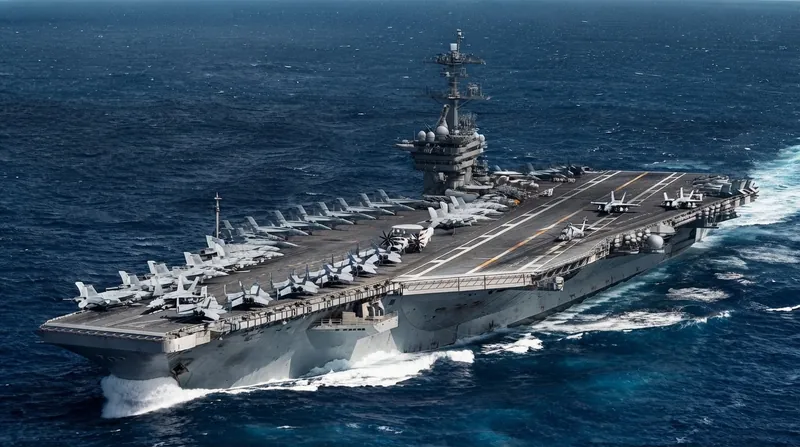
AIAIUSS Theodore Roosevelt Assumes Middle East Watch as George Washington Departs
AIAIAIAIBahrain Reports Industrial Blaze After Iranian Strike as IRGC Targets US Bases
AIAIAISenate Republicans Block Bipartisan Resolution to Limit Trump's War Powers in Iran Conflict
AIAISaudi Arabia and US Review War Plans as Coalition Intercepts Houthi Missile Barrage Over Riyadh
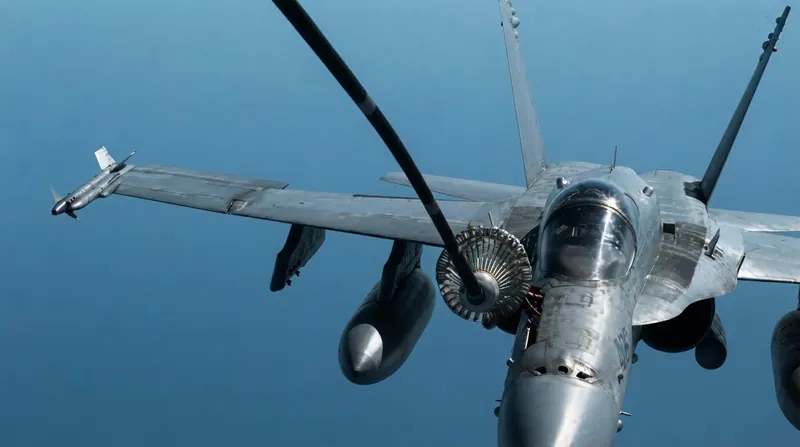
AIAIUS Fighter Jets Strike Iranian Missile Launch Site on Qeshm Island Following Gulf Attacks
AIAI



Earlier live pages
How the story developed
The conflict escalated in early June 2026 when a fragile April ceasefire unraveled. On June 7, U.S. forces struck Iranian radar sites, and Iran fired ballistic missiles at U.S. bases in Kuwait and Bahrain. Following the downing of an American helicopter, the U.S. struck approximately 20 Iranian air defense and radar sites on June 11, halting commercial shipping in the Strait of Hormuz and trapping over 500 vessels. On June 16, the U.S. and Iran signed a preliminary Memorandum of Understanding to halt hostilities. By June 17, the two nations agreed to a 60-day ceasefire featuring immediate oil export waivers and a $300 billion investment framework, which temporarily reopened the Strait and eased global oil prices.
The ceasefire collapsed by July 12 over maritime disputes and Israeli strikes in Lebanon, prompting Iran to close the Strait of Hormuz. On July 14, President Trump reinstated a full U.S. naval blockade on Iran and imposed a 20 percent tariff on commercial shipping passing through the Strait. The conflict expanded in August as Iran-aligned Houthi forces launched a fatal strike on a commercial vessel in the Bab el-Mandeb Strait, enforcing a new naval blockade. In response, Saudi Arabia launched a 14-nation maritime defense coalition on August 14 to secure the Red Sea. On August 22, the 60-day ceasefire formally collapsed as the U.S. announced unprecedented economic warfare and Iran shifted to an offensive military doctrine.
Throughout September, Houthi rebels advanced, capturing the strategic Mokha port, Perim Island, and the Hanish archipelago by September 14, effectively sealing off the Red Sea's southern chokepoint. Direct U.S.-Iran military exchanges intensified; on September 13, U.S. Central Command destroyed five Iranian crude oil carriers after the Islamic Revolutionary Guard Corps targeted an American warship, and Iran retaliated by firing ballistic missiles at a U.S. military base in Jordan. The U.S. Treasury launched 'Operation Economic Outcast,' extending secondary sanctions to sever Iran's commercial aviation and financial sectors from global networks. On September 26, the U.S. military deployed ship-mounted high-energy laser weapons to the Strait of Hormuz to counter incoming drones.
By October, the eight-month closure of the Strait of Hormuz drove Brent crude prices above $116 a barrel and pushed global diesel prices to record highs. The World Bank projected a 2.1 percent economic contraction for the Middle East and began negotiating $60 billion in emergency aid for up to 40 developing nations facing energy shocks. On October 2, the G7 and the International Energy Agency agreed to release 100 million barrels of oil and diesel from strategic reserves. The Pentagon deployed 9,000 troops to the Middle East on October 3. Houthi forces escalated strikes on Saudi Arabia, hitting the Ras Tanura oil refinery on October 27. In response, Turkey and Pakistan activated the Mecca Mutual Defense Pact to deploy forces to Saudi Arabia, Egypt pledged military backing, and Britain deployed RAF fighter jets to Riyadh. By October 28, the Pentagon estimated the U.S. military had spent over $47 billion on the conflict.
In early November, diplomatic efforts stalled. Following the U.S. midterm elections, Vice President JD Vance and President Trump acknowledged the war contributed to Republican defeats. Regional alliances shifted as Syria agreed to deploy 600 special forces to Saudi Arabia, and South Korea expanded its naval mission near the Strait of Hormuz. On November 11, the U.S. Justice Department indicted three Iranian operatives over a thwarted terror plot targeting RAF Fairford in the UK. Trump abruptly terminated U.S. participation in ceasefire negotiations on November 13. U.S. forces bombed an Islamic Revolutionary Guard Corps missile launch site on Qeshm Island on November 17, and Iranian drones subsequently targeted the Ali Al Salem Air Base in Kuwait and installations in Bahrain. On November 19, a Houthi ballistic missile struck the Public Investment Fund tower in Riyadh's financial district. On November 20, the U.S. Senate blocked a bipartisan resolution to limit the president's war powers, after which Trump deferred planned military strikes against Iran until 2027.