
How the Brain Rebuilds Itself: The Science of Extraordinary Stroke Recovery
Around one-third of stroke survivors experience near-complete spontaneous recovery. Now, advanced neuroimaging and multimodal therapies are decoding how the brain rewires itself, paving the way for targeted treatments.

Share this story
In short
- Approximately one-third of stroke survivors experience an extraordinary, almost complete spontaneous recovery.
- The brain utilizes neuroplasticity—including axonal sprouting and cortical remapping—to bypass damaged tissue and restore function.
- Undamaged regions of the brain can exhibit structural 'youthfulness' as they rejuvenate networks to compensate for stroke damage.
Stroke remains one of the most devastating neurological events a human can experience, fundamentally altering lives in a matter of minutes. Yet, the brain's biological response to this trauma is not uniformly tragic. According to recent clinical observations and longitudinal studies, approximately one-third of stroke survivors experience an extraordinary, almost complete spontaneous recovery.
For these individuals, the profound paralysis or cognitive deficits that immediately follow the stroke begin to rapidly dissipate, allowing them to return to their pre-injury baselines with startling speed. This subset of patients provides a living blueprint for resilience, proving that the adult brain possesses an astonishing, innate capacity to heal itself under the right conditions.[1]
This phenomenon, often termed "spontaneous biological recovery," has long puzzled neurologists and rehabilitation specialists. For decades, clinicians have watched some patients regain full motor control while others with seemingly identical initial injuries and lesion sizes face lifelong, debilitating impairment. The stark divergence in outcomes highlighted a massive gap in medical understanding. Now, however, advanced neuroimaging techniques and unprecedented global data collaborations are finally decoding the precise biological mechanisms behind these remarkable rebounds, shifting the field from passive observation to active, molecular-level investigation.[1]
The stakes of this emerging research are immense and global in scale. Stroke is a leading cause of long-term disability worldwide, placing an enormous emotional and economic burden on families and healthcare systems. If scientists can understand exactly how the brains of this "lucky third" successfully rewire themselves—identifying the specific genetic expressions, cellular behaviors, and network adaptations that drive success—they can develop targeted therapies. The ultimate goal is to artificially trigger this exact same neuroplasticity in the remaining two-thirds of patients, effectively democratizing extraordinary recovery.[1][3]
To fully grasp the magnitude of this scientific breakthrough, one must first understand the microscopic anatomy of an ischemic stroke. When a blood clot obstructs flow to a specific region of the brain, it immediately creates two distinct zones of compromised tissue: the "ischemic core" and the surrounding "penumbra." The core is the epicenter of the stroke, where the absolute lack of oxygen and nutrients causes rapid, irreversible cell death within minutes of the blockage.
However, the tissue immediately surrounding this core—the penumbra—tells a vastly different story. The penumbra is functionally impaired due to severely reduced blood flow, causing the patient to exhibit immediate, frightening neurological deficits, but it remains biologically salvageable for a brief window of time. It is within this delicate, oxygen-starved penumbra, and in the healthy, undamaged tissue across the opposite hemisphere of the brain, that the complex, highly orchestrated magic of neurological recovery actually occurs.
The primary biological engine driving this spontaneous recovery is neuroplasticity. Long considered a trait exclusive to the developing brains of children, neuroplasticity is the adult brain's innate ability to reorganize its physical structure, functional roles, and synaptic connections in response to injury or new learning. When a stroke destroys a specific neural pathway, neuroplasticity allows the brain to dynamically reroute its internal communications, effectively building new biological bridges over the damaged neurological infrastructure.
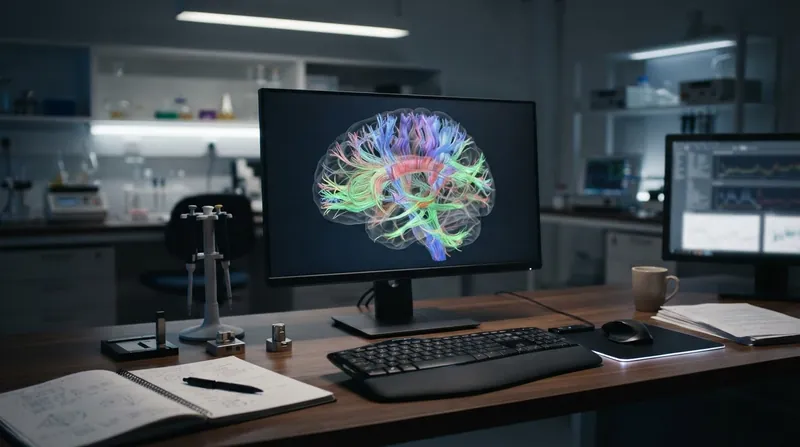
Recent findings from the ENIGMA consortium have provided unprecedented, high-resolution visual evidence of this process in action. By harmonizing advanced MRI data from dozens of diverse patient cohorts across more than 50 countries, researchers successfully created the world's largest stroke neuroimaging dataset.
When analyzing patients recovering from severe motor impairment, the sophisticated artificial intelligence models deployed by the consortium revealed a startling, previously undetected pattern hidden deep within the brain's architecture. This massive dataset allowed scientists to look beyond the immediate site of the injury and examine the holistic response of the entire central nervous system.[2]
The researchers discovered that the undamaged regions of these recovering patients' brains actually exhibited measurable signs of structural "youthfulness." Rather than simply surviving the trauma of the stroke, the brain effectively rejuvenates its healthy networks, altering its biological age to compensate for the lost function on the damaged side. This systemic rejuvenation suggests that the brain enters a hyper-adaptive state, marshaling resources from entirely unaffected lobes to rescue the body's compromised motor systems.[2]
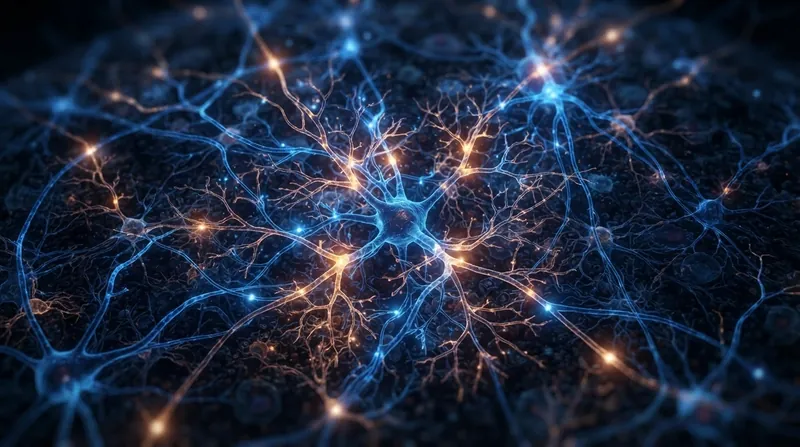
This compensatory mechanism takes several physical forms at the cellular level, the most critical of which is "axonal sprouting." In this process, surviving neurons located near the ischemic core physically grow new branches—axons and dendrites—to bypass the damaged area. These microscopic neural detours slowly reconnect severed circuits, allowing electrical signals to once again travel from the motor cortex down to the spinal cord, gradually restoring movement to paralyzed limbs.
An even more profound mechanism observed in these patients is "cortical remapping." In some of the most extraordinary documented recoveries, the brain entirely transfers a lost function to a completely different, undamaged region. For example, if the area governing the motor control of a right arm is destroyed, the brain may slowly shift that exact responsibility to adjacent healthy tissue, or sometimes even across the corpus callosum to the opposite hemisphere, completely rewriting its own anatomical map.[3]
The timeline for this spontaneous, structural rewiring is highly compressed and fiercely urgent. Clinical data consistently shows that the vast majority of natural motor recovery occurs within the first three to six months post-stroke. This period represents a critical biological window when the brain is at its absolute most malleable, flooded with growth factors and highly receptive to forming new synaptic connections before the tissue eventually stabilizes and scars.
However, modern neurology is no longer content to simply wait and see who falls into the fortunate third during this brief, critical window. A new era of "neuroplasticity-informed rehabilitation" is actively attempting to force the brain into this highly adaptive state on command. By utilizing aggressive behavioral protocols and cutting-edge technological interventions, clinicians are working to artificially extend the window of plasticity, driving meaningful recovery in patients who do not spontaneously heal on their own. This proactive approach marks a departure from older, more passive models of post-stroke care.
Task-specific training is currently at the forefront of this behavioral effort. By forcing patients to perform highly repetitive, goal-oriented movements—such as grasping a cup or stepping over an obstacle hundreds of times a day—physical therapists can drive activity-dependent gene expression. This intense, focused repetition essentially commands the brain to build new synapses, proving that sheer physical effort can dictate the physical architecture of the mind.
Constraint-induced movement therapy takes this concept of forced adaptation a step further. By physically restricting the patient's healthy limb with a mitt or sling, therapists force the continuous use of the impaired limb. This aggressively stimulates the dormant or damaged neural pathways that control the paralyzed side, preventing the brain from taking the path of least resistance and simply relying on its healthy hemisphere to navigate the world.
Beyond traditional physical therapy, multimodal interventions are showing unprecedented promise in recent, large-scale clinical trials. Researchers have definitively demonstrated that combining traditional cognitive or motor training with non-invasive brain stimulation yields significantly larger, more sustained improvements than either therapy administered alone. This hybrid approach represents the absolute cutting edge of modern neurological rehabilitation, seamlessly merging behavioral science with advanced bioelectronics to maximize patient outcomes. By attacking the problem from both a software and hardware perspective, therapists can achieve results that were previously thought impossible.
By applying low electrical currents or targeted magnetic fields directly to the scalp—using techniques like transcranial direct current stimulation—clinicians can safely alter the resting excitability of the cerebral cortex. This stimulation primes the brain's networks, lowering the threshold for neurons to fire and making them highly receptive to the physical therapy that immediately follows, effectively supercharging the rehabilitation session.
Despite these rapid, highly encouraging advances, significant uncertainties remain in the broader field of stroke recovery research. The exact genetic, molecular, and age-related factors that allow one patient's brain to successfully initiate cortical remapping while another's fails are still only partially understood. This variability leaves researchers searching for definitive, reliable biomarkers that can accurately predict individual recovery trajectories and help tailor highly specific interventions from the very first day of treatment. Until these biological variables are fully mapped, stroke rehabilitation will retain an element of trial and error.[1]
Furthermore, while the biological pathways for motor recovery are becoming increasingly clear to scientists, the mechanisms behind the recovery of complex cognitive functions and speech—such as severe aphasia—remain stubbornly opaque. Cognitive networks are vastly more distributed and intricate than localized motor networks, often requiring much longer, highly variable recovery timelines that challenge current rehabilitation models. Unlocking the secrets of cognitive neuroplasticity remains one of the most pressing frontiers in modern neuroscience. Patients suffering from these invisible deficits often require entirely different therapeutic strategies than those recovering from physical paralysis.
Yet, despite these lingering mysteries and clinical challenges, the overarching medical paradigm has fundamentally shifted for the better over the last decade. The scientific community no longer views the adult human brain as a static, rigid organ permanently diminished by vascular injury. Instead, it is now universally recognized as a dynamic, highly adaptable system capable of profound, self-directed repair when given the right biological environment and rigorous behavioral cues. This realization has injected a profound sense of optimism into stroke wards worldwide, replacing despair with actionable hope.[3]
As artificial intelligence continues to decode the complex genetic blueprints of neural networks, and as targeted neuromodulation therapies become increasingly personalized to individual brain topographies, the landscape of stroke care is poised for a historic revolution. The extraordinary, near-complete recoveries once limited to a fortunate third of patients may soon become the standard, expected outcome for all stroke survivors. The brain's capacity to rebuild itself is no longer a medical miracle; it is a biological mechanism waiting to be fully harnessed.[2][3]
Key terms
- Neuroplasticity
- The brain's innate ability to reorganize its physical structure, functional roles, and synaptic connections in response to injury or new learning.
- Ischemic Core
- The epicenter of a stroke where an absolute lack of oxygen and nutrients causes rapid, irreversible cell death.
- Penumbra
- The functionally impaired but biologically salvageable brain tissue immediately surrounding the ischemic core.
- Axonal Sprouting
- A cellular process where surviving neurons physically grow new branches to bypass damaged areas and reconnect severed circuits.
- Cortical Remapping
- The process by which the brain transfers a lost function to a completely different, undamaged region to compensate for injury.
- Transcranial Direct Current Stimulation (tDCS)
- A non-invasive therapy that applies low electrical currents to the scalp to alter the resting excitability of the cerebral cortex.
Frequently asked
What is the penumbra in a stroke?
The penumbra is the area of brain tissue surrounding the irreversibly damaged core. It is functionally impaired due to reduced blood flow but remains biologically salvageable, making it the primary target for acute treatment and recovery.
How long does spontaneous stroke recovery take?
The vast majority of natural, spontaneous motor recovery occurs within the first three to six months after a stroke, representing a critical window when the brain is highly malleable.
What is cortical remapping?
Cortical remapping is a form of neuroplasticity where the brain transfers a lost function—such as moving an arm—from a damaged area to a completely different, healthy region of the brain.
Can brain stimulation improve stroke recovery?
Yes. Clinical trials show that non-invasive techniques like transcranial direct current stimulation can alter brain excitability, making the brain more receptive to physical therapy and improving overall recovery outcomes.
Viewpoints in depth
Innate Biology Researchers
Focus on the brain's natural ability to rejuvenate and remap itself post-injury.
This camp emphasizes that the foundation of all stroke recovery lies in spontaneous biological mechanisms like axonal sprouting and cortical remapping. By studying the 'lucky third' of patients who recover naturally, they hope to identify the genetic and molecular biomarkers—such as the 'youthfulness' of undamaged brain regions—that dictate neuroplastic potential.
Behavioral Rehabilitation Specialists
Argue that intense, task-specific physical therapy is the primary driver of long-term rewiring.
Rehabilitation experts focus on activity-dependent neuroplasticity. They argue that while the brain may have an innate capacity to heal, it requires aggressive, repetitive behavioral inputs to build functional synapses. Techniques like constraint-induced movement therapy are designed to force the brain out of learned non-use, proving that targeted physical effort can physically alter brain structure.
Neuromodulation Advocates
Believe that combining physical therapy with brain stimulation is the key to unlocking recovery.
This perspective champions multimodal interventions. Researchers in this camp argue that physical therapy alone is often insufficient for severe strokes. By using transcranial magnetic or direct current stimulation to alter cortical excitability, they aim to artificially prime the brain's networks, making them highly receptive to the physical rehabilitation that follows.
- Spontaneous Recovery Researchers
- Focus on the brain's innate biological mechanisms, brain age, and natural rewiring.
- Advanced Intervention Advocates
- Focus on augmenting recovery through brain stimulation, AI, and multimodal therapies.
- Behavioral Rehabilitation Specialists
- Focus on driving neuroplasticity through intensive, task-specific physical therapy.
Perspectives this story doesn't cover
- Patients with severe cognitive aphasia
- Caregivers managing long-term disability
- Healthcare economists evaluating therapy costs
Sources
Source coverage
3 outlets
3 viewpoints surfaced



- [1]New ScientistSpontaneous Recovery Researchers
How some people's brains make an extraordinary recovery from stroke
Read on New Scientist → - [2]The Lancet Digital HealthSpontaneous Recovery Researchers
Contralesional neuroplasticity and brain age in stroke recovery
Read on The Lancet Digital Health → - [3]Factlen Editorial TeamAdvanced Intervention Advocates
Synthesis by Factlen editorial team
Read on Factlen Editorial Team →
More in Science
See all →Deep Brain Stimulation
Deep Brain Stimulation Studies Identify Three Neural Circuits Driving Lasting Depression Remission
4 sources
Pain Modulation
The Gate Control Theory of Pain: How Tactile A-Beta Signals Block Nociceptive Transmission in the Spinal Dorsal Horn
4 sources
Alzheimer's Research
APOE4 Gene Actively Damages Brain Vessels in Alzheimer's, Mechanism Shown to Be Reversible by Blocking TGF-β Signaling
6 sources
Genomic Medicine
Ultra-Rapid Genomic Test Cuts Brain Tumor Diagnosis Time From Weeks to Hours
3 sources
Comments
Every angle. Every day.
Get Science stories with full source coverage and perspective breakdowns, free every day.