
Deep Brain Stimulation Studies Identify Three Neural Circuits Driving Lasting Depression Remission
Researchers have identified three specific white matter pathways that must be engaged during deep brain stimulation to achieve sustained relief from treatment-resistant depression. The findings shift surgical targeting from anatomical landmarks to individualized brain connectivity maps.
By Logan Price

Share this story
On October 1, 2026, researchers at Mount Sinai published findings identifying three specific white matter pathways that dictate the success of deep brain stimulation for severe depression. The study shifts the surgical focus from placing electrodes at a fixed anatomical landmark to engaging a patient's unique neural wiring.[1][4]
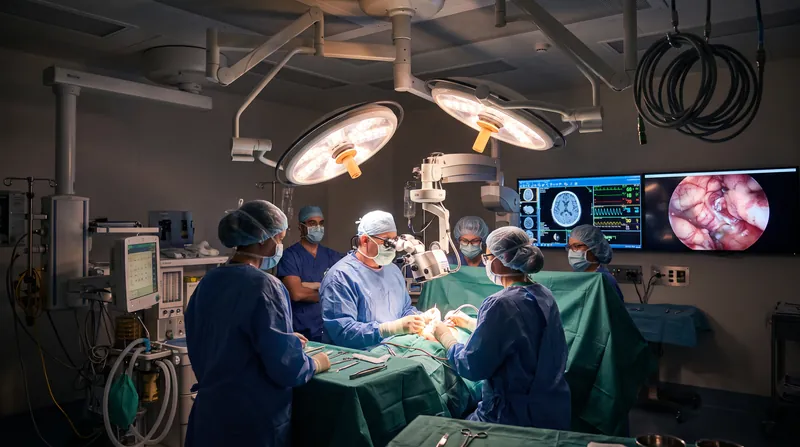
Deep brain stimulation involves surgically implanting electrodes to deliver controlled electrical impulses to specific brain regions. While the U.S. Food and Drug Administration has approved the therapy for Parkinson's disease and epilepsy, its application for treatment-resistant depression remains an experimental, though highly promising, intervention.[4][5]
For years, neurosurgeons targeting depression have placed electrodes in the subcallosal cingulate, a region known as Area 25. While many patients experienced profound and lasting relief, others saw no clinical benefit, leaving researchers searching for the hidden variables that determined surgical success.[4][5]
The new analysis, published in the American Journal of Psychiatry, examined the largest multi-cohort group of patients to date who received subcallosal cingulate stimulation. By combining computational models of electrical fields with brain connectivity maps, the team traced exactly where the therapeutic stimulation traveled.[1][5]
Mapping the Connectome
The researchers discovered that lasting clinical improvement consistently required the electrical field to intersect three distinct white matter bundles. These critical pathways are the cingulum bundle, the forceps minor, and the medial uncinate fasciculus or ventral amygdalofugal pathway.[1][5]
"This study underscores the importance of individualized surgical targeting for achieving optimal outcomes with deep brain stimulation for depression," said Dr. Helen Mayberg, founding director of the Nash Family Center for Advanced Circuit Therapeutics at Mount Sinai. She noted that the precision of the initial electrode placement dictates the entire trajectory of the therapy.[4]
Confirming that the intended brain target has been engaged is an essential first step in any neuromodulation treatment. The research team's findings suggest that missing these specific neural connections by just a few millimeters could render the entire surgical intervention ineffective.[4]
The study highlighted a striking pattern among patients who failed to respond to the treatment after two years of continuous stimulation. Across multiple independent study sites, these non-responders shared a distinct lack of electrical engagement with the left cingulum bundle.[1][5]
This realization shifts the targeting question from where an electrode sits to which connections its electrical field actually engages. For circuit researchers, electrode placement alone may not capture the network effects that matter for sustained psychiatric remission.[3][5]
Individualized Surgical Targeting
The traditional surgical approach relied heavily on anatomical landmarks visible on standard magnetic resonance imaging. However, because individual brain wiring varies significantly from person to person, a perfectly placed electrode by anatomical standards might still miss the critical white matter intersections.[1][5]
To solve this structural variability, the Mount Sinai team advocates for connectome-based targeting. This method uses advanced tractography—detailed maps of a patient's structural brain connections—to guide the precise placement of the stimulation electrodes before the surgery even begins.[1][4]
By modeling the estimated electrical field against the patient's specific connectome, surgeons can adjust the trajectory to ensure all three necessary pathways are engaged. The approach treats the tissue immediately around the electrode as a node in a larger network rather than the whole target.[3][5]
The researchers did not test whether repositioning the electrodes in the non-responding patients to reach the missing left cingulum bundle would retroactively improve their clinical outcomes. That specific question remains open for future clinical trials to address.[1][5]
The connectome-guided targeting strategy is already being put to the test in the ongoing Abbott TRANSCEND clinical trial. The randomized, controlled study uses patient-specific structural maps to guide subcallosal cingulate stimulation for individuals suffering from treatment-resistant depression.[1][4]
Advancing Depression Therapies
Treatment-resistant depression is defined as severe, persistent depressive symptoms that have not improved adequately after multiple standard interventions. For these patients, standard medications, intensive psychotherapy, and electroconvulsive therapy have all failed to provide adequate or lasting relief.[1][5]
The ability to reliably induce and maintain remission in this vulnerable population represents a major clinical milestone. Previous long-term follow-up data from Mount Sinai showed that response and remission rates could be maintained for up to eight years when the subcallosal cingulate was successfully targeted.[4][5]
The new pathway-specific findings help explain why those long-term outcomes were achievable for some patients but remained elusive for others. The data provides a measurable targeting process that future surgical teams can replicate and verify independently across different institutions.[3][5]
"We still have much to learn about which patients are most likely to benefit from stimulation of this particular target," Mayberg said. She emphasized that developing imaging-based signatures to match patients to their optimal treatment remains a central research goal.[1][4]
The research received support from the National Institutes of Health BRAIN Initiative, the Hope for Depression Research Foundation, and the DANA Foundation. The multi-institutional effort involved analyzing data from several independent cohorts to ensure the pathway associations held true across different patient populations.[2][5]
Ultimately, the success of deep brain stimulation for complex psychiatric conditions will depend on this advanced level of precision. As neurosurgeons adopt connectome-based targeting, the focus will remain on mapping the pathways rather than simply hitting the anatomical landmark.[3][5]
The study's lead author, Ha Neul Song, utilized sophisticated neuroimaging techniques to reconstruct the exact stimulation volumes for each participant. This retrospective modeling allowed the team to visualize the invisible electrical fields and correlate them directly with the patients' long-term psychiatric evaluations.[4][5]
As the technology matures, these connectomic determinants could establish a standardized biological blueprint for psychiatric neurosurgery. By ensuring the cingulum bundle, forceps minor, and uncinate fasciculus are all engaged, clinicians can maximize the probability of lifting the burden of intractable depression.[3][5]
Key points
- Mount Sinai researchers identified three specific white matter pathways that must be stimulated for deep brain stimulation to relieve severe depression.
- The study shifts surgical targeting from fixed anatomical landmarks to individualized brain connectivity maps called connectomes.
- Patients who failed to respond to the therapy after two years consistently lacked electrical engagement with the left cingulum bundle.
- The findings are currently guiding electrode placement in the ongoing Abbott TRANSCEND clinical trial for treatment-resistant depression.
What we don’t know
- Whether repositioning electrodes in non-responding patients to engage the missed pathways would retroactively improve their clinical outcomes.
- Which specific patient profiles or depression subtypes are most likely to benefit from targeting this exact neural network.
- The precise biological mechanism by which stimulating these three white matter bundles eliminates depressive symptoms over the long term.
- Clinical Neurosurgeons
- Focuses on the practical shift from anatomical landmarks to connectome-based targeting to ensure precise electrode placement.
- Psychiatric Researchers
- Views the three pathways as a critical network that regulates mood, emphasizing the biological mechanisms of depression remission.
- Medical Device Developers
- Prioritizes the technological implications, such as advanced imaging software and directional leads to shape the electrical field.
Perspectives this story doesn't cover
- Patients with treatment-resistant depression
- Independent neurosurgeons outside the trial network
Sources
Source coverage
5 outlets
3 viewpoints surfaced





- [1]News-MedicalClinical Neurosurgeons
Precise brain circuit targeting may improve depression treatment outcomes
Read on News-Medical → - [2]EurekAlert!Medical Device Developers
Study identifies brain pathways linked to sustained improvement in those receiving deep brain stimulation for treatment-resistant depression
Read on EurekAlert! → - [3]HongLabPsychiatric Researchers
Deep Brain Stimulation Pathways Linked to Lasting Depression Relief
Read on HongLab → - [4]Mount Sinai Health SystemClinical Neurosurgeons
Study Identifies Brain Pathways Linked to Sustained Improvement in Those Receiving Deep Brain Stimulation for Treatment-Resistant Depression
Read on Mount Sinai Health System → - [5]American Journal of PsychiatryPsychiatric Researchers
Connectomic Determinants of Subcallosal Cingulate Deep Brain Stimulation for Depression
Read on American Journal of Psychiatry →
More in Science
See all →Memory Formation
How Rapid Brain Growth Erases Early Childhood Memories
5 sources
Pain Modulation
The Gate Control Theory of Pain: How Tactile A-Beta Signals Block Nociceptive Transmission in the Spinal Dorsal Horn
4 sources
Alzheimer's Research
APOE4 Gene Actively Damages Brain Vessels in Alzheimer's, Mechanism Shown to Be Reversible by Blocking TGF-β Signaling
6 sources
Genomic Medicine
Ultra-Rapid Genomic Test Cuts Brain Tumor Diagnosis Time From Weeks to Hours
3 sources
Comments
Every angle. Every day.
Get Science stories with full source coverage and perspective breakdowns, free every day.