
How Pilates Reduces Anxiety and Depression: The Science of Mindful Movement
A new observational study and a comprehensive 2026 meta-analysis confirm that the controlled breathing and mindful movement of Pilates significantly reduce symptoms of depression, anxiety, and chronic stress.
By Aylin Aksoy

Share this story
In short
- A new observational study confirms that regular Pilates practice significantly reduces symptoms of depression, anxiety, and stress in healthy adults.
- The mindful movement and controlled breathing inherent to Pilates activate the parasympathetic nervous system, lowering cortisol levels.
- A 2026 meta-analysis of 32 trials involving 1,264 participants validated the positive psychosocial outcomes and quality-of-life improvements associated with Pilates.
For decades, the prescription for exercise-induced mental health benefits has heavily favored high-intensity aerobics or steady-state cardio. Public health guidelines frequently emphasize running, cycling, or swimming to trigger the release of endorphins and combat the rising tide of psychological distress. However, a growing body of evidence is shifting the spotlight toward mind-body interventions that prioritize controlled movement over sheer exertion.
As burnout and chronic stress become pervasive hallmarks of modern life, researchers are increasingly investigating how low-impact modalities might offer a more sustainable path to psychological well-being. At the forefront of this shift is Pilates, a century-old practice that is now being rigorously evaluated not just for its core-strengthening physical benefits, but as a potent, scientifically validated intervention for mental health.[5]
A newly published observational study in the journal Healthcare provides compelling evidence that regular Pilates practice significantly mitigates symptoms of depression, anxiety, and chronic stress in healthy adults. Conducted by a team of researchers led by Dr. S. Guidotti, the study sought to bridge a critical gap in the literature.
While the physical advantages of Pilates—such as improved flexibility, dynamic balance, and muscular resistance—are well-documented, its specific capacity to alter behaviors associated with stress-related physical disorders had remained underexplored in non-clinical populations. The findings confirm that the mind-body discipline offers profound psychological protections that rival traditional aerobic interventions.[1]
The observational study compared an experimental group of active Pilates practitioners—comprising adults between the ages of 50 and 64—against a control group of non-active individuals of a similar demographic profile. Researchers utilized validated psychological instruments, including the Symptom Questionnaire (SQ) and the P Stress Questionnaire (PSQ), to assess both immediate psychological symptoms and underlying risk behaviors for stress-related physical disorders. By tracking these metrics, the research team aimed to isolate the specific mental health benefits conferred by the Pilates method, separating them from the general advantages of an active lifestyle.[1]
The results were striking. The statistical analysis revealed a highly significant decrease in anxiety levels among the Pilates group compared to the non-active controls. Similarly, the practitioners exhibited significant reductions in symptoms of depression and somatization—the physical manifestation of psychological distress. The Pilates Method Alliance, an international non-profit dedicated to the practice, noted that these findings validate what instructors have observed anecdotally for years: that the precise, controlled movements of Pilates translate directly into measurable psychological relief and improved emotional regulation.[1][3]
Perhaps the most intriguing finding from the Healthcare study was the improvement in specific stress-risk behaviors. The researchers highlighted that Pilates practitioners demonstrated a significantly enhanced ability to benefit from their spare time by successfully taking their minds away from daily commitments and pressures.
In an era characterized by constant digital connectivity and blurred boundaries between work and rest, this cognitive disengagement is a critical component of mental recovery. The intense concentration required to execute Pilates movements effectively forces the brain to anchor itself in the present moment, interrupting the cycle of rumination that often fuels anxiety and chronic stress.[1]
The underlying physiological mechanisms driving these mental health benefits are rooted in the nervous system. Clinical experts and mind-body practitioners emphasize that Pilates is fundamentally different from traditional resistance training because of its strict integration of breathwork. Controlled, diaphragmatic breathing is a core principle of the practice, and this specific respiratory pattern directly stimulates the vagus nerve. This activation shifts the autonomic nervous system out of the sympathetic fight-or-flight state and into the parasympathetic rest-and-digest mode, creating a cascade of calming physiological effects throughout the body.[4]
By engaging the parasympathetic nervous system, Pilates actively lowers the circulation of cortisol, the body's primary stress hormone. Unlike high-intensity interval training (HIIT) or heavy weightlifting—which can temporarily spike cortisol levels and induce physical stress as a catalyst for adaptation—Pilates offers a restorative approach. The mindful movement reduces muscle tension and promotes a sense of calm without taxing the adrenal system. This dual action of strengthening the body while simultaneously calming the nervous system makes it an exceptionally valuable modality for individuals whose baseline stress levels are already elevated.[4]
The environment in which Pilates is practiced can also amplify its psychological benefits. Recent data published in the MTP Rehab Journal explored the acute effects of Pilates on state anxiety, comparing indoor studio sessions with outdoor practice. While both environments yielded significant reductions in anxiety, the outdoor group experienced a remarkable 33.1% decrease, accompanied by a large effect size.
In contrast, the indoor studio group saw a 17% reduction. This suggests that combining the mindful, breath-focused movements of Pilates with the restorative properties of nature—often referred to as green exercise—can supercharge the intervention's capacity to alleviate emotional distress.
The findings from these recent observational studies are further contextualized by a comprehensive systematic review and meta-analysis published in April 2026 in the journal Sports. This sweeping analysis sought to evaluate the broader impact of Pilates-based exercise on mental health, psychological well-being, and overall quality of life across both clinical and healthy populations. By aggregating data from dozens of independent trials, the researchers aimed to determine whether the psychological benefits of Pilates hold up under the rigorous scrutiny of pooled statistical analysis.[2]
The 2026 meta-analysis included 32 randomized and quasi-experimental trials, encompassing a total of 1,264 participants. The demographic scope was intentionally broad, representing adolescents, adults, and older adults across diverse clinical and non-clinical groups. The outcomes measured across these trials included depressive symptoms, anxiety, quality of life, self-esteem, and general well-being. This large-scale synthesis provides one of the most robust evaluations to date of how Pilates functions as a psychological intervention across the lifespan.[2]
The pooled results of the meta-analysis yielded a statistically significant positive effect for psychosocial outcomes, particularly in enhancing quality of life and boosting self-esteem. The researchers noted that the psychological benefits of Pilates appear to be closely intertwined with its physical mechanisms. Improvements in body awareness, postural stability, and physical self-perception directly translated into enhanced self-esteem and reductions in social appearance anxiety. For clinical populations, the reduction in chronic pain and improvements in functional mobility served as vital mediators, paving the way for improved overall well-being.[2]
However, the meta-analysis also introduced an important layer of nuance regarding clinical mental health conditions. While the overall trend was positive, the pooled evidence for reducing negative psychological indicators—specifically clinical depression and severe anxiety—showed substantial statistical heterogeneity, measured at 91.7%. This high degree of variability indicates that while many individuals experience profound relief from depressive symptoms through Pilates, the results are not entirely uniform across all study designs, populations, and intervention protocols.[2][5]
Researchers attribute this heterogeneity to the wide variability in how Pilates programs are structured and delivered. The meta-analysis highlighted that differences in intervention duration, session frequency, and the mode of delivery significantly influence outcomes. Interestingly, subgroup analyses suggested that low-frequency programs, including just once-weekly sessions, were still associated with measurable improvements. Furthermore, evidence from individual trials indicated that supervised, face-to-face instruction was particularly advantageous for older adults, likely due to the combined benefits of expert physical correction and social interaction.[2]
This emerging body of research positions Pilates in a unique Goldilocks zone for mental health interventions. For individuals grappling with depression or severe anxiety, the prospect of engaging in high-intensity aerobic exercise can often feel insurmountable, creating a barrier to entry that exacerbates feelings of inadequacy. Pilates offers a highly adaptable, low-impact alternative that feels more achievable. It provides the neurochemical benefits of movement—such as the release of endorphins and brain-derived neurotrophic factor—without the daunting physical toll of more aggressive fitness regimens.[5]
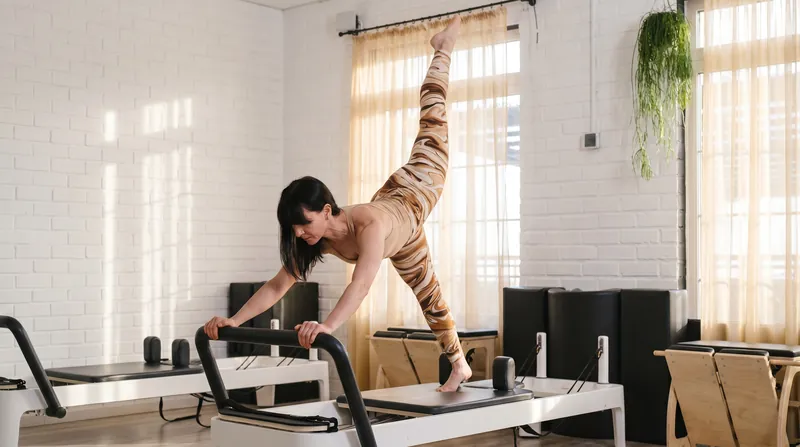
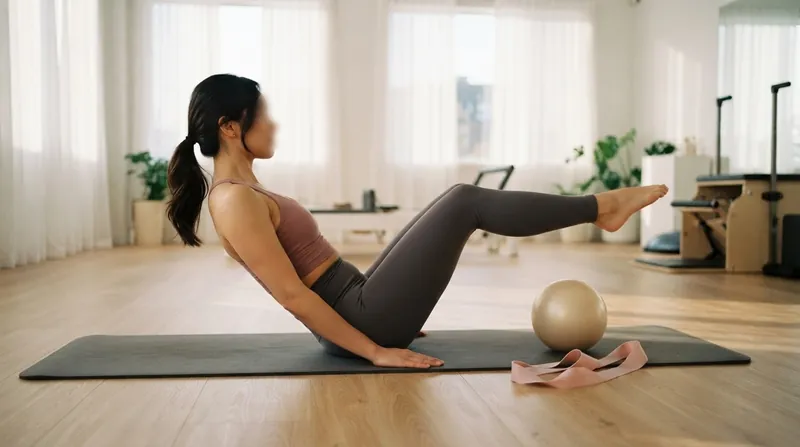
Accessibility remains one of the practice's strongest assets in the context of public health. Because Pilates can be heavily modified to accommodate different fitness levels, physical limitations, and age groups, it serves as a highly inclusive intervention. Whether performed on specialized reformer equipment in a clinical setting or on a simple mat in a living room, the core principles of breath control, centering, and precision remain intact. This adaptability allows for gradual, sustainable engagement, which is critical for individuals whose mental health challenges make consistency difficult.
Beyond the physiological and biomechanical advantages, the social architecture of Pilates classes plays a vital role in its psychological efficacy. Supervised, group-based Pilates fosters a sense of community and shared focus. The presence of an instructor providing real-time feedback not only ensures physical safety but also reinforces the mind-body connection by constantly drawing the practitioner's attention back to their breath and alignment. This supportive environment combats the isolation that frequently accompanies depression and anxiety, adding a crucial layer of psychosocial support to the physical intervention.[2][4]
The convergence of observational data and large-scale meta-analyses is prompting a reevaluation of how exercise is prescribed for mental health. Public health advocates and rehabilitation specialists are increasingly recognizing that a holistic approach—one that integrates physical conditioning with mindful awareness—may be more effective for stress management than purely aerobic protocols. By validating the psychological benefits of Pilates, the scientific community is expanding the toolkit available to healthcare providers, offering a proven strategy that addresses both the physical and emotional manifestations of modern stress.[1]
Ultimately, the latest research confirms that Pilates is far more than a tool for core strength and flexibility; it is a comprehensive mind-body intervention with profound implications for mental well-being. By lowering cortisol, activating the parasympathetic nervous system, and training the mind to anchor itself in the present moment, Pilates provides a powerful antidote to the anxiety and depression that characterize contemporary life. As the scientific understanding of exercise-induced neuroplasticity deepens, Pilates stands out as a scientifically validated, accessible, and highly effective pathway to holistic health.[5]
Key terms
- Parasympathetic Nervous System
- The part of the autonomic nervous system responsible for the body's 'rest and digest' functions, which slows the heart rate and promotes relaxation.
- Cortisol
- The body's primary stress hormone, which can cause chronic inflammation and psychological distress when elevated for prolonged periods.
- Somatization
- The physical manifestation of psychological distress, where mental anxiety or depression presents as unexplained physical pain or fatigue.
- Statistical Heterogeneity
- In a meta-analysis, this refers to the degree of variation in study outcomes, indicating that results differ across various populations or intervention methods.
- Vagus Nerve
- A major component of the parasympathetic nervous system that regulates internal organ functions, including heart rate and digestion, and is stimulated by deep breathing.
Reader questions
How does Pilates reduce anxiety and stress?
Pilates integrates controlled, diaphragmatic breathing with precise movements, which stimulates the vagus nerve. This activates the parasympathetic nervous system, lowering cortisol levels and shifting the body out of a 'fight or flight' stress response.
Is Pilates as effective as aerobic exercise for mental health?
Yes, recent observational studies show that Pilates provides significant reductions in depression and anxiety that rival traditional aerobic interventions, with the added benefit of being low-impact and highly adaptable for different fitness levels.
Does it matter if I practice Pilates indoors or outdoors?
While both environments significantly reduce anxiety, research indicates that outdoor practice can nearly double the psychological benefits, showing a 33.1% reduction in state anxiety compared to a 17% reduction for indoor studio sessions.
How often do I need to practice to see mental health benefits?
While optimal dosage varies, meta-analytic data suggests that even low-frequency programs, including just once-weekly supervised sessions, are associated with measurable improvements in psychological well-being and quality of life.
Where opinion splits
Clinical Researchers
Focus on empirical data, statistical significance, and the need for rigorous trials to prove clinical efficacy.
From a clinical research perspective, the validation of Pilates as a mental health intervention requires rigorous, quantifiable data. Researchers emphasize that while observational studies show promising correlations between Pilates and reduced anxiety, establishing definitive causality requires large-scale randomized controlled trials (RCTs). The 2026 meta-analysis highlighted significant statistical heterogeneity, suggesting that the psychological benefits may vary widely depending on the specific population, the duration of the intervention, and the clinical severity of the participants' depression or anxiety. For this camp, the goal is to standardize Pilates protocols so they can be reliably prescribed by medical professionals alongside or in place of traditional pharmacotherapy.
Mind-Body Practitioners
Emphasize the holistic, real-world benefits of breathwork, parasympathetic activation, and accessible movement.
Instructors and mind-body practitioners view the scientific findings as validation of principles they have observed in studios for decades. This perspective argues that the true power of Pilates lies in its holistic integration of breath, alignment, and focused attention, which actively downregulates the nervous system. Rather than viewing exercise simply as a mechanical process to burn calories or build muscle, this camp emphasizes the qualitative experience of movement. They point to the immediate, visceral relief practitioners feel when they successfully 'take their mind away' from daily stressors, arguing that the parasympathetic activation achieved through mindful breathing is just as critical as the physical exertion itself.
Public Health Advocates
Highlight Pilates as a low-barrier, scalable intervention for the growing mental health crisis.
Public health advocates focus on the accessibility and scalability of Pilates as a population-level intervention for mental health. With depression and anxiety rates climbing globally, this camp stresses the need for interventions that are sustainable and approachable for individuals who may be intimidated by high-intensity fitness cultures. Because Pilates can be modified for seniors, individuals with chronic pain, and those with severe mobility limitations, it removes significant barriers to entry. Advocates argue that integrating low-impact, mindful movement into community health programs and workplace wellness initiatives could provide a cost-effective, preventative buffer against the modern epidemic of chronic stress.
- Clinical Researchers
- Focus on empirical data, statistical significance, and the need for rigorous trials to prove clinical efficacy.
- Mind-Body Practitioners
- Emphasize the holistic, real-world benefits of breathwork, parasympathetic activation, and accessible movement.
- Public Health Advocates
- Highlight Pilates as a low-barrier, scalable intervention for the growing mental health crisis.
Perspectives this story doesn't cover
- Individuals with severe, treatment-resistant clinical depression who may not respond to movement-based interventions.
- Socioeconomically disadvantaged populations who face financial barriers to accessing supervised studio Pilates.
Sources
Source coverage
5 outlets
3 viewpoints surfaced



- [1]HealthcareClinical Researchers
Benefits of Pilates on Depression, Anxiety, and Stress: An Observational Study Comparing People Practicing Pilates to Non-Active Controls
Read on Healthcare → - [2]SportsClinical Researchers
Effects of Pilates-Based Exercise on Mental Health, Psychological Well-Being, and Quality of Life: A Systematic Review and Meta-Analysis
Read on Sports → - [3]Pilates Method AllianceMind-Body Practitioners
Pilates Research: Psychological Outcomes in Adults
Read on Pilates Method Alliance → - [4]Inspire AtlantaMind-Body Practitioners
How does Pilates improve mental health?
Read on Inspire Atlanta → - [5]Factlen Editorial TeamPublic Health Advocates
Synthesis by Factlen editorial team
Read on Factlen Editorial Team →
More in Fitness
See all →Back Pain Rehab
RCT Finds Supervised Pilates Superior to Home Exercise for Preventing Chronic Low Back Pain
5 sources
Biomechanics
Reformer vs. Mat Pilates: The Biomechanics of the Powerhouse
4 sources
Biomechanics
How Pilates Uses Controlled Movements to Strengthen Core Muscles and Reduce Anxiety
7 sources
Core Biomechanics
Why Anterior Pelvic Tilt During the Pilates Hundred Inhibits Transverse Abdominis Activation
5 sources
Comments
Every angle. Every day.
Get Fitness stories with full source coverage and perspective breakdowns, free every day.